From our Old Bike Archives – Issue 100 – first published in 2022.
Tracks in Time, Rowley Park Speedway, Brompton, Adelaide
Story: Peter Laverty • Photos: Graham Longley, Brian Darby, Neil Burston, Ross Garrigan
There have been many Speedway tracks in and around Adelaide, but to most fans, the biggest name of all, and the most fondly remembered, will always be Rowley Park.
There is a solid school of thought that Speedway racing, as it is generally accepted in Australia, originated in Adelaide, at Jubilee Oval on October 11, 1902. Primarily a programme of bicycle races on a banked concrete track that, at the time, ringed the Adelaide Oval, the card nevertheless included a Handicap race for motorcycles which attracted eleven starters. This was billed as “The first motor race in Australia” and the motorcycle event, two heats and a final over five miles, was actually held on consecutive Saturdays. Further motorcycles races were held at the same location over the next twelve months.
While the concept of rushing around an oval (or circular) track was the simplest form of motor sport, as opposed to marathons conducted on public roads, ‘Speedway’ as it became known, certainly flourished, and Adelaide was home to a string of circuits in the first half of the twentieth century.* Among them was Morphettville Racecourse in 1909. In 1916, members of the Motorcycle Club of South Australia were given permission to modify a horse track on a property called Olive Farm at the northern suburb at Northfield. By 1920 this track had been developed into a 600-yard prepared circuit, specially prepared for motorcycle racing.
Closer to Adelaide, in fact right on South Terrace, Thebarton Oval ran Speedway racing from 1922 to 1928 on a 550 yard track that began as a grass surface but quickly became dirt, running around the outside of an Australian Rules field, with the goal posts still in place at each end of the track. However Thebarton Oval did possess one unique feature – electric lighting – which allowed dirt track racing to be held at night; a first for Australia and possibly the world. Not surprisingly, the inner-city track attracted fierce opposition from local residence and closed in 1928, although it was briefly revived in 1945 when star rider Laurie Jemison obtained permission for a one-off meeting. Wayville Showgrounds came on stream in 1926, and other at Woodville in 1924, and a one-mile dirt circuit at Gawler which closed soon after opening following a double fatality in 1927.
Enter Rowley Park
A disused clay pit on Torrens Road at Brompton, North Adelaide, was originally planned to be a major centre for soccer when it was purchased by dentist and noted goalkeeper Ted Rowley in 1908. Rowley Park, as it was named was however, a less than ideal site, prone to flooding and devoid of vegetation. When the South Australian Soccer Association found more salubrious grounds at Hindmarsh, Rowley Park lay unused until it was eyed by speedway competitors, who were displeased with their treatment by the Melbourne-based promoters at the established Kilburn Speedway. A lease was agreed upon for 23 races per season and for 1949 and 1950, both Rowley Park and Kilburn tracks operated until Kilburn’s demise after the 1950/51 season.
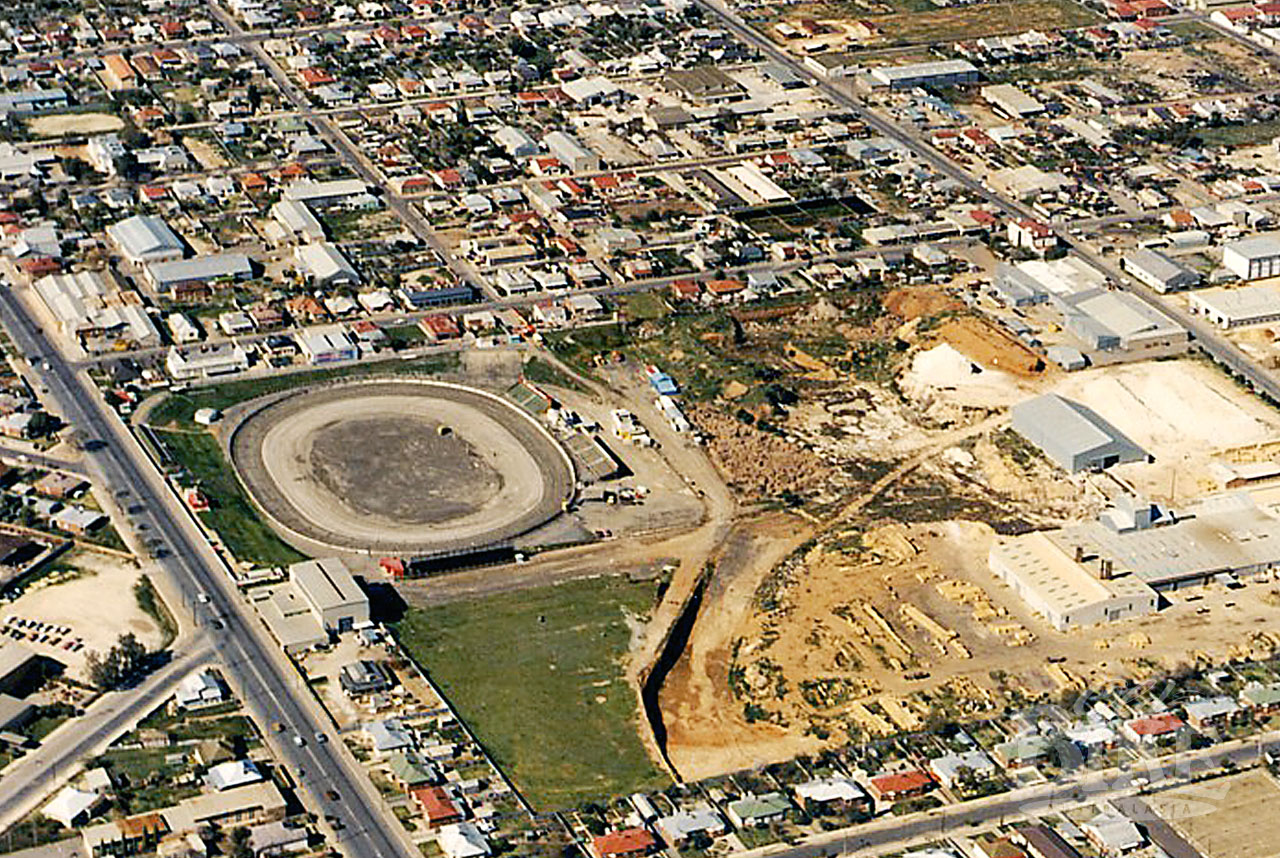
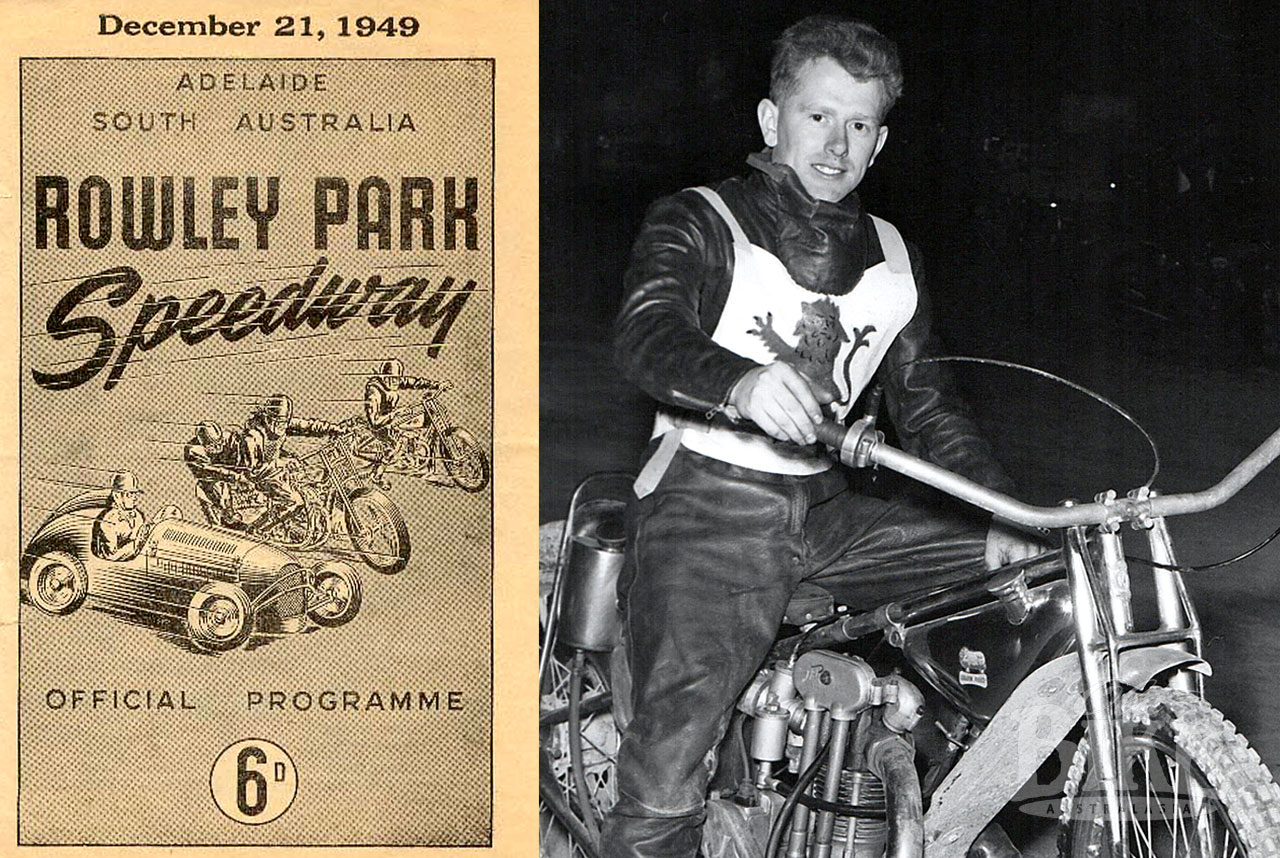
After remedial work, including the erection of a safety fence, the opening meeting at Rowley Park took place on 21st December, 1949, with ex-speedcar driver Wal Watson as the promoter. Watson remained at the helm until 1951, when he was replaced by former Sydneysider Alf Shields, who had begun racing as a solo rider and moved to speedcars. Shields made improvements to the track, including adding a dolomite surface which suited two, three and four-wheel competitors, before selling the lease to Hugh Reskymer “Kym” Bonython in 1954.
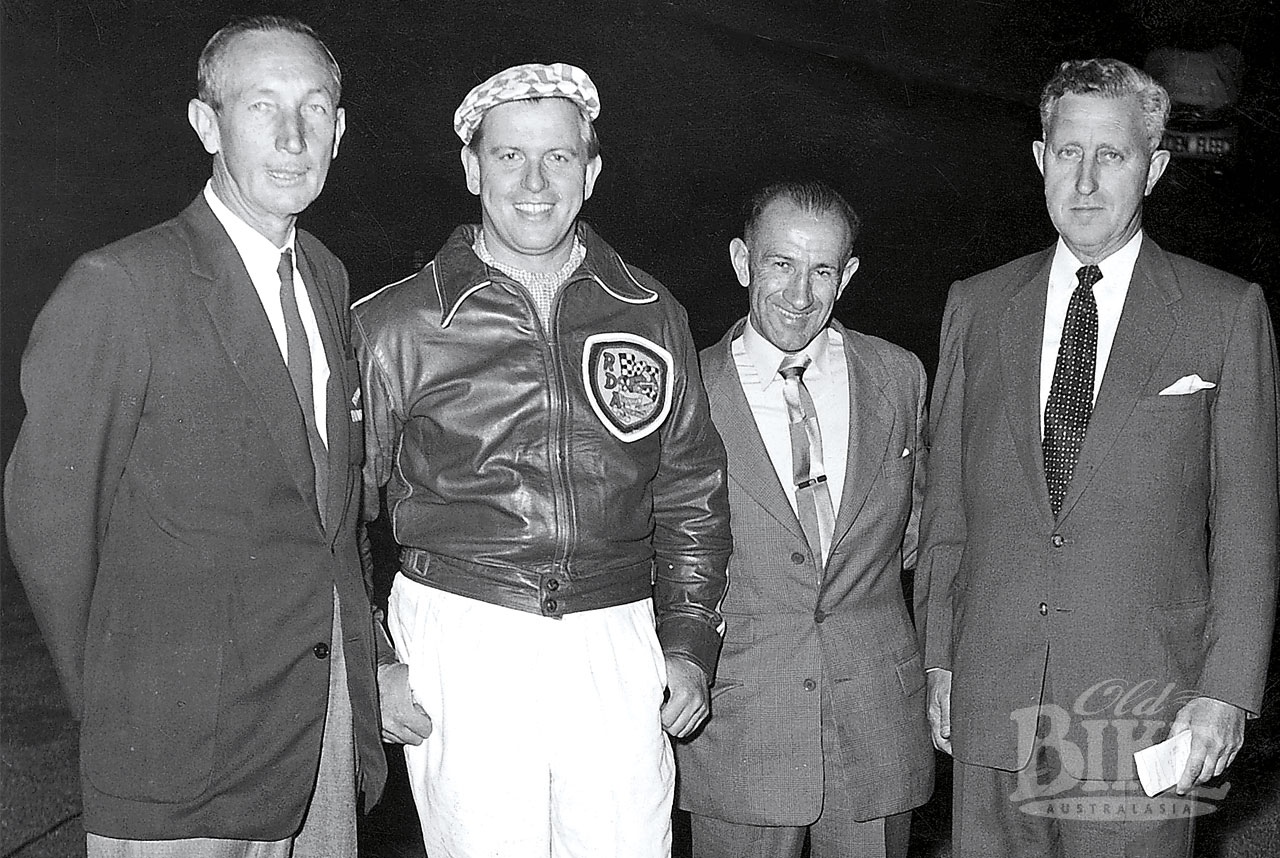
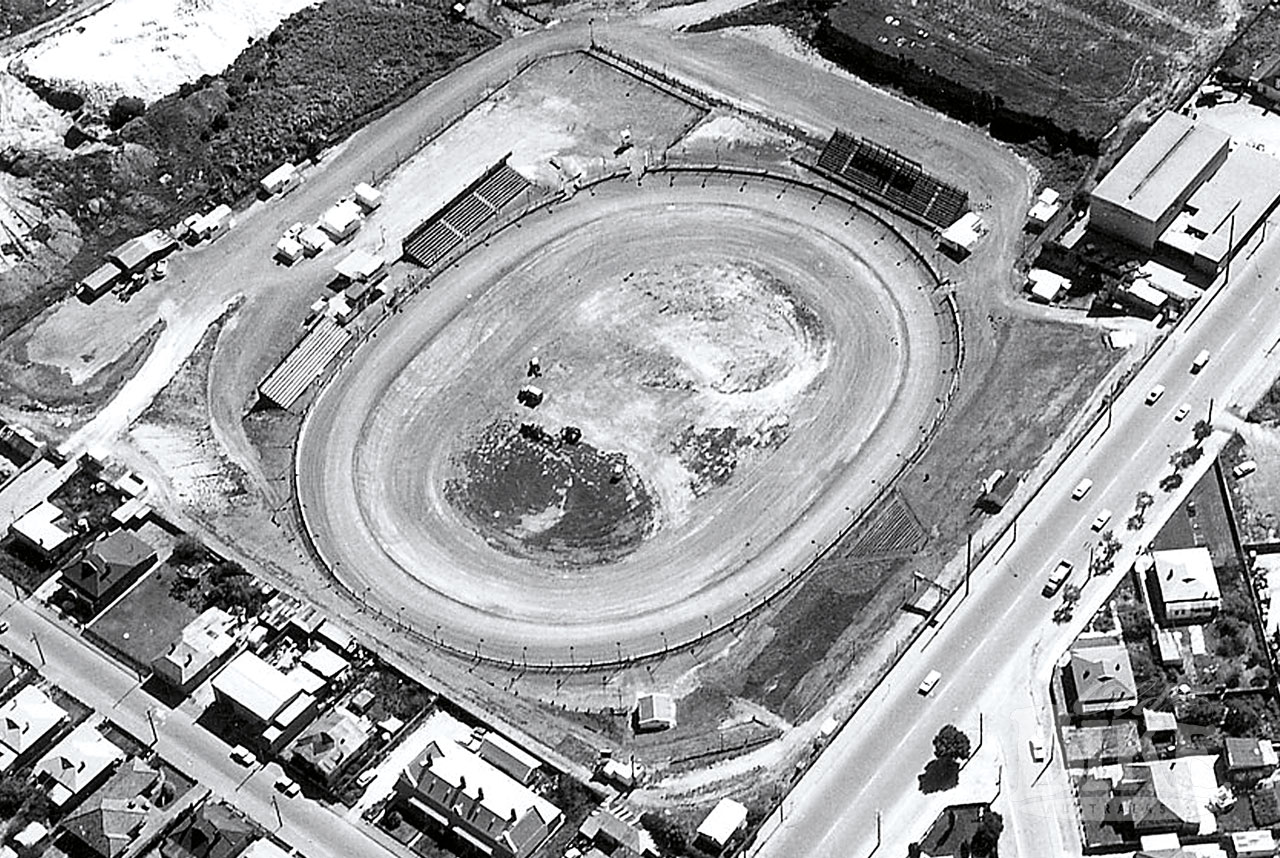
Bonython’s father John had been editor of The Advertiser newspaper and later Lord Mayor of the City of Adelaide. During WW2, Kym served in the RAAF and rose to the rank of Squadron Leader, being awarded the Air Force Cross and the Distinguished Flying Cross. Following the war, Kym Bonython became extensively involved in the music industry, opening a record store in Adelaide and forming his own concert promotion company, Aztec Services, which brought many famous jazz musicians to Australia. He was also a passionate supporter of art and later owned several galleries. As if his life was not diverse enough, Kym also developed a taste for Speedcar racing, and he was good at it. When he took over the lease of Rowley Park he installed Jack Self as Track Manager and vigorously promoted the venue. The circuit was reshaped in 1955 to a more conventional oval shape of 440 metres, rather than the squarish shape of the original, and was also widened. This involved construction of a new safety fence, with a ‘catch fence’ above the timber fence.
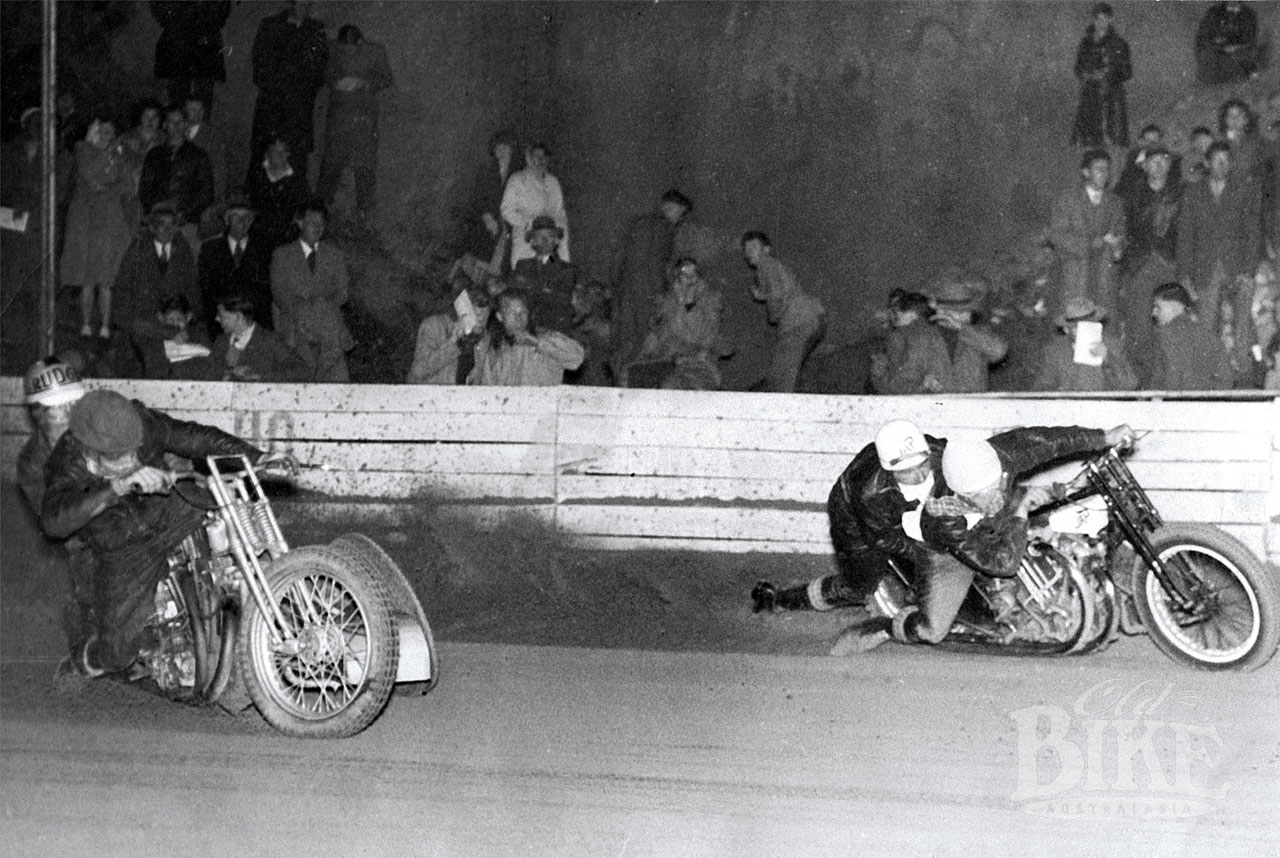
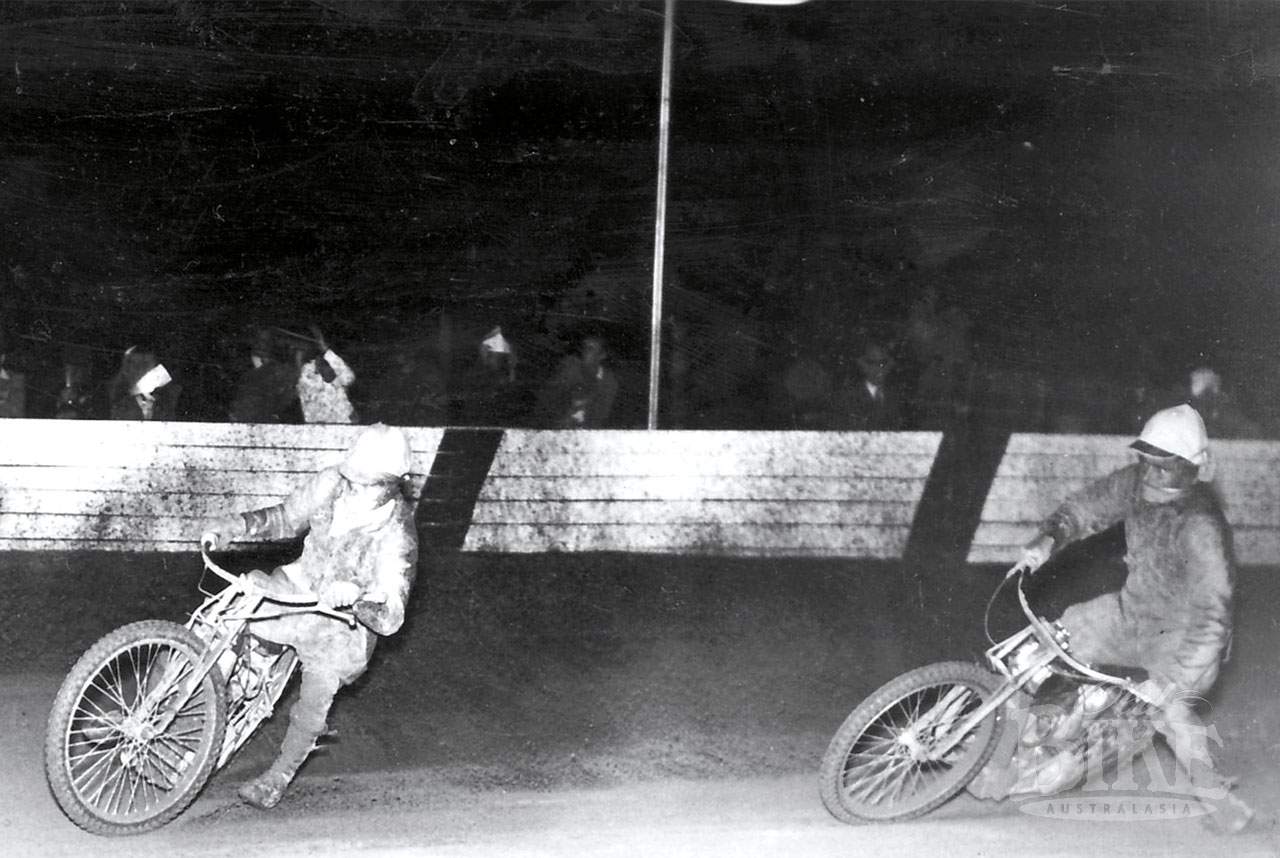
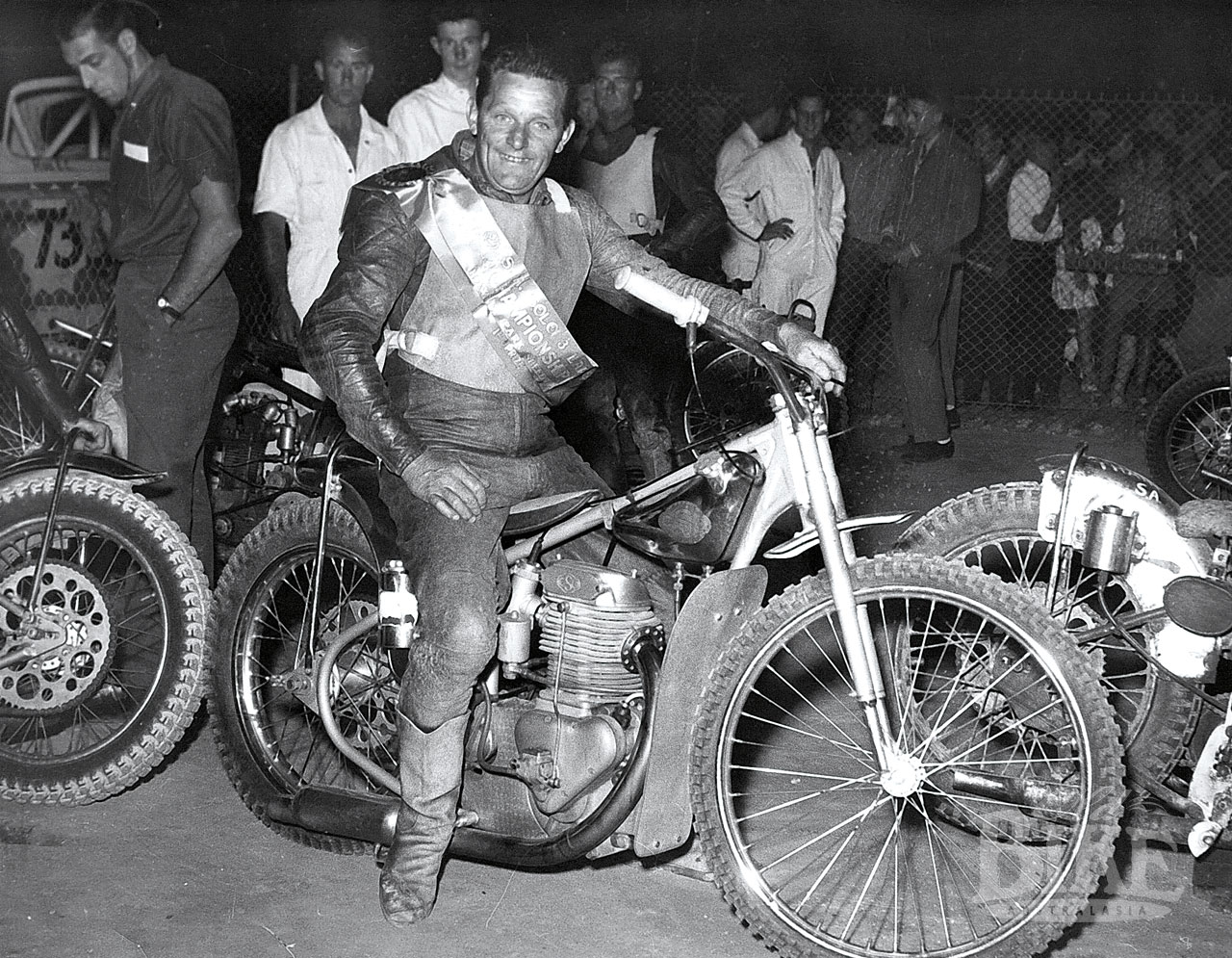
“Friday Night is Speedway Night”, was the Rowley Park slogan, and the venue regularly attracted crowds of up to 20,000 per meeting. Under Bonython’s stewardship, a string of big names visited the venue, notably flamboyant American Speedcar driver Bob Tattersall in 1957, former World Champion solo star Peter Craven from England in 1959 and the young and then-struggling New Zealand solo rider Ivan Mauger the following year. The leading resident rider was Jack Young, who guided Mauger through his formative years and by Mauger’s own admission, set him on the path to six World Championships. By the early ‘seventies, Bonython’s extensive art interests had stretched to Sydney, where he now lived, and in 1973 he sold the Rowley Park lease to a group of five former Speedcar divers – Rex Sendy, Kevin Fischer, Cec Iechler, Tom Dillon and Ray Skipper. This consortium lasted just one season (1973/74) as promoters before the Racing Drivers’ Association of South Australia took over.
Beginning of the end
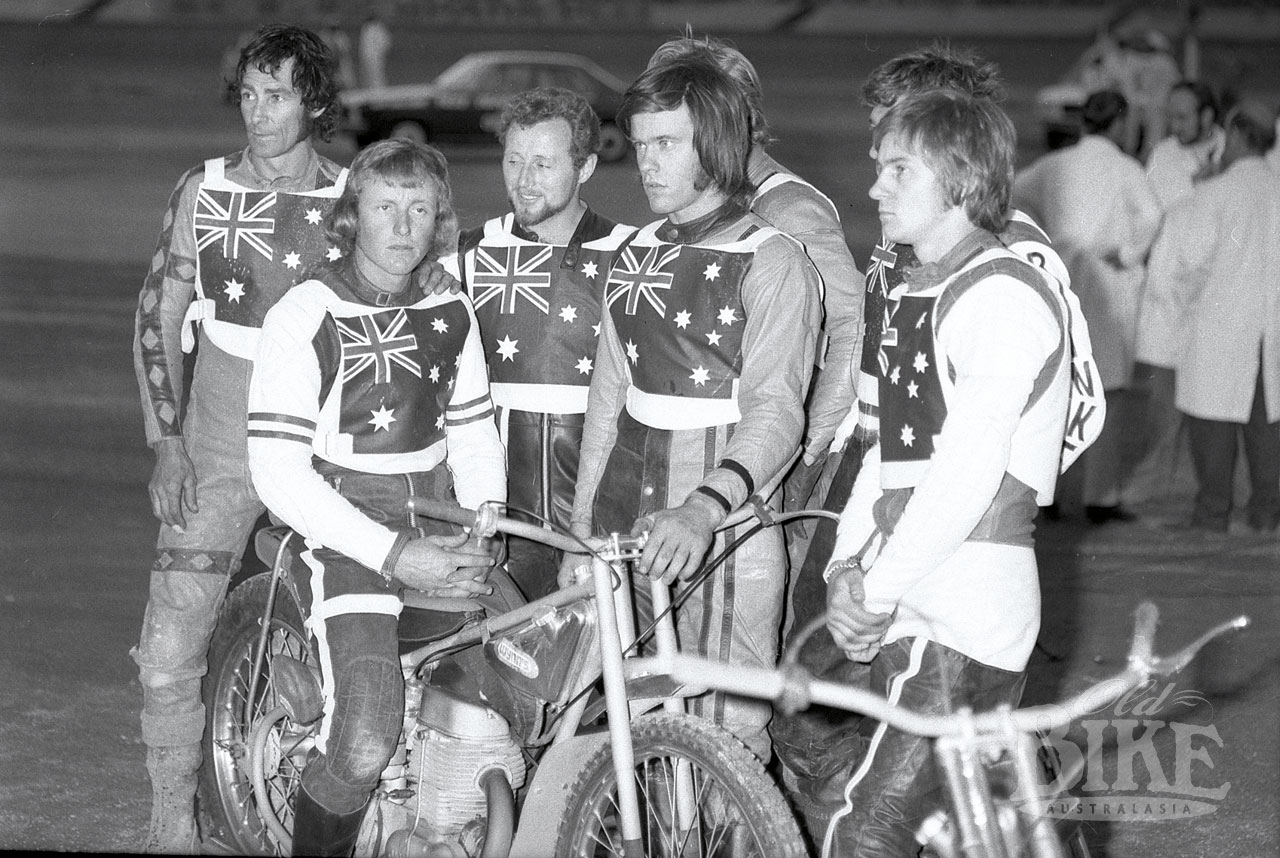
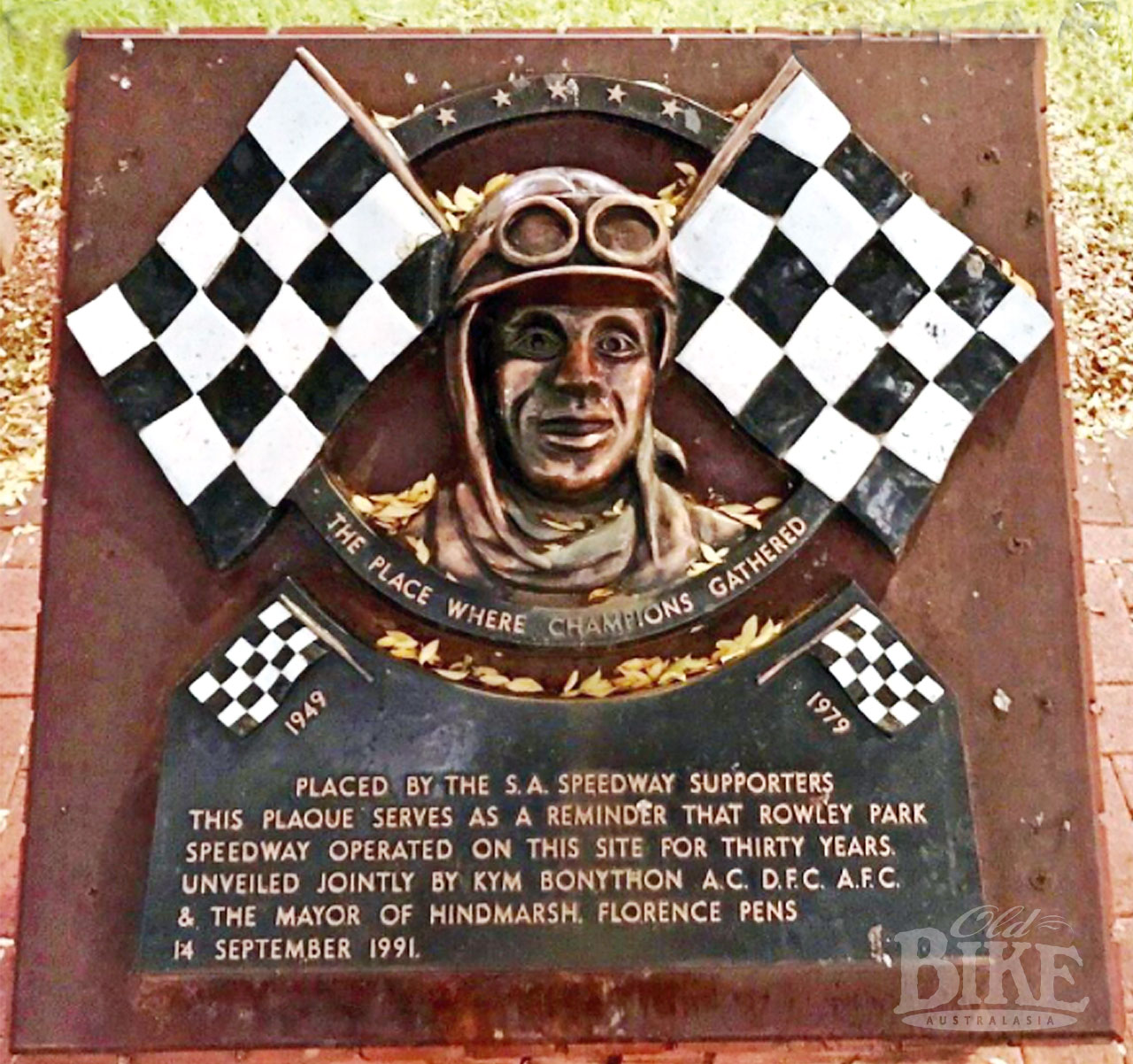
Unlike the austere post-war years when the track opened, there were now plenty of other attractions, and Rowley Park’s proximity to the well-to-do suburbs of North Adelaide increasingly made it the target for complaints about noise and parking congestion. Exactly the same situation existed in Sydney and resulted in the closure (in 1996) of the Showground Speedway Royale. The bigger more powerful Sprintcars which had largely supplanted the midgets also severely taxed the safety limits of the Adelaide track itself, and the 1978/79 season proved to be the last hurrah. The meeting of 6th April, 1979 saw the curtain come down on Rowley Park and before long, houses had taken over where the cars and bikes once raced. The housing estate was fittingly named the Kym Bonython Estate and today a bronze plaque sits at the entrance.
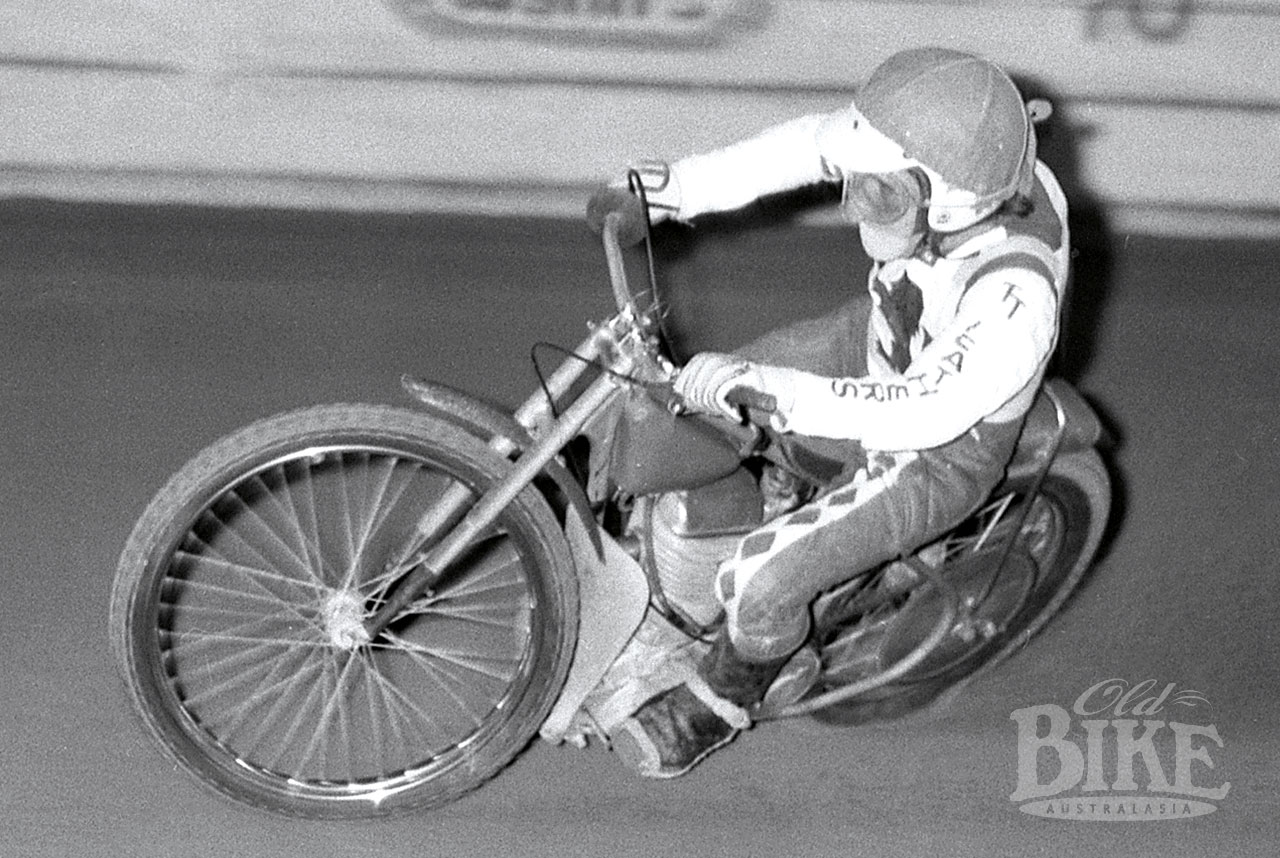
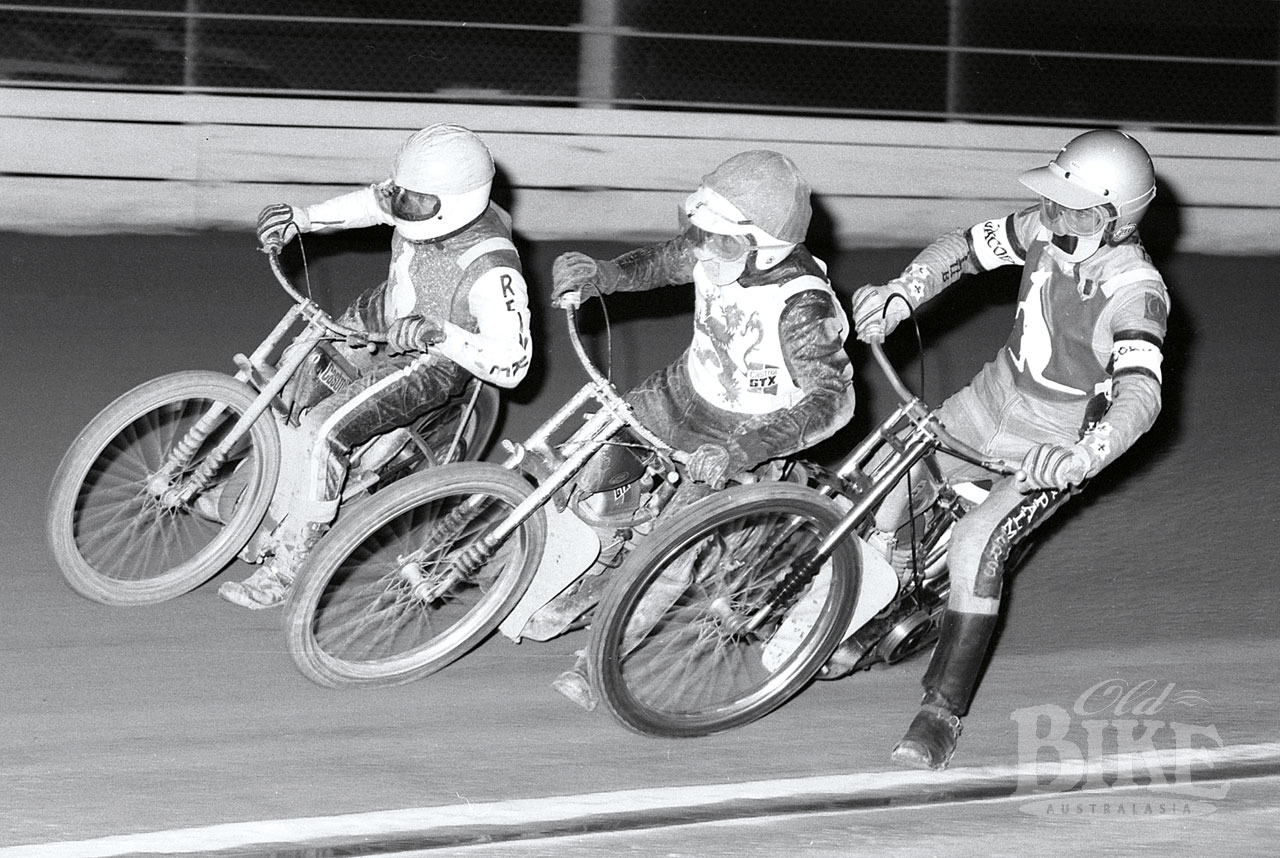
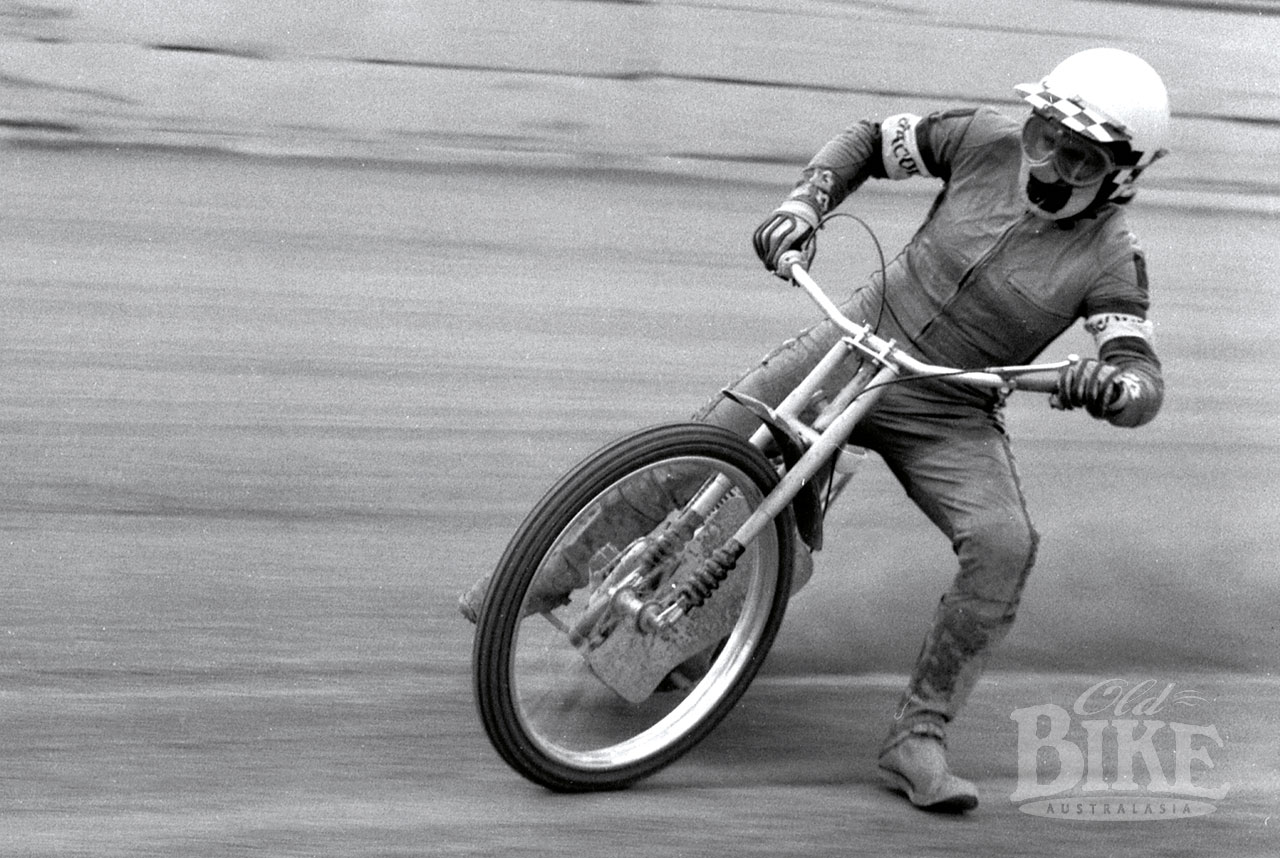
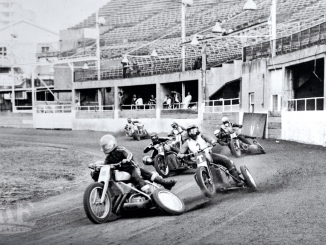
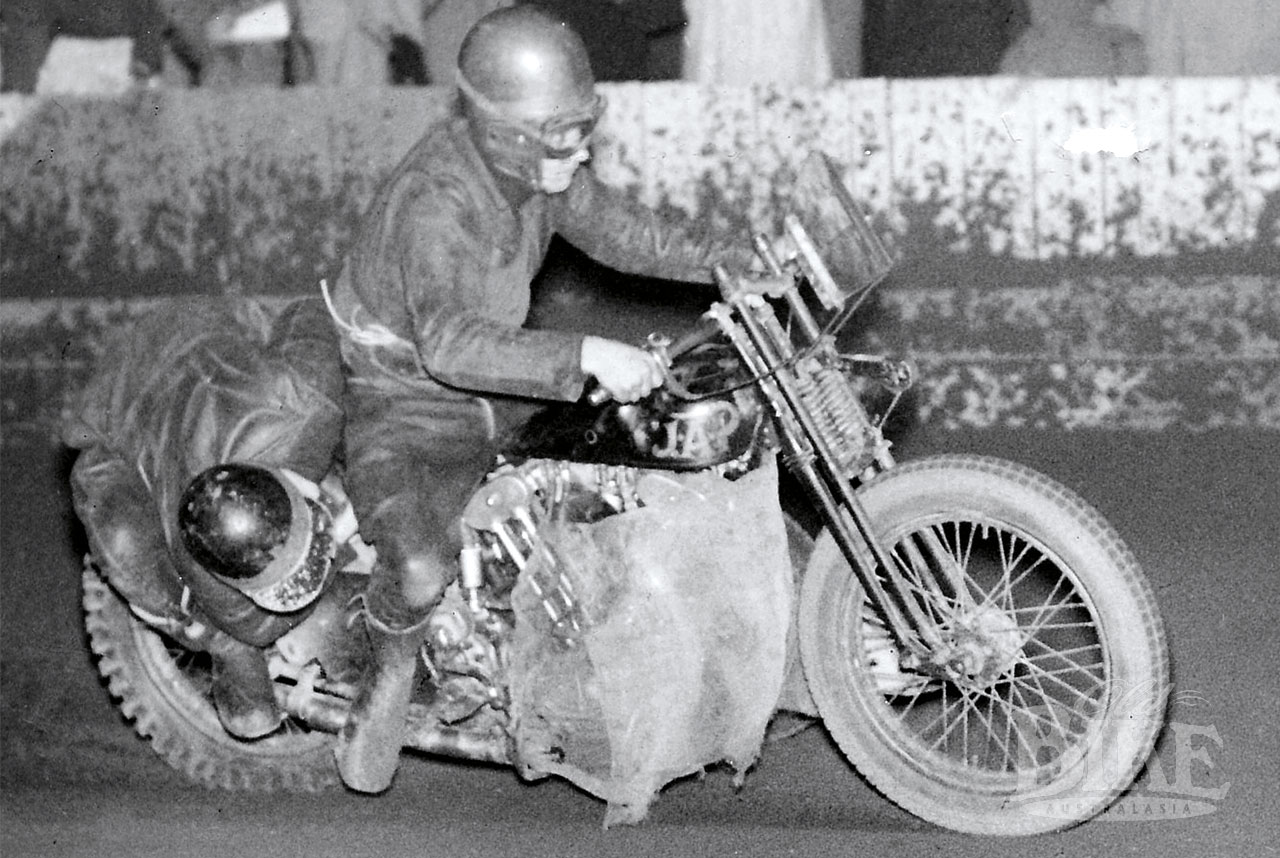
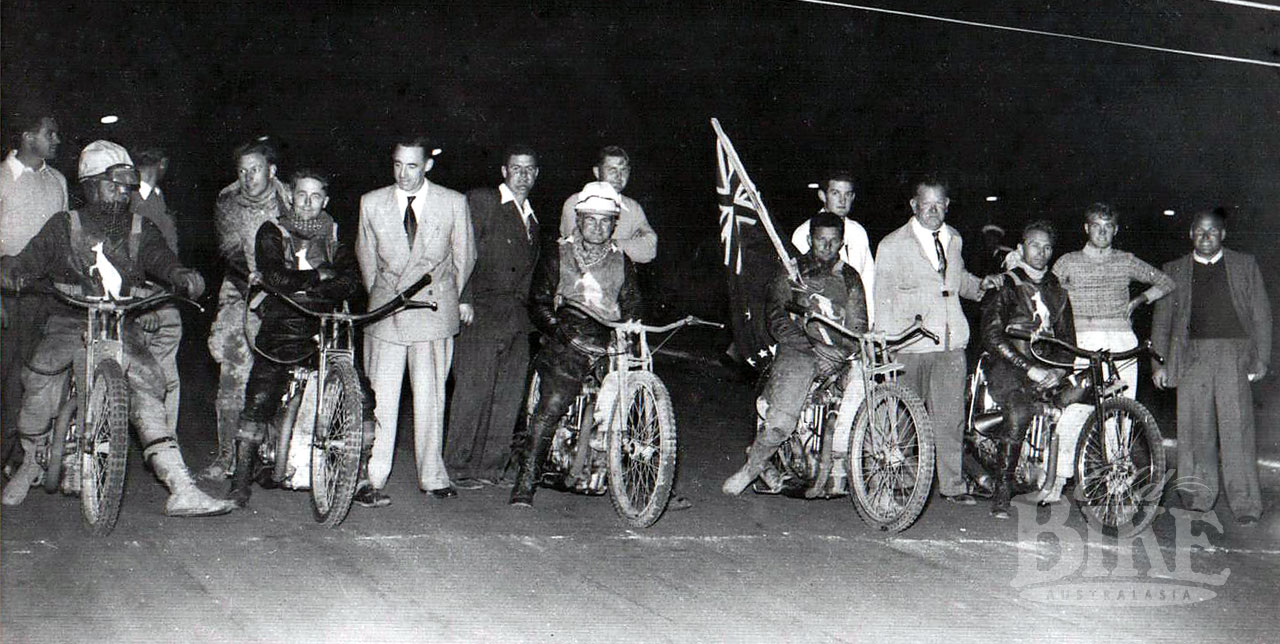
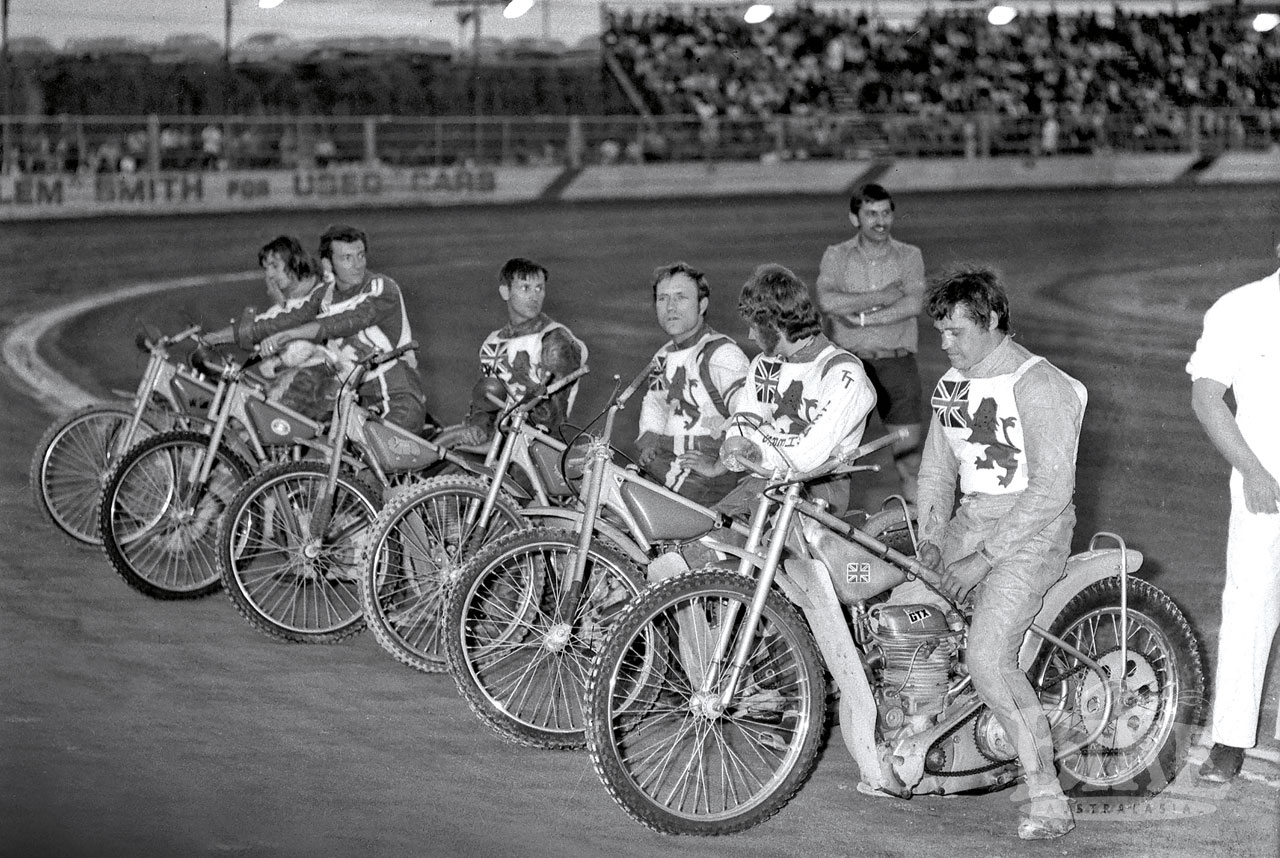
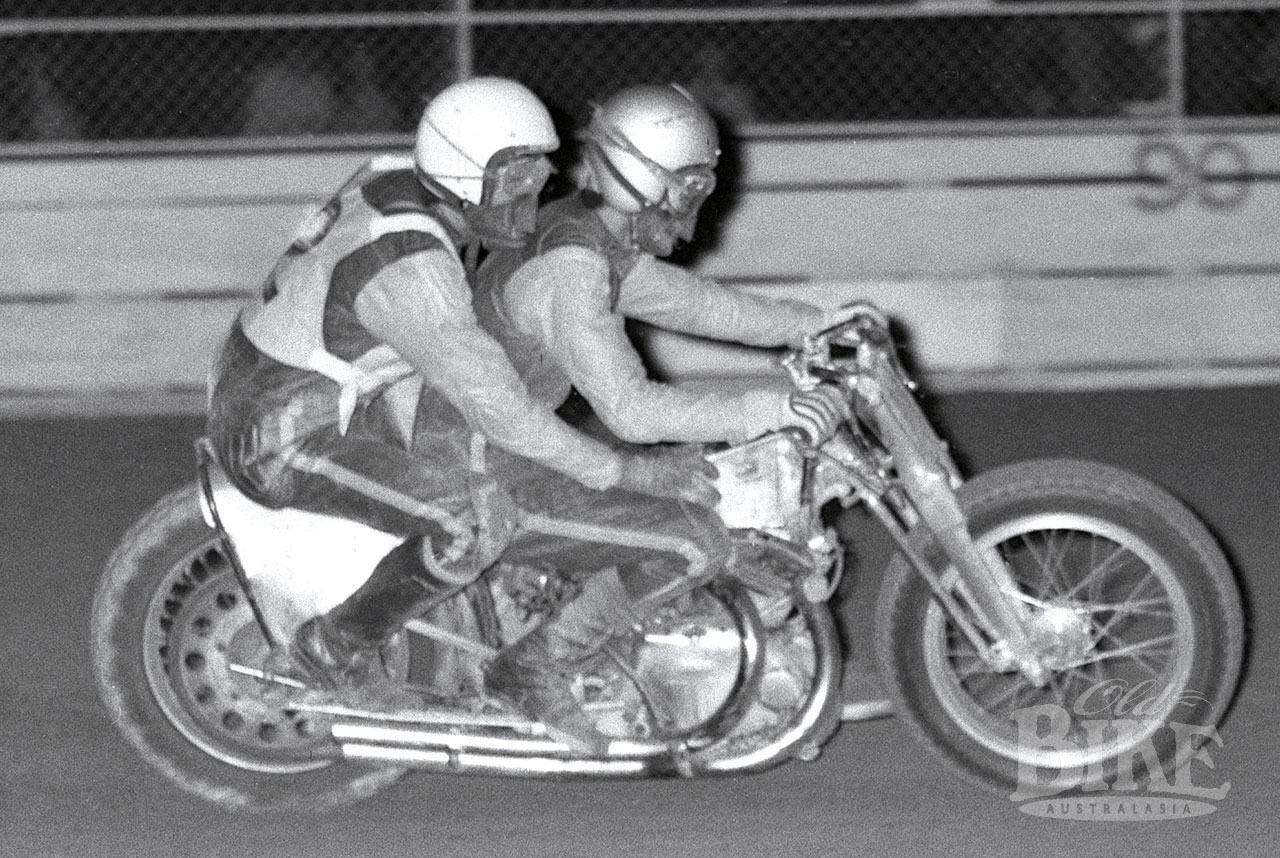
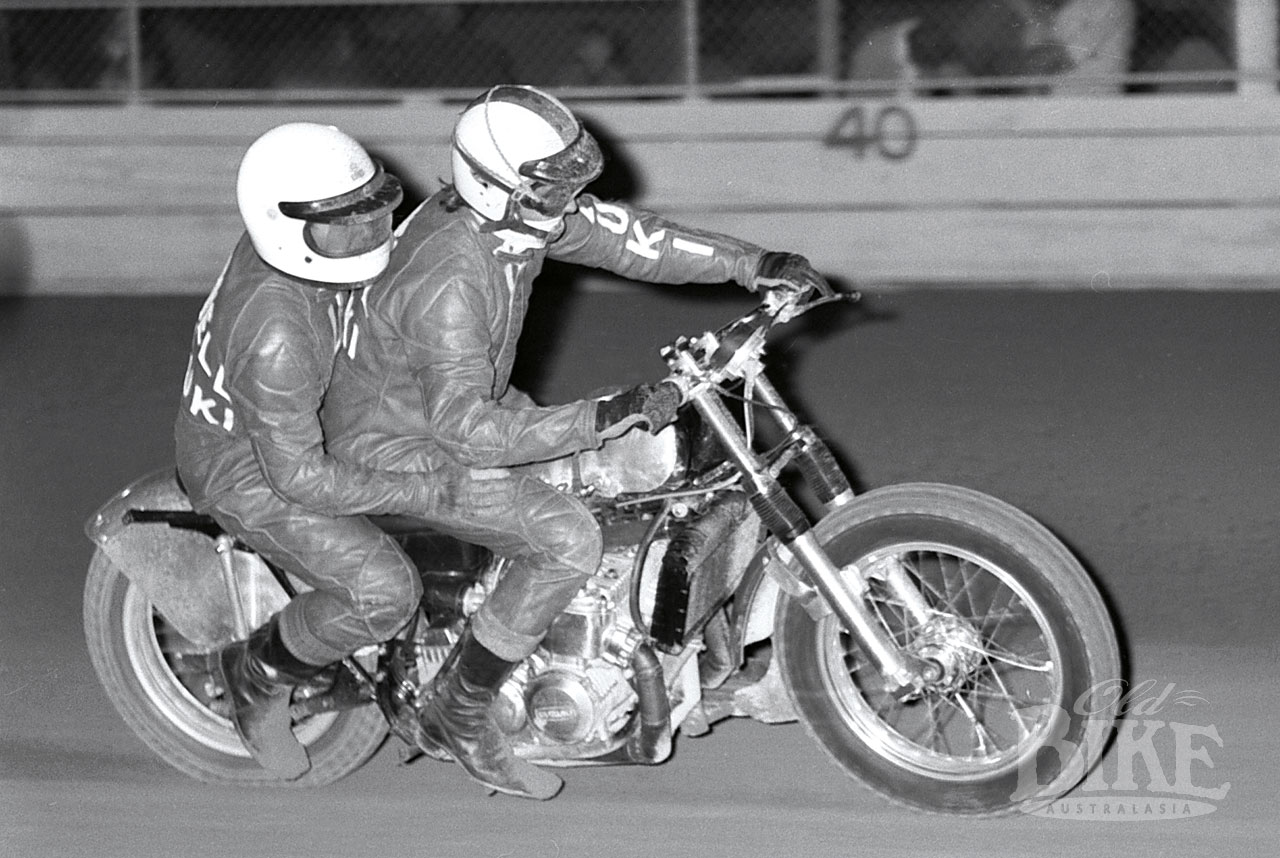
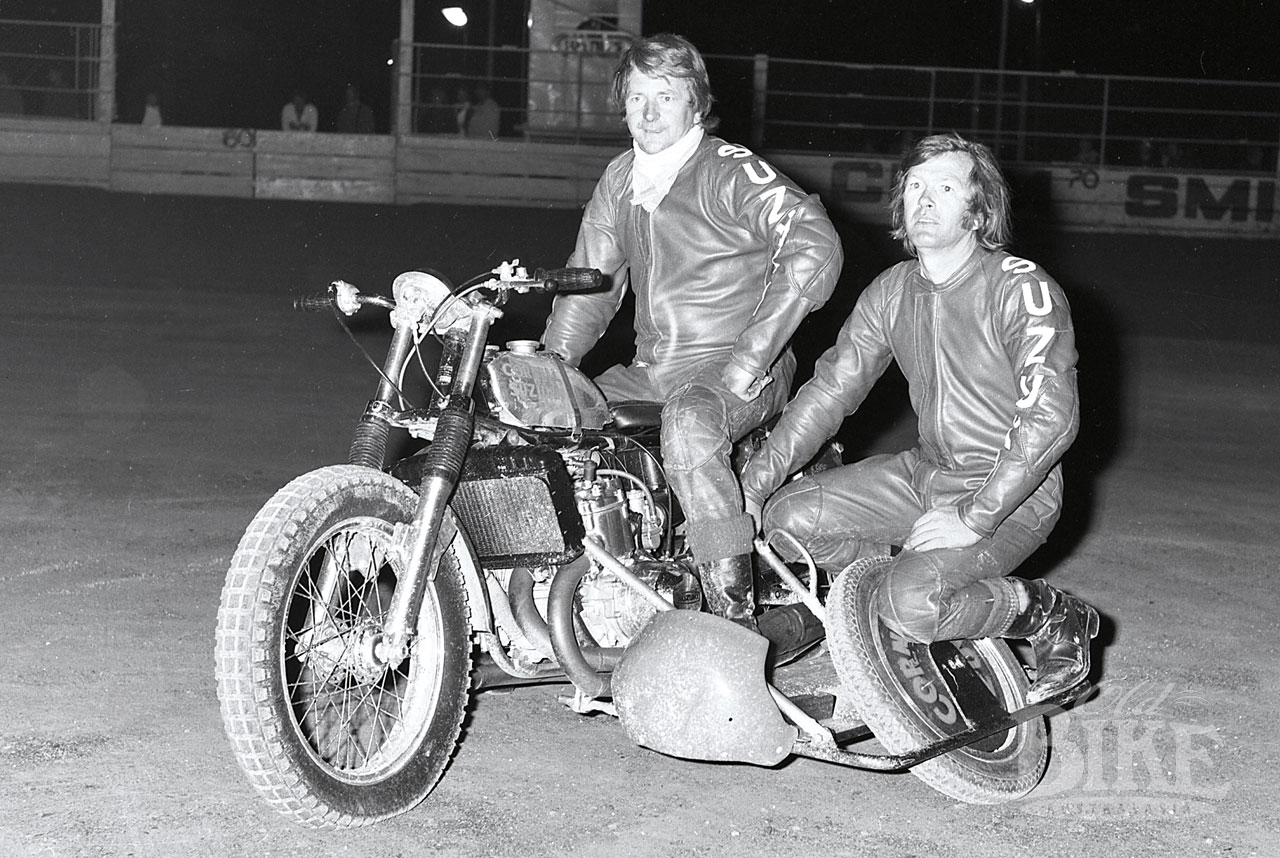
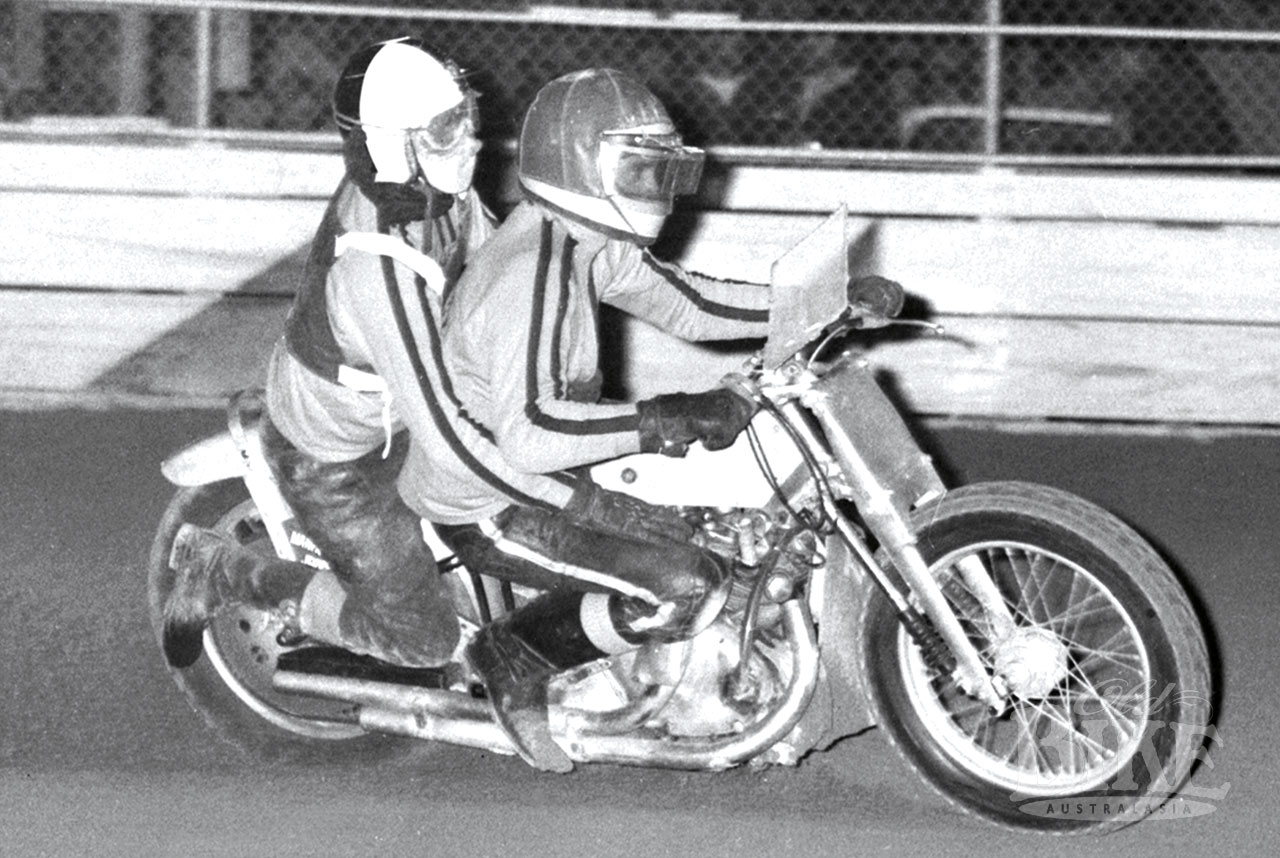
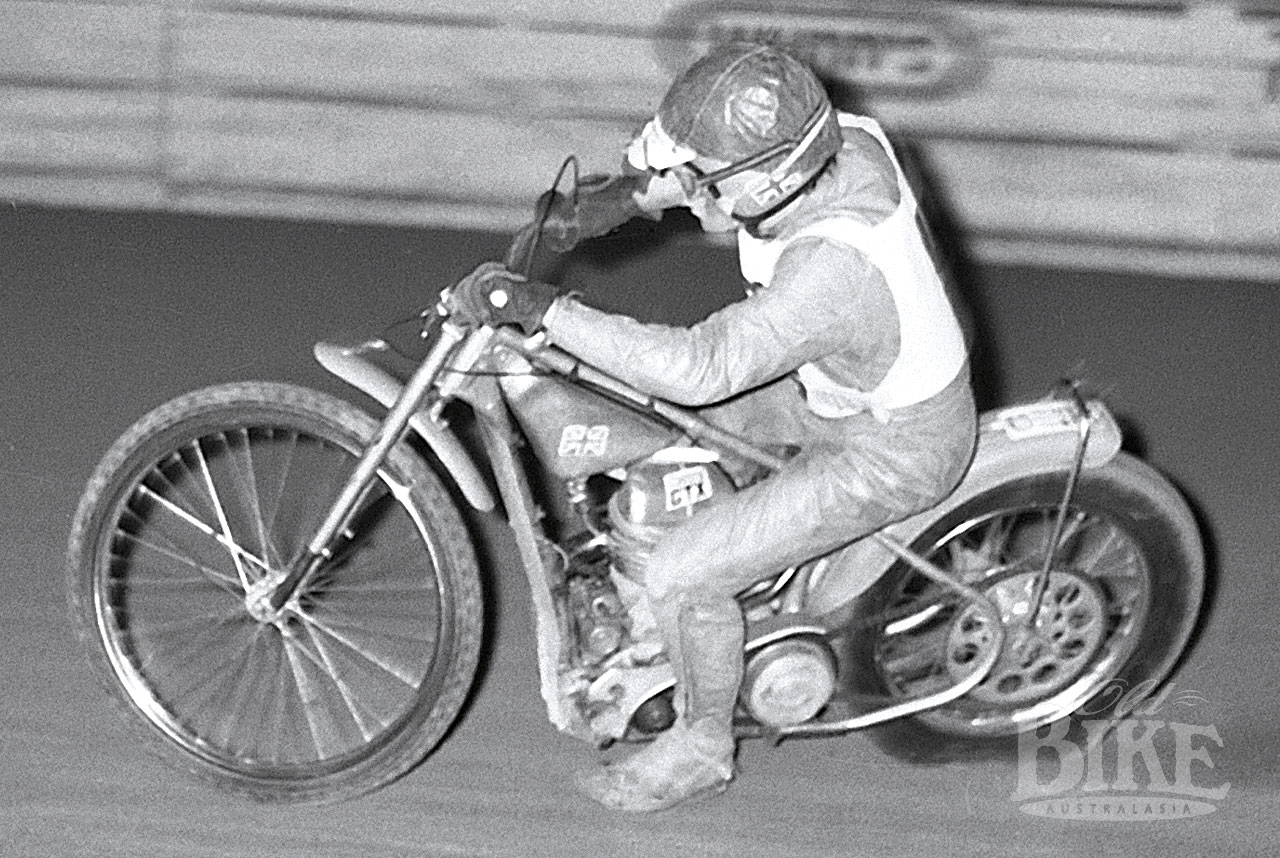
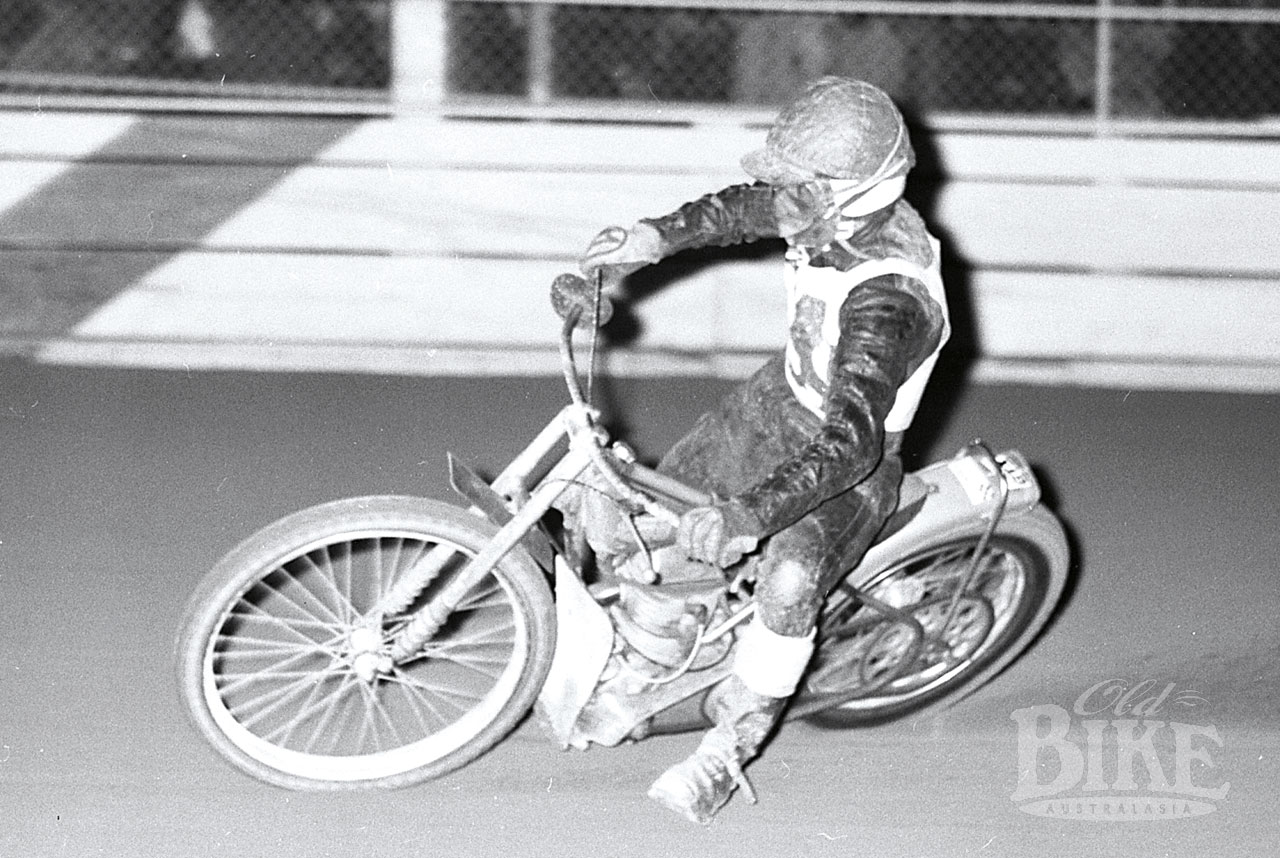
In motorcycle terms, Rowley Park hosted some big events, although the once-popular England versus Australia test matches disappeared after 1949/50 and, despite some ‘unofficial’ matches in the next few years, failed to be reinstated until 1958/59. Due to the Australia-wide decline in speedway popularity in the early 1950s, the Australian Solo Championship was not held from1954/55 until 1960/61. Similarly, the Sidecar title was not held in 1949, 1964/65 and 1969/70. When these titles did return, Rowley Park held its fair share; the Australian Solo Championships in 1966, 1967 and 1972 and the Australian Sidecar Championships in 1952, 1959, 1960, 1964, 1973 and 1978.
Three solo riders lost their lives at Rowley Park; Peter Stirling (1965), Harry Denton (1967), and Jimmy Gavros (1970). English solo star Gerry Hussey, who was a popular regular at Rowley Park, ironically lost his life there in 1959 when he tried his hand in a TQ Speedcar. Sidecar accidents claimed Brian Bennett (1957) and Douglas Dyke (1977).
*Source: A history of Australian Speedway by Jim Shepherd.
Australian Championships held at Rowley Park
SOLOS
7 January 1966
1. Chum Taylor (WA) 2. Jim Gooch (England) 3. Dennis Gavros (SA).
17 January 1967
1. Jack Scott (SA) 2. Gote Nordin (Sweden) 3. Ken McKinlay (Scotland)
25 February 1972
1. Jim Airey (NSW) 2. Ole Olsen (Denmark) 3. John Boulger (SA)
SIDECARS
22 February 1952
1. Chook Hodgekiss/Charlie Kendall (NSW) 2. Jim Davies/ Doug Tankard (Vic) 3. Clacker Levy/ Charlie Moran (NSW)
23 January 1959
1. Don Willison/Des Dick (SA) 2. Bruce Kelley/Doug Fleet (SA) 3. Stan Smith/ Laurie Noyce (SA)
22 January 1960
1. Bruce Kelley/Doug Fleet (SA) 2. Stan Smith/Laurie Noyce (SA) 3. Ron Johnson (Qld)
3 January 1964
1. Bruce Kelley/Barry Dienhoff (SA) 2. Charlie McConnell/Ray Holt Stan Smith/Len Johnston (SA)
9 March 1973
1. Neil Munro/Rod Lang (SA) 2. Bill Mitchell/David Weaver (SA) 3. Dennis Nash/Ray Barber (WA)
17 February 1978
1. Keith Sewell/Paddy Kuhnert (Qld) 2. Ken Walker/Jamie Walker (Vic) 3. Deane Taylor/Peter Menz (SA)