From our Old Bike Archives – Issue 101 – first published in 2022.
The R69S has become, over the years, one of the most revered of all the BMW flat twins. It is rare too, although not as rare as the R69.
Story and photos: Jim Scaysbrook
To go back to the beginnings, the model had its origins in the brand new 594cc engine (officially designated M268/1) that made its public debut as the R68 model at the 1951 IFMA Motorcycle Show in Frankfurt. With 35hp on tap, BMW stated the R68 would be good for a genuine 100mph, and it was. Virtually square at 72mm x 73mm bore and stroke, with a compression ratio of 6.3:1, the engine would rev to 7,000 rpm. A Norris magneto supplied the sparks, and the engine breathed through a Bing 24 carburettor. A gear oil pump was located in the engine sump, feeding oil along the crankshaft and to the top end, whence it drained back into the sump. A single plate clutch, spline-coupled to the gearbox input shaft, separated the power unit from the shaft final drive. Current came from a six-volt 60-watt generator. The cylinder head was secured by two cap screws in addition to the four studs that bolted through to the crankcase, with spherical ball races supporting the built-up steel crankshaft. The rocker arms pivoted in needle roller bearings, actuated by stronger push rods.
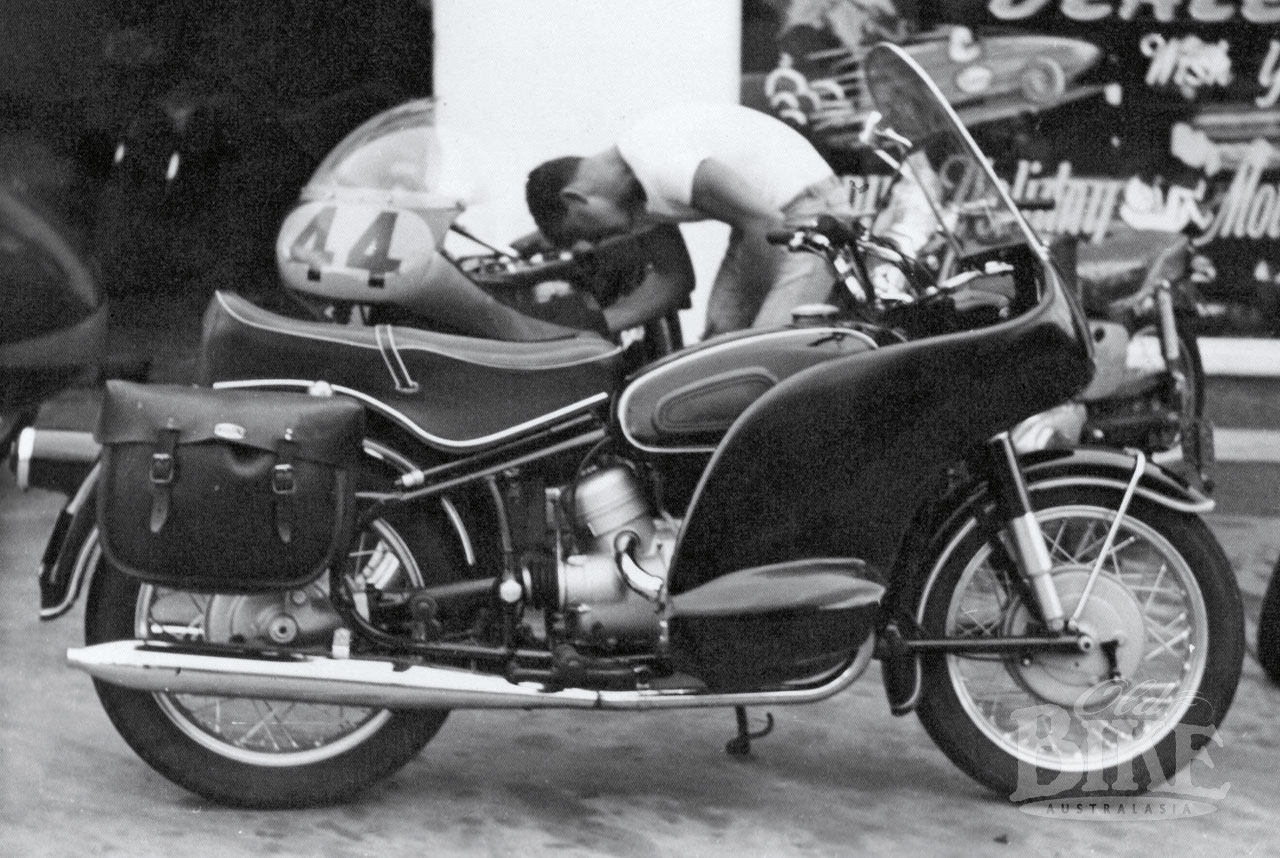
Four years later came the R69, or the M268/2 in engine nomenclature. In reality, the engine was virtually the same as in the R68, but with new connecting rods, producing the same 35hp, but at 6,800rpm. A new three-spring diaphragm clutch sat at the rear of the engine, and the gearbox had three shafts instead of two.
The big difference in the R69 was not the engine, but the chassis. Gone was the plunger rear end used on the R68, replaced with a new swinging arm set up. There was a swinging arm up front as well, in place of the tried and proven BMW telescopic forks that had influenced Norton thinking for their Roadholder forks. The new front end was actually based on the leading link design developed by Ernie Earles in England and produced under licence. It’s fair to say there were advantages and disadvantages with the system, increased weight being an example of the latter, but it was the public reaction to the design that worried the marketing department. US buyers in particular disliked the Earles front end.
Sharpening the pencil
The late 1950s was also not a period that BMW itself remembers fondly. Mounting losses from the car program had driven BMW close to bankruptcy and there were even plans to sell the company to rival Daimler-Benz. Luckily, this plan was abandoned at the last minute, while the sale of BMW’s aircraft division provided a little extra capital to restructure the car and motorcycle divisions.
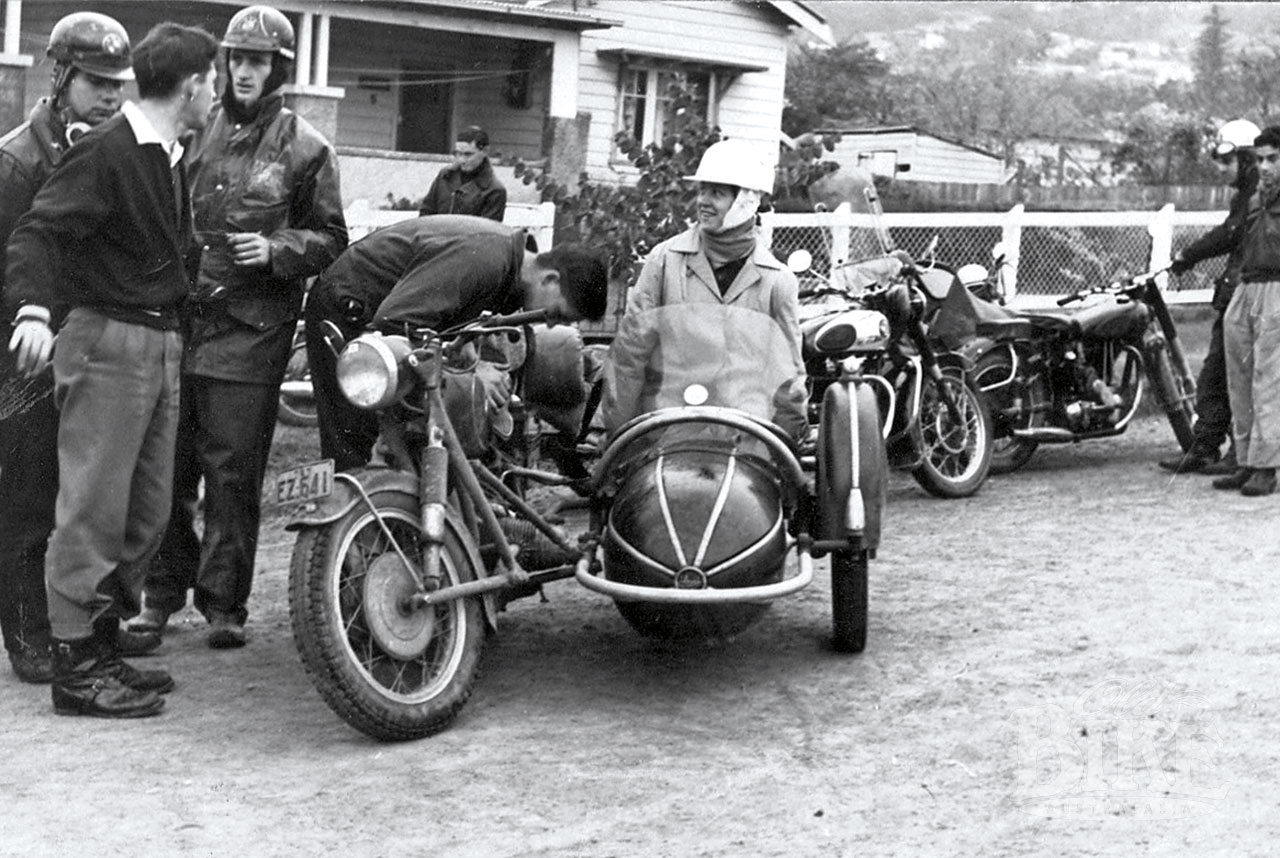
For 1960, the R69 continued in the range, but a new version, the R69S, was added. This used a revised engine (the M263/3) with higher compression pistons and larger inlet ports, with power increasing to 42hp at 7,000 rpm, making it the most powerful production BMW motorcycle ever built. The power increase was partially achieved by a more efficient exhaust system and improved crankcase ventilation, plus other things like a larger capacity air filter. The R69S also marked a departure from the “any colour you want as long as it is black” mantra, a limited proportion of the production run being offered in Dover White with black striping. To special order, Granada Red, Turf Green or Riviera Blue models, with white striping, could also be had. Sporty touches included a hydraulic steering damper, while options included a VDO tachometer, engine-protecting crash bars, different seats and a fairing.
Despite the optimism, the early ‘sixties was a tough time for large capacity motorcycles, and BMW in particular. In 1962, total motorcycles sales for the company dropped to 4,302 units – the lowest since 1927. There were even quality control issues with the R69S, including gudgeon pin failures and some bottom end troubles as well. Curing these was considered of greater importance than model facelifts, and thankfully most of these problems were ironed out. Overall production figures increased marginally from the 1962 low point, but continued at levels that kept shareholders and management fretting.
For 1967, specific USA-only versions of the R60 and R69S were offered, differing mainly in the use of BMW’s own telescopic front fork to replace the unfashionable leading link set up, although the Earles fork was listed as an option and remained popular (particularly for sidecar use) in many markets. The Americans had never shown much enthusiasm for the three-wheeled concept, so the standard fitment sidecar attachment lugs were deleted on the R69US. Bar-end turn indicators (manufactured by Hella) were also a common fitment on the US and some European models. Many owners fitted the accessory 24-litre Meir fuel tank in place of the standard 17-litre job, and to create extra space to clear the front of the bigger tank, the handlebars could be moved forward to a second mounting position.
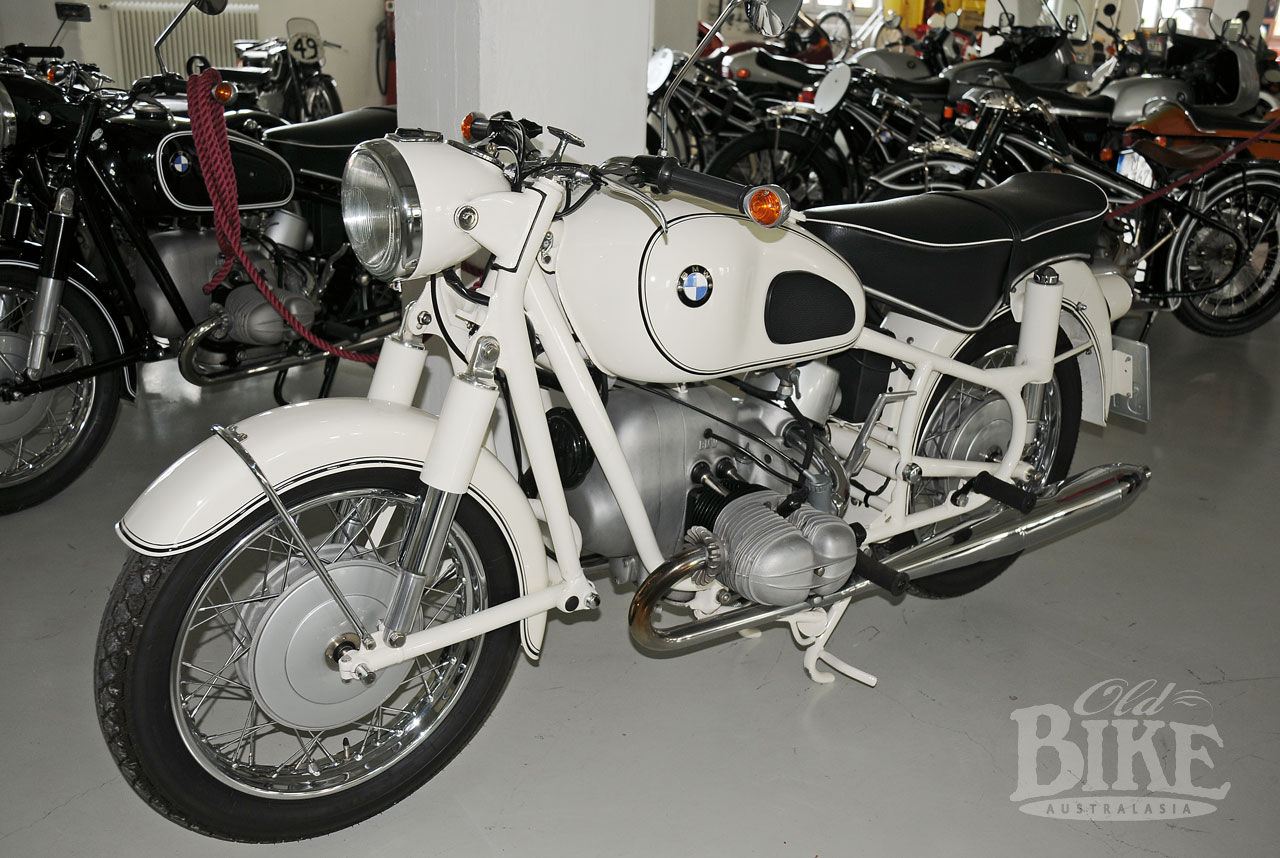
In its ten-year existence, 11,317 examples of the R69S were produced – a figure that includes 1003 of the R69US. This compares with just 2,956 built during the five-years of the R69, making this a much rarer model today. As expensive as the R69S was (at almost twice the price of a 650 Triumph), BMW were in fact losing money on each and every bike produced, something that distinctly did not impress the board in Munich. Highly-paid engineers, not unskilled production line workers, assembled the models, substantially adding to the unit cost. BMW clearly understood that built-up crankshafts such as that used in the M268 series engines needed high degrees of precision, with flex factors carefully calculated, and it all cost money. With sales of BMW cars remaining reasonably healthy for those who could afford the quality, the loss-making motorcycle division was always under intense scrutiny. In fact, towards the end of the ‘sixties, there was serious thought given to ceasing motorcycle production altogether.
Fortunately, that dire option was not exercised, but only because Technical Director Werner Bonsch managed to convince the company’s board of directors that the all-new M04 design by Hans-Gunther Martwitz was the way to take BMW into the 1970s and beyond – the famous ‘Stroke 5’ design was born just in time.
One man’s R69S
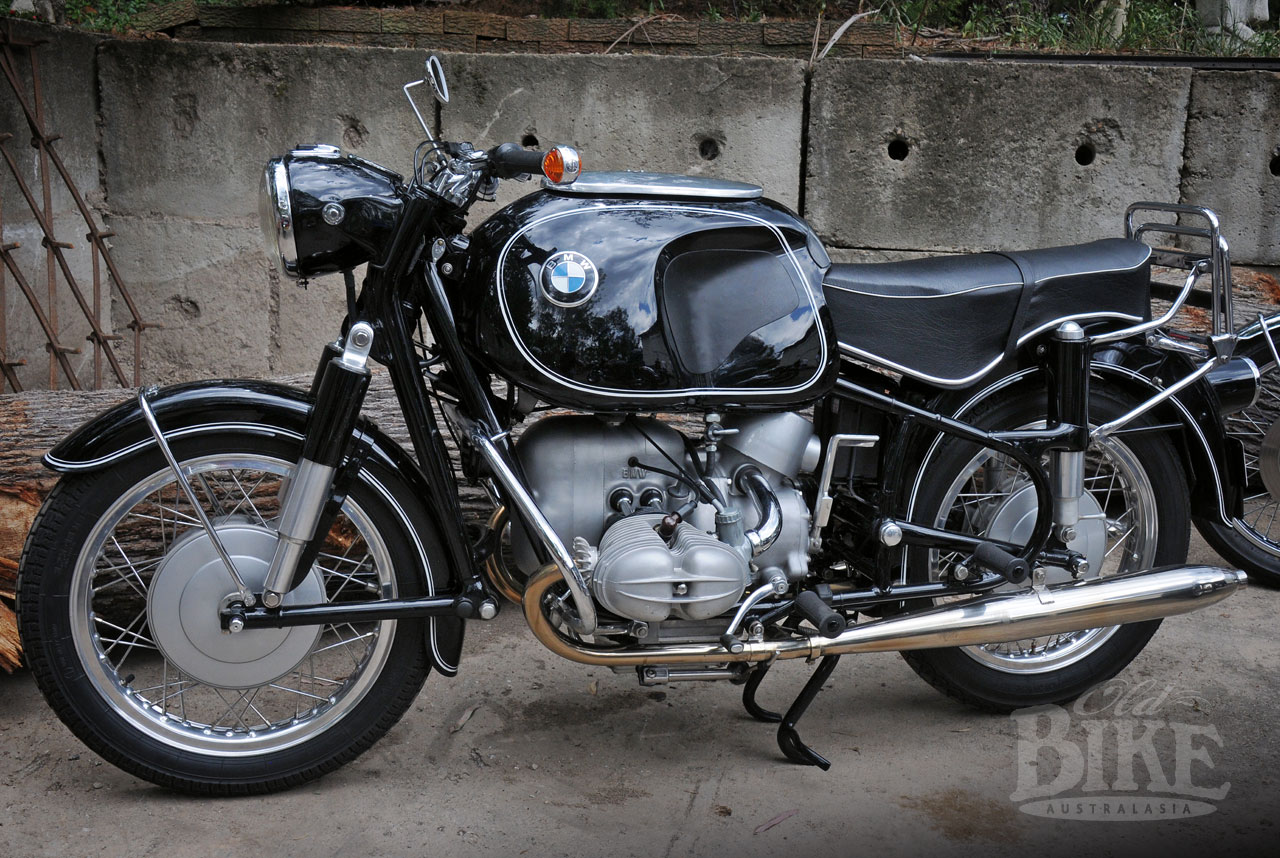
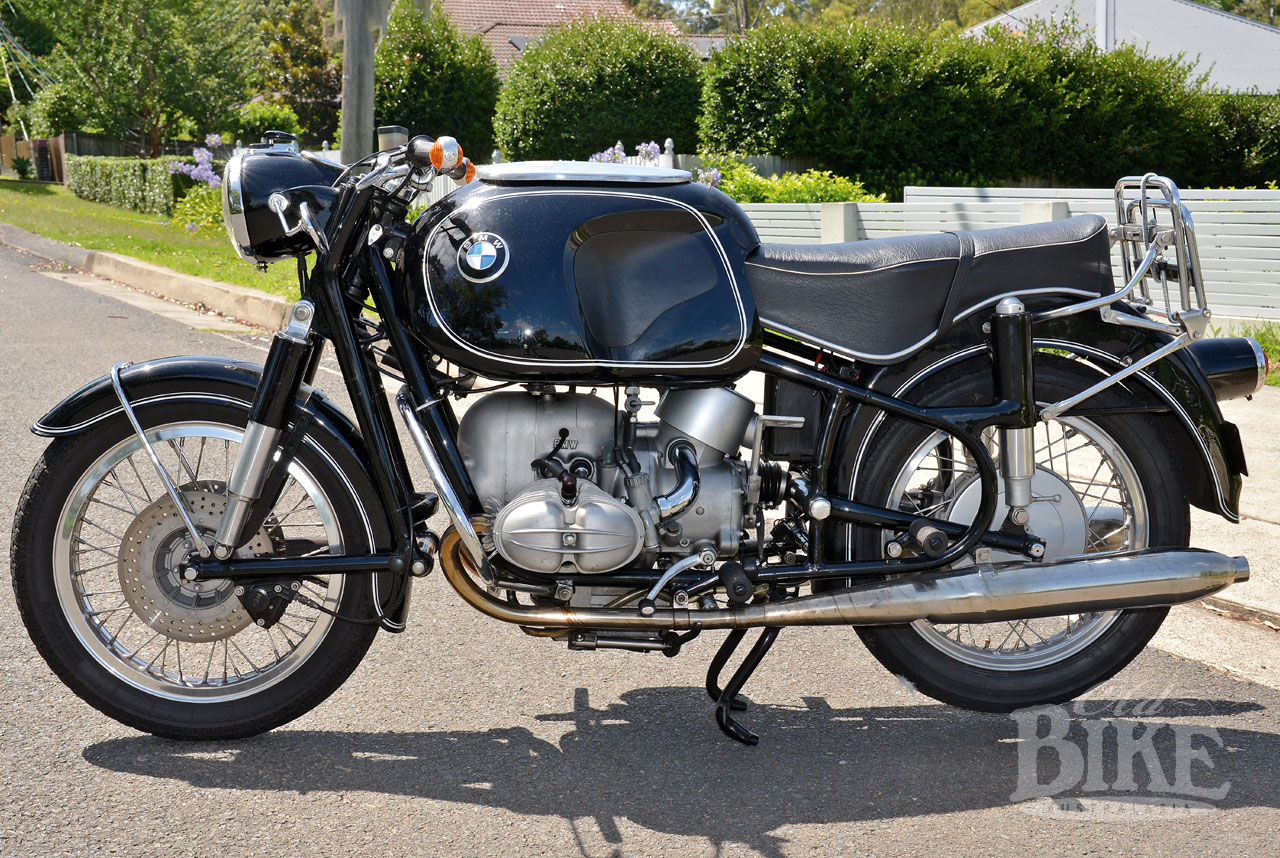
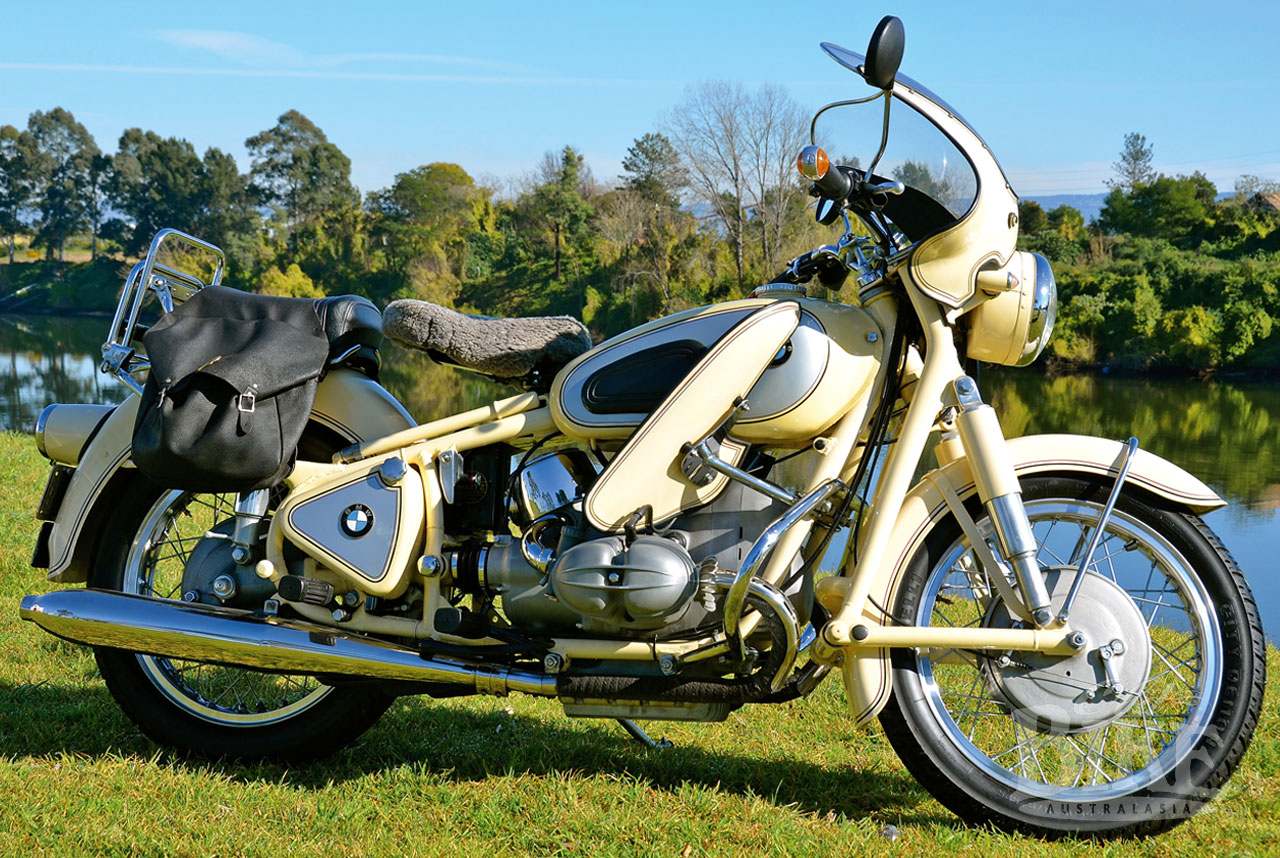
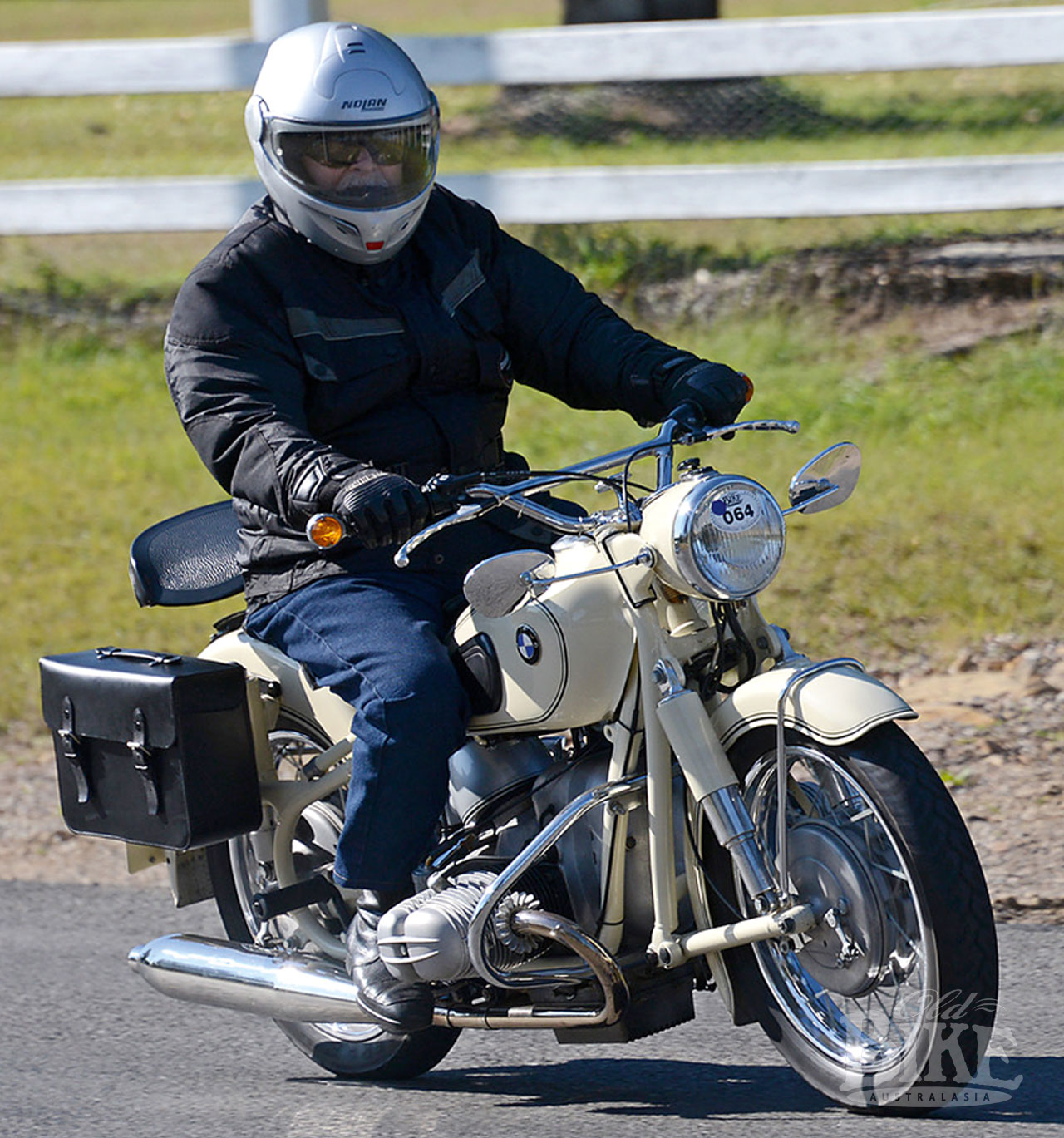
Former president of the once-great Willoughby District Motorcycle Club, a road racer for more than 50 years, and today a keen collector and restorer, John Simms is also a long-time BMW devotee. His R69S was built by BMW in September 1961 and imported to Australian by L.F. Pratt in Geelong. Visually, the standout feature is the 33-litre fuel tank, as John explains.
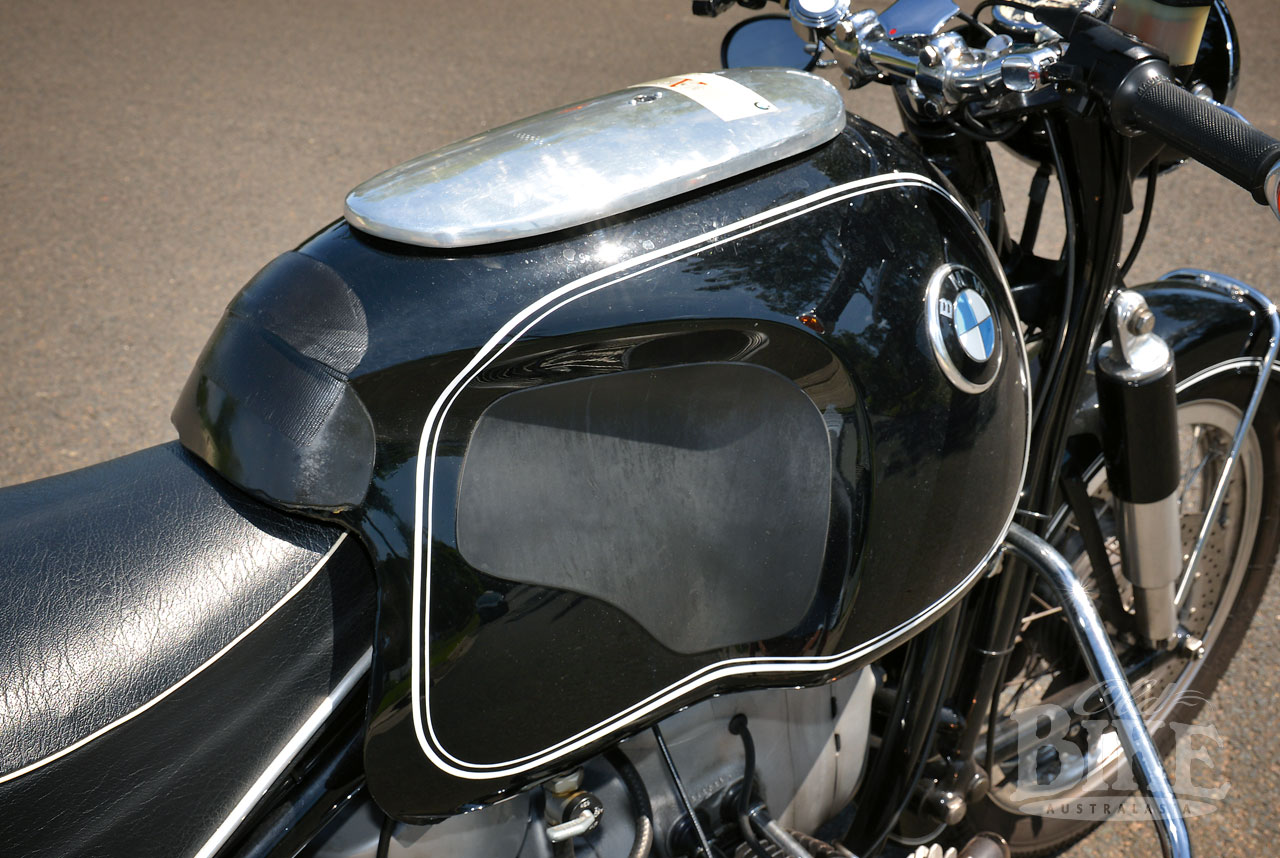
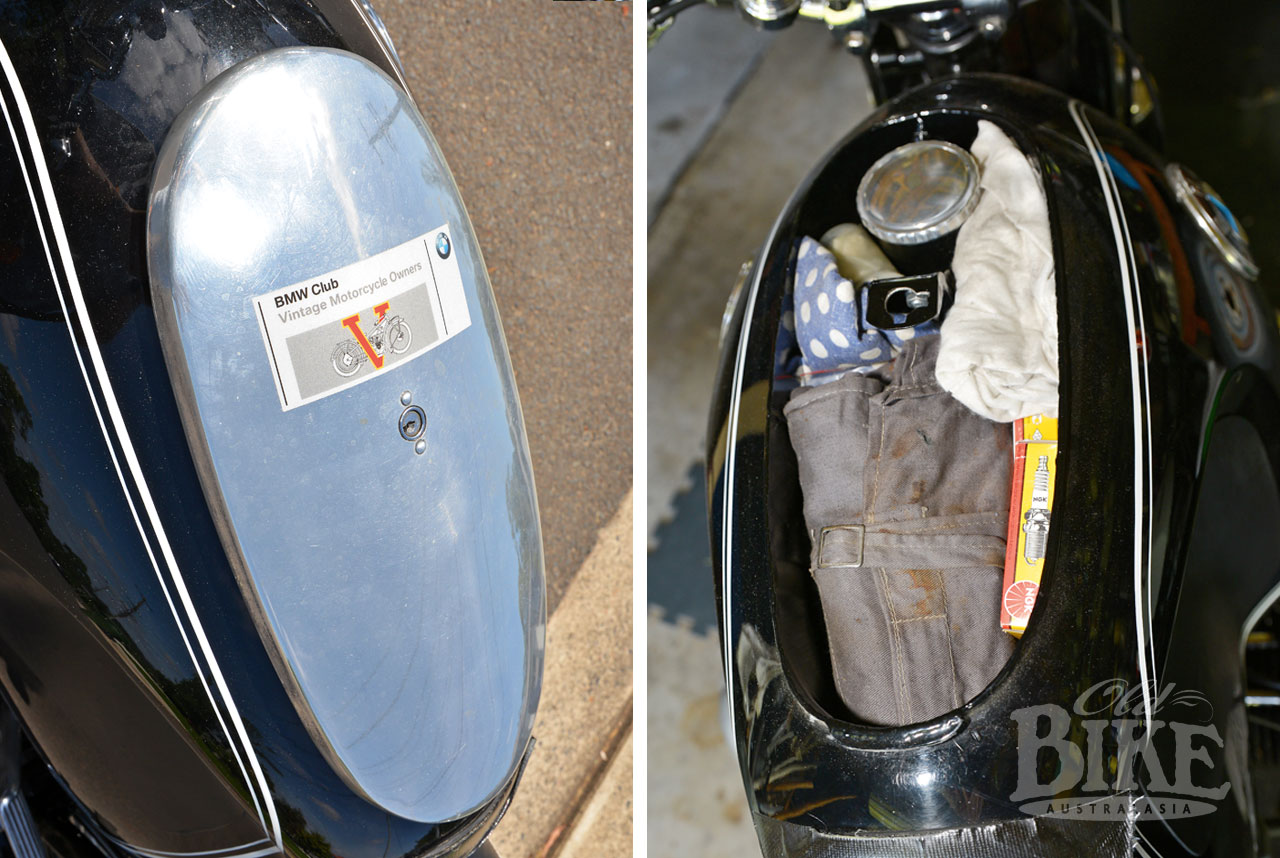
‘These tanks were made by Heinrick, there was also some made by Hoske, but the Heinrick tanks are more attractive, I think. Former Willoughby club member Peter Dan imported the tanks which came in two halves, plus the centre bit; it was cheaper that way than bringing in the finished tanks. They were seam welded here by Jack Allen in the ‘seventies. I bought it off a bloke who did the Castrol 6 hour race t-shirts for the officials, in fact I bought two BMWs off him, this one and an R69 for $500 each. I had two R69 bikes; the original one had 75,000 miles on it when I sold it. I bought the 69S in 1976.
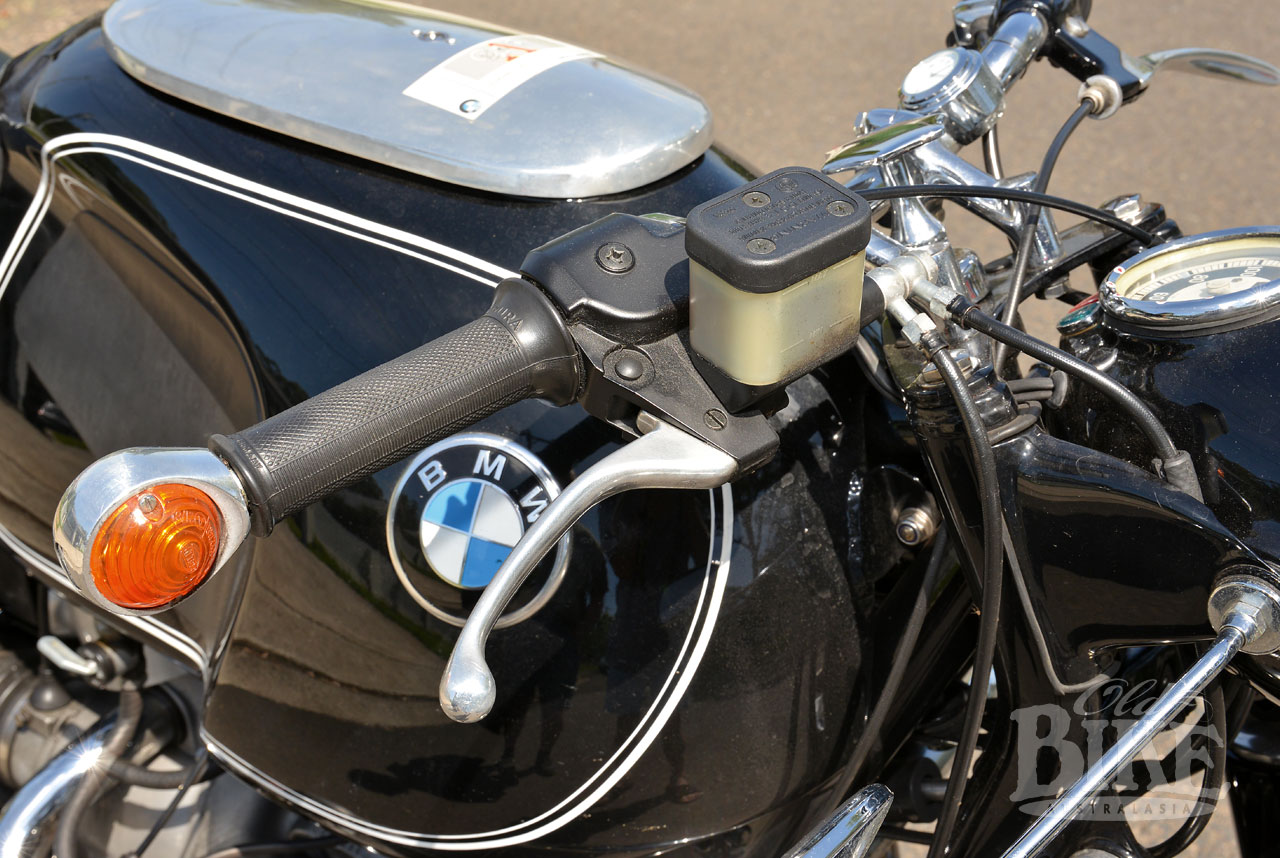
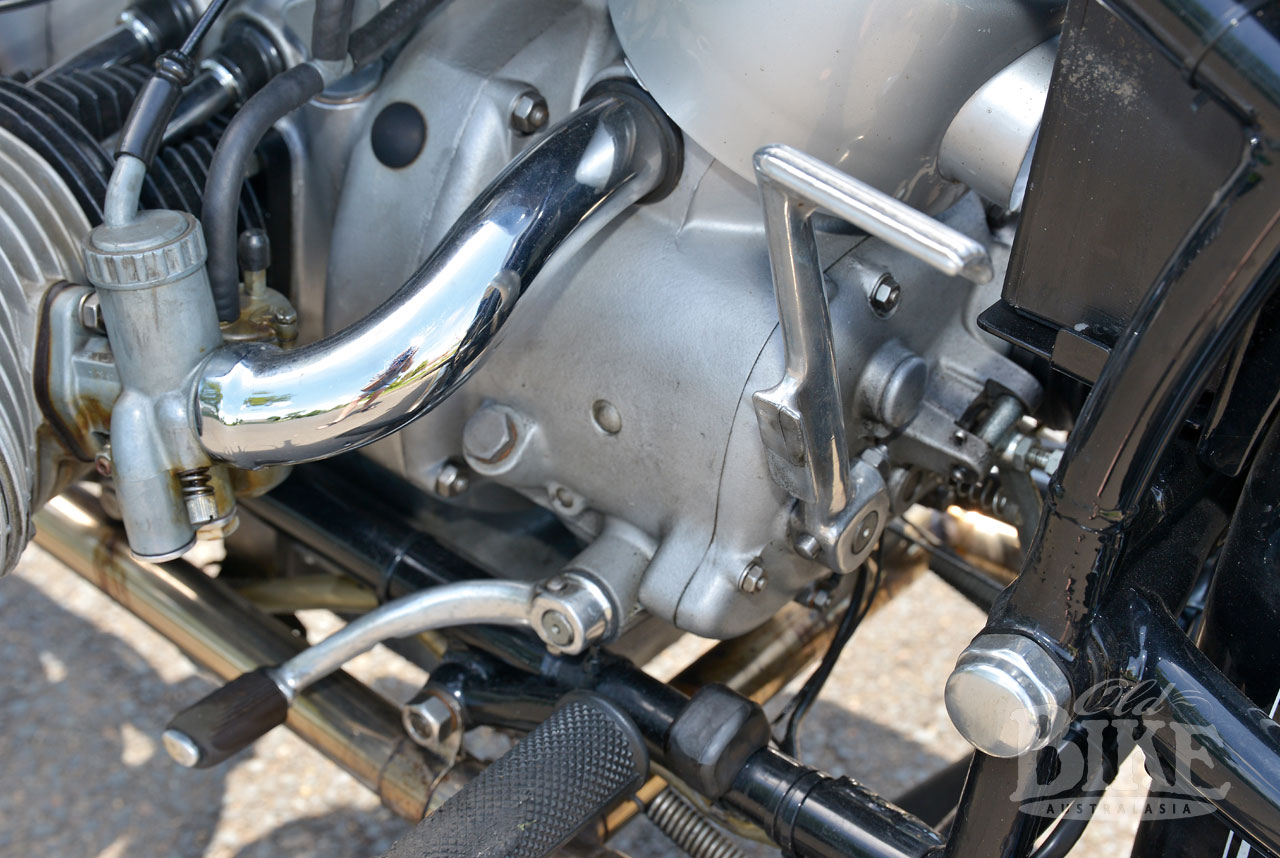
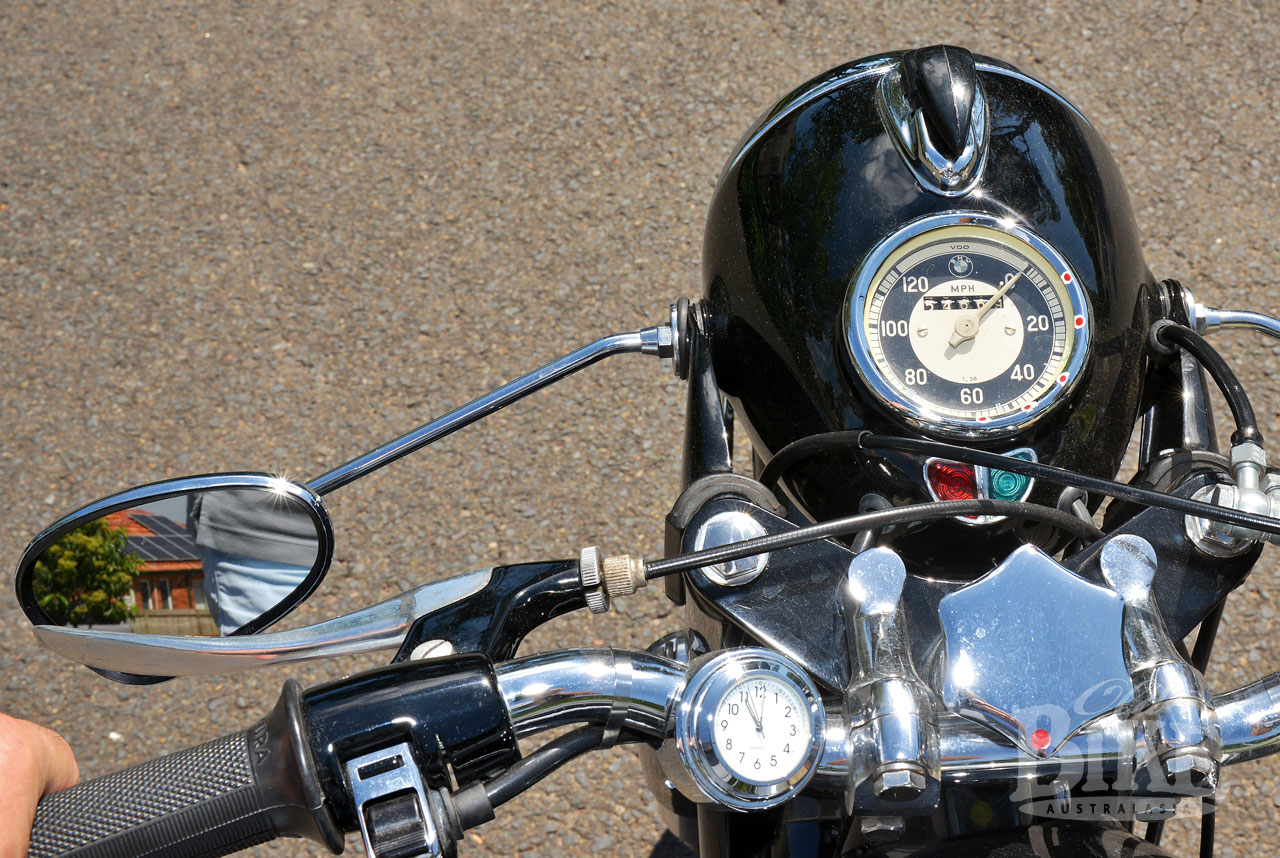
“I just kept it for years and didn’t do anything with it. I was racing at the time and I didn’t have any money. I only started restoring it in 2006. It took about three years to get all the bits for it. It was all there but I needed to replace some things, including a couple of bits in the engine. Adrian Vergison did the engine and gearbox. In any restoration I always get the frame checked. It must have been pranged at some stage so I took it to (Sydney dealer) the late Don Wilson to have it straightened. Eventually I got it back from him, put it all together and it handled like a bag of crap. So I pulled it all to bits again, gave the frame to Laurie Alderton and it was all bent – Don Wilson hadn’t straightened it and he had since died. Laurie managed to fix it, so after all that I had to get the frame repainted – I wasn’t a happy chappy. Laurie Alderton and I both had R69 BMWs at the same time, both fitted with Peel fairings made in the Isle of Man and imported by Pratts. I painted mine black and Laurie painted his white. When I restored the R69S I couldn’t get a badge from L.F. Pratt so I put one of the Tom Byrne badges on it, because I bought so many bikes off them.”
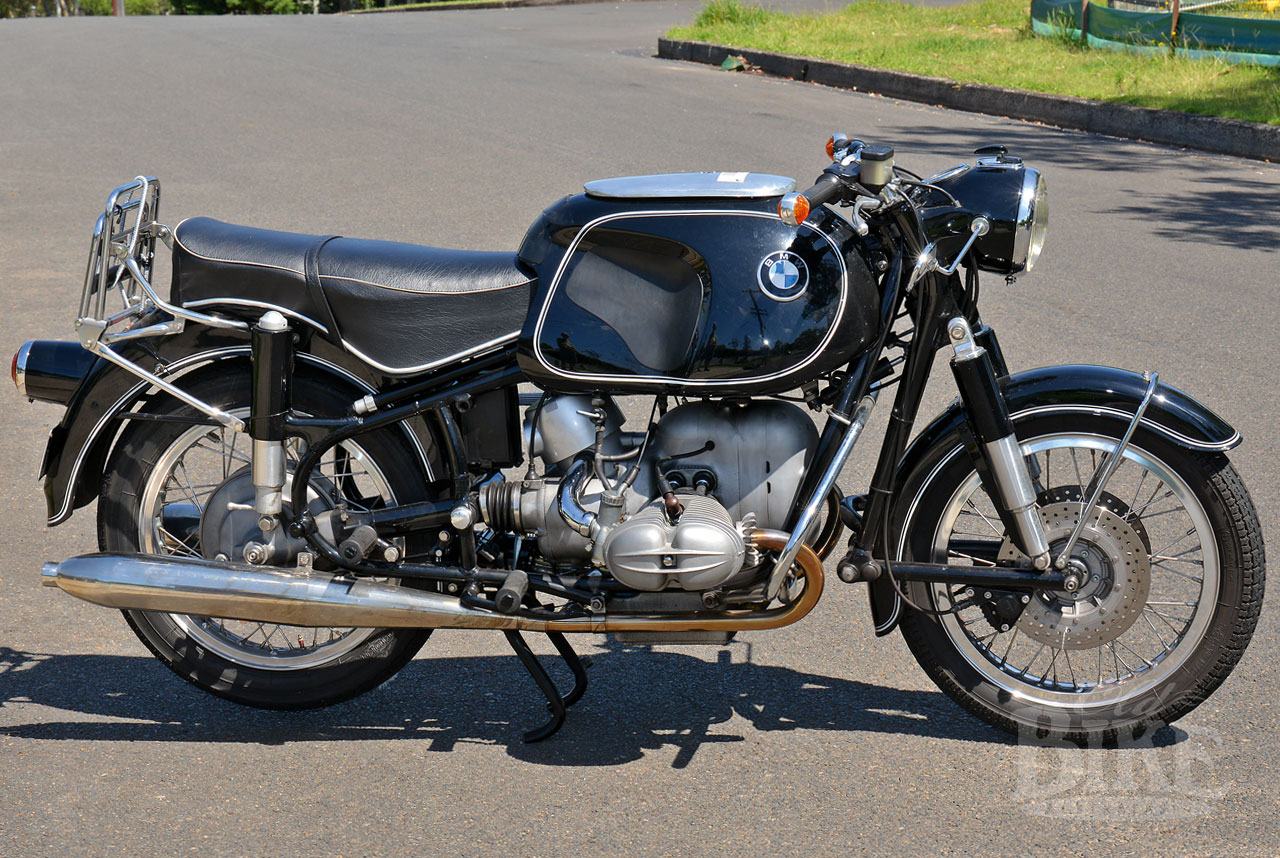
The other major change to standard specification is in the front end. “The standard front brake isn’t too good so I pulled it out. The hub is from an R90S. I bought an 18-inch alloy rim from US, all drilled with right spokes – the R90S is a 19-inch and the rim is not a gusset type. I still have the original drum brake wheel. The disc rotors are R90S, calipers are 08 Brembos off a Ducati. The throttle is BMW R65 but it only had one cable not two like the R69S so I have put a junction box under the tank. It has done 54,000 miles and had 47,000 when I bought it”.
Keeping the flag flying
Today, more than 40 years since the last R69S rolled off the line in Munich, the model is more popular than it ever was in its decade of production. The quality and no-compromise engineering that went into the model is plainly evident, and a thriving industry supplies retro parts for the interminable restorations that are going on around the world. Because the model is such a practical proposition, many, perhaps the majority, are regularly ridden and enjoyed. As well as several books dedicated to the boxer BMWs that include the R69S, there are numerous web sites with technical tips, restoration guides and links to parts suppliers.
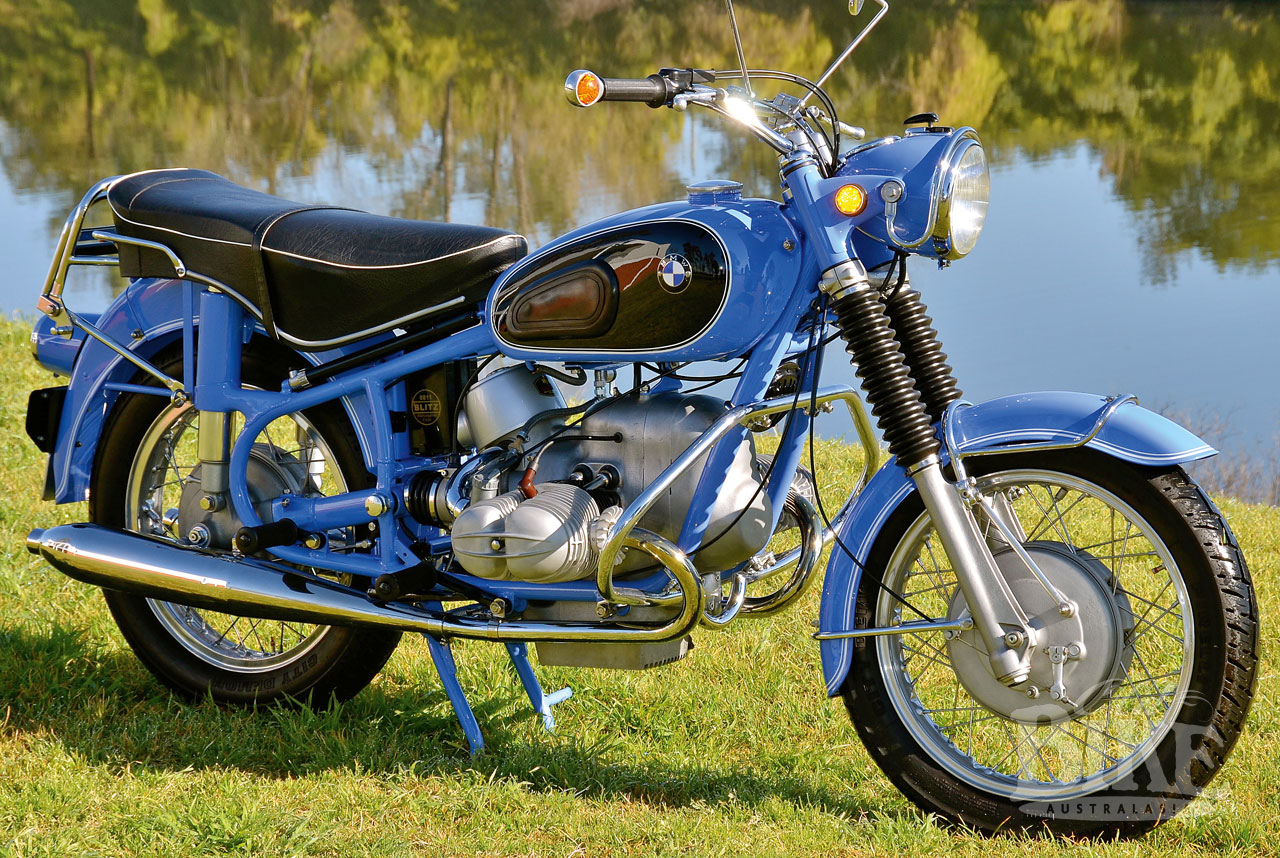
As well-engineered as it was, the R69S was not without its little problems, notably with cylinder heads and pistons; problems possibly exacerbated by being flogged up and down US freeways on questionable fuel. Another explanation is that pressure from the merging ‘green’ lobby in Europe in the ‘sixties resulted in aluminium casting with a lower sulphur content, leading to longevity issues, cracking and stripped spark plug threads. All of these can be addressed by restorers, although severe cases would prove expensive to remedy. By and large, the model has a well-deserved reputation for excellence, and is keenly sought after.