On The Dyno: Presented by OEM.DIGITAL Pty Ltd
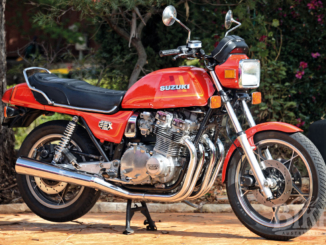
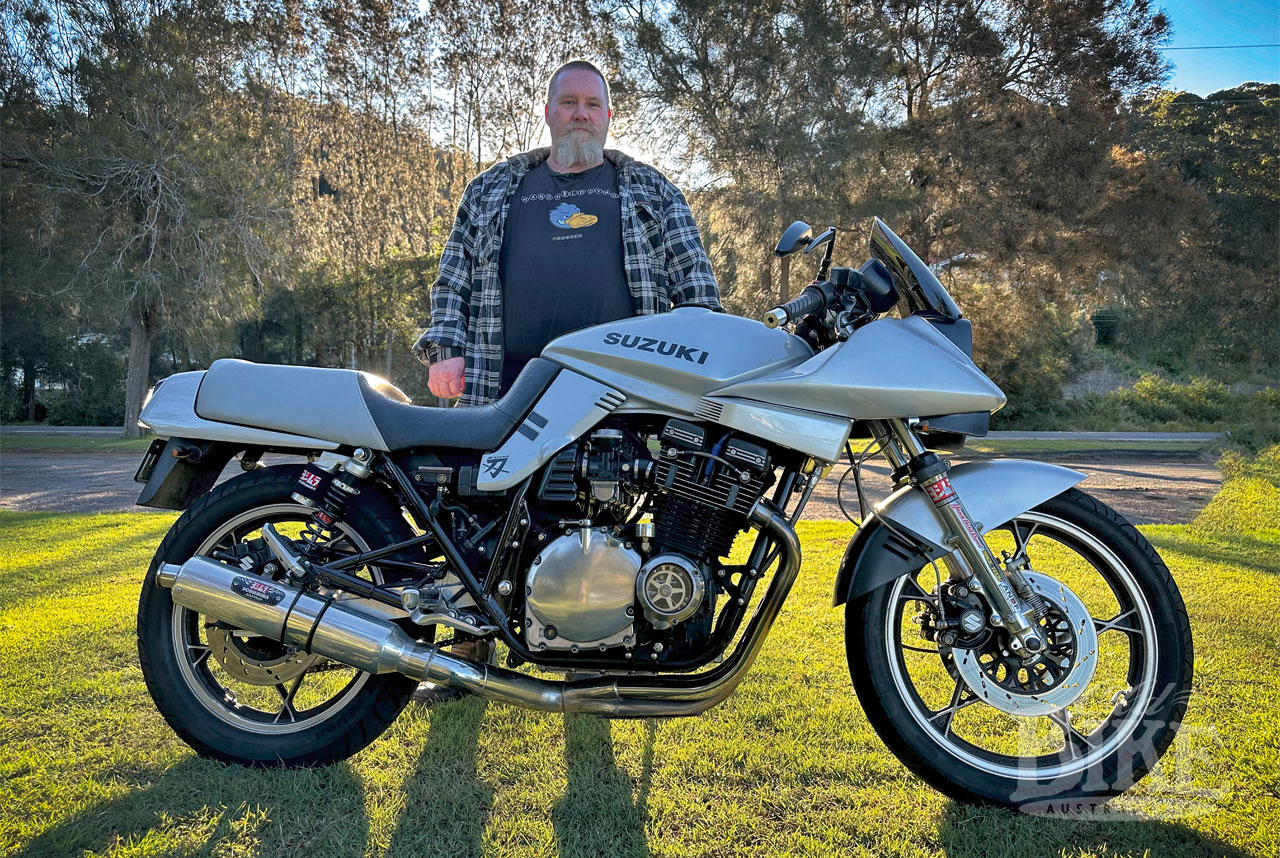
Suzuki 1100 Katana owner Jamie Anderson was among the first to support the OEM.Digital Hand Held Dyno ignition project four years ago, when developer Mike Arnott called for Beta Testers to prove his cutting-edge ignition system.
Attracting more than 200 crowd-sourced Beta Testers worldwide – from Denmark to New Zealand, Illinois to South Africa – who each paid AUD $1,295 for prototype ignitions to test, speaks volumes about just how much of a game-changer this ignition promised to be, and about the generosity of the global motorcycling community in backing a two-man tech start-up working out of a shed in Sydney.
Having already experienced easier starting, a stronger idle, and noticeably more punch from his Ducati Pantah, Jamie was first in line to test the new Suzuki version when it launched – and the results blew his socks off!

The dyno results: technical analysis
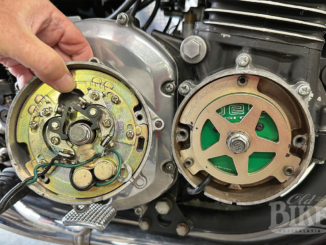
The test on Jamie Anderson’s 1982 Suzuki GSX1100 Katana was a direct, back-to-back comparison using Suzuki’s own electronic ignition and stock timing map against the Hand Held Dyno configured with the same map – a methodology that isolates the ignition unit as the only variable. Conducted under identical conditions, the dyno data clearly showed that the modern digital unit delivered a stronger, cleaner, and more stable power curve across the entire rev range.
In raw numbers
Maximum Power increased from 79.73 HP to 92.90 HP – a gain of 13.17 HP (16.5%).
Maximum Torque rose from 61.89 ft-lbs to 68.25 ft-lbs – a gain of 6.36 ft-lbs (10.3%).
Stability and Efficiency
The most telling aspect of the dyno plot is the difference in power-delivery stability. The original Suzuki ignition shows notable instability in the low-to-midrange and a rapid collapse in power after 8,000 RPM. Conversely, the Hand Held Dyno unit delivers a smoother, more linear climb and sustains its power output better at high RPMs.

Does it really set a new technical benchmark?
These double-digit gains, achieved using the factory Suzuki timing curve, confirm what the crowd-sourced Beta Testers – those visionary riders who believed in the project from the start – already knew: that precision, passion, and persistence can rewrite what’s possible for classic bike ignition – heck, it even has a smartphone app, for a classic bike! ‘nuff said!
Just look at what people are saying about the OEM Digital Hand Held Dyno….
“It’s the best system I’ve come across in 50 years of doing this.”
– Mike Pacella, Atlanta Motorcycle Works – gained 6.6HP on a Kawasaki Z1000.
“It’s the cheapest and easiest way to add instant horsepower.”
– Dudley Lister, IoM and 500cc Grand Prix Mechanic – gained 12.9HP on a Suzuki 1100 Katana.
Prices for the OEM.Digital Hand Held Dyno® system start @ AUD$1,295 + GST/VAT/ETC – includes Smartphone App with Tachometer, GPS speed and nine selectable ignition maps, all available via your mobile phone.
For enquiries contact Michael Arnott Mb: 0409 049 179, email: mike@oem.digital or visit their website at OEM.DIGITAL