From our Old Bike Archives – Issue 100 – first published in 2022.
Story and photos: Jim Scaysbrook
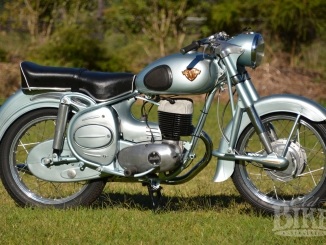
There were several very quick 250s from Germany in the mid-1950s; among them NSU, Maico, Adler… and Zündapp.
From the big flat twin and flat fours that served the company so well up to WW2, Zündapp faced the post-war years with a new emphasis on light weight two stroke models with greater mass appeal. The Bella scooter, introduced in 1953, was highly successful and sold in great numbers, much to the relief of the company accountants.
Pre-war, Zündapp produced the DB200, a 200cc two stroke single with a vertical cylinder with twin exhaust ports. The model followed conventional practice with a tubular rigid frame and pressed steel girder forks. The original DB200 appeared in the late ‘thirties in civilian form but was quickly pressed into military service, reappearing in 1947 to cater for a market that urgently needed affordable everyday transport. Such was the demand for the small capacity models, Zündapp made the bold decision to construct a new factory in Munich, totally devoted to the small models, leaving production of the larger bikes at the original plant in Nurnberg, which suffered substantial damage in WW2 but was rebuilt.
A string of DB models flowed out of Munich, with designations DB201, 202, 203, and 204. Of these the DB203 was the most luxurious and was fitted with a new form of rear suspension. Commuters lapped them up. Then came a new pair of small motorcycles, the DB205 and the DB255, the so-called Elastic models. These differed from the older DB model in having spine-type frames, with the engines, featuring forward-sloping cylinders, suspended from the top tube. Rear suspension was by swinging arm, with fully enclosed rear chains.
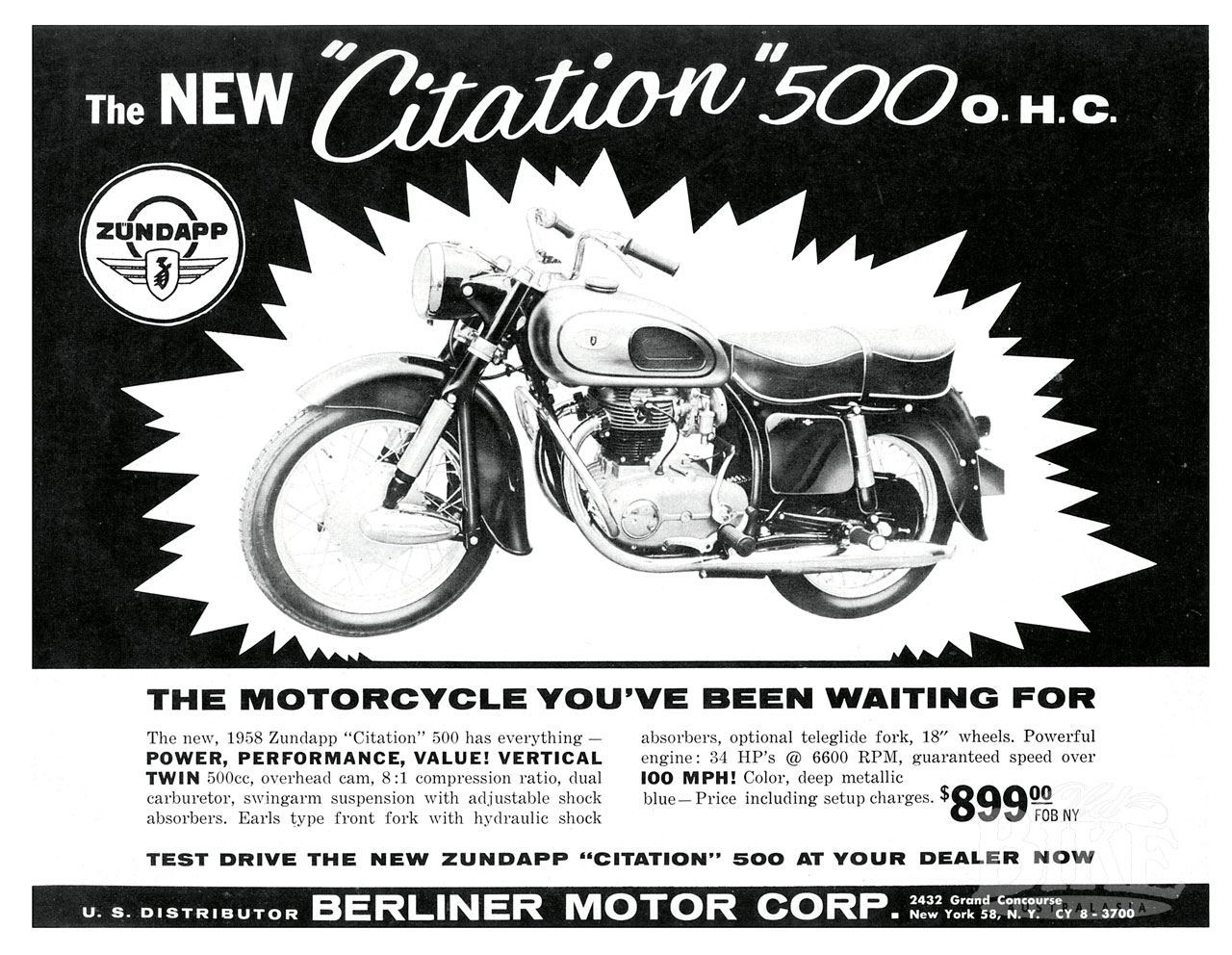
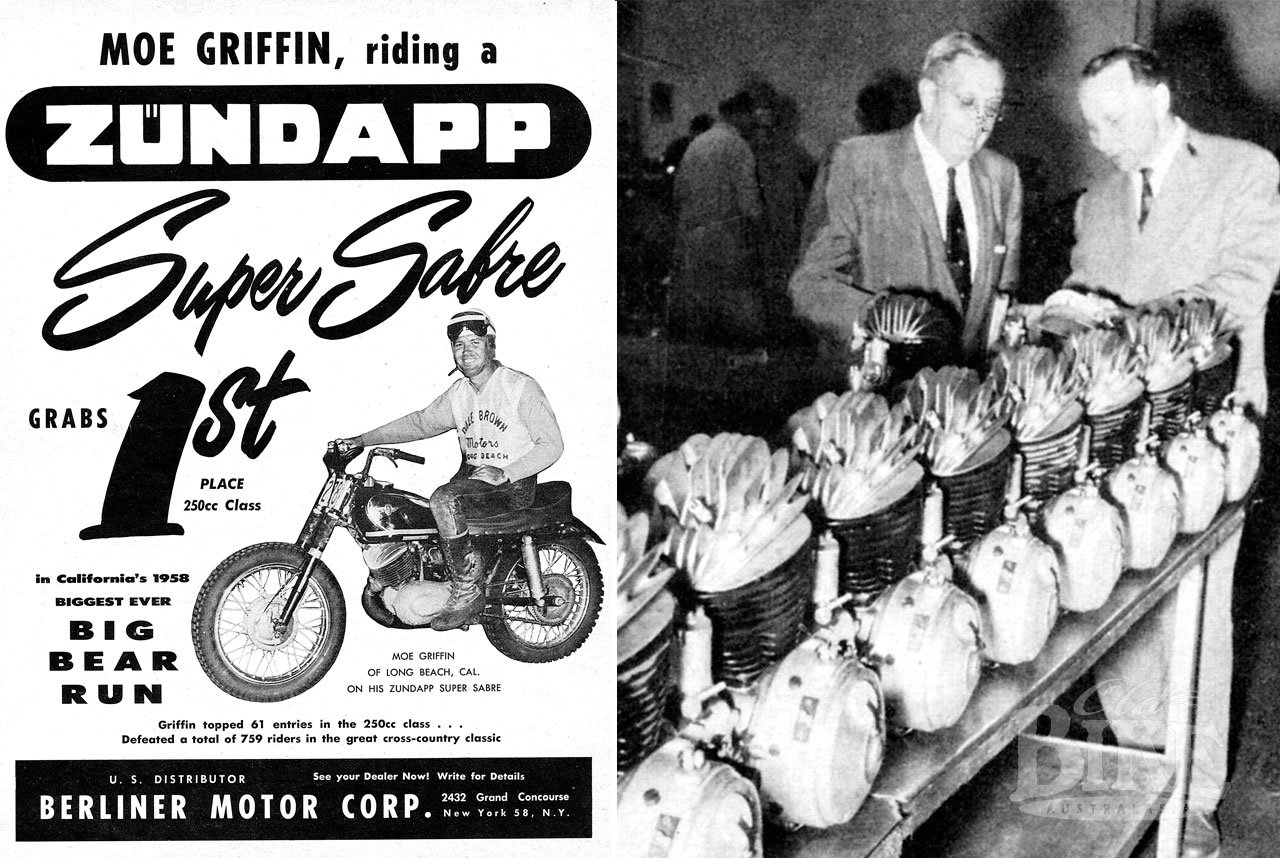
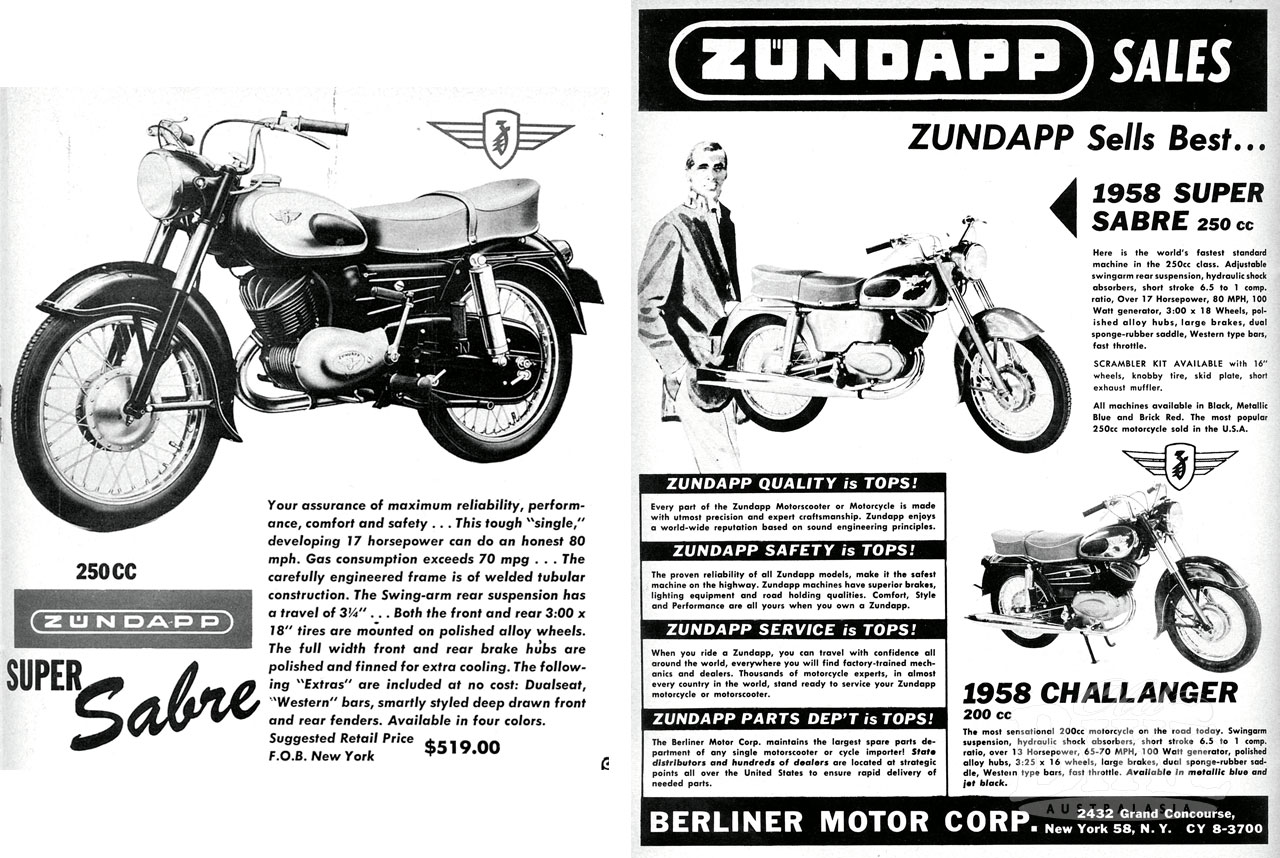
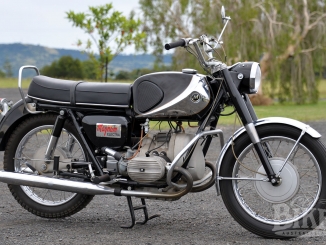
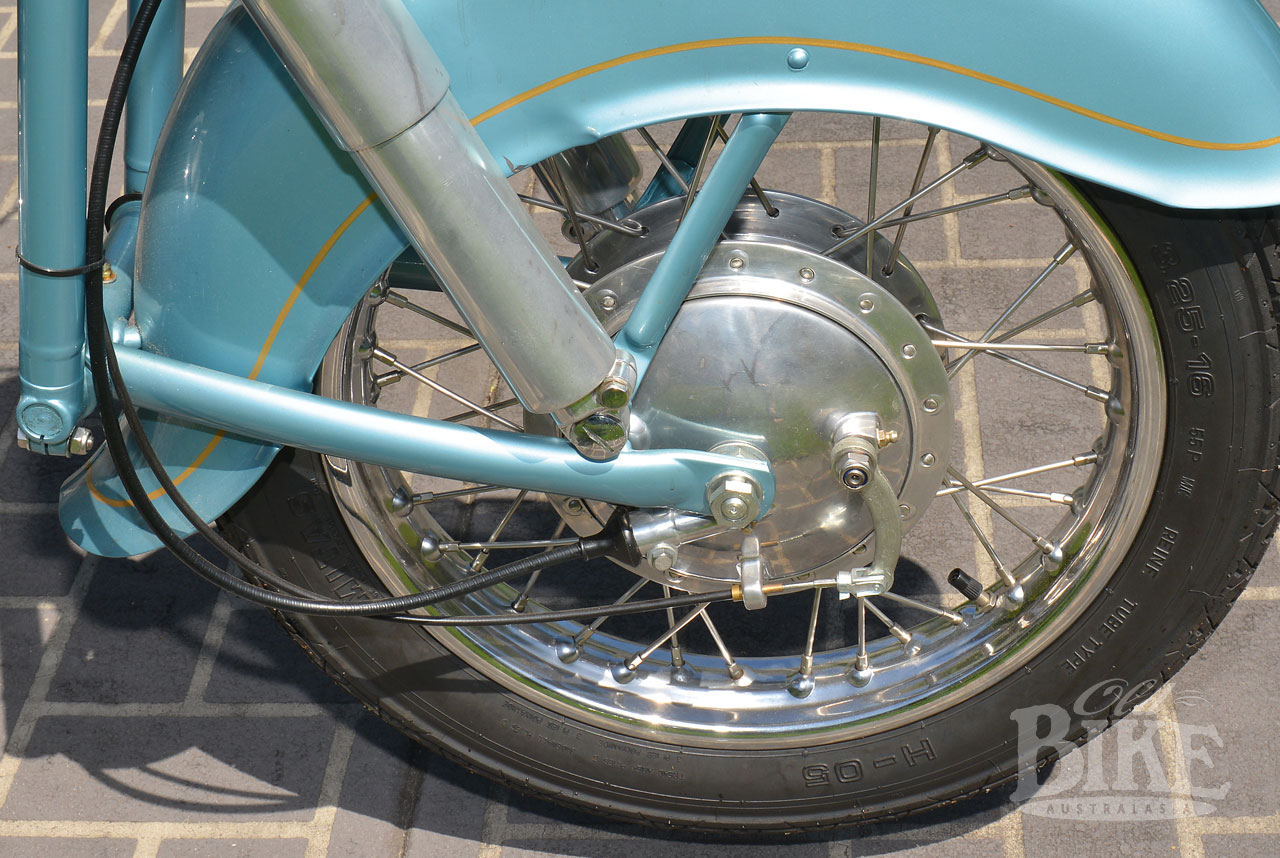
The basic design remained in production for several years, but in 1957 Zündapp restyled the lightweights in more modern clothing. There were three models in the new range, in 175cc, 200cc and 250cc form. The 250 model was marketed as the 250S Trophy in Europe, and as the Super Sabre in USA. The 250S used leading link forks with long-travel oil-damped spring units (as on the Maico Blizzard) with 16-inch wheels front and rear. The US model used telescopic forks with 18-inch wheels, plus the requisite high-rise “Western” handlebars, and a lighter style front mudguard, but was otherwise identical. Interestingly, power output of the 250S was always quoted at 14.5hp, whereas American ads for the Super Sabre quote 17hp. A road test for the US magazine Cycle in December 1956 produced an electronically-timed top speed of 81 mph (130.4 km/h), and cited that the Super sabre “could be cruised effortlessly at California’s maximum legal speed of 55mph (88.5 km/h)…and there was plenty of throttle left, even on the hills.”
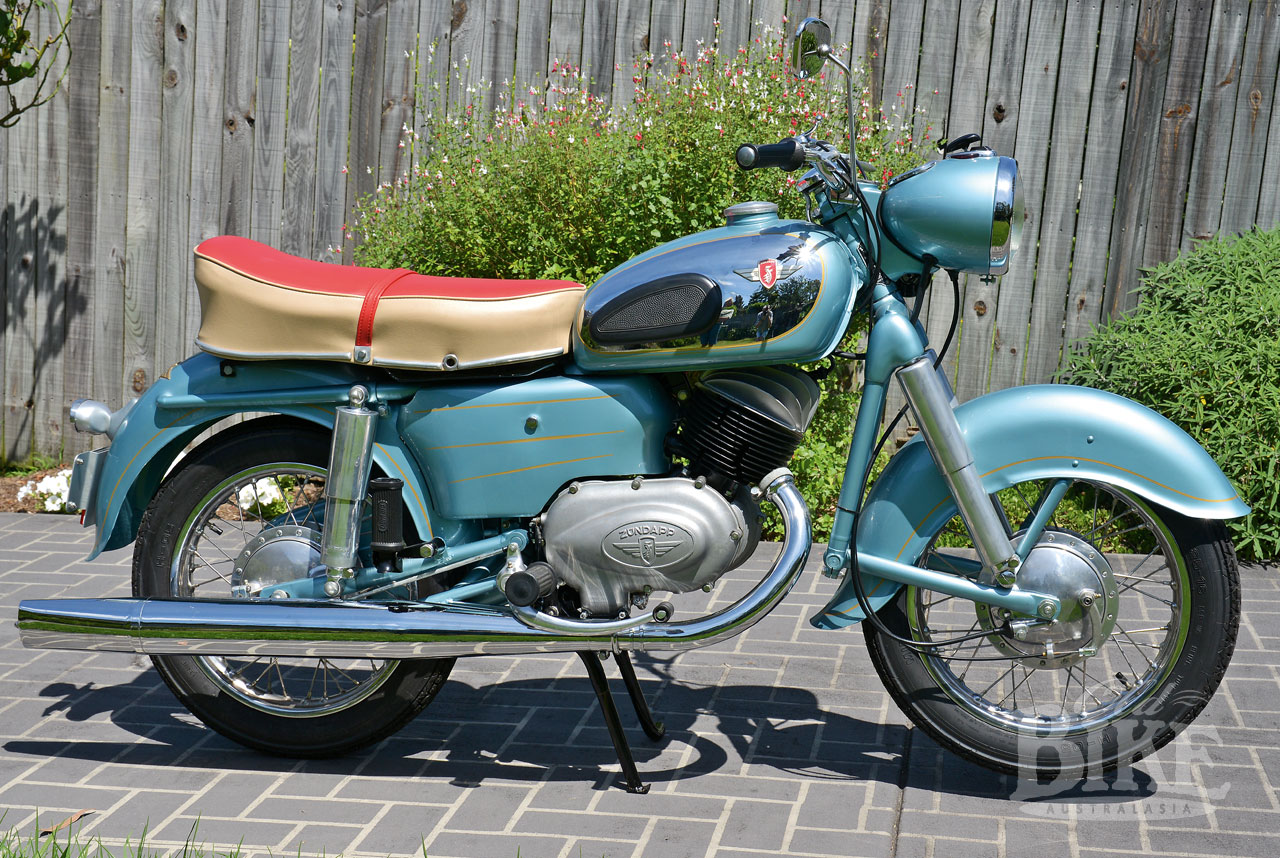
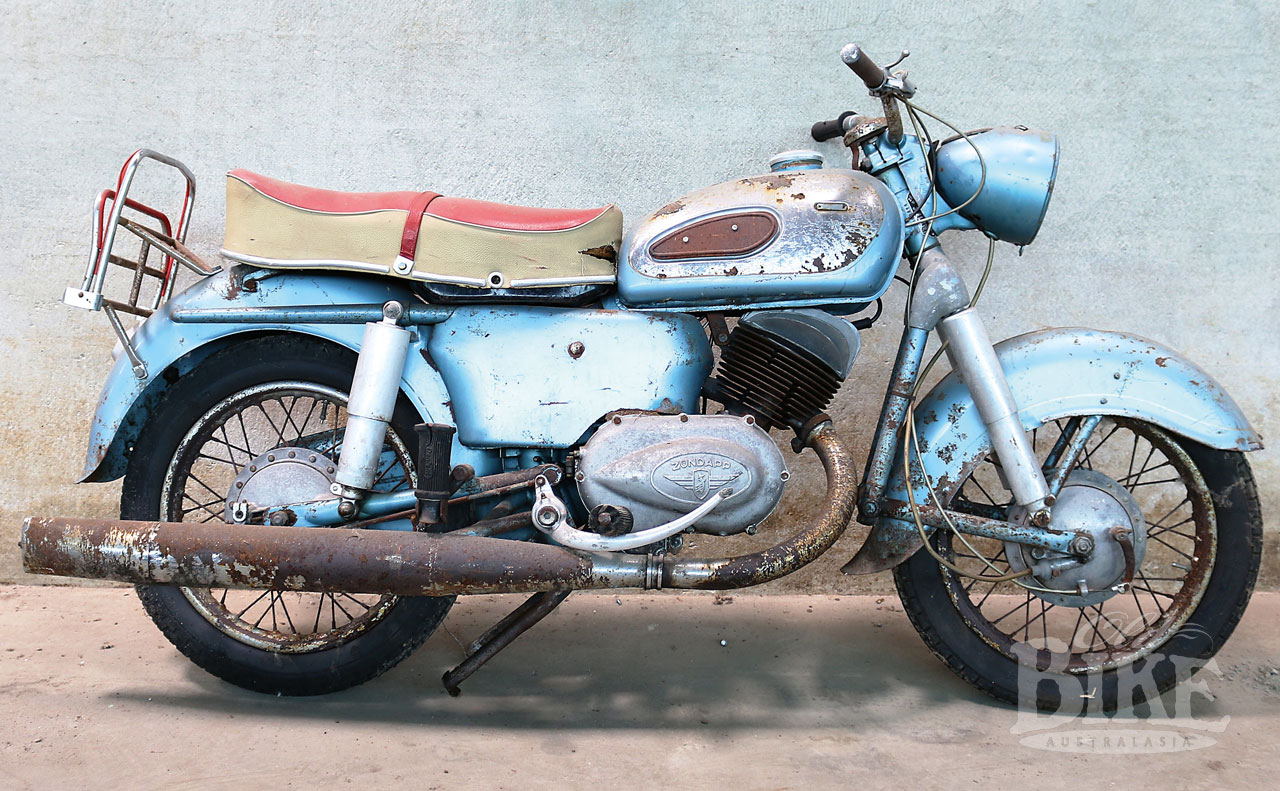
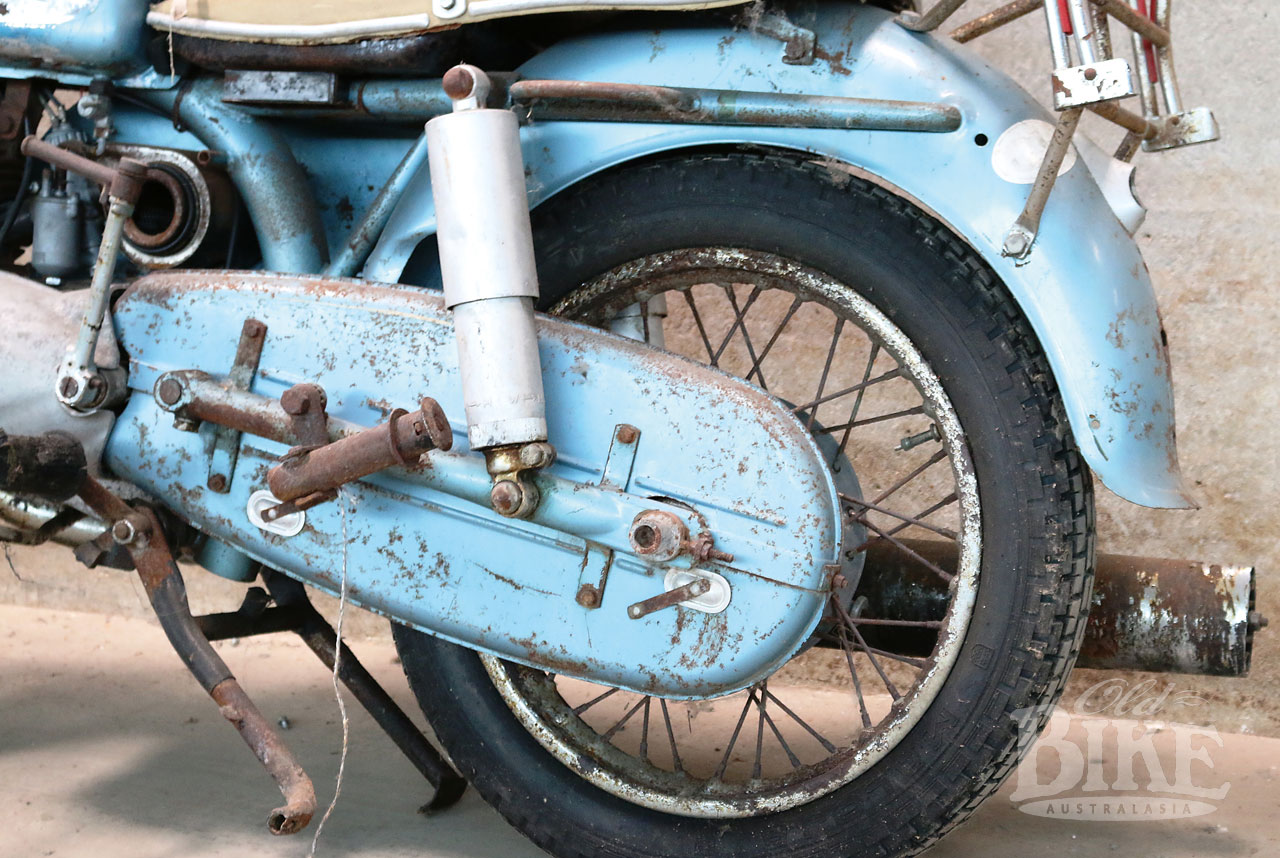
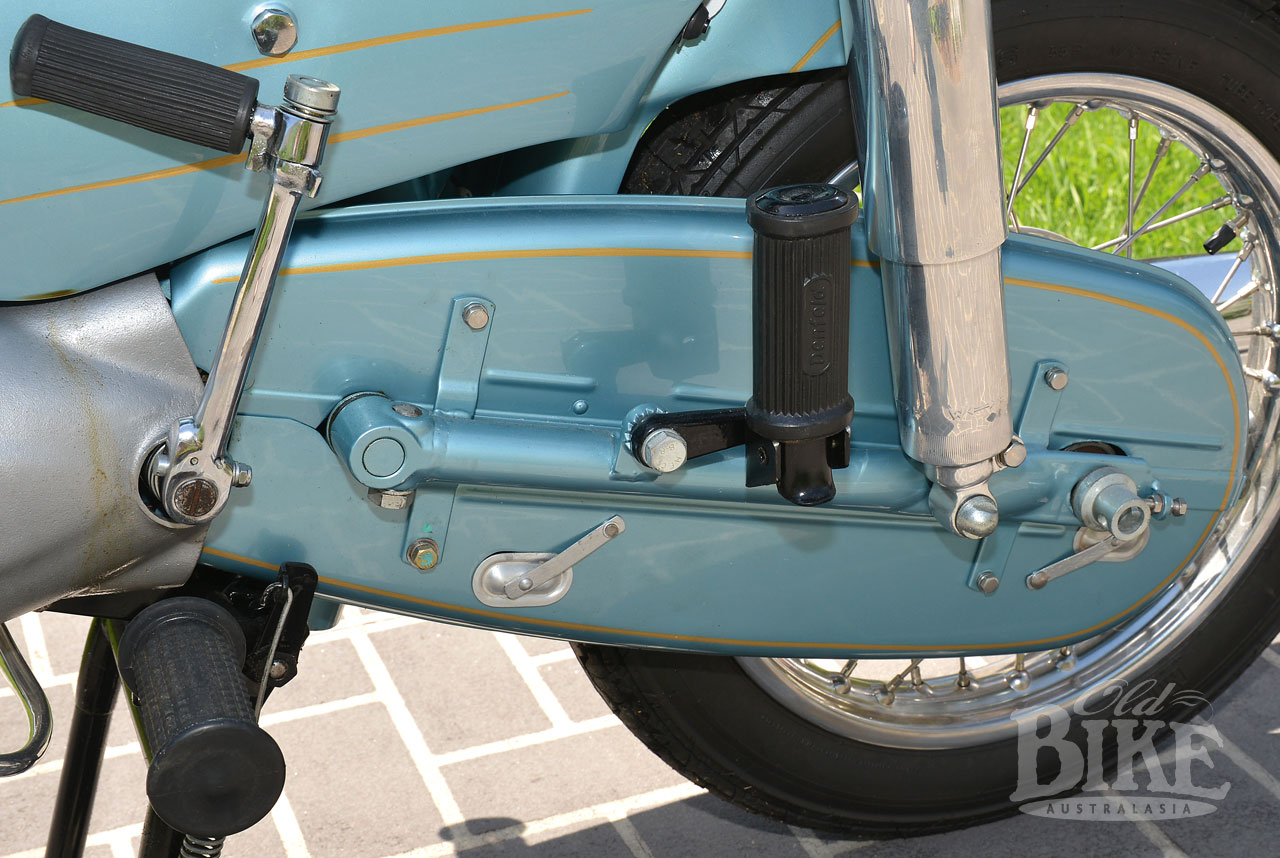
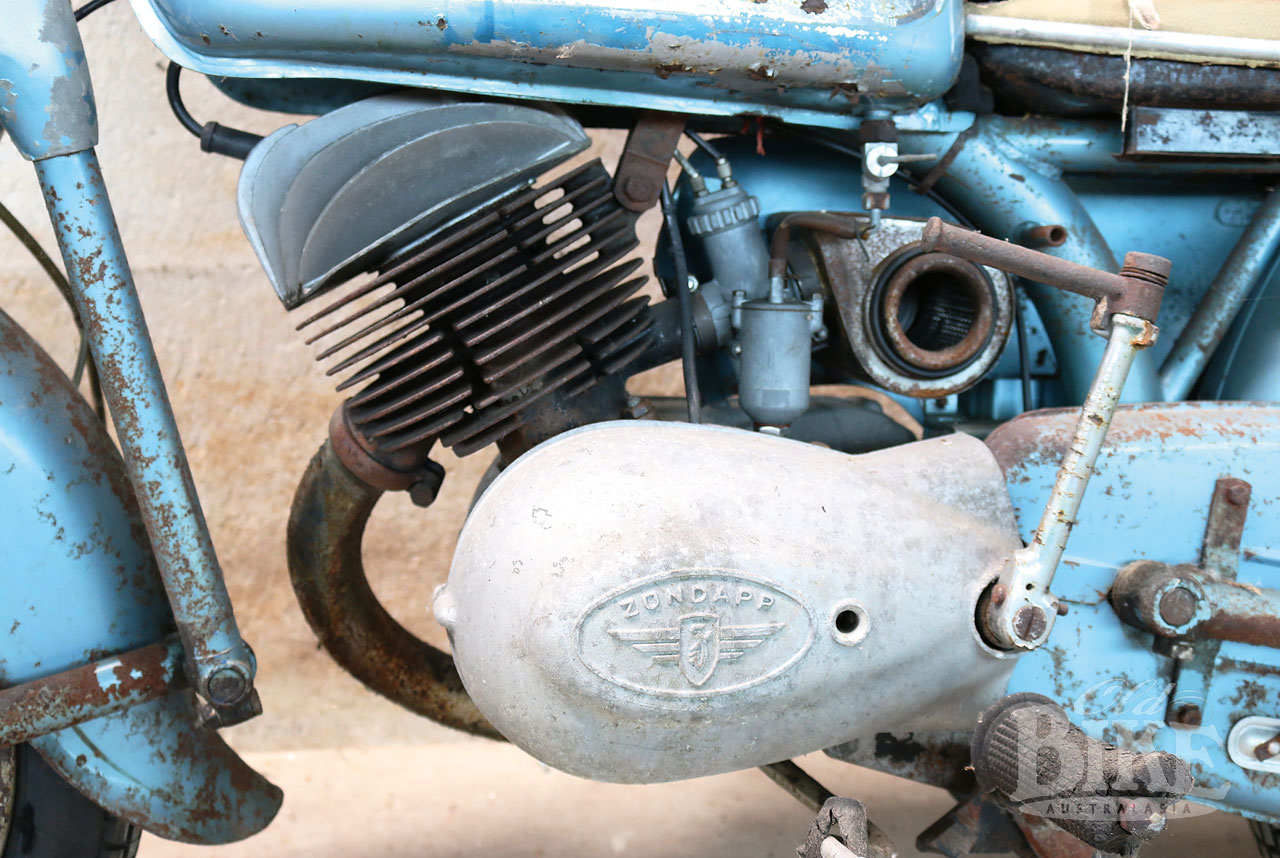
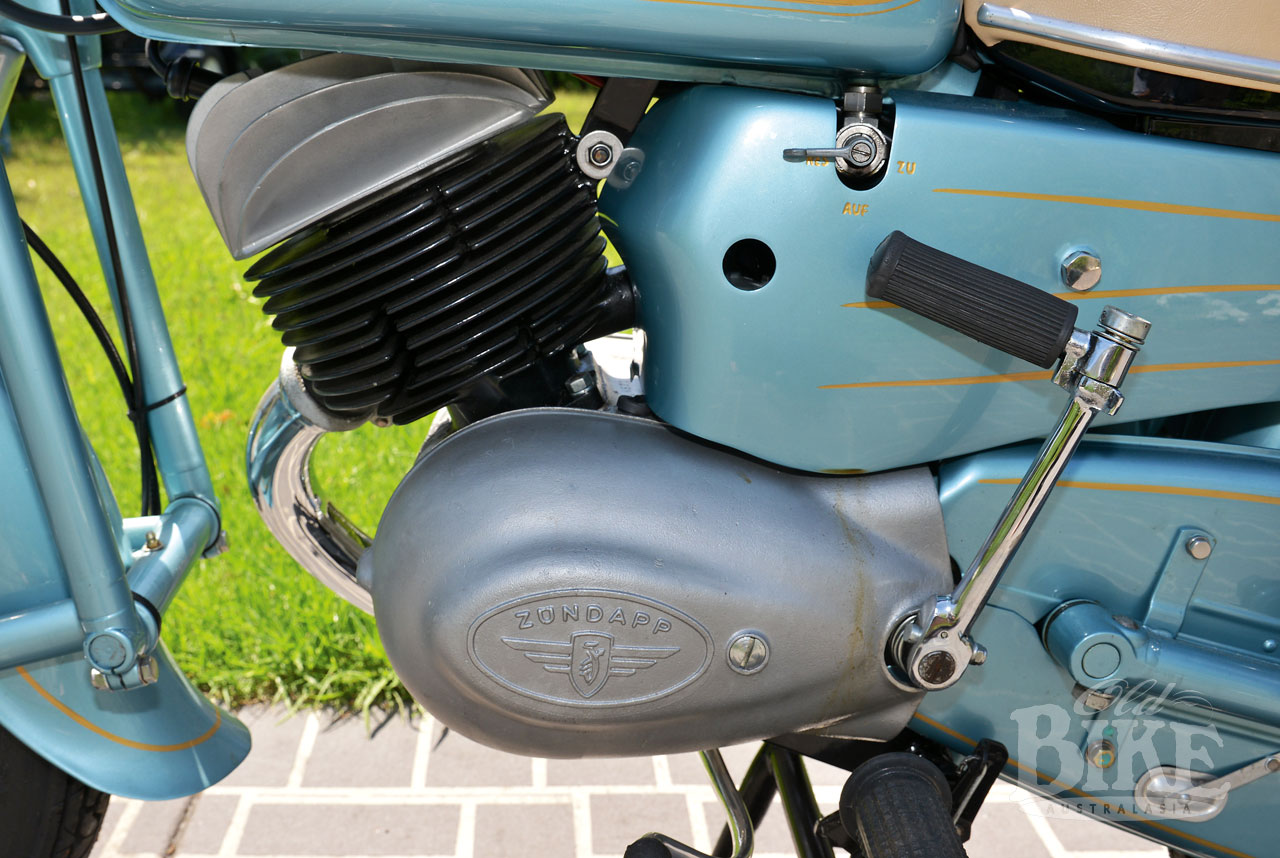
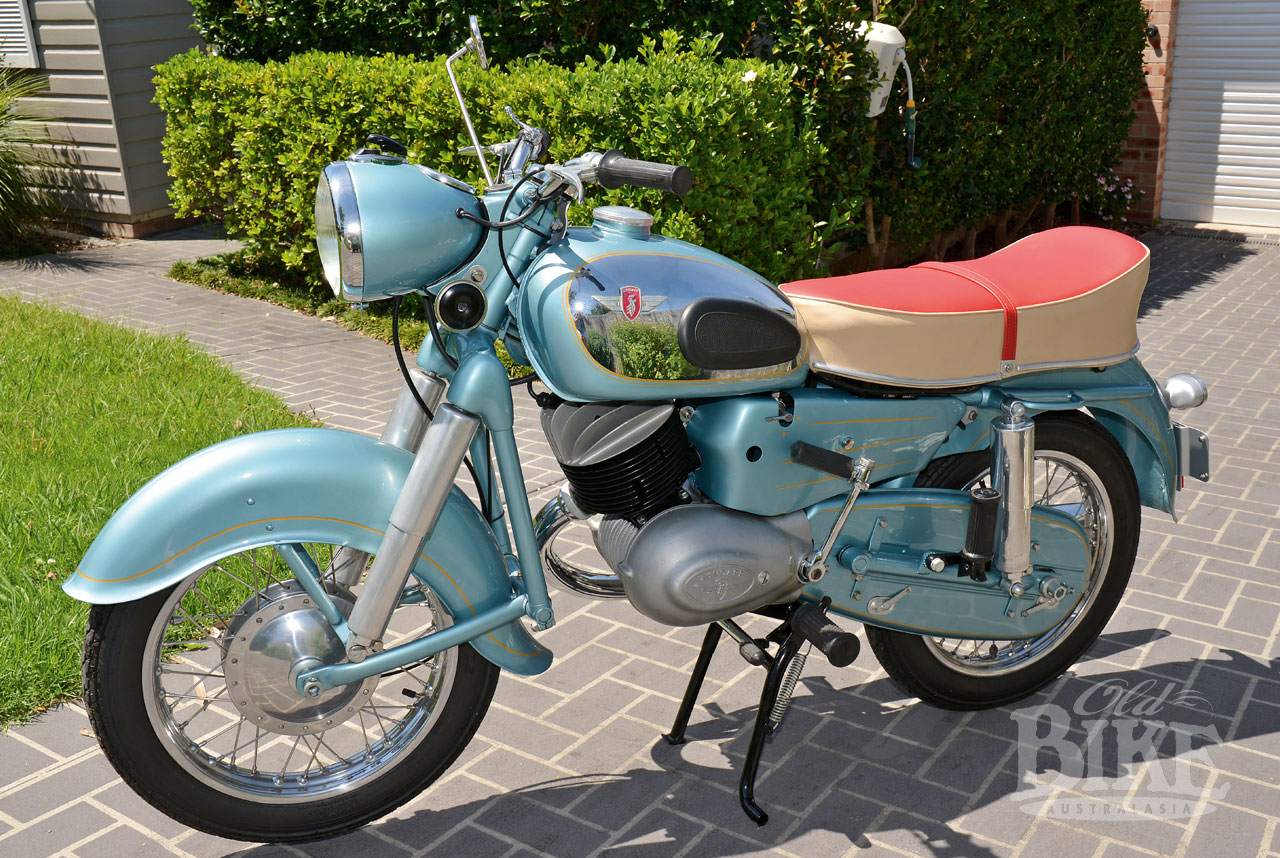
Although more sporty in appearance, the 250S was still squarely aimed at the commuter, but it nevertheless was a spirited performer. The slightly under-square engine had a single exhaust port, with a long, uniquely styled silencer finishing in a flatten tail section. Atop the cast iron cylinder sat a massive aluminium alloy head with radial finning. A sumptuous dual seat, upholstered in contrasting colours, provided supreme comfort for rider and passenger. A very tidy appearance was achieved by enclosing the carburettor, air filter, battery and a hand tyre pump behind easily detachable pressed steel side panels. The seat is retained by two pins in the rear of the seat, which slides over these and is locked at the base with a key. Removal gives access to the air filter and the tool kit. To cope with pillion loads, the rear shock absorbers could be adjusted by hand by simply twisting the bottom section.
The new 250s were in full production by 1956, billed as “The world’s fastest standard machine in its class”. Lightweights were now top of the list for Zündapp, which increasingly concentrated on models with capacities as small as 50cc. The reason for this was a new law that prohibited anyone riding a motorcycle with a capacity above 50cc without a licence – a statute that spawned a massive increase in moped sales.
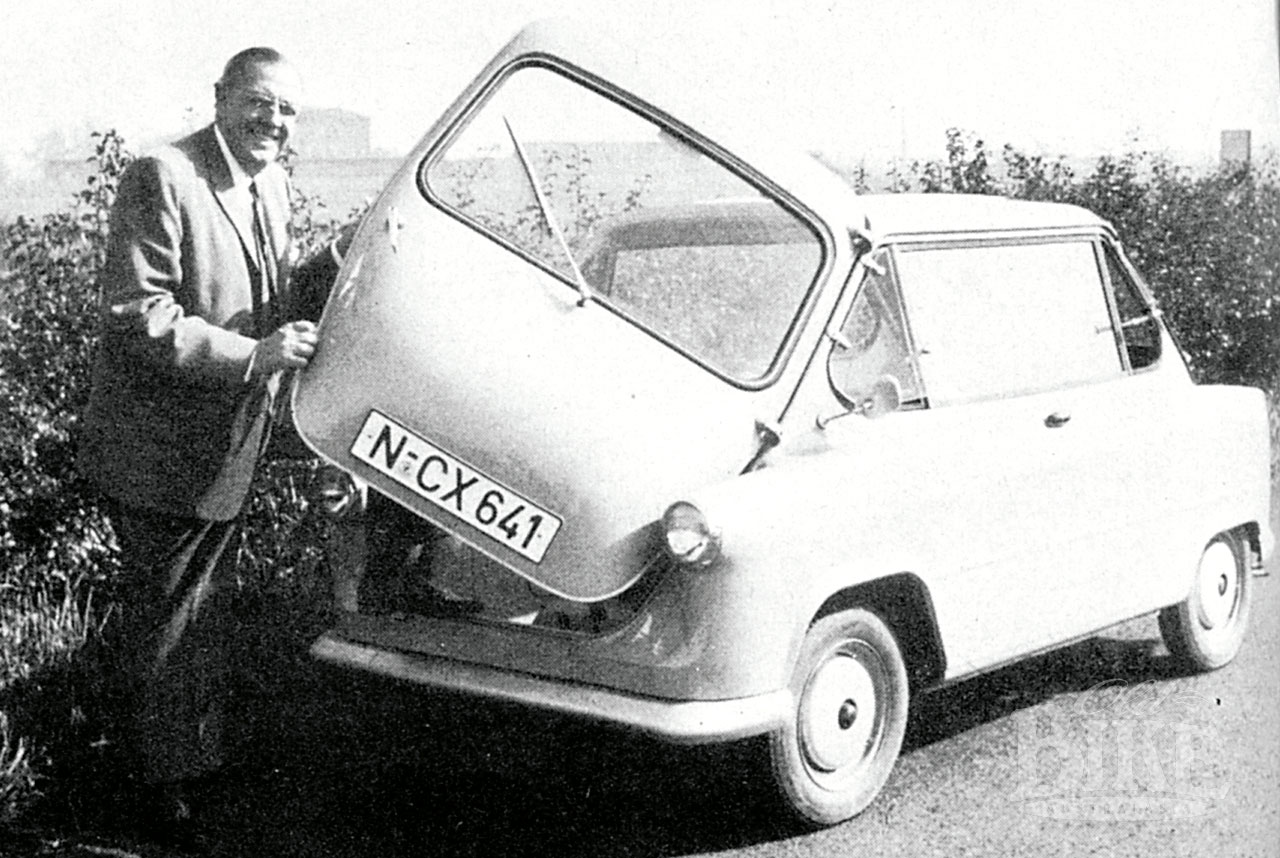
It also made Zündapp rather nervous about the future of motorcycles, encouraging them to branch out into car production with a micro-car called the Janus. This was a truly unconventional concoction, the prototype conceived and built by the aircraft company Dornier, and called the Delta. Zündapp entered a licencing agreement to produce the vehicle, which had side hinged full width doors at both ends and the 2-stroke engine (basically identical to the 250S power unit) in the centre. Passengers sat back-to-back with the rear seat facing backwards. This feature suggested the name – Janus being a Roman god with a face on either side of his head. Production commenced in June 1957 but was abandoned one year later, with only 6,902 cars built, and even fewer sold.
Production of the 250s/Super Sabre continued in dwindling numbers until 1963, but by then an entirely new range of models with the KS designation was the focus of the factory’s efforts. Zündapp never gave up the fight against legislation and the increasing popularity of small cars, and even tried a joint venture with Royal Enfield to market a range of small motorcycles and mopeds. It was too late however, and by 1984 it had to run up the white flag and joined many other famous European brands in bankruptcy.
Zùndapp’s motorcycle production line and the rights to its designs and patents were sold to the Chinese Xunda Motor Company, which continued production to 1990. These days Zündapp continues in name only, assembling small capacity motorcycles and moped with various power units, including Honda. It is a far cry from the brand that began in 1921 and encompassed some highly original designs and iconic models.
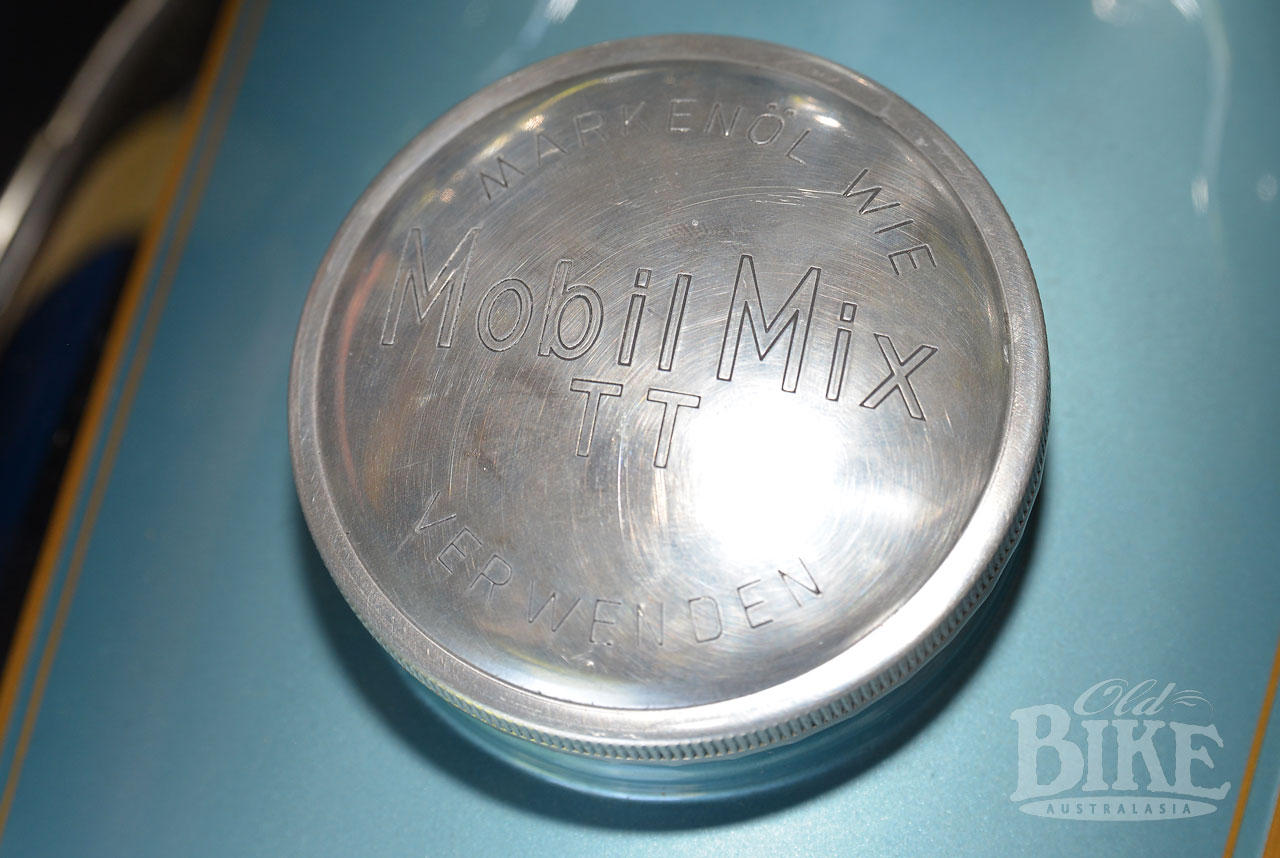
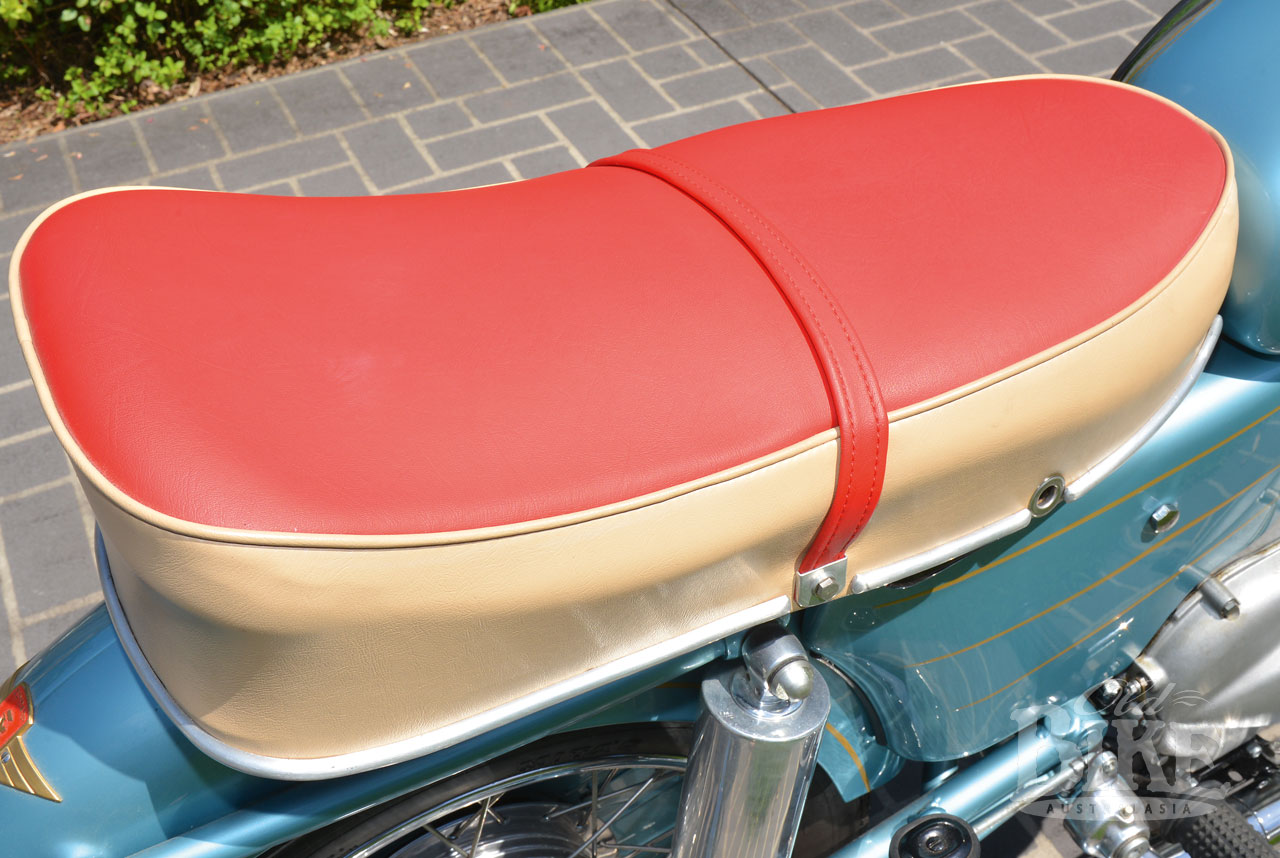
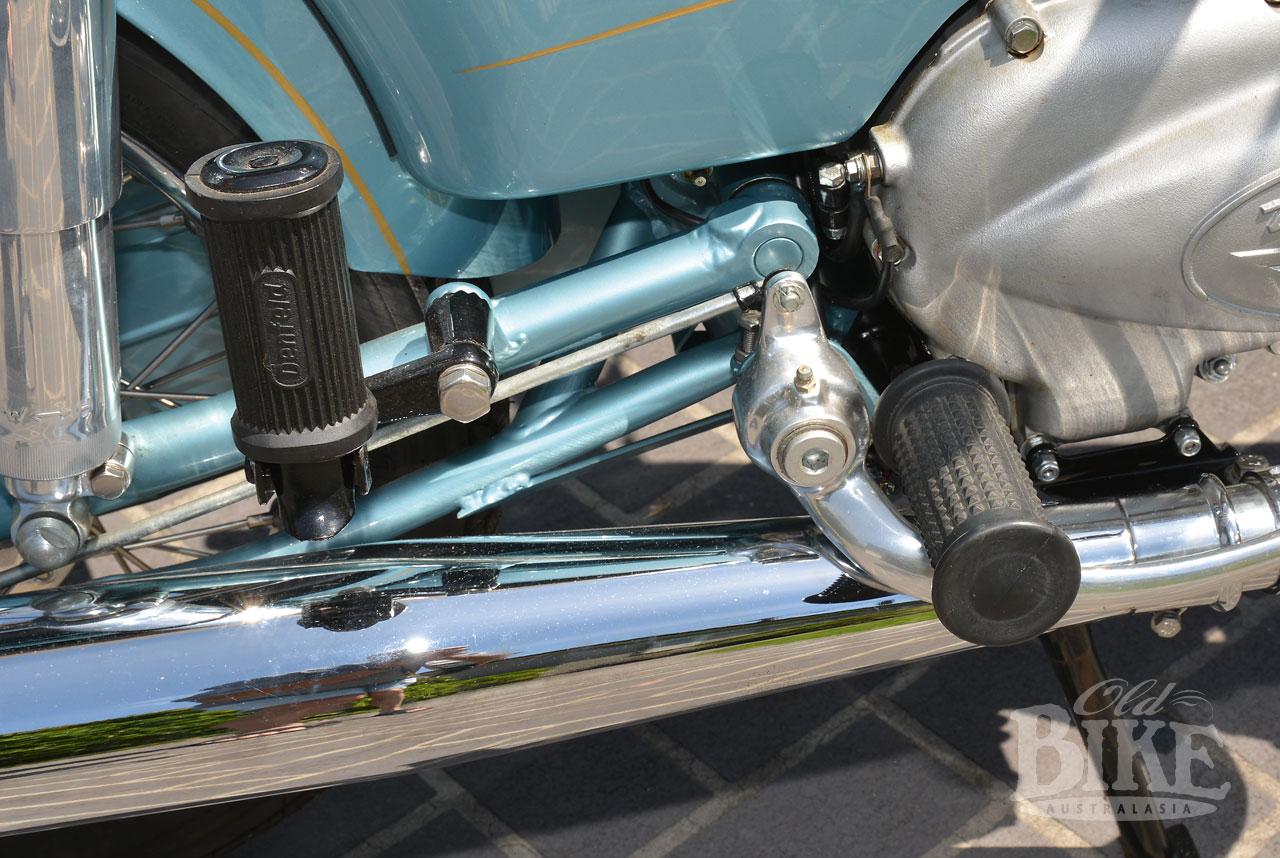
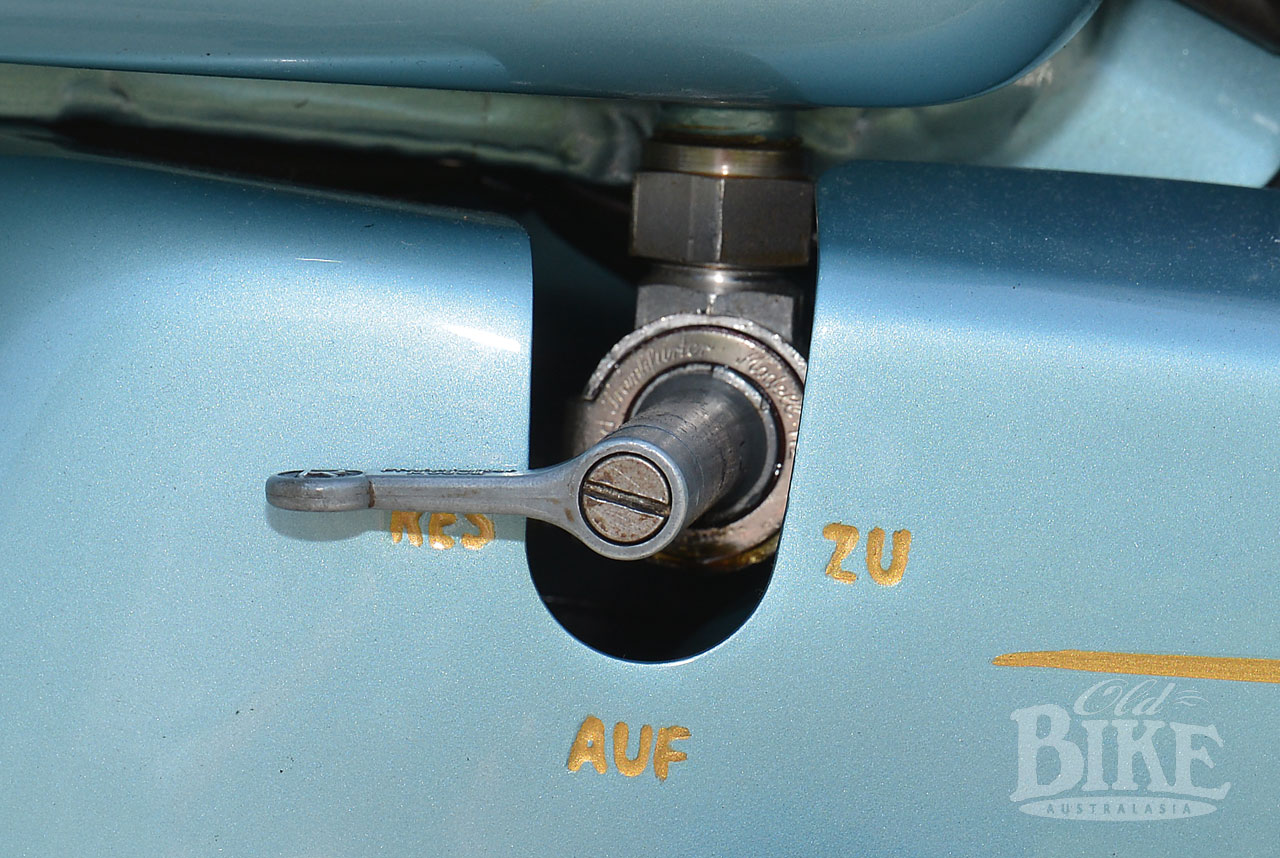
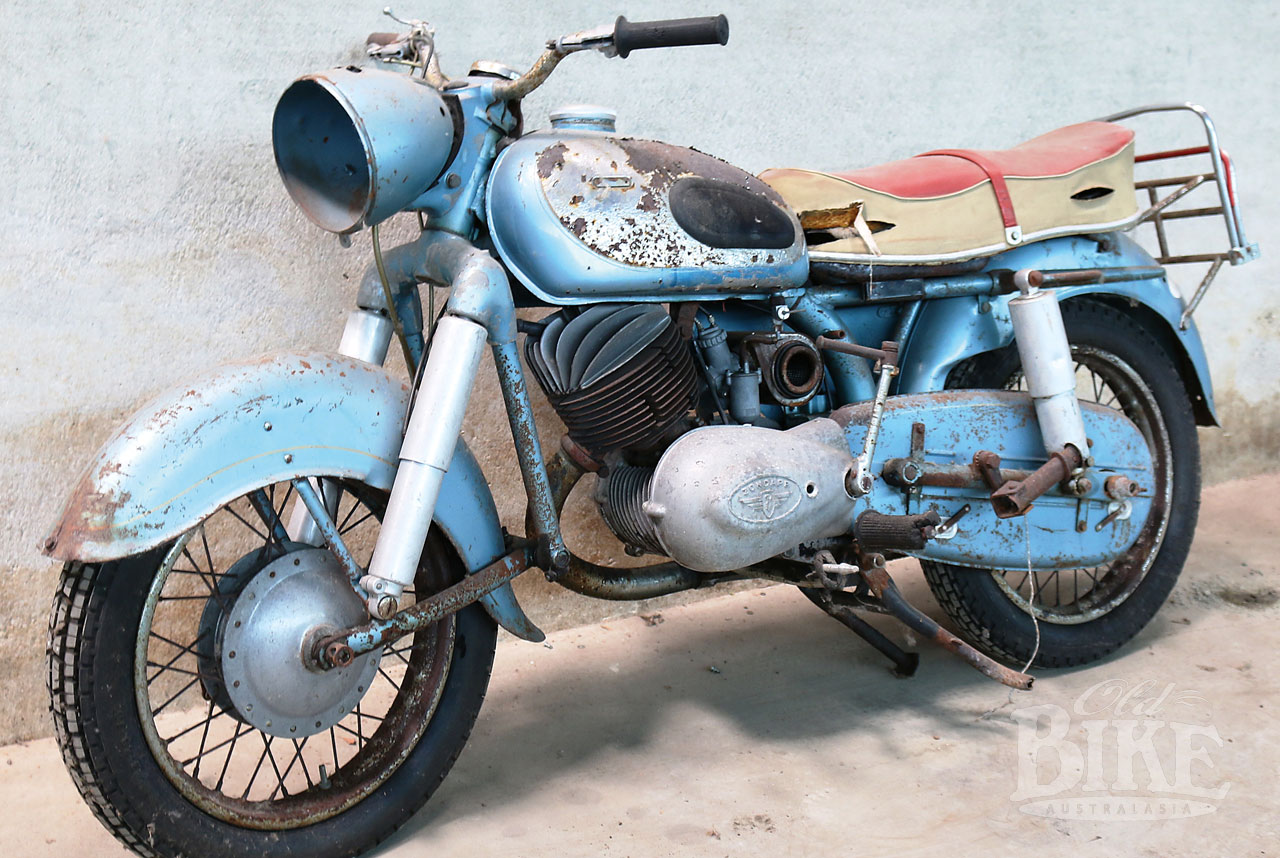
A basket case reborn
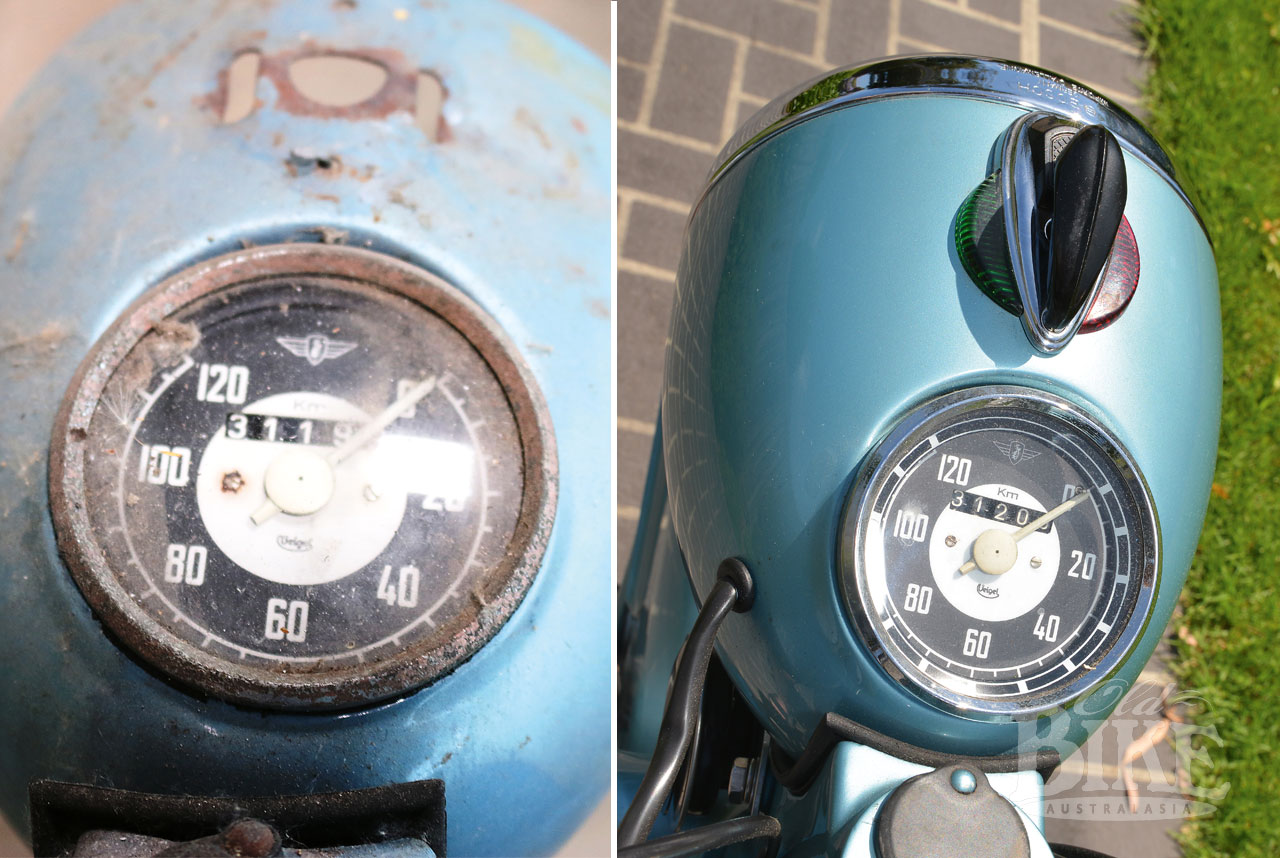
The featured model is a 1958 250S that was found in The Netherlands by Sydney-based former racer and keen restorer John Simms. “I bought this bike as a basket case from a company in Holland called Dutch Lion Motorcycles. It was all there but in very poor condition, and when I finally received it (in Sydney) I discovered the motor was locked solid.
“Parts are very hard to come by for these models, and in looking around I came across the remains of three of the Super Sabre models in USA. These were basket cases as well, but I bought these and was able to get most of the parts I needed. I have enough left over to build a US model, which is the next project. One of the hardest parts to find was the tail light. I have a friend in Germany who contacted the NSU museum and they eventually tracked one down for me. I had to extend the centre stand a bit so the wheels would clear the ground.
“The paintwork is the original colour and was done by Peter Fleming at Star Enamellers in Sydney, a really good job. Rather than try to salvage the exhaust system and the huge muffler, I managed to get a new reproduction item which is very good quality and identical to the original.”
The quality of John’s restoration is first class and the little Zündapp starts first kick and idles cleanly. It now enjoys a much more relaxed life than its former existence in The Netherlands.
Specifications: 1958 Zündapp 250S
Engine: Single cylinder two stroke air cooled
Bore x stroke: 67mm x 70mm
Compression ratio: 6.5:1
Capacity: 245cc
Carb: Bing 26mm
Transmission: 4 speed with oil-bath primary chain. Enclosed rear chain
Fuel capacity: 13.5 litre
Dry weight: 136kg
Power: 14.5hp at 5,500 rpm
Ignition: Coil/battery
Electrical: 100 watt generator
Frame: Welded tubular steel backbone type.
Wheelbase: 1300mm
Seat height: 725mm
Suspension: Front: Telescopic forks with 105mm movement
Rear: Swinging arm with twin shock absorbers, adjustable pre-load, 85mm travel.
Top speed: 110 km/h
Tyres: Front and rear: 3.25 x 16 in steel rims.
Super Sabre: Front and rear: 3.00 x 18 on alloy rims.