From our Old Bike Archives – Issue 100 – first published in 2022.
Myths and legends surround many models in the annals of motorcycling history. The older they become, the more the truth seems to be distorted. In the case of the rare BSA Lightning Clubman, it takes a fine comb to separate fact from hearsay.
Story: Peter Laverty • Photos: Russ Murray
But firstly, why did the model even exist, albeit briefly? To give the motorcycle its official title, the A65LC, along with its 500cc variant the A50CC (also known as the Cyclone), were conceived as tools for the booming ‘sixties British Production Racing scene, where the premier annual event was the 500 Mile Race, usually held at the Thruxton airfield circuit, and when that track was unavailable, at Castle Combe (1965) and Brands Hatch (1966 and 1967). The Production TT at the Isle of Man was also seen as an increasingly prestigious event.
BSA’s new (for 1962) range of unit-construction twins (the A50 and A65) that replaced the ageing A7 and A10 models was seen by the company as a vital move to modernise the range, which it was. The two models shared a crankshaft and stroke of 74mm, with the 500 having a bore of 65.5mm and the 650 (actual 654cc) a bore of 75mm.
Triumph and Norton were making much mileage from track successes, and BSA rightly felt they needed a hat in the ring, and with the departure from BSA of Edward Turner, who was ambivalent about the value of racing, a new focus on the sport arrived with his replacement, Harry Sturgeon. Of course, BSA had been the mainstay of ‘Clubman’ racing a decade before with the Gold Star singles, and the new generation of unit twins provided an ideal platform to revive that glory.
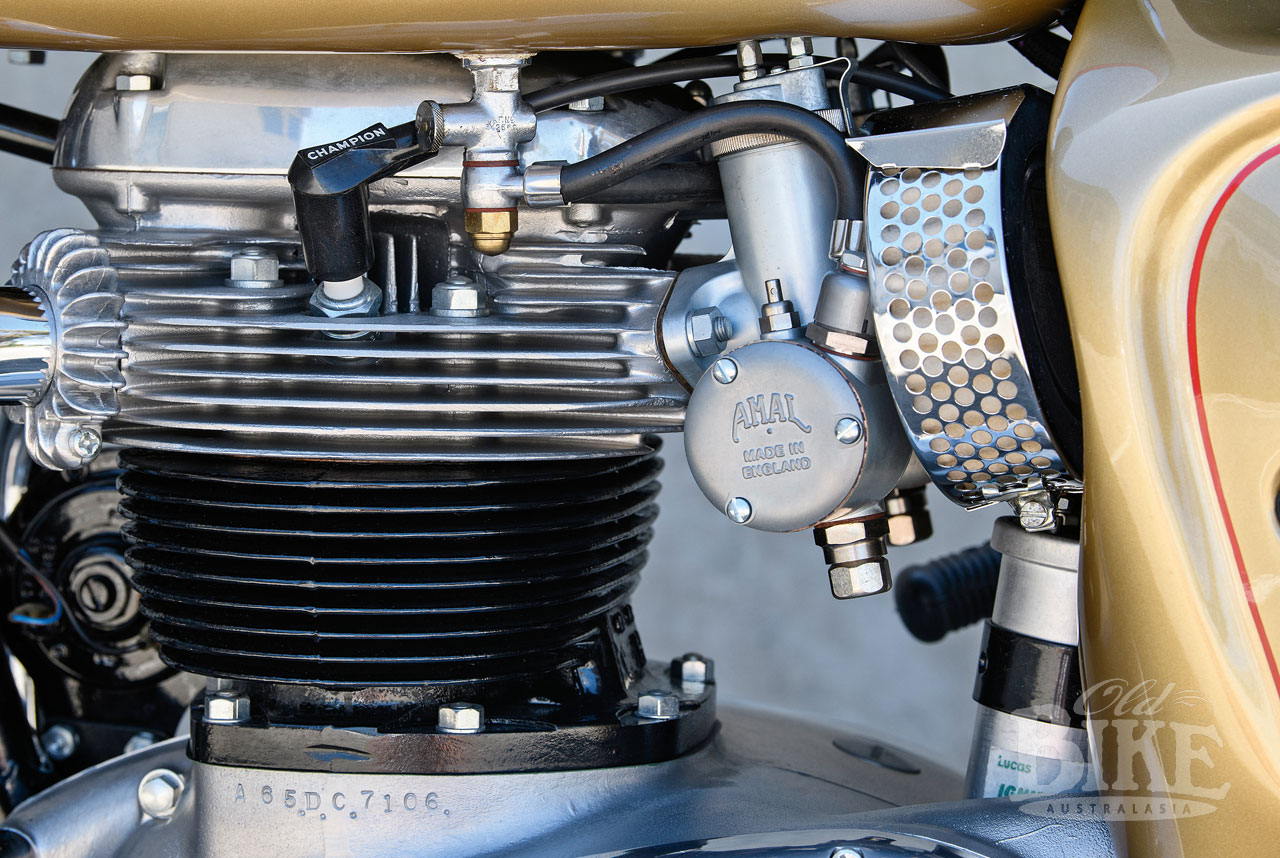
The first high performance model of the new range was the A65R Rocket which appeared in October 1963. It was fitted with a single Amal Monobloc 389/201 carb, but in USA was sold as the Lightning Rocket with a twin-carb set up. The USA models also featured 8-inch full-width hub front brakes. A high-lift camshaft giving a longer valve opening with greater overlap was fitted, with ignition by twin coils and a gear-driven contact breaker.
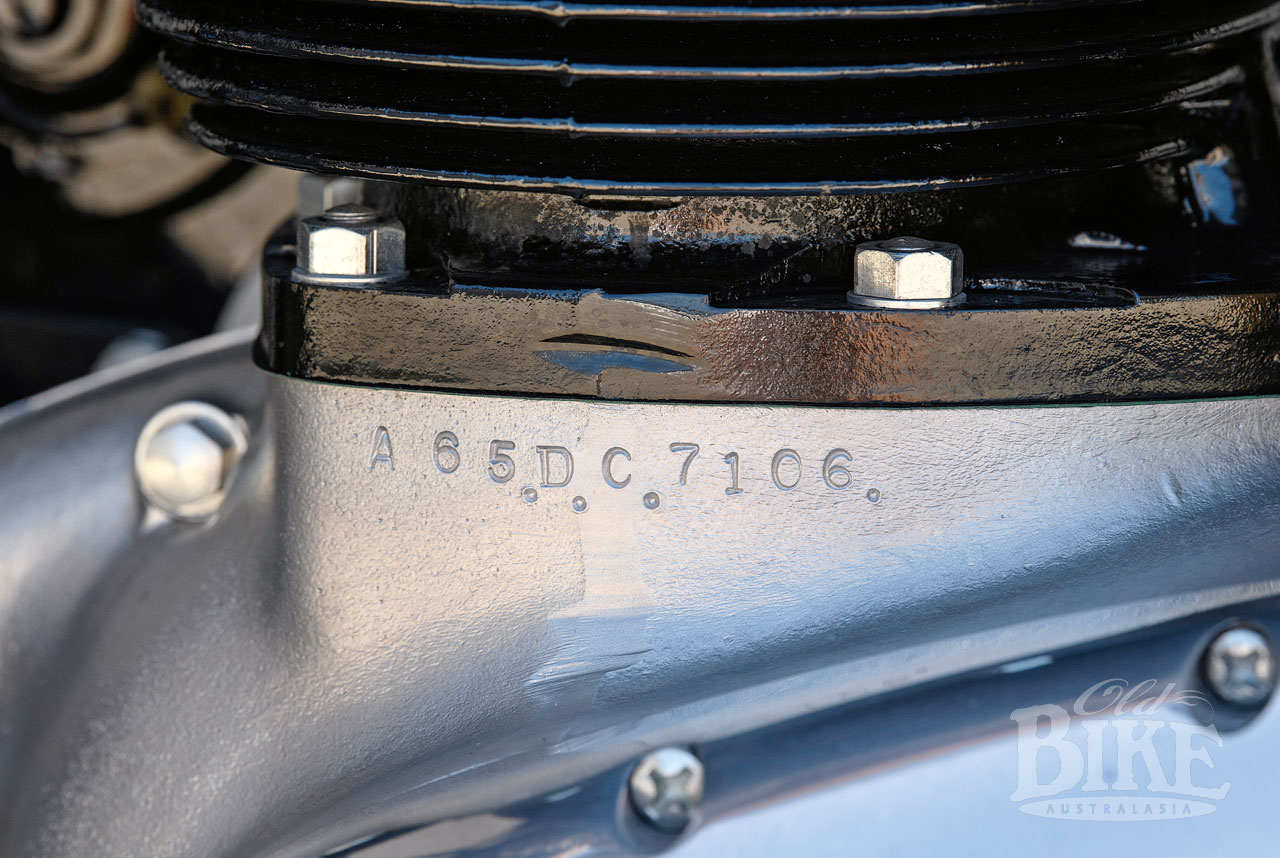
To create the Lightning Clubman, or A65LC, BSA began with the catalogued A65L Lightning. The light alloy, twin-carb cylinder head came from the US-spec A65R, coupled with a higher performance camshaft and pistons with a 9.0:1 compression ratio. All LC engines were individually bench-tested before delivery, as had been the case with the Gold Stars. With 51 hp on tap, the LC was the most powerful and fastest BSA in the range.
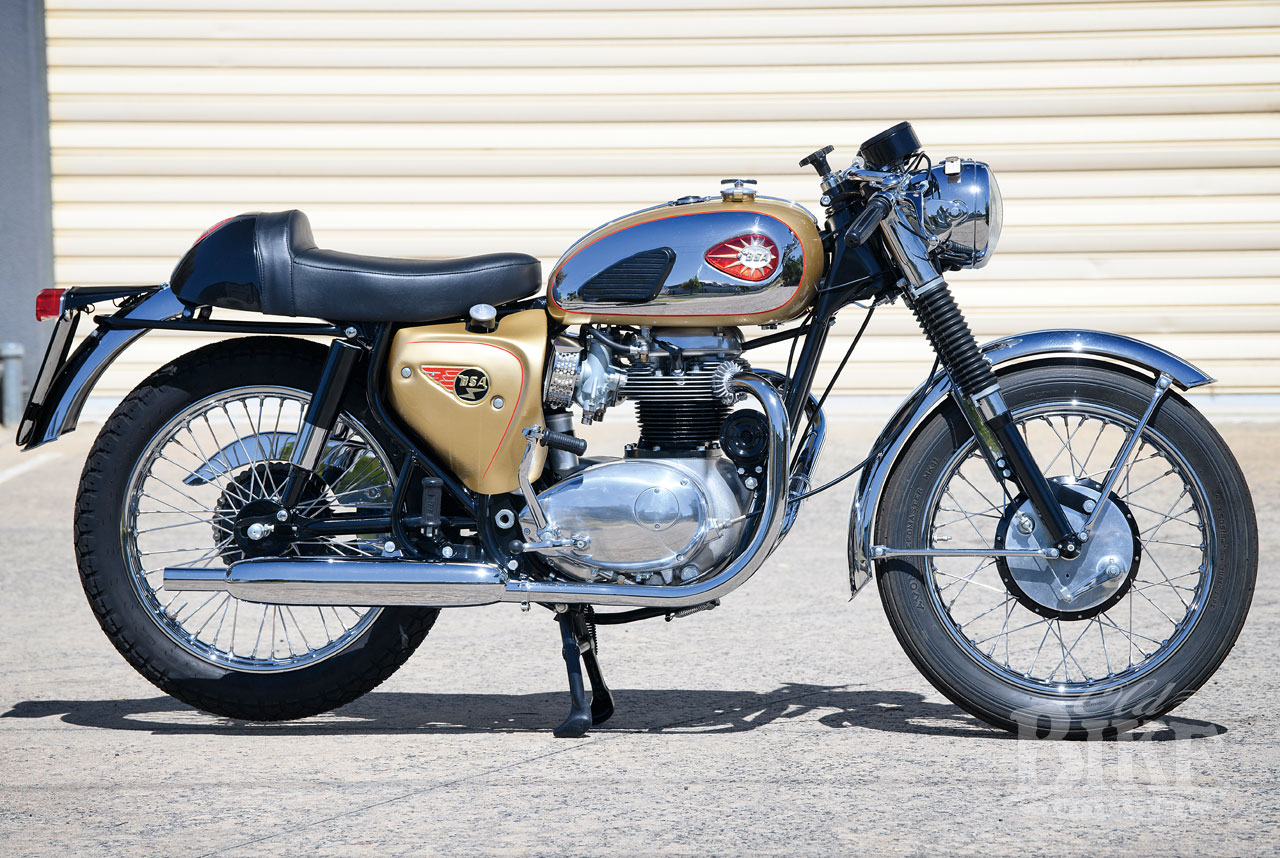
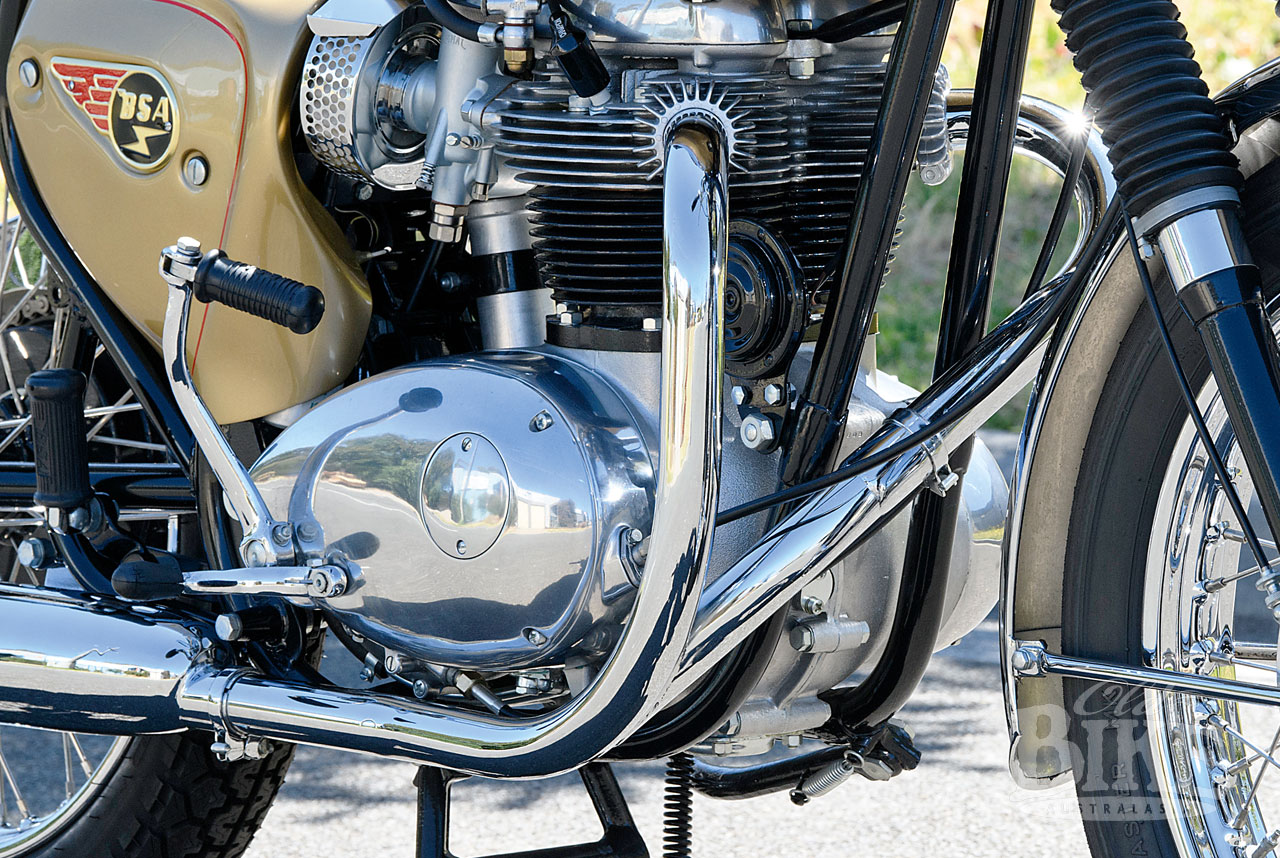
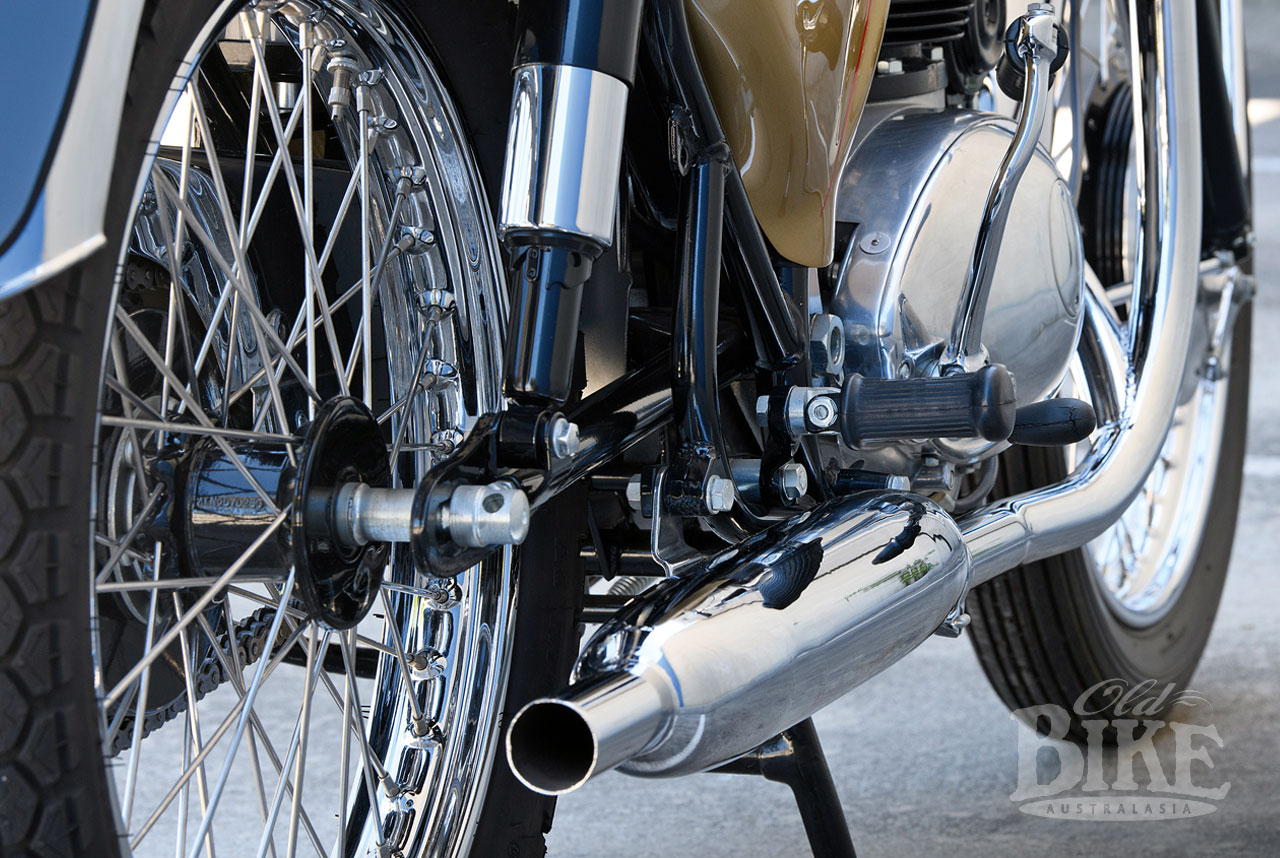
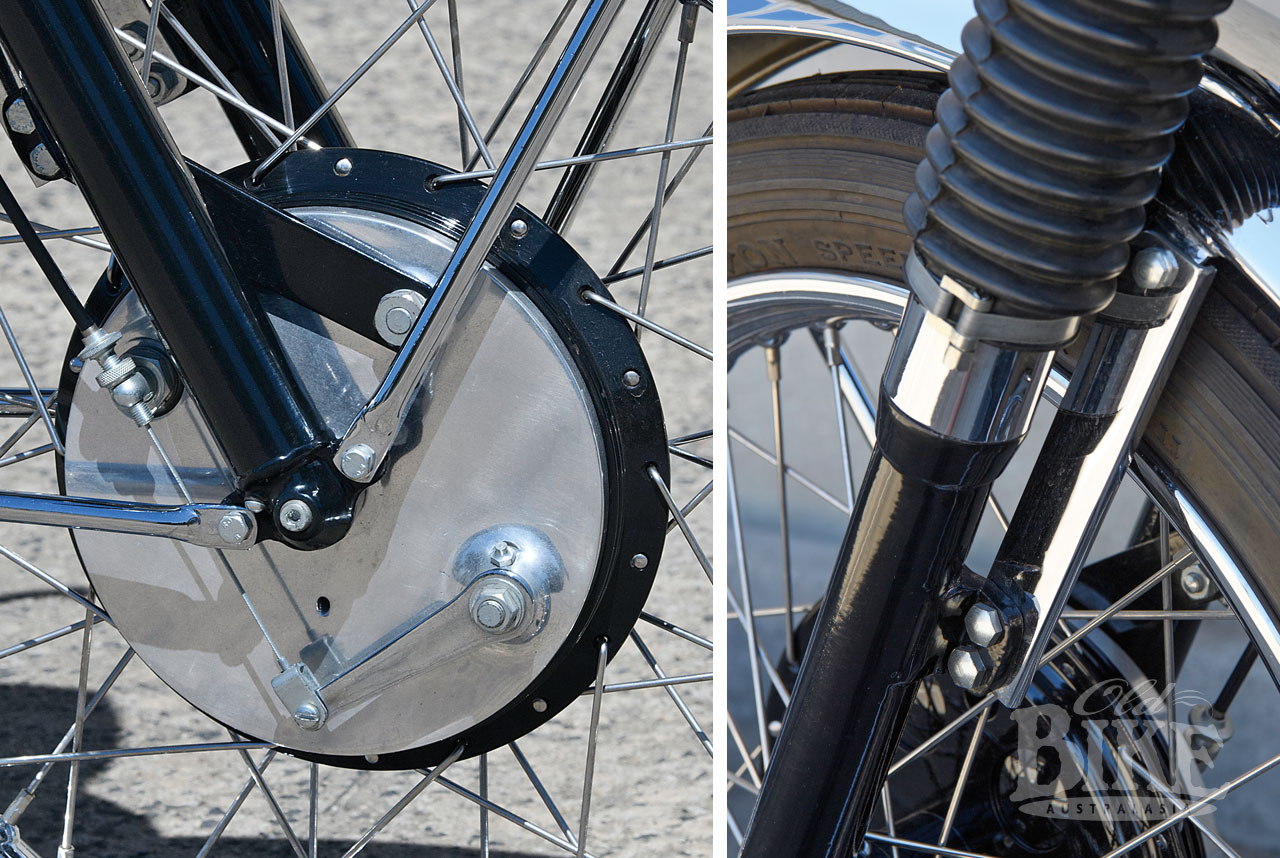
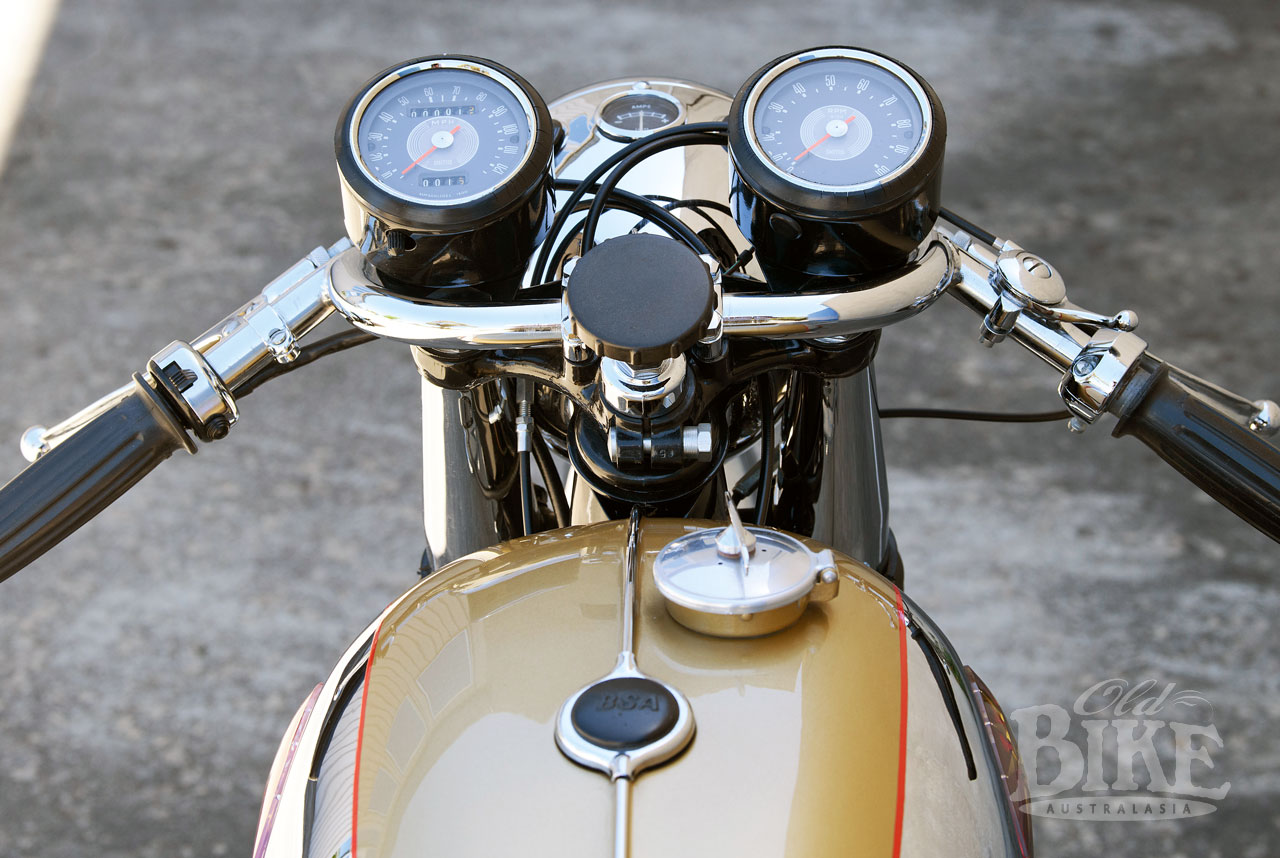
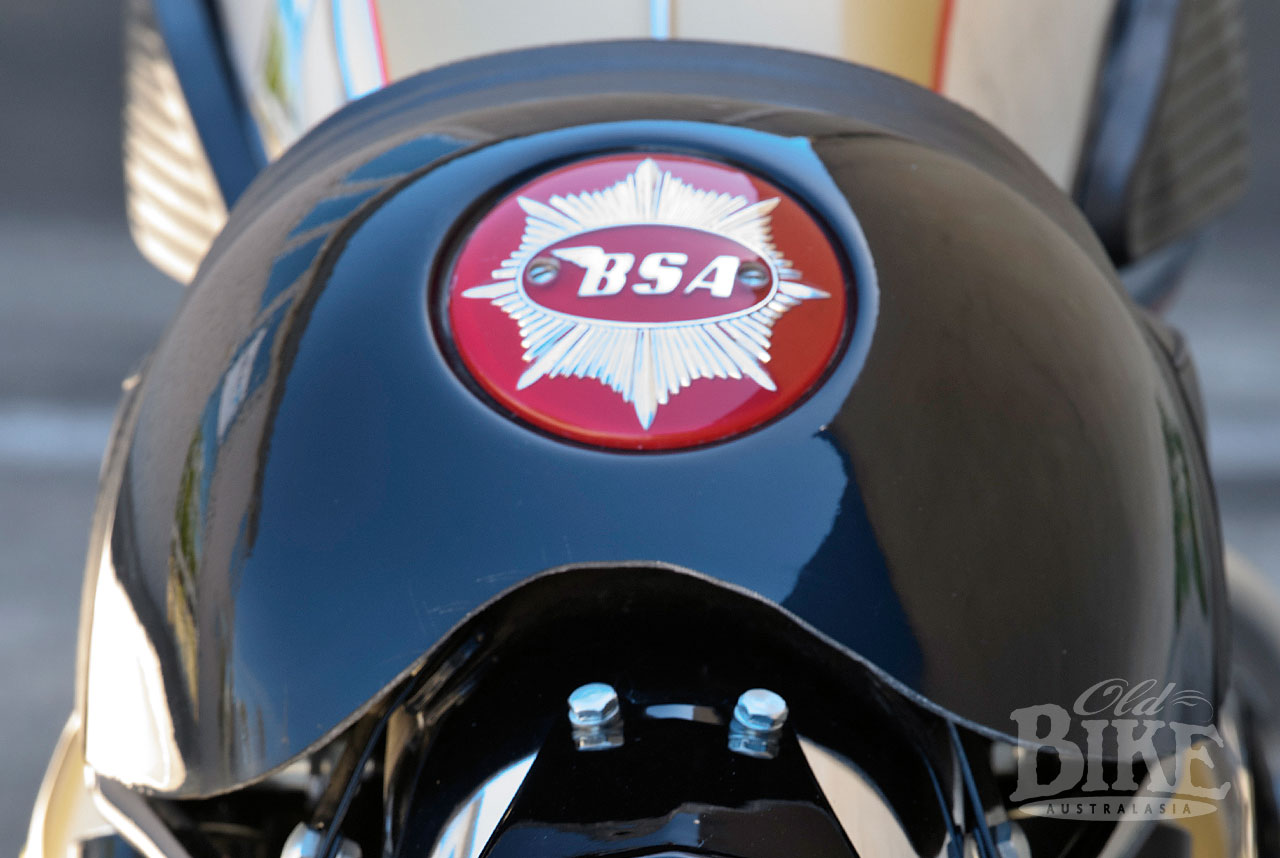
Out went the standard dual seat, to be replaced with a racing-style humped back single seat with a big red BSA badge inset on the rear. In keeping with its intended purpose, handlebars were of the ‘Ace’ style – forward and low set – with rear set footrests and gear lever/rear brake pedal to match. In the case of the rear brake, a complex dual-rod linkage was used, apparently purely to permit the stop light switch to remain in the standard position. The kick start lever was cranked out to clear the muffler, and because the gear lever faced backwards rather than forwards, the internal selector mechanism in the close-ratio gearbox was reversed to retain BSA’s usual down-for-first gear change pattern. As on the A65R, the exhaust system itself was of the ‘Siamesed’ variety, with the left side engine pipe cranked across the frame front down tubes to join the right. The muffler was unique to the model, with the front pick up point for the engine pipe set at the bottom as seen on some Triumphs. Curiously, in view of its race track intentions, the front brake was the Gold Star type single sided, single leading shoe type rather than a twin-leading shoe job, however the US model was catalogued with a 190mm full width single-leading-shoe drum.

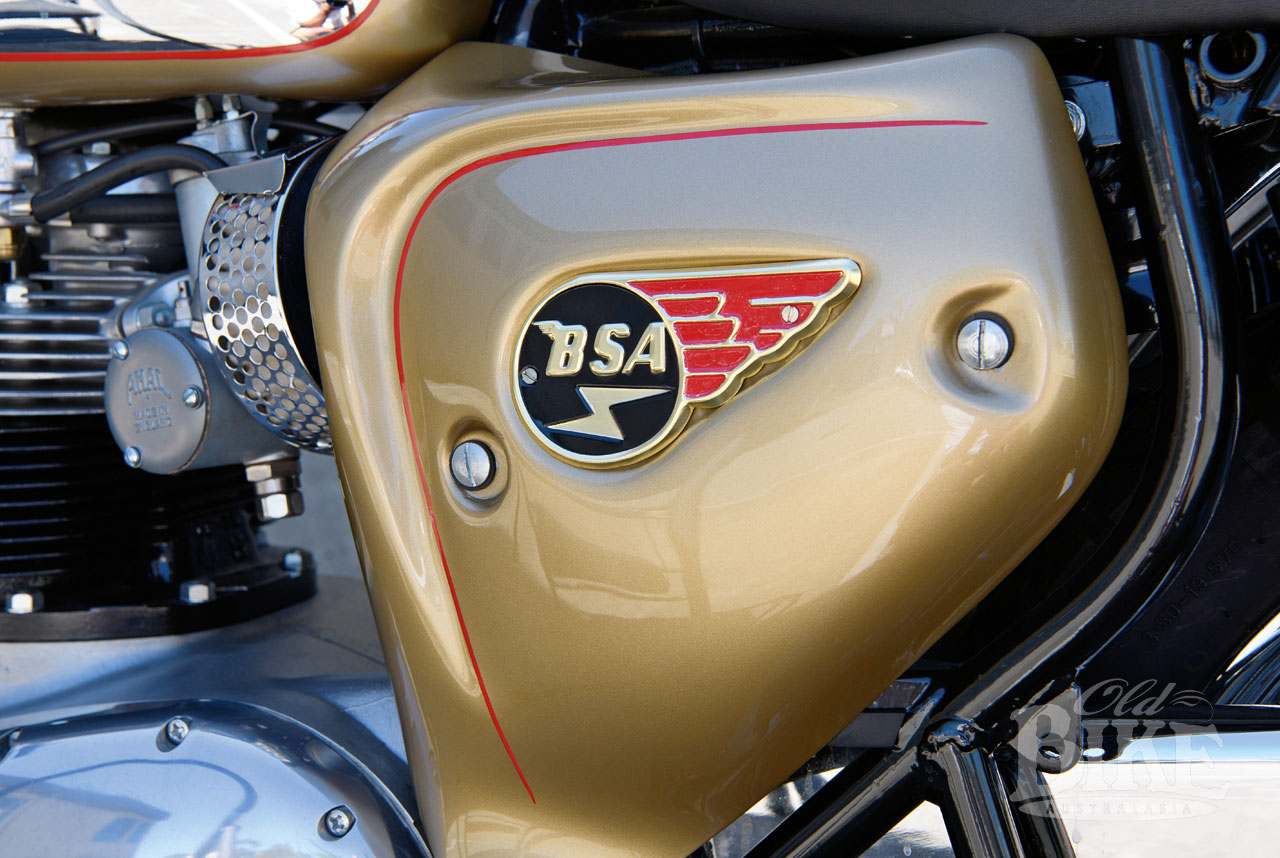
In appearance, the Lightning Club was distinctive in its gold livery, with chrome sided fuel tank lined in red with the famous pear-shaped badges, and gold painted fibreglass side covers. Mudguards were chrome-plated steel blades, with black used for the cycle parts and frame. Steel rims were standard, as was the friction steering damper and the twin Smiths instruments with the speedo on the left. Two fuel tanks were listed, with either 4 gallon (18.2 litres) or 5 gallon (22.7 litres) capacity.
A famous victory
The Lighting Clubman may have failed to notch up a win in the annual 500 Mile races, but it did score one victory that has become synonymous with the model. The Hutchinson 100 was first run in 1925 at Brooklands, sponsored by the tyre company of the same name. Over the years, the event changed in format (it was originally a handicap), and moved to various circuits, settling at Silverstone. September 1965 marked the 17th, and final time it was run at the famous Midlands circuit, and true to form, it rained. Despite the weather, a record crowd of over 40,000 piled in.
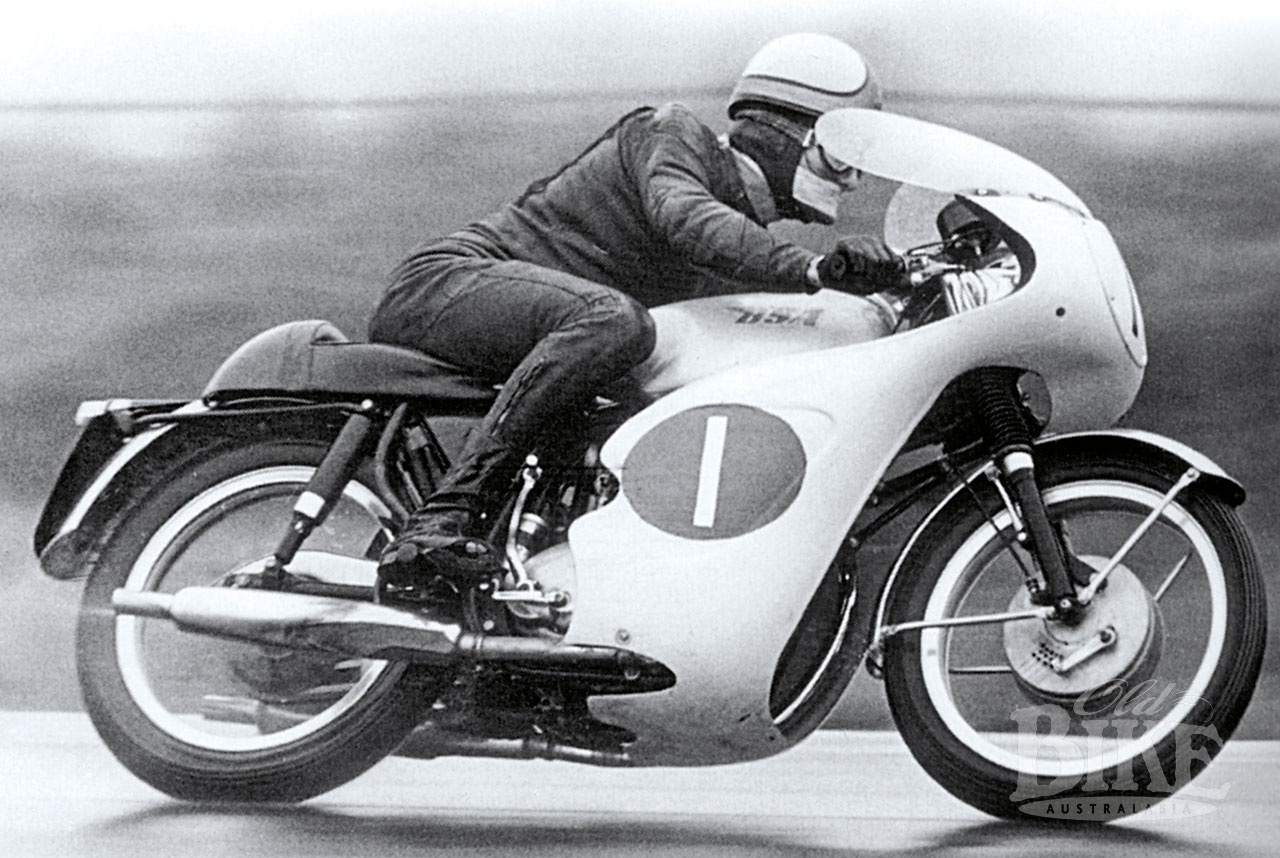
The entry list was headed by World Champion Mike Hailwood, who had been recruited for three starts – the 350cc race on Tom Kirby’s 7R AJS, the 500cc race on the works 500-4 MV Agusta, and the 15-lap Production Race on a BSA Lightning Clubman also entered by Kirby and, as permitted under the British regulations, fitted with a Dolphin fairing and an alloy fuel tank. It also had twin pipes and mufflers, rather than the Siamese/single muffler of the version sold in the shops and a full-width front hub, which was fitted to the US models. English Production Racing rules were far more elastic than what was used in Australasia.
After snatching victory in the opening 350cc race by half a second from John Cooper, Hailwood fronted for the Production Race just as the rain arrived. Into the lead went Tony Smith riding the very first A65LC built, (the same bike on which he had finished second in the 500 Mile race at Castle Combe the month before) but he was soon displaced by Hailwood and the Triumph pair of Phil Read and Percy Tait. Smith’s race finished after he aquaplaned off the circuit and fell, while Hailwood took over at the front and splashed his way home to win from Read and Tait, with Rod Gould fourth on another Lightning Clubman.
For his win, Mike took home the princely sum of 15 pounds. BSA made much of the win with a vigorous round of advertising, and BSA dealers, including Tom Kirby, sold as many Lightning Clubman models as they could get. Admittedly, the retail models were somewhat removed in specification from the Hailwood machine, but the basic architecture was there, and finished in gold with red striping, it was enough to send many a young man into a swoon.
A short life
Production of the Lightning Clubman commenced in September 1964 and finished in October 1965. It is generally accepted that 190 were built, which makes the A65LC a very rare BSA indeed. Its replacement was the Spitfire Mk2, fitted with twin Amal Grand Prix carburettors, which took over as BSA’s hope in the UK Production Racing Scene until the arrival of the triples.

Our featured motorcycle is supplied by Jon Munn from Classic Style Motorcycles at Seaford, Victoria, and was imported from USA in a rather sorry state. It certainly does not look sorry now, after a ground-up restoration by Jon and his former workshop manager Geoff Knott, now retired. Jon points out touches that make the Lightning Clubman unique, such as the Gold Star-style badge set into the rear of the seat hump, and the complex rear brake rod system. Resplendent in a gold/chrome/red décor, the machine really stands out in a crowd, and there is invariably one around it whenever it appears.
Because many of the parts are unique to the Lightning Clubman, spares are not exactly easy to come by but the BSA is now 100% authentic and a real stunner.
Specifications: 1965 BSA Lightning Clubman A65LC.
Engine: OHV parallel twin, air cooled.
Bore x stroke: 75mm x 74mm
Compression ratio: 9.0:1
Capacity: 654cc
Power: 51 hp at 6,750rpm
Carburation: 2 x Amal 389 Monobloc
Ignition: Coil and battery
Gearbox: 4 speed
Tyres: Front: 3.25 x 19; Rear: 3.50 x 19
Brakes: Front: 8-inch sls; Rear: 7 inch sls
Wheelbase: 1420mm
Fuel capacity: 22.7 litres
Seat height: 820mm