Words & Images, Jim Scaysbrook – Old Bike Australasia Magazine, Issue 127
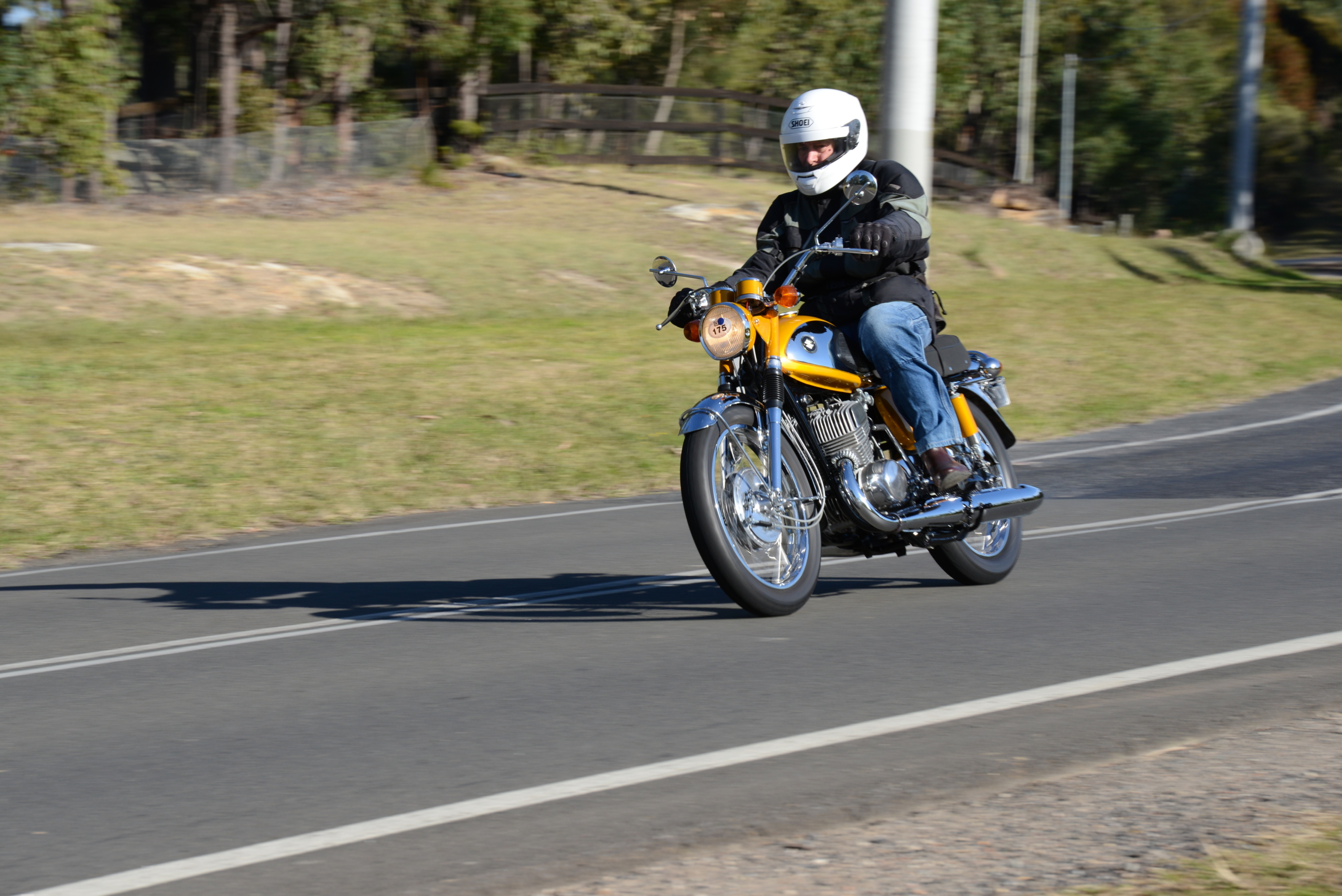
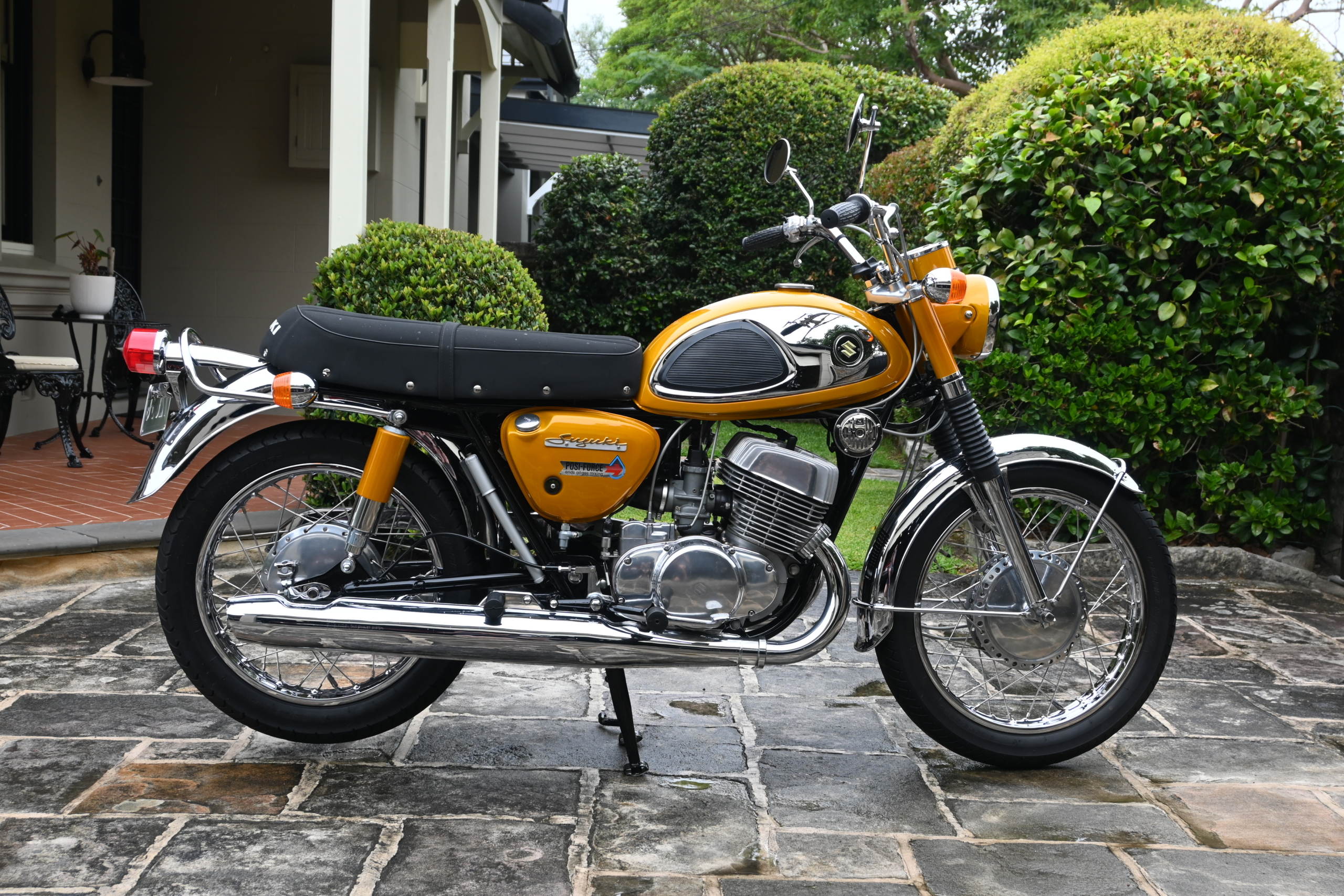
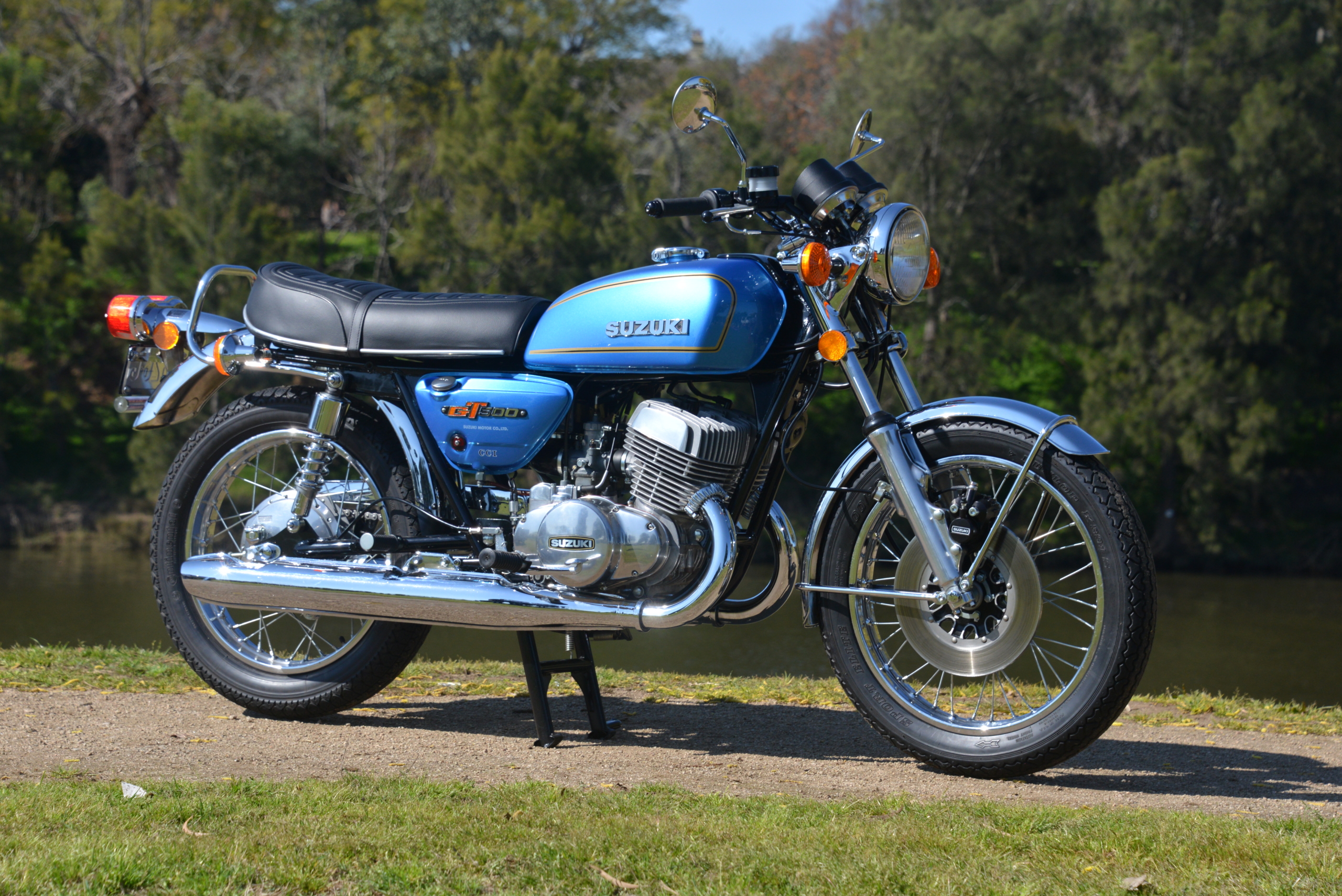
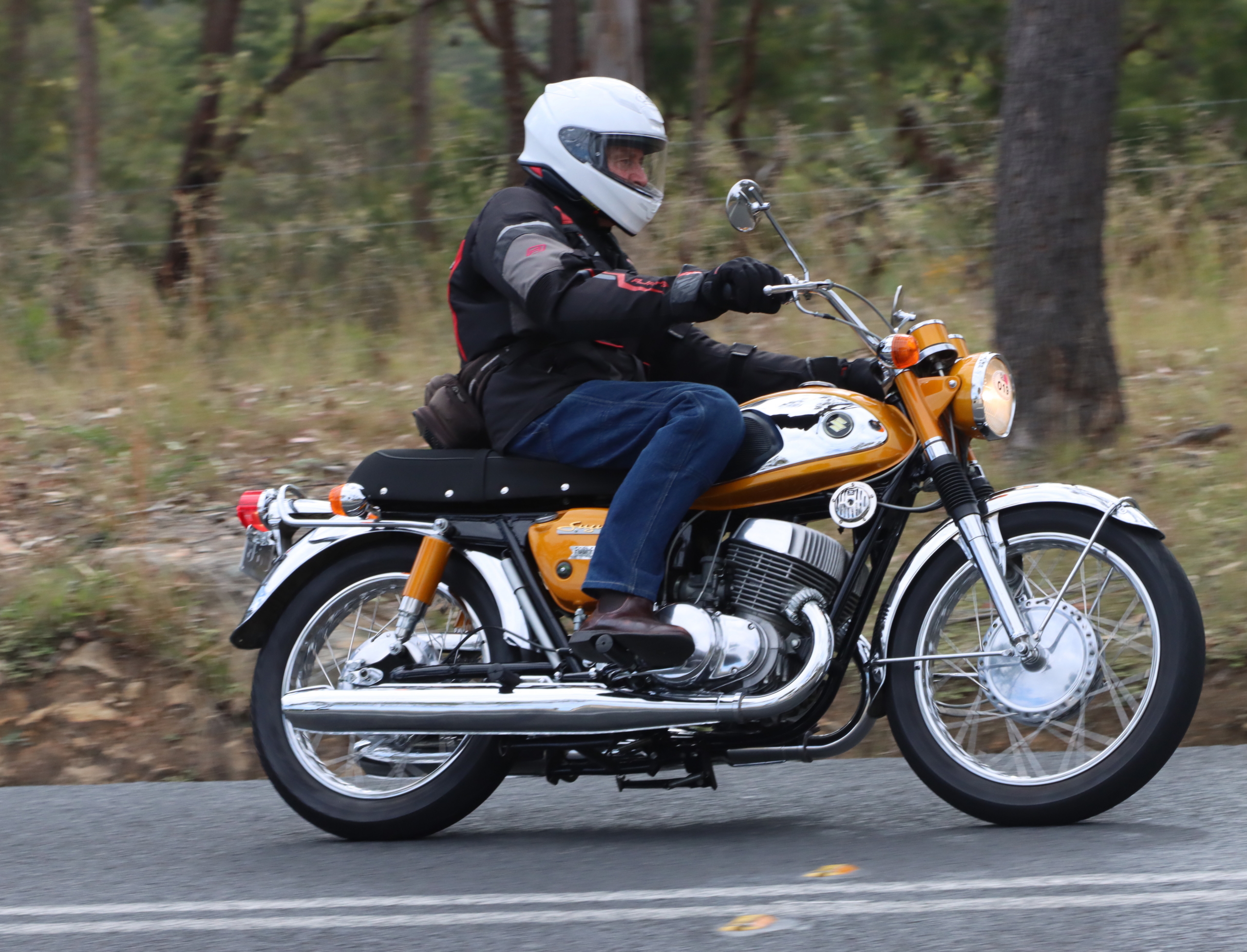
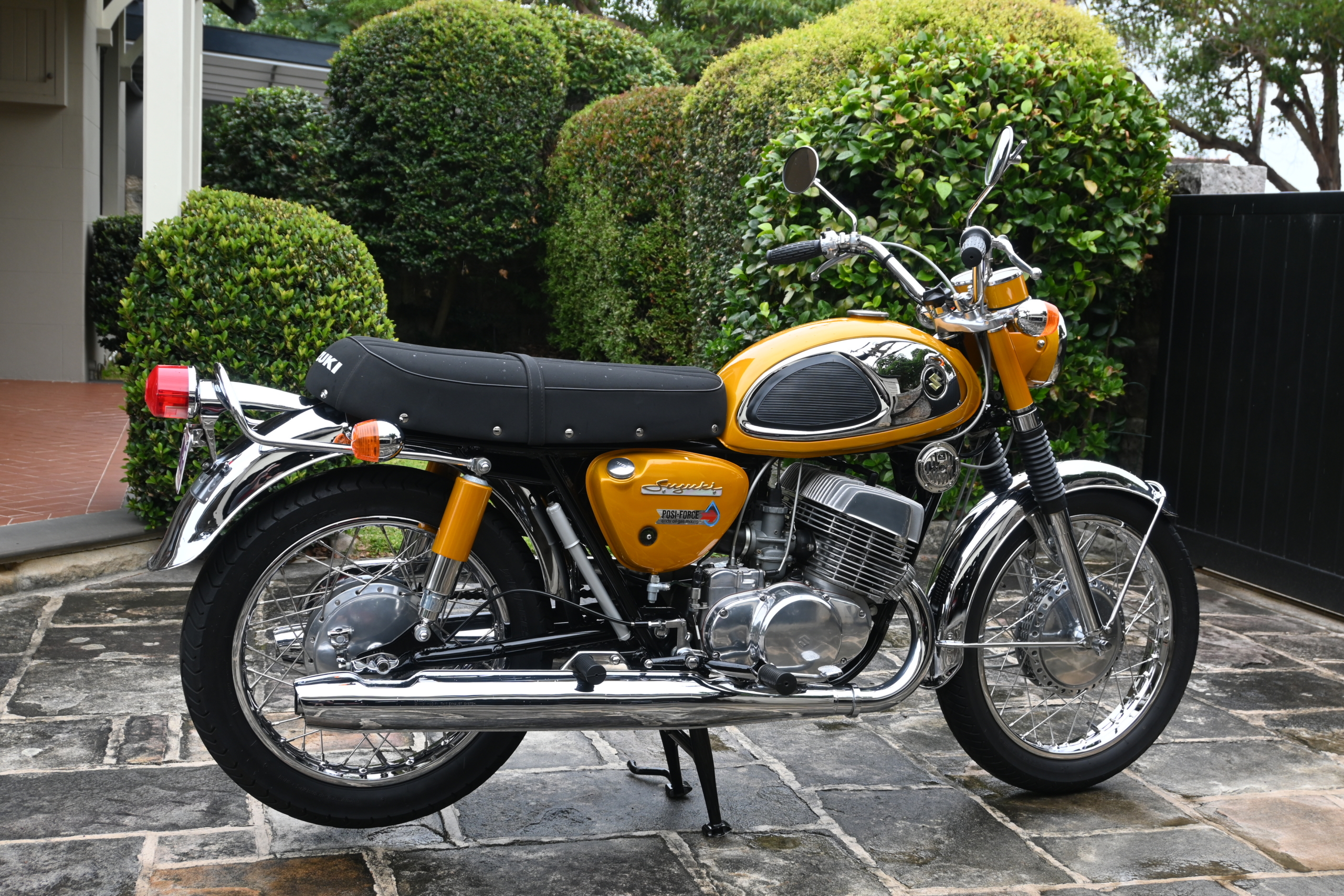
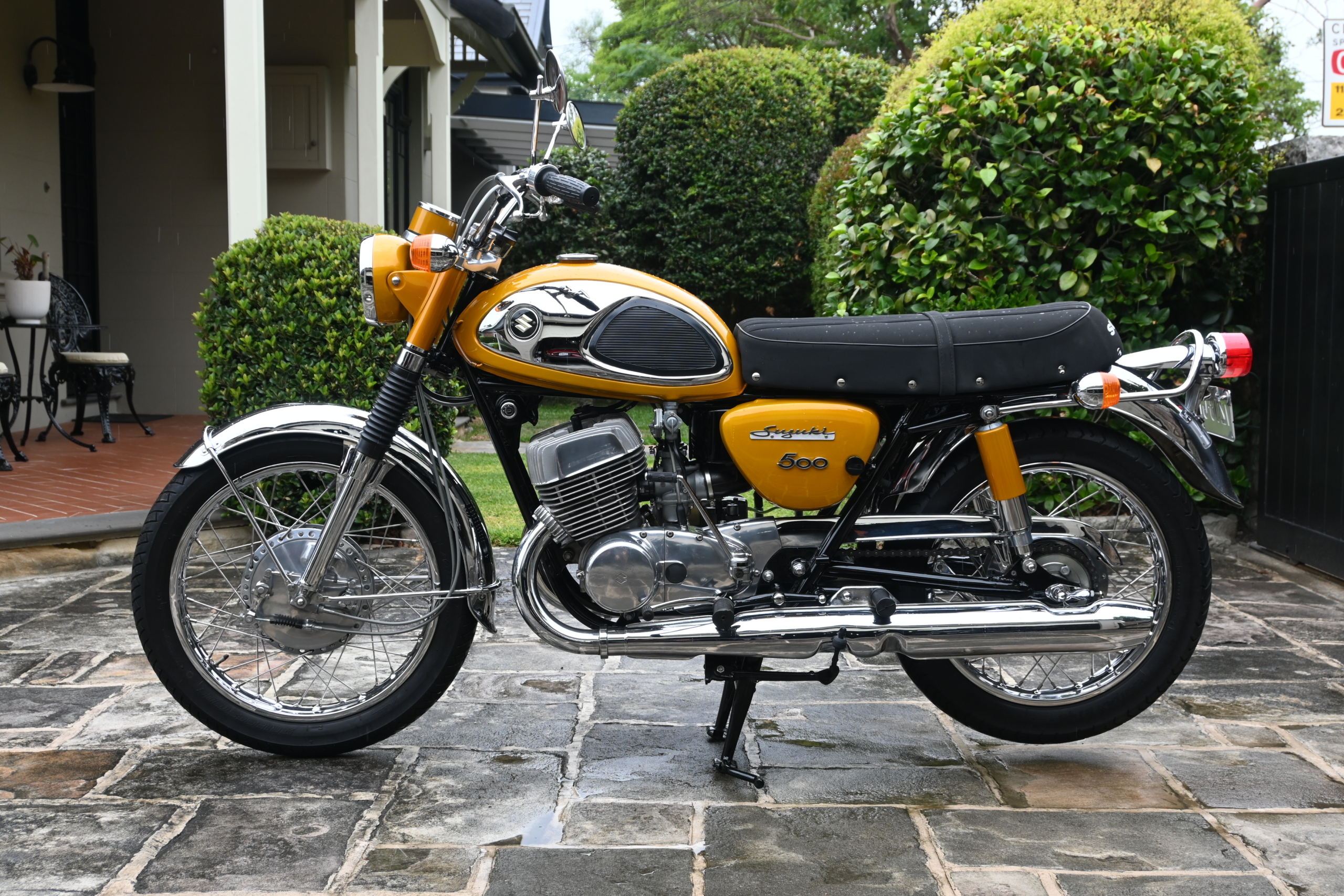
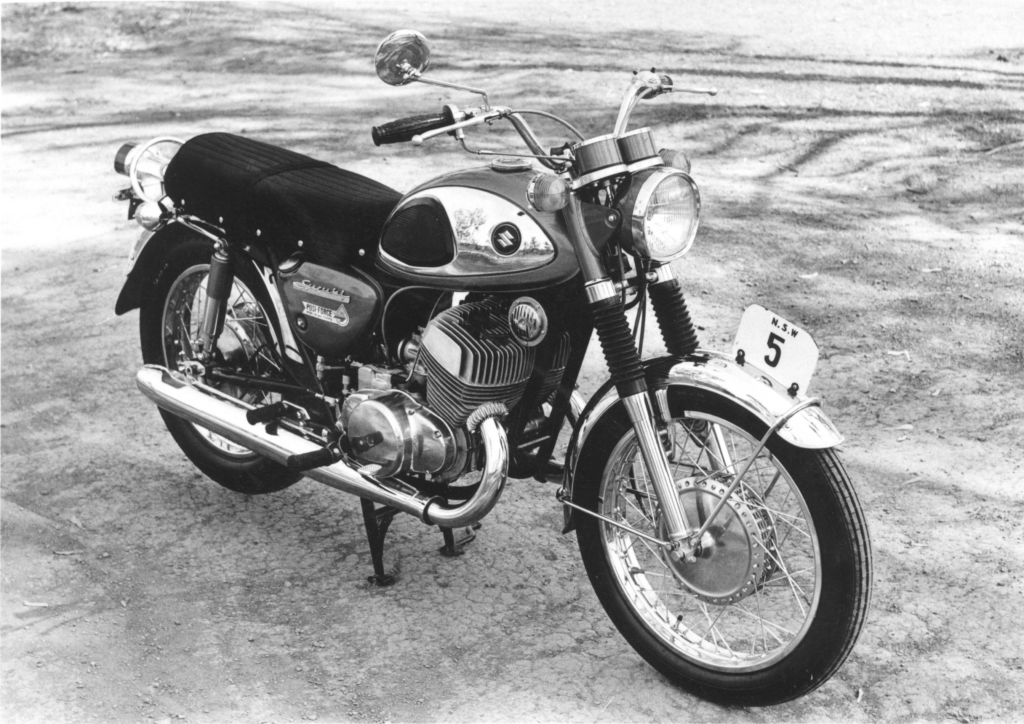
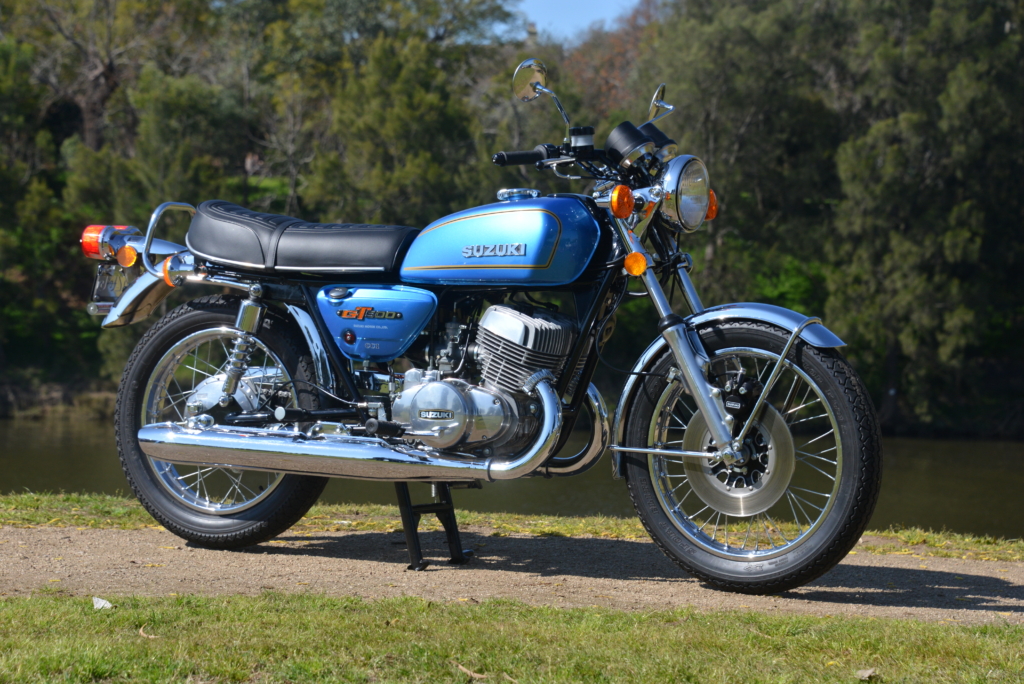
In production for just one year, the Suzuki T500 Cobra is a very significant model. It is also an exceedingly difficult model for restorers, with NOS components virtually non-existent. Confusion with the later Titan models, perpetuated by misinformation on social media and numerous websites, often leads to incorrect parts being used in restorations. This one is 99% original and a joy to behold.
A Big Two-Stroke Arrives
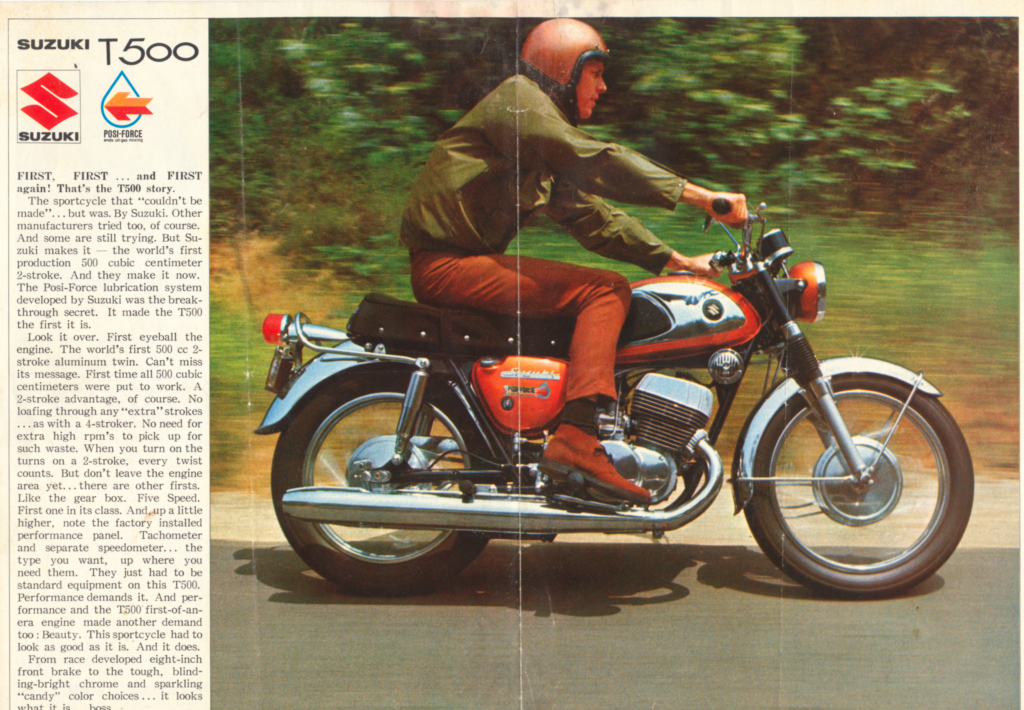
Such was the momentum of the newly invigorated motorcycle market in the mid to late ’60s that history was bound to repeat itself occasionally. The new wave of motorcycle magazines (particularly in the USA) fell over themselves to welcome each and every new model from Japan, universally observing that a country previously focused on tiddlers was now producing much larger fare—including two-strokes with big engines.
Of course, big two-strokes were nothing new. Scott had been at it for decades with their liquid-cooled twins, DKW had 350 twins and triples, Zundapp had twins, and there were numerous singles. But all the air-cooled creations were compromised in some way or another by the bugbear of the design – cooling, and hence distortion and loss of performance.
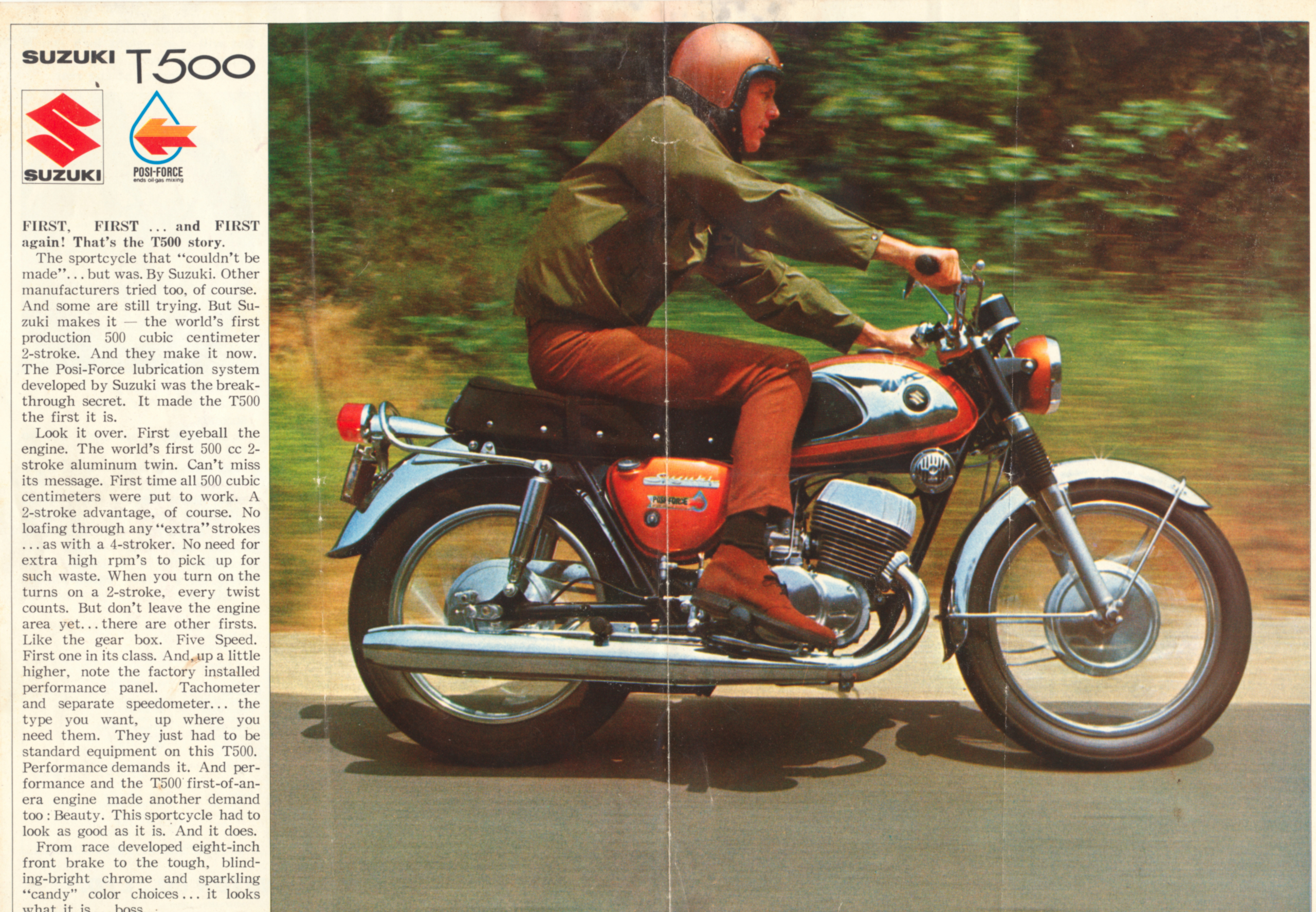
It got to a stage where pundits dismissed the feasibility of any two-stroke twin greater than 250cc. But then along came a whole bunch of 350s from Yamaha, Bridgestone, and others. Surely 350cc was the limit, at least when retaining the relative simplicity of air-cooling? That thinking largely prevailed until late 1967, when, to audible gasps at the Tokyo Motorcycle Show, Suzuki pulled the wraps off a big, fat air-cooled twin of 492cc. To quote Sir Arthur Conan Doyle, the game was afoot.
Engineering Under the Microscope
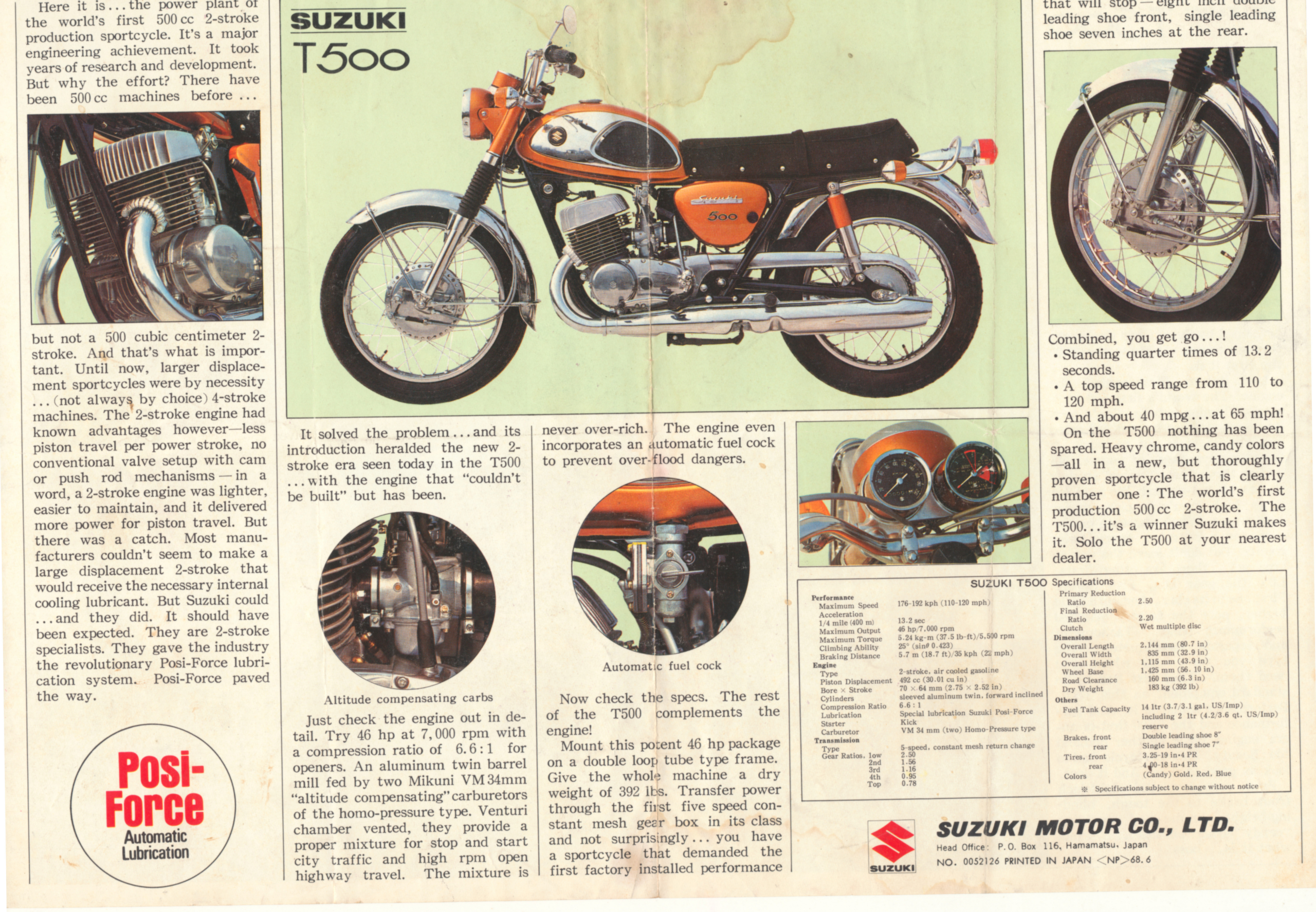
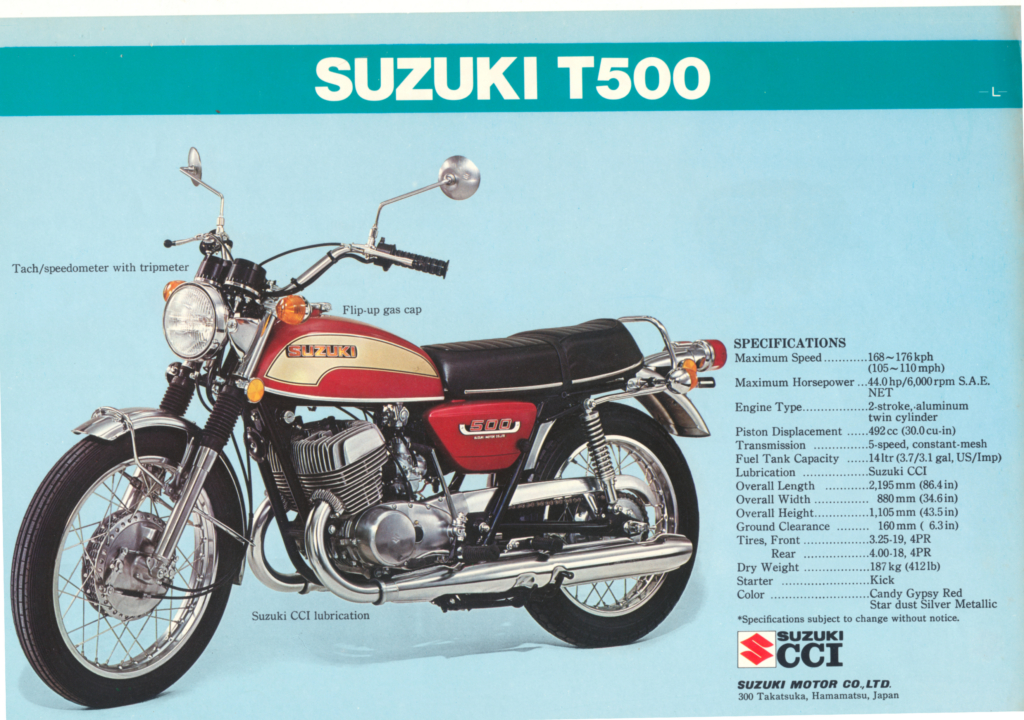
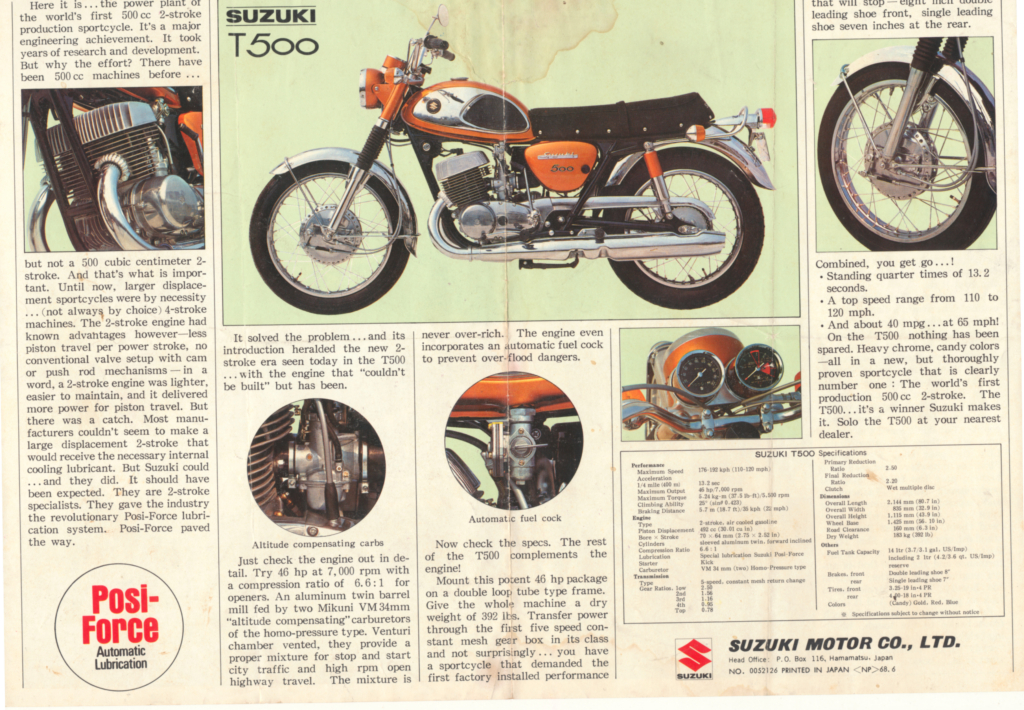
Curiously dubbed the 500/Five, the new Suzuki was immediately subjected to intense scrutiny from boffins, many of whom were confident of finding anomalies that would render the design impractical. They were disappointed. From the bottom end to the top of the cylinder heads, the Suzuki was top drawer. Downstairs in the horizontally split crankcases sat a built-up crank carried in three immense roller bearing assemblies. O-ring seals prevented lubricant from escaping from the bearing recesses and the outer races into areas it wasn’t needed, such as the clutch and the electrical department. Like the smaller Japanese 250s, transmission oil was used to lubricate the center main bearing. However, rather than return it via the clutch, it went directly back into the gearbox area to more efficiently lubricate the uppermost gears in the five-speed box, while the clutch received just the amount of oil it needed through a separate passageway.
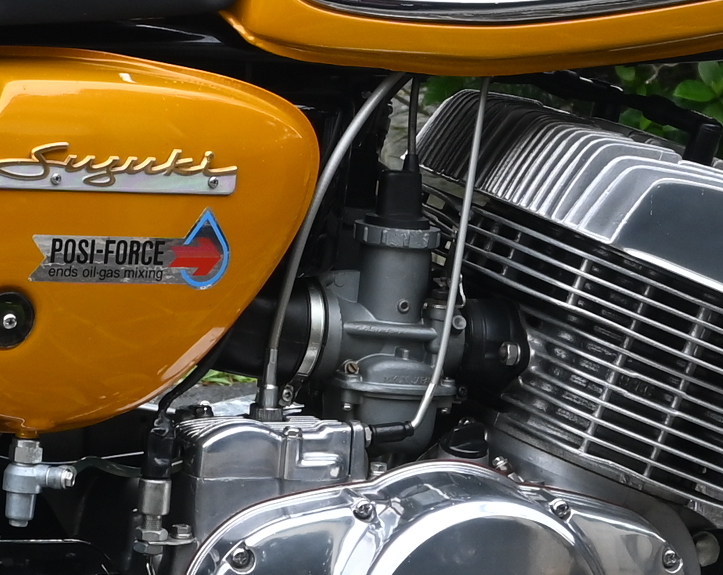
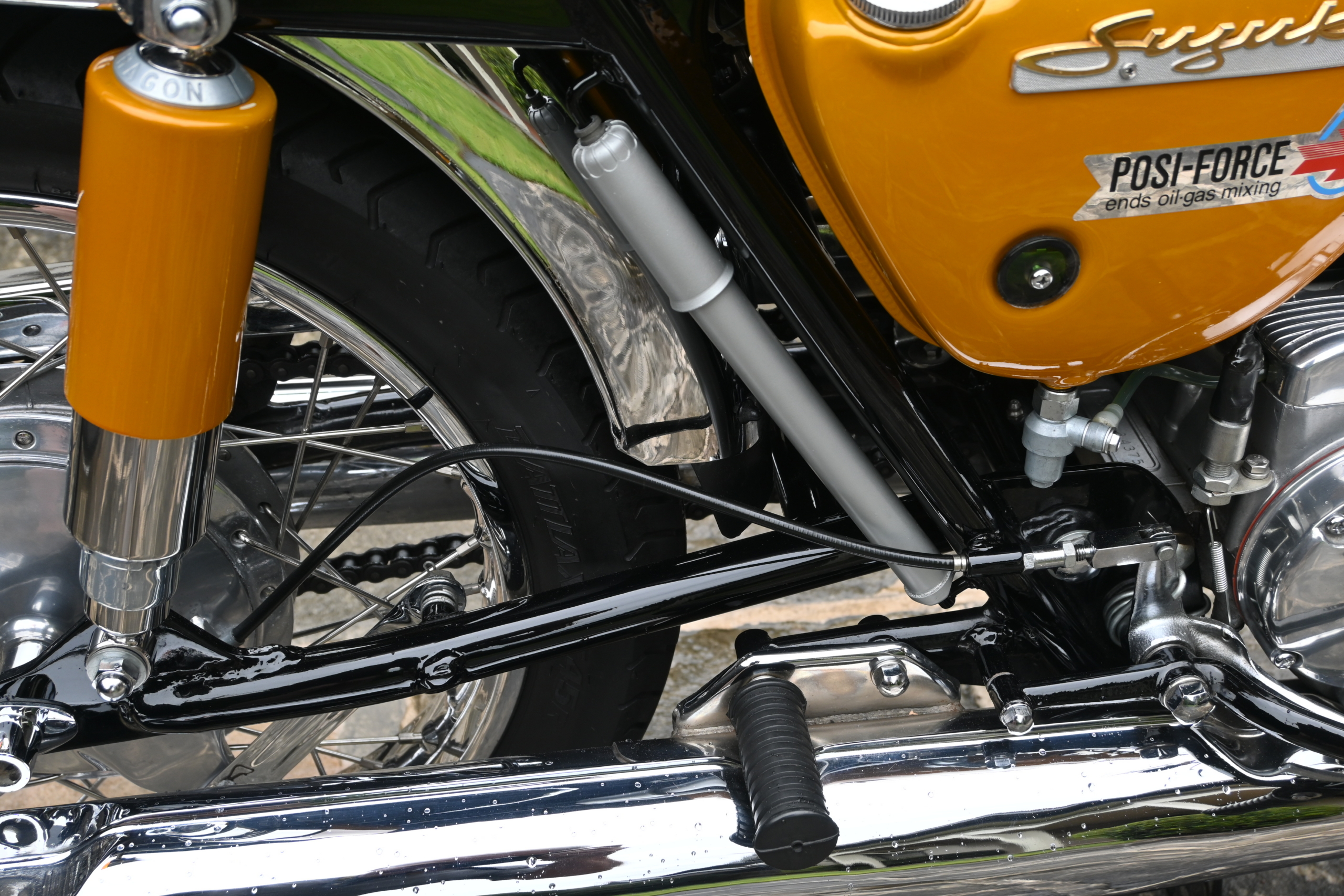
As was usual practice, the pistons and little ends were lubricated by oil mist. Suzuki’s Posi-Force oil injection system sent the liquid through the outer main bearings to be combined with the fuel/air mix supplied by the carburetors – twin 34mm Mikunis. These carbs were specially commissioned from Mikuni, who agreed to make a limited batch. The carbs are larger in almost all respects than the usual VM series and are, these days, as rare as a straight answer from a politician.
Port timing was controlled by pistons with windows cut into them (rather than grooves or notches), which was an expensive manufacturing process but provided the pistons with full-circumference skirts. Without the grooves, they were quieter. Fuel was fed into the carbs from a vacuum-operated positive-shutoff fuel tap (introduced on the T20) to complete a very advanced system.
Frame, Suspension and Brakes
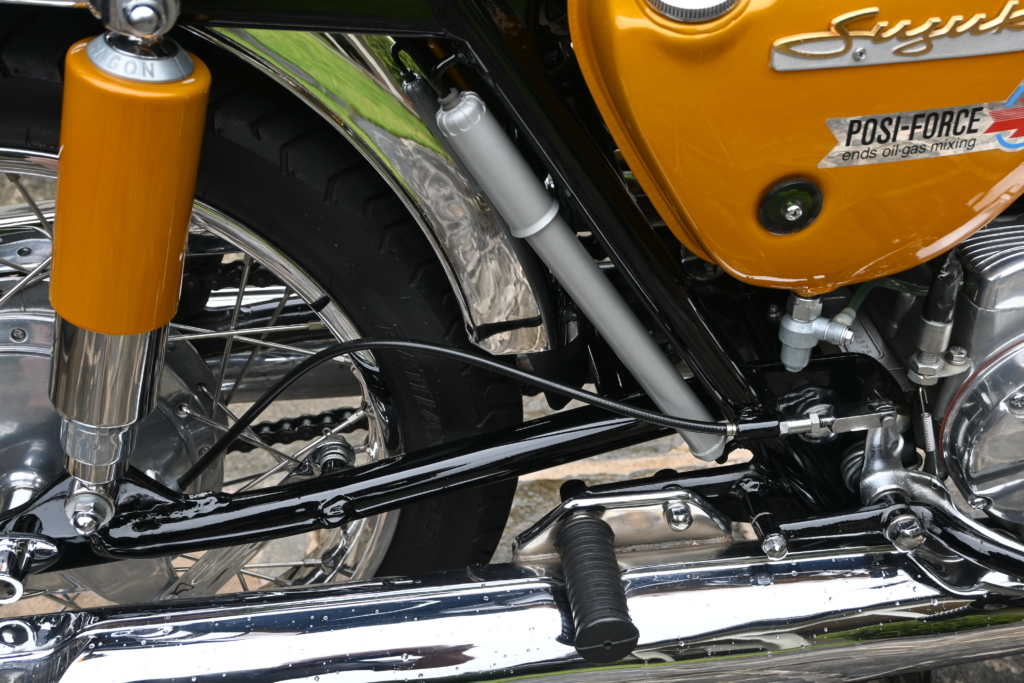
Also bearing a family resemblance to the 250 was the 500/Five frame, with thick-walled steel tubing gusseted at strategic points in a full-cradle design. The bottom rails ran straight up to meet the top mounts for the shock absorbers. Suspension, however, was regarded by testers and reviewers as perhaps the only real shortcoming. Although the rear shocks were generally seen as adequate, the front forks were fitted with fairly soft springs and insufficient damping. Suzuki responded by saying that this had been noted and design work was underway to rectify the situation. On the other hand, praise was heaped on the brakes: the front featured a very impressive-looking twin-leading shoe 8-inch design with a finned drum, and the rear had a 7-inch single-leading shoe. Even though the Suzuki looked a bit on the hefty side, its weight with half a tank of fuel was a very respectable 178kg.
The Death Valley Test
Where the accolades really gushed was in the performance department – the 500/Five was a rocket, yet amazingly tractable in the low and mid-range. To finally dispel the myths about overheating, reliability, and so on, Suzuki took a batch of the new 500s to one of the most inhospitable places on Earth: Death Valley in the Mojave Desert, California, in mid-summer. Journalists and road testers tried to burst them. Guess what? The Suzukis barely raised a sweat.
About That Name
To maintain the family tradition, the 500/Five quickly became the T500, as it should have been all along. It also gained a longer swinging arm in an attempt to improve its freeway manners. The 500/Five has become somewhat mystical, and it is generally believed that only a small batch went to the USA (one being tested by Cycle World magazine in their December 1967 issue) before production of the T500 began in earnest. The swinging arm was lengthened from 1340mm to 1425mm. Even the Suzuki museum in Hamamatsu doesn’t have one.
But the change to the T500 model name wasn’t good enough for some markets. In the US, descriptors ruled, not collections of engineering-based letters. So the T500 added another moniker – the Cobra, of the highly venomous hooded serpent variety. Fair enough, that sort of works, so we’ll use that from here on.
A Racer’s Weapon at Bathurst
From the moment the Cobra broke cover in Australia in early 1968, it was seriously eyeballed as a racing tool with huge potential. In Australia, Production Racing was rapidly gaining a foothold on most programs, although not at Bathurst with its strictly limited track time on the public road circuit. After a few attempts from 1961, the Production races disappeared from the program.
By Easter 1969, however, the Bathurst promoters could no longer ignore the fact that droves of spectators wanted to see “their” bikes on the track. And so, a single race was added – the final race on the card on Easter Saturday, April 5th, 1969. This was for both Lightweight (250cc) and Unlimited Production machines, resulting in a huge grid and a very wide range of lap times according to capacities and abilities.
A total of 49 entries were received, but by the time the huge field was gridded up for their six-lapper, the light was already fading. First away was Bob Rosenthal’s Dunstall Norton 750 (which possibly stretched the “Production” tag a touch), showing serious mumbo up the mountain and down Conrod Straight. But alas, after two laps, the Norton’s lubricant began to go places it should not have gone, and through into the lead came Bill McDonald on a Cobra.
Bill was more known as a dirt track rider, but he didn’t have to be asked twice when Bankstown (western Sydney) Suzuki dealer Norm Askew decided to enter a Cobra and offered it to Bill. From the time he took over at the front, McDonald pulled away steadily to take the win by thirty-five seconds from Tony Hatton on Paul Spooner’s 350 Yamaha. There were plenty of Cobras sold in the weeks following Easter 1969. At $795, it was a bargain.
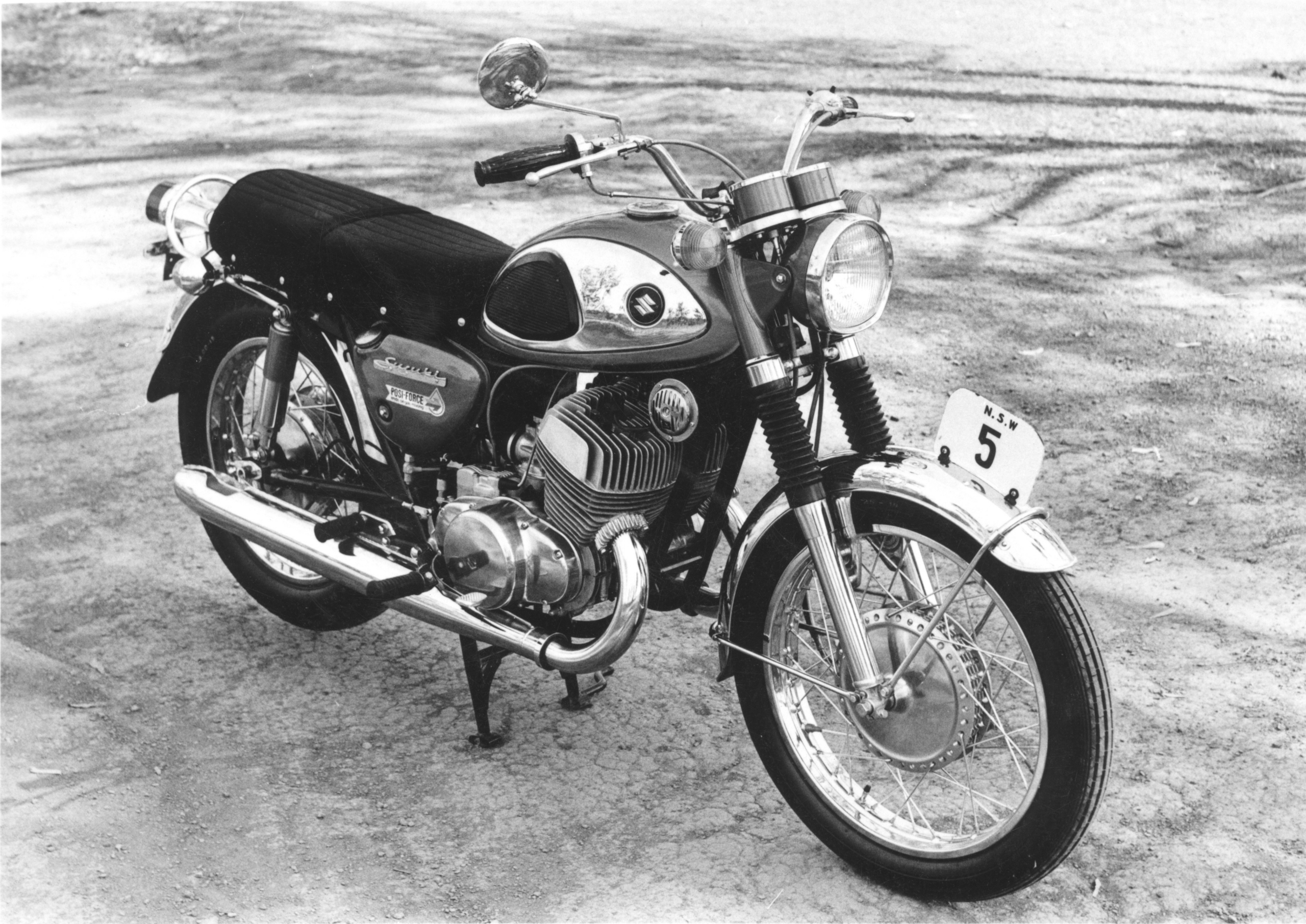
Even the Sydney police wanted Cobras, and a batch was soon added to the fleet that traditionally comprised Triumphs and BMWs. The police found the Cobra to be flexible around town, with enough performance to apprehend all but the most determined felons. Police riders reported that the Suzuki was comfortable and not tiring to ride.
Styling and Legacy
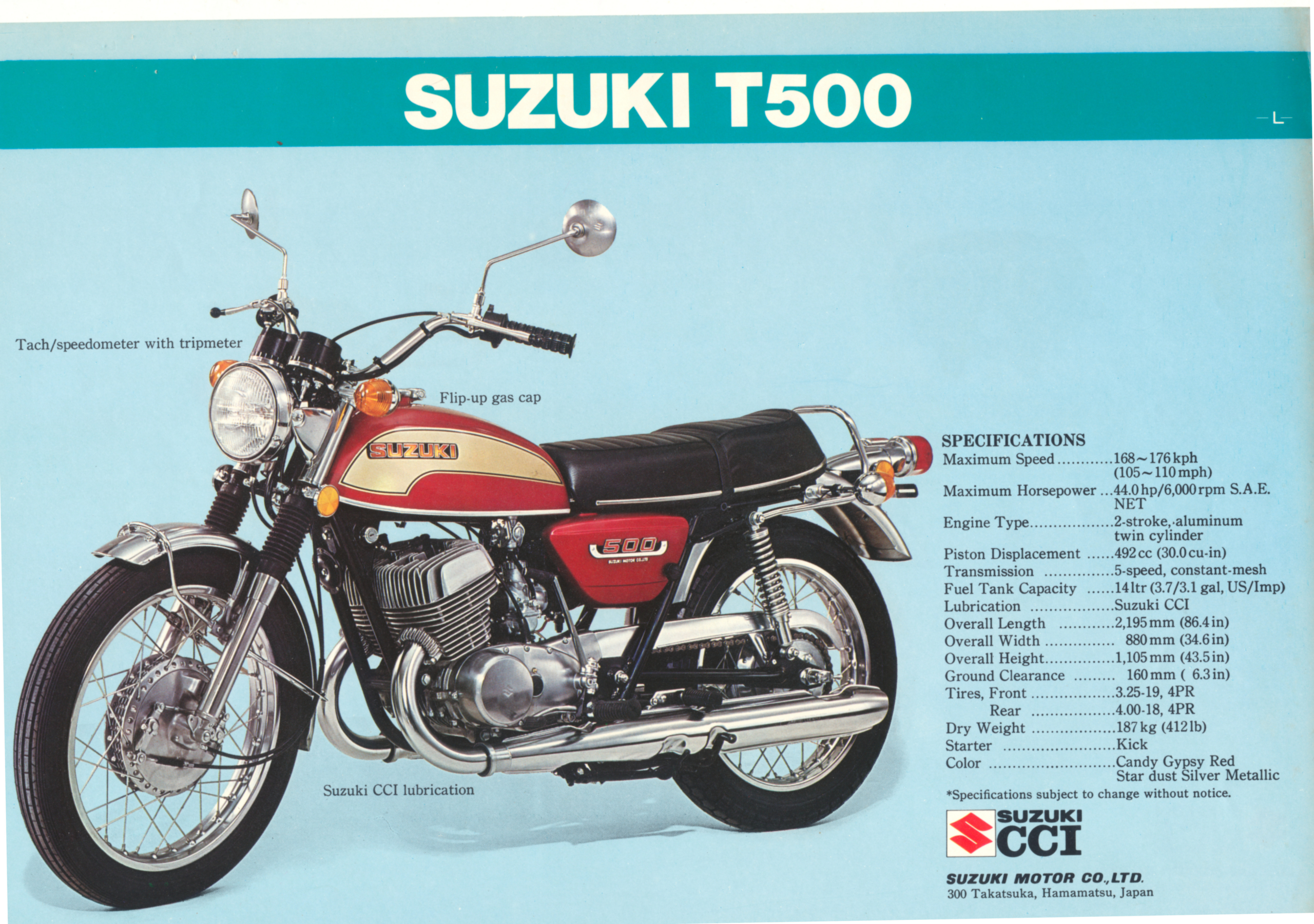
In the looks department, the Cobra certainly had a foot in the accepted styling of the day. Available in a rather flamboyant candy gold, red, or blue, the tank had chrome clip-on side covers and rubber knee pads that had been standard wear for quite a while. The chrome-plated mudguards were sleek and minimalist, unlike the heavily valanced items seen on many touring bikes – and the Cobra was certainly marketed as a tourer, at least in Australia.
The Cobra was short-lived, replaced in just one year by what was termed the Titan II, which was basically a Cobra with more modern styling. Interestingly, the Titan was still sold in the UK as the Cobra because well-known dealers Read Titan had the name registered for motorcycle use. The Titan dispensed with the chrome-sided fuel tank and had smaller 32mm carbs and a slightly lower state of tune (and a reduced appetite for petrol), which seemed to fit in with the adage that, at least with Japanese bikes, the first model was always the fastest.
Despite the almost universal emphasis on four-strokes, the big air-cooled twin stayed in the Suzuki line-up until 1977, the final models being the disc-brake GT500A and GT500B – which is not a bad innings.
A Major Rescue Mission
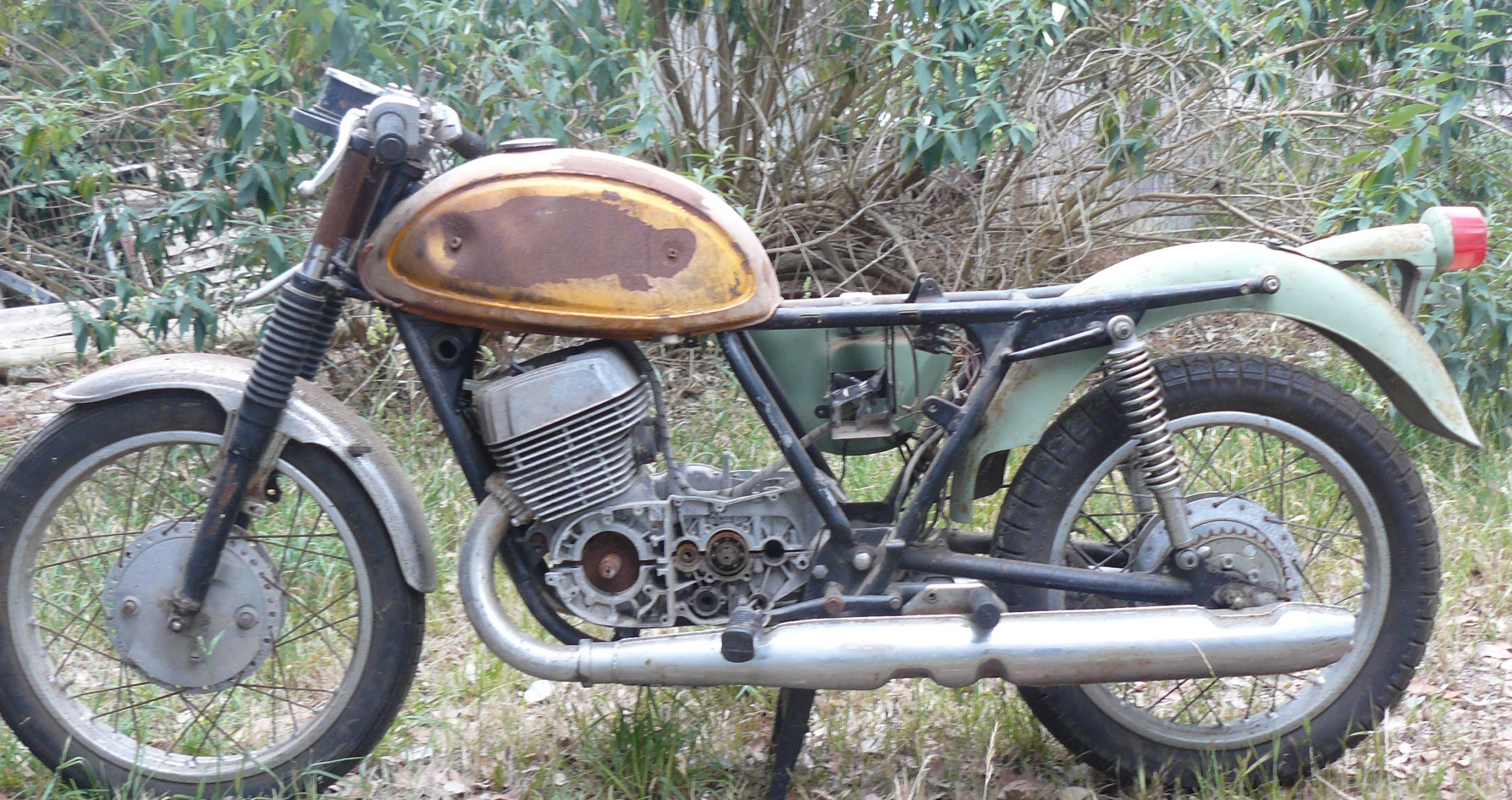
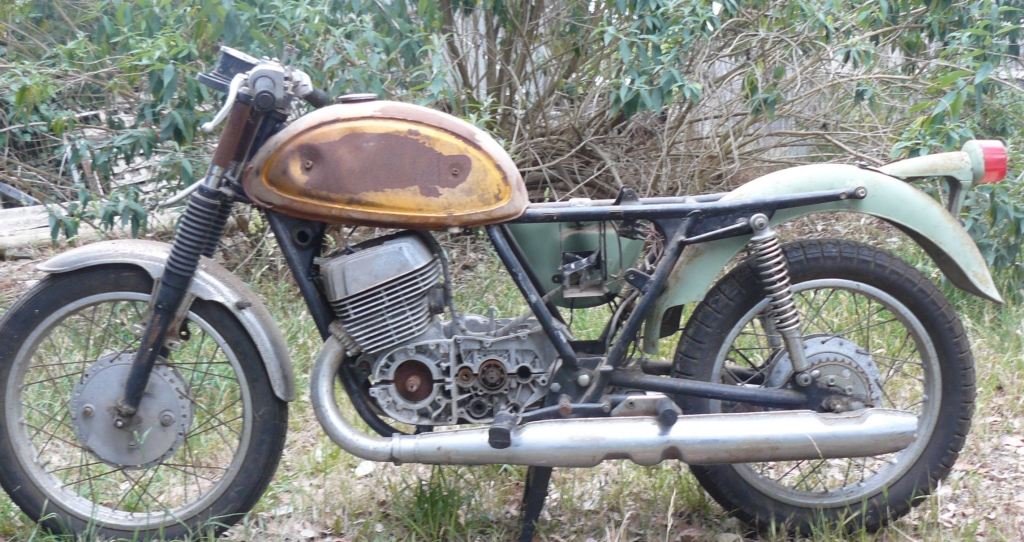
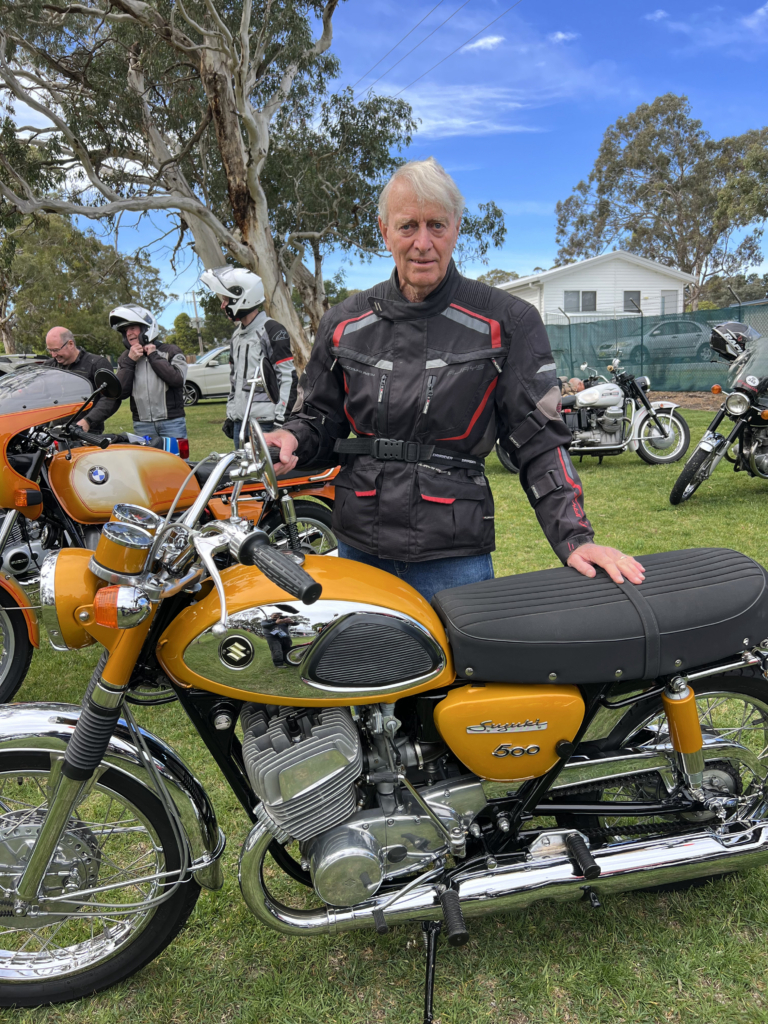
Considering the incredible standard of Paul Chapman’s resurrection of the featured Cobra, it’s hard to believe he started with so little. An empty engine and gearbox, missing or incorrect tinware, headlight, wiring, and switches… it was quite a challenge.
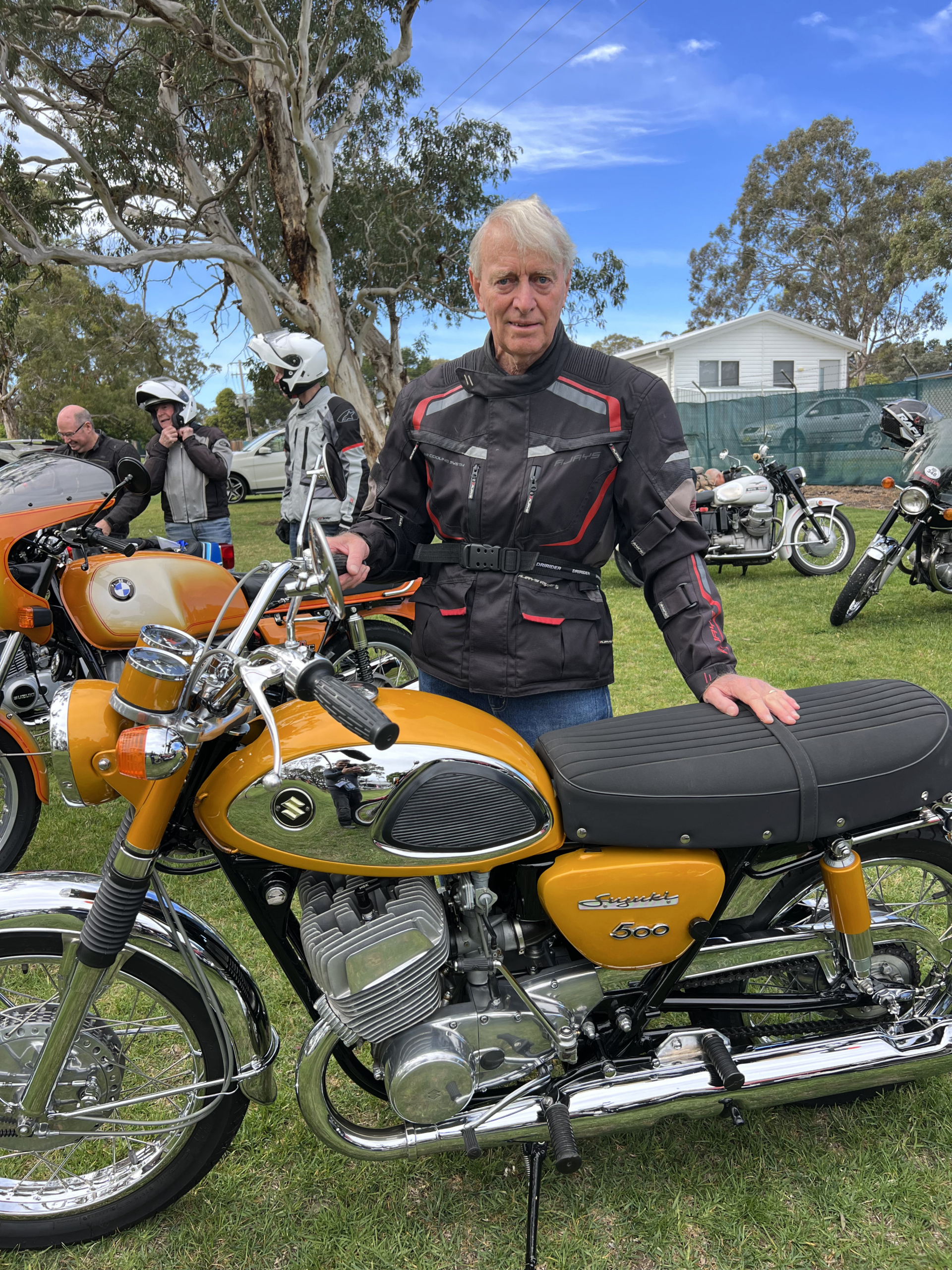
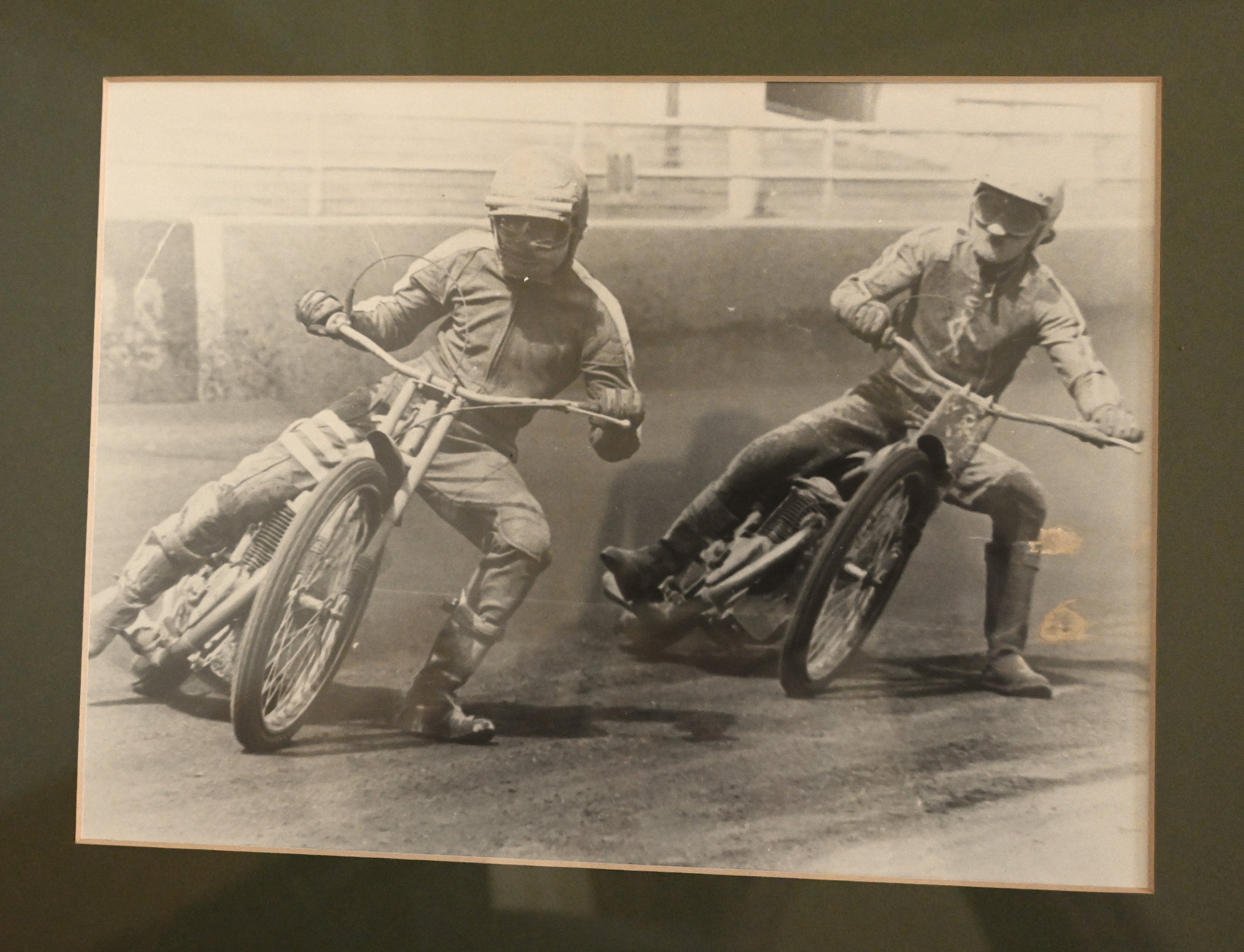
Paul is a veteran racer who rode in speedway and motocross before successfully making the transition from the pure road racing classes to Historic Racing when it began in the mid-’70s. Pride of place in his home office is the painting by Alan Puckett that he received following his win in the 1975 Ryans of Parramatta Feature Race at Amaroo Park – one of the very first Historic events. His mount on that day was a BSA owned by Don Halliday, who supported Paul’s career over the years. The BSA was a hybrid with a locally made Smith frame housing a pre-war Gold Star engine. Don Halliday is still with us and has an excellent collection of motorcycles and cars, the pride of which is Jack Brabham’s original #28 midget Speedcar.
Finding the Cobra
The purchase of the Cobra came about through a conversation with Brian Cutler, who had founded the Badge Replica business that supplies so many tank badges and similar items for restoration projects. Brian attended one of the Vintage Japanese Club’s annual rallies in NSW and heard that a Cobra was in existence in the vicinity, so he sought it out. He mentioned the discovery to Paul Chapman, and in January 2017, Paul drove to Melbourne and brought the Cobra back to Sydney. It was a heart-stopping moment as Paul surveyed the decrepit carcass that now sat in his workshop, and the enormity of the project took hold as he realized just how scarce these bikes had become since their solitary year of production.
The Hunt for Parts
“The crank was just a solid block of rust,” Paul explains, “and there were stacks of things missing, like the mufflers. These were one-offs, only used on the Cobra, but I was lucky to get a set from Paul Miller in the US, who was the source of an amazing amount of Suzuki stuff and didn’t mind hunting for bits he didn’t personally have in stock. For instance, the mirrors are also one-off and don’t have the Suzuki ‘S’ stamped into them like the later models, but Paul found a set in – of all places – Moscow, at a motorcycle dealer that sold Suzukis and locally made bikes.”
“Jack Taylor (who recently celebrated his 100th birthday and only stopped riding at 99) was a big help in allowing me to trawl through his stock of T500 parts for the engine and transmission, although these were mainly Titan parts which were mostly incompatible with the Cobra.”
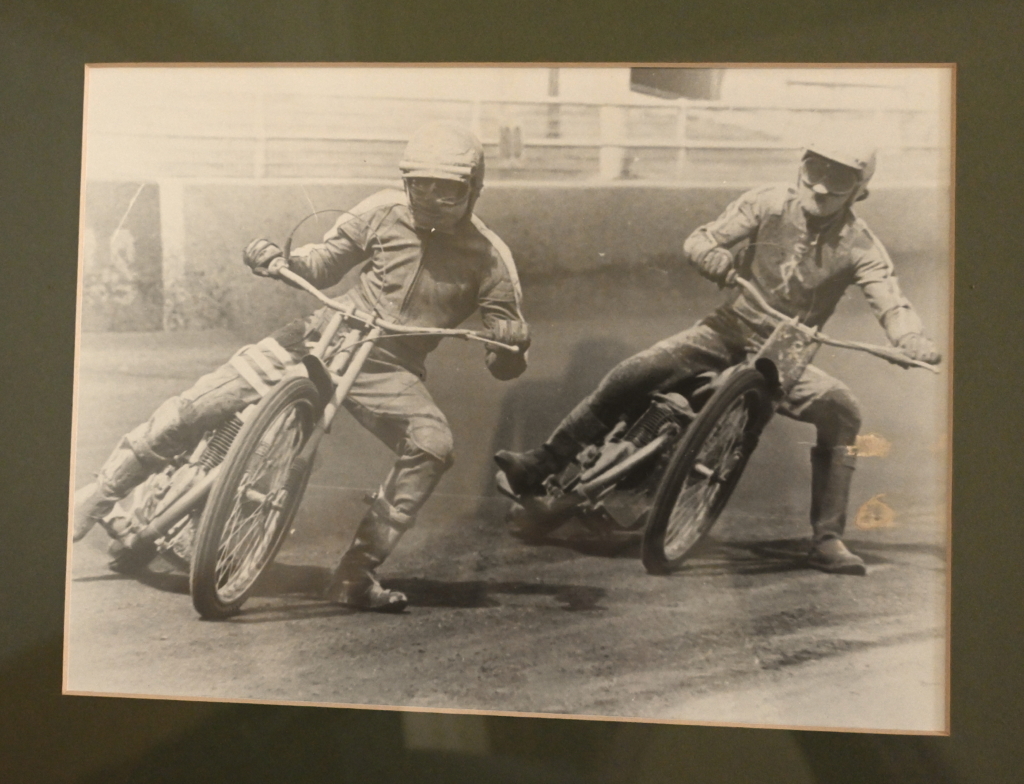
During his speedway days, Paul raced against Carl Askew, who remains a good friend. “Carl’s father, Norm Askew, was a Suzuki dealer who entered the Cobra for Bill McDonald at Bathurst, and Carl served his apprenticeship with Hazell & Moore, the Suzuki importers, and worked on the T500s, so he knows them backwards,” says Paul. “With this restoration, Carl was a big help to me with advice on the motor, and I put it together under his supervision. Carl’s former business partner, Peter Jones, did the crank and the rebore. Cobra engines had two oversizes – plus 20 thou and plus 40 – but my barrel was already at maximum oversize. Then I discovered that Wiseco in the USA made plus 60 and plus 80 forged pistons, and I was able to get a set of their plus 60 pistons, so that equates to a capacity now of 516cc.”
Restoring the Fine Details
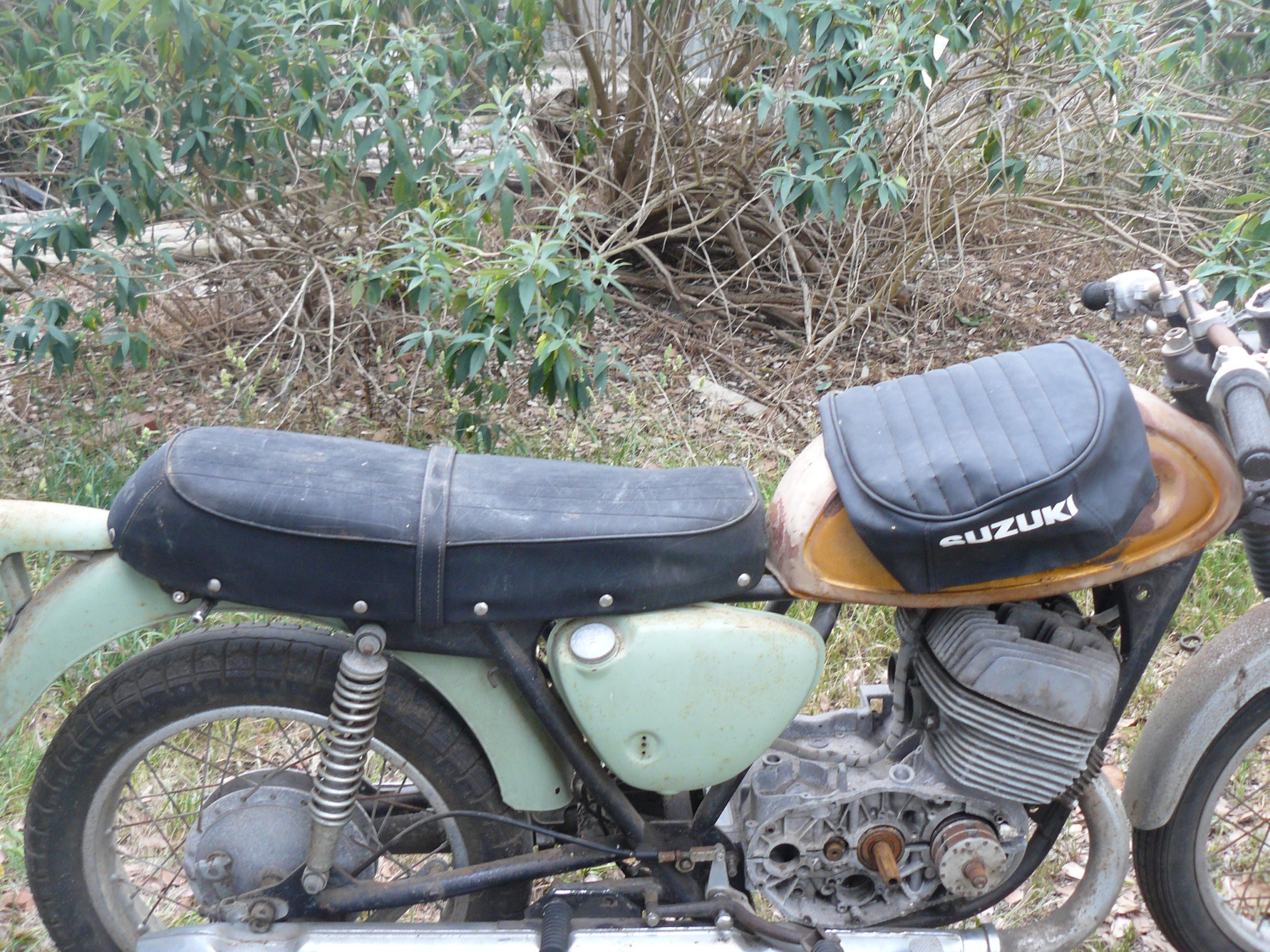
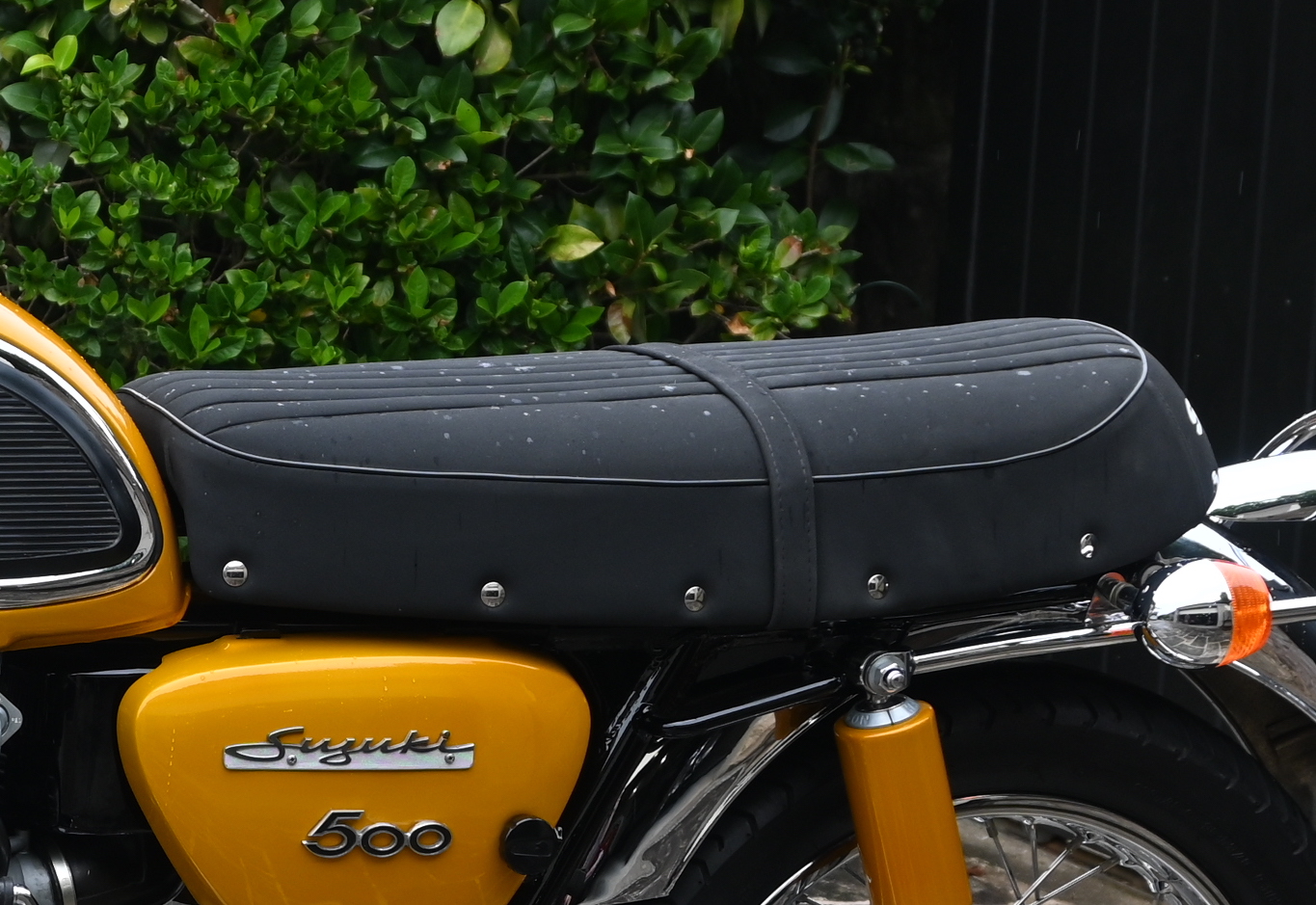
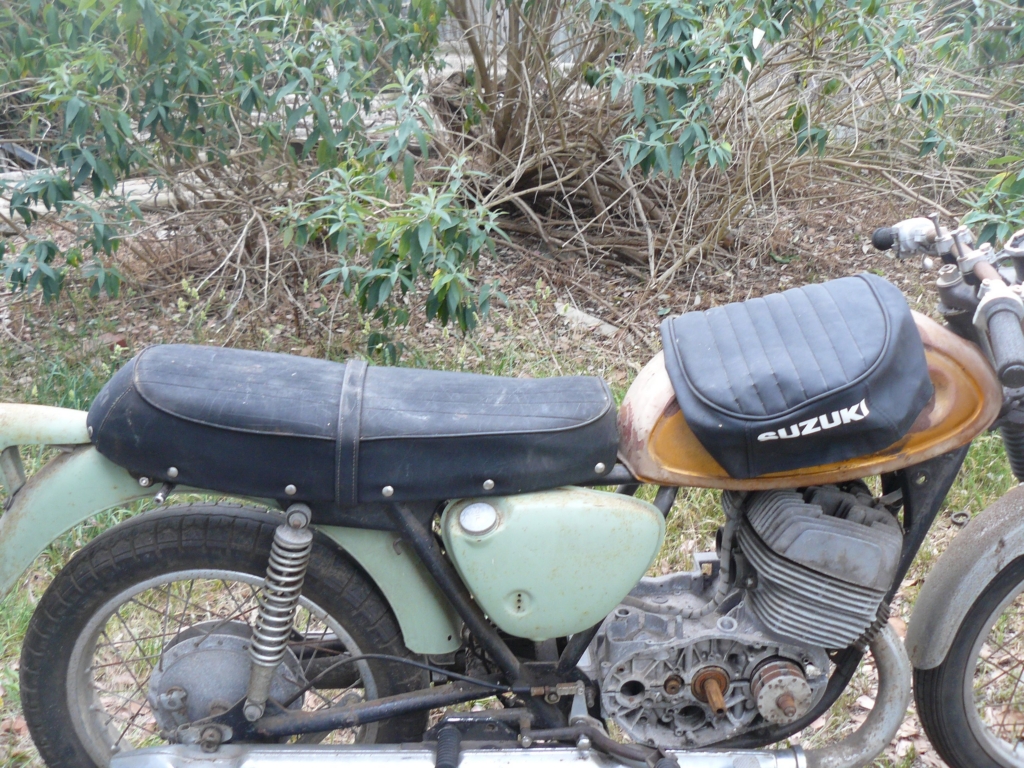
Fortunately, the speedometer and tachometer were there, although in dire condition, but these were rebuilt by Peter Boros in Sydney. Peter and Paul share the distinction of both owning a Velocette Sportsman, so they have a common language. The unique 34mm Mikuni carbs also came with the bike and were able to be refurbished. Another quirky component was the seat – a further one-year-only Cobra part. The original seat was fortunately with the bike, but the cover is a non-slip suede/velour fabric that disappeared on the subsequent Titan.
The seat itself was entrusted to Tony O’Conner at Eldorado in Adelaide, but a global search failed to unearth an original cover. Tony was able to ascertain that an early Honda model used similar velour for the seat, so that widened the scope of the search a little. Finally, an artisan in Thailand was located with a stock of the material and was able to make an almost-perfect original with the embedded pattern and side rivets. The stunning gold paintwork was done by the late Ron Keed and looks as good today as when it was applied eight years ago.
Two Completely Different Animals
The project brought home to Paul the fact that, unlike popular opinion, the Cobra and its replacement, the Titan, were completely different animals. “Hardly anything is directly interchangeable between the models – the fuel tank, oil tank, seat, and much of the mechanical components are different, as I found out. One bit that was missing was the rear passenger grab rail, which is unique to the Cobra. After a lot of searching, I was able to have one made by an elderly chap in England. In fact, I had two made, just in case – the other one is hanging up in my shed. I have also owned a ’73 Titan, and the two bikes are totally different to ride – the Cobra is quicker, but it also absolutely gobbles fuel, whereas the Titan doesn’t.”
Back on the Road
Eleven months after the project began, the Cobra was ready for club registration, which it gained in December 2017. Its first rally outing was the Canberra Rally in March 2018, and there have been lots more since. It’s always a show-stopper and an award winner, such as the Bike of the Rally at the 2025 Classic Rider Club of Goulburn Rally reported in OBA 126. The only major component that differs from the original are the Hagon rear shocks, but this is a worthwhile compromise for a motorcycle that is ridden regularly and not just for show. Nobody seems to quite agree on just how many Cobras were built before the Titan took over, but it wasn’t many, and even fewer have survived in absolutely original specification. Now there’s one more.
Specifications: 1968 Suzuki Cobra T500
|
Engine |
Twin cylinder piston port two stroke, air cooled |
|---|---|
|
Compression ratio |
6.6:1 |
|
Bore x stroke |
70mm x 64mm |
|
Capacity |
492cc |
|
Power |
46hp at 7,000 rpm |
|
Torque |
50.8 Nm (37.5 ft lb) at 5,500 rpm |
|
Lubrication |
Suzuki Posi-Force |
|
Starting |
Kick |
|
Carburation |
2 x Mikuni VM34 |
|
Transmission |
5-speed, chain final drive |
|
Wheelbase |
1425mm |
|
Dry weight |
183kg |
|
Tank capacity |
14 litres |
|
Brakes |
Front: Twin leading shoe 8-inch |
|
Tyres |
Front: 3.25 x 19 |
|
Colours |
Candy Gold, red or blue |
|
Price (Australia 1968) |
$795.00 |