From our Old Bike Archives – Issue 102 – first published in 2022.
Story: Nick Varta • Photos: Jim Scaysbrook
If this motorcycle looks familiar, it’s because the basic design, in post-war times, wore many badges, but perhaps none as striking as when it was clothed in Italian Red…
There are few more illustrious brands in the automotive world than Maserati. Images of luscious red sports cars spring to mind, as well as the svelte Grand Prix cars that began pre-war and culminated in the delicious 250F – surely one of the most beautiful Formula 1 cars ever created. But there was more to the brand than is commonly remembered, including a brief period as a motorcycle manufacturer.
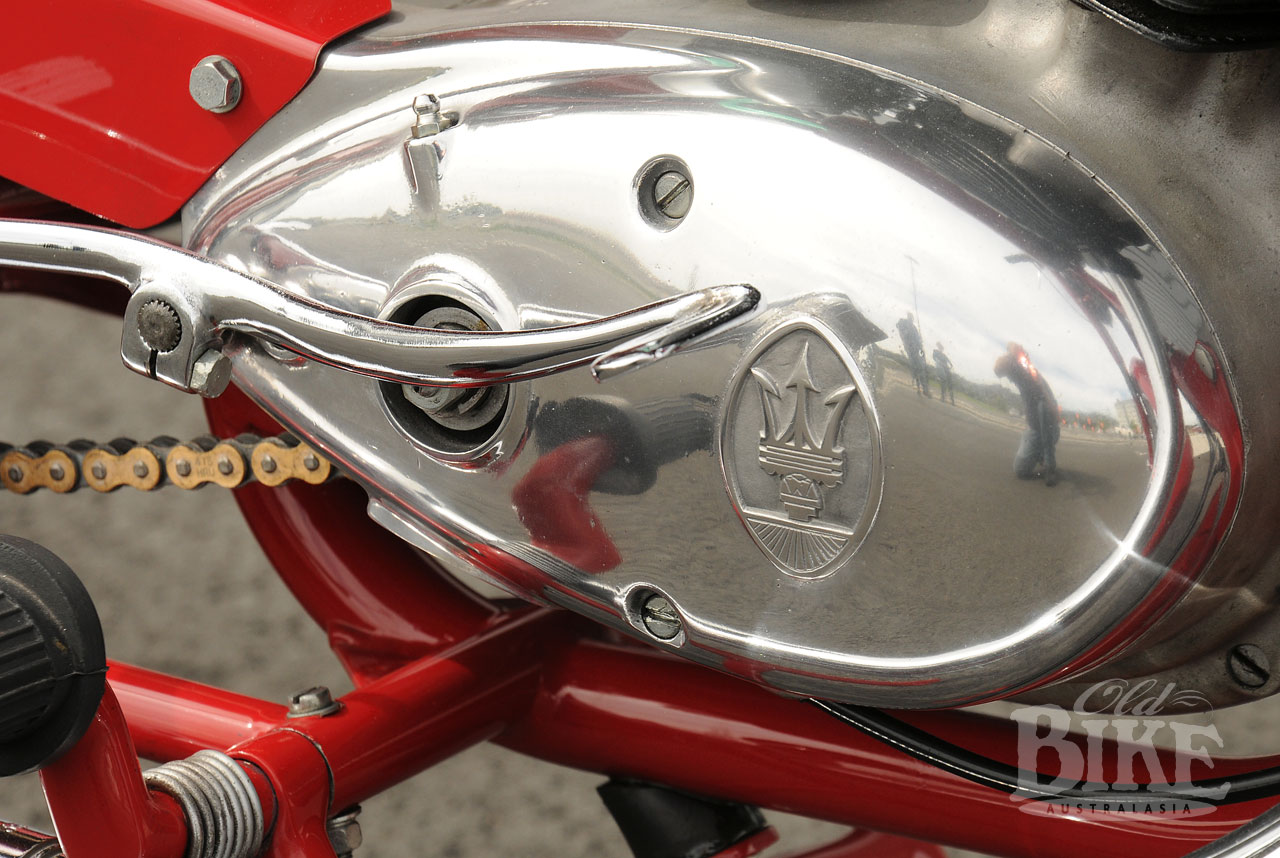
Rodolfo Maserati, a railroad worker with a passion for precision engineering and powered machinery, had seven children with his wife Carolina Losi. Three of the boys, Alfieri, Ettore and Ernesto, opened a car workshop in Bologna in December 1914, and five months later Italy was at war. The company struggled through, making spark plugs and batteries, but post-war embarked on their real passion; the design and building of fine sporting cars. The first car, the Tipo 26, released in 1926, proudly displaying the Trident symbol taken from the statue of Neptune in their home town of Bologna.
A series of superb vehicles followed, including the 16-cylinder V4 model that established a new World Record of 246.069km/h for the Flying Ten Kilometres in 1929. Eight years later, the three brothers accepted an offer from Adolfo Orsi to purchase the business. Orsi moved the Maserati production to nearby Modena. The brothers remained as engineering consultants with the new organisation on a 10-year contract, but when this was up in 1947 they left to form a new company called OSCA. Importantly and somewhat shrewdly, the brothers insisted on a deal whereby they retained the right to use the family name and logo.
By all accounts Orsi, with a diverse portfolio of manufacturing enterprises, did a good job with his acquisition, supplying a dealer network with sporty cars and building small numbers of cars purely for competition in the hands of private owners. Orsi was also well aware of the need to anticipate industry trends. His sister Ida became the head of the division making automotive components, chiefly spark plugs and batteries that had been the original company’s staples, which became completely separate from the car company.
It was a time of considerable commercial unrest in Italy and Orsi’s companies were plagued with a series of strikes, especially in his steel foundries, which led to the decision to split the company into further segments. With the sales of small capacity motorcycles remaining healthy following WW2, Orsi decided to enter that field as well, and the most expedient way of doing so was to purchase an existing manufacturer. Italmoto itself had begun in 1952, producing a conventional (DKW-inspired) 125cc two stroke single and a 160cc overhead valve four stroke single. However the company had struggled for capital and was easy pickings for Orsi. Ida Orsi also assumed control of the new Maserati motorcycle division.
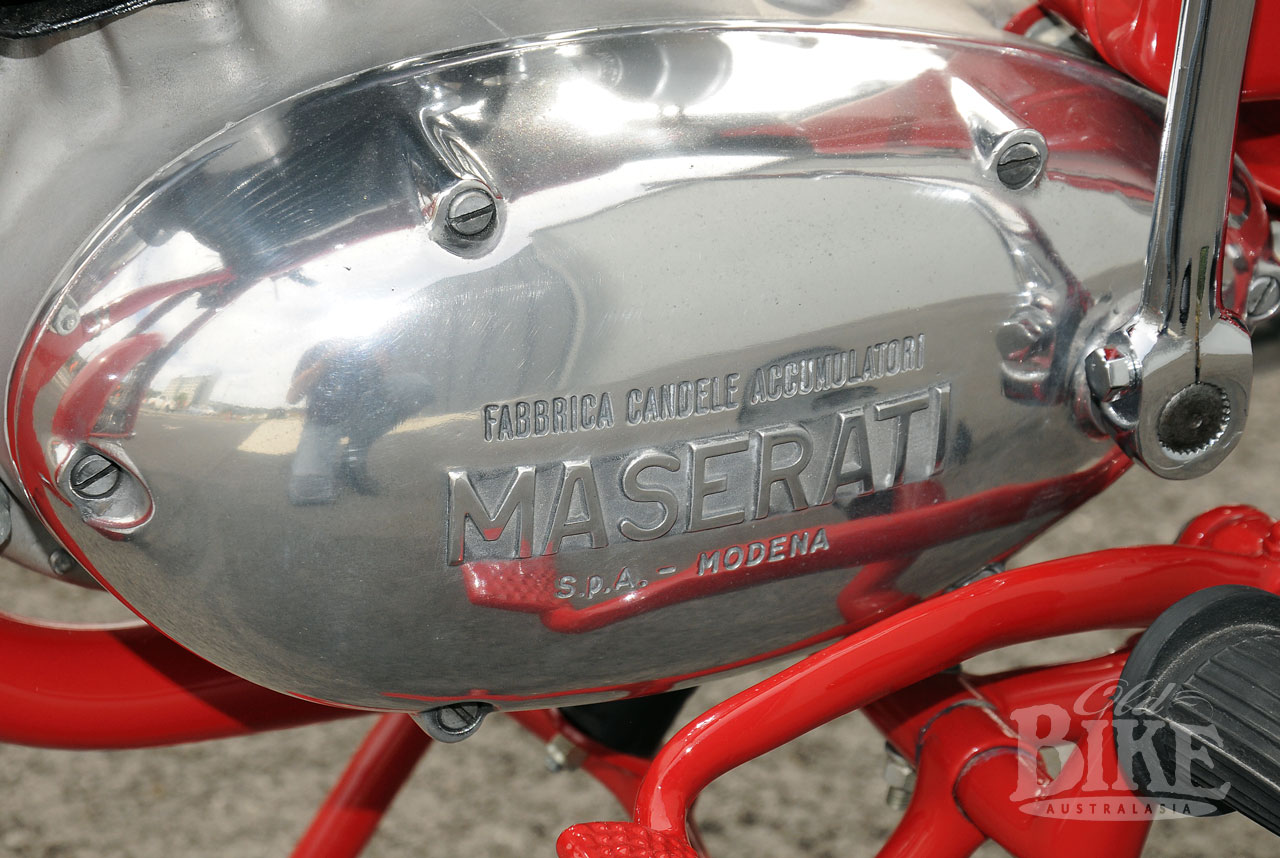
There had been a motorcycle connection in the Maserati family well prior to this. The eldest Maserati son, Carlo, built a motorcycle as a commission from the Marchese Carcano around 1898 and raced it for two years in the big inter-city events that were immensely popular in Italy. It was called, naturally enough, a Carcano, but Carolo died in 1910 and it looked like the motorcycle dream died with him, as the other brothers were much more interested in cars (and spark plugs). In fact the original name for the Maserati factory in Bologna was Fabrica Candele (spark plug) Accumulatori (battery) Maserati S.p.a.
So, almost half a century later, motorcycles were back on the menu, albeit a menu with a different owner. Maserati (Orsi) quickly gave the Italmoto range a make-over, planted the Trident badge on the petrol tank and crankcases, and set about production of the 160, 125 and a 50cc, all of which were available in sport or touring guise. Of them all, the 50 was the sportiest and quite popular with the racing set for that capacity class, as was the later 75cc version.
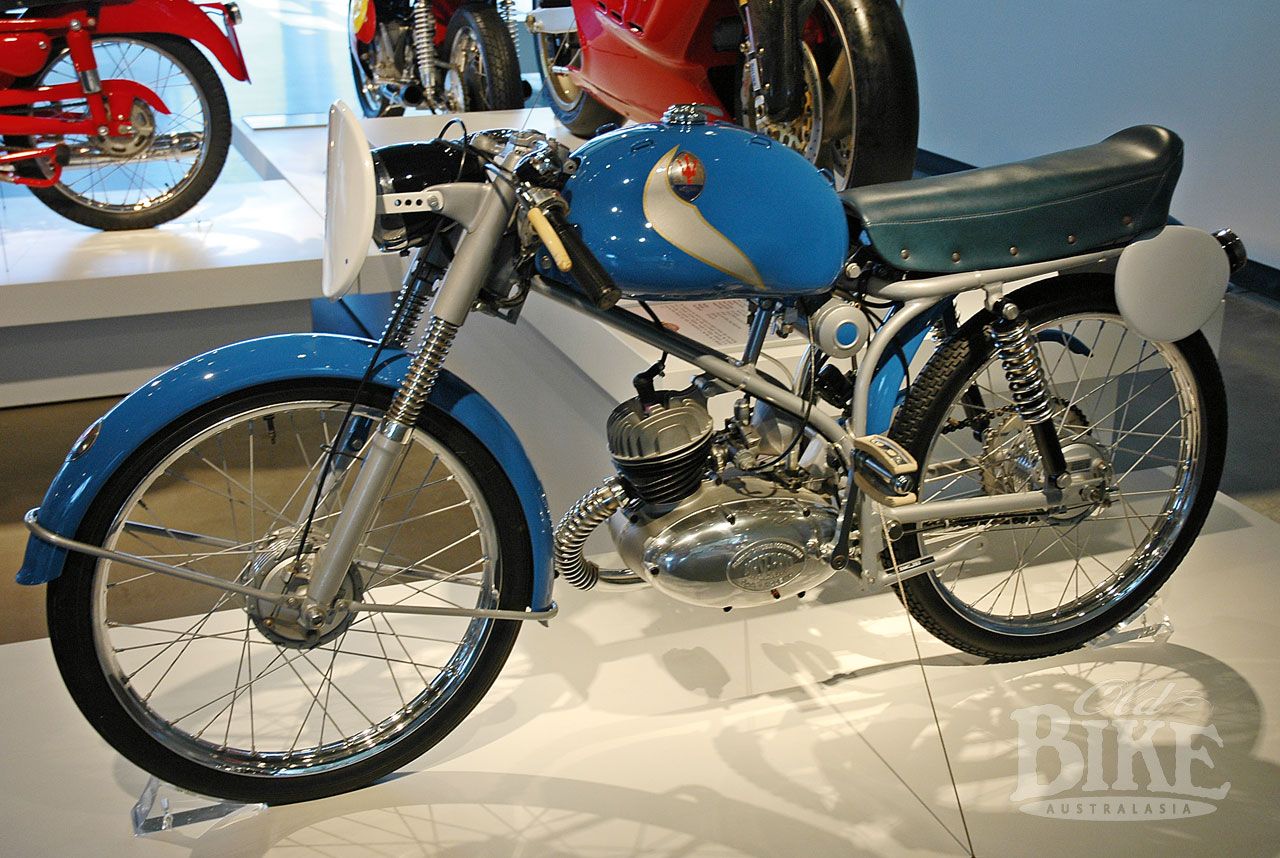
The first version retained the Italmoto pressed-steel girder fork but by 1955 the Maserati T2 was fitted with a more modern telescopic front fork and swinging arm rear suspension. Full width hubs characterized both models and the claimed top speed was 75/80 km/h. At this time the Italian motorcycle industry was particularly buoyant. MV Agusta, Gilera, Moto Guzzi and Mondial were dominating Grand Prix racing, with Ducati, Laverda, Morini, Benelli, Rumi and Bianchi ruling the important Italian Gran Fondo street races. After being outclassed in the 1954 and 1955 Motogiro d’Italia for smaller capacity machines, Maserati produced a sporting T2 125 GTS for the 1956 event. Now with 7 horsepower and a four-speed transmission, the new 125 T2 GTS managed third (Falzoni) and fourth (Guido Borri) in the Production 125cc class. For 1957 the GTS went into regular production, this sporting model proving popular over the next few years.
At the other end of the scale, the-four stroke 160 was no rocket ship. Produced as the Tourismo 160/T4 and the Lusso 160/T4, the main difference being full width hubs and a speedometer on the luxury model. Both had swinging arm frames with telescopic front forks, aluminium alloy Borrani rims, flat, sporty handlebars and dual seats. The engine was slightly over-square at 60mm x 58mm bore and stroke, producing 7.5hp at 6,000 rpm, with a four-speed gearbox in unit. Next came a 175cc variant, the S-4, with a 60.8 x 60mm bore and stroke and 7.5:1 compression ratio that pushed power to a respectable 15hp at 8,500 rpm. Unlike the pushrod 160, the 175 sported a chain-driven single overhead camshaft.
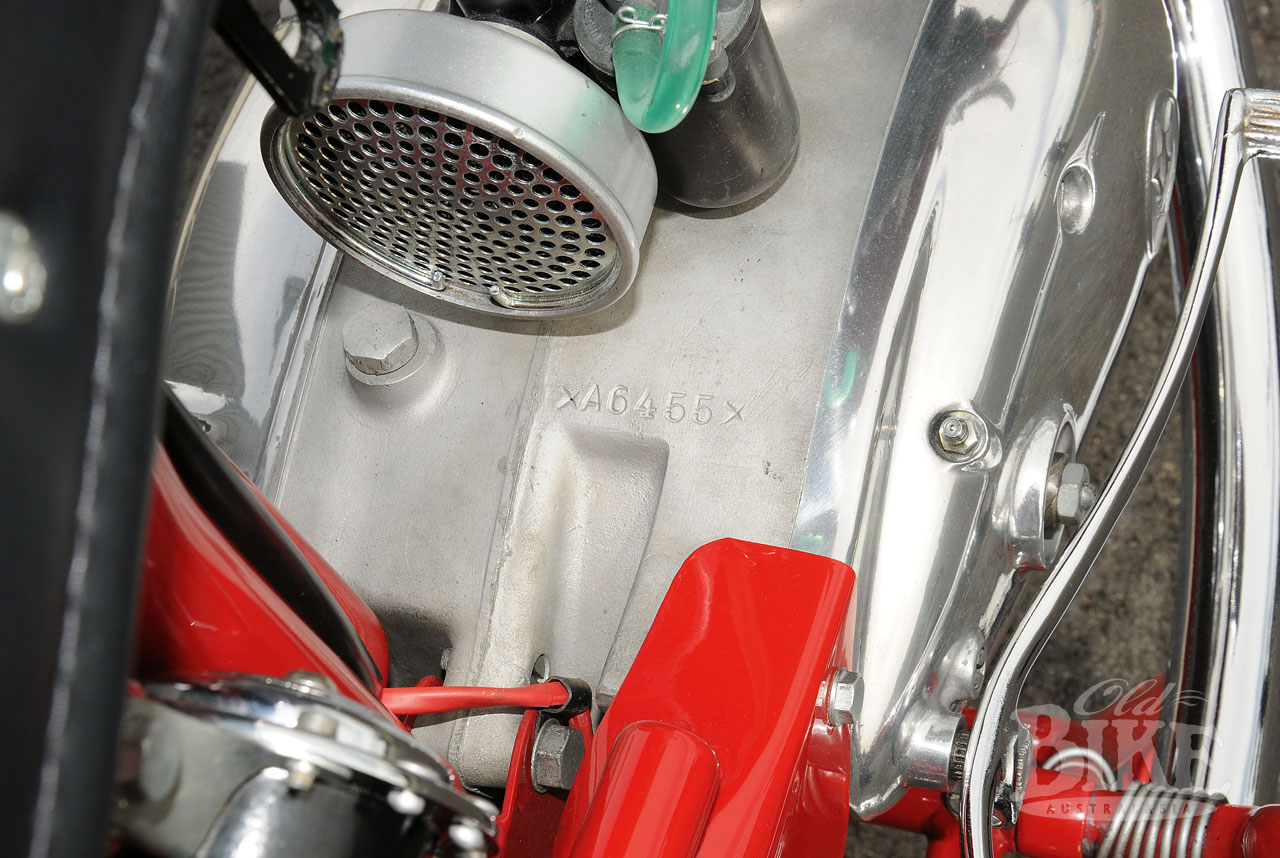
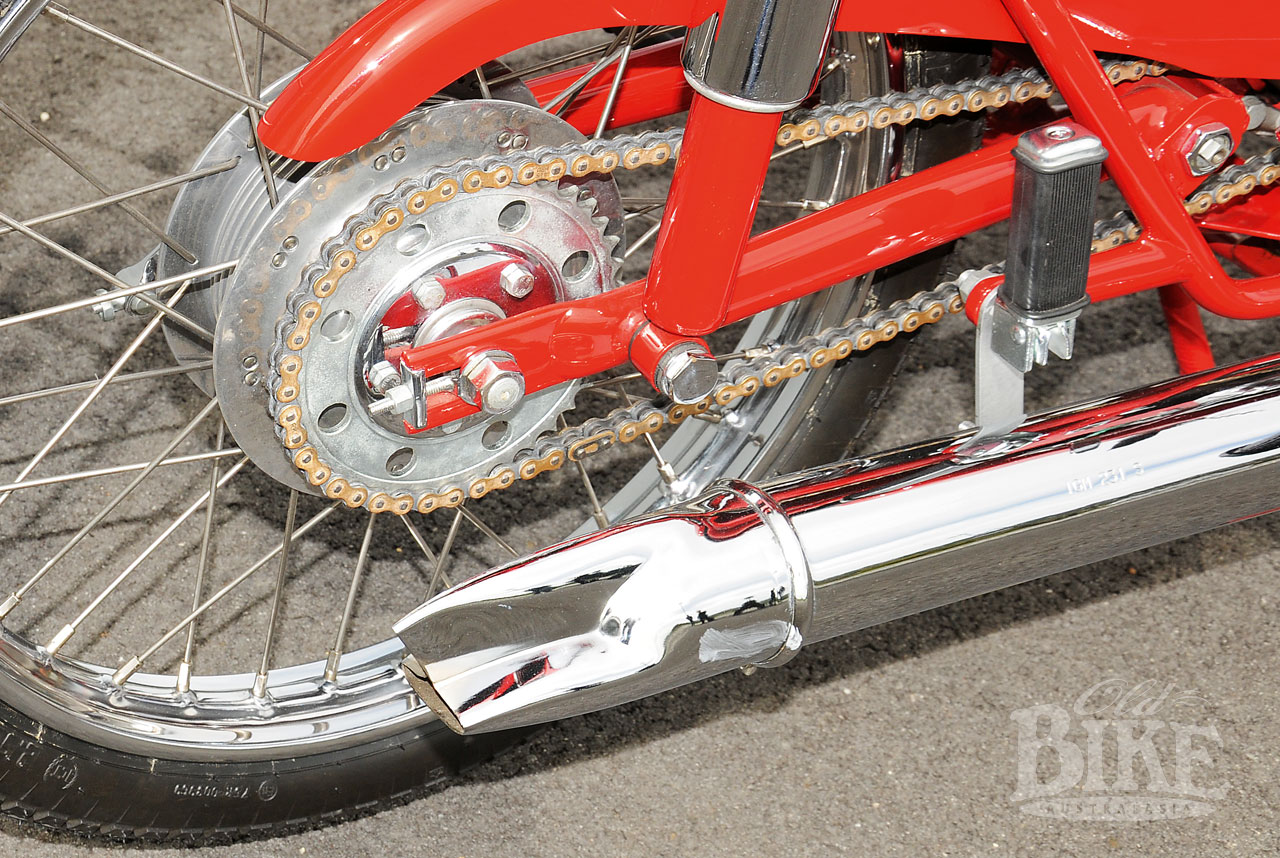
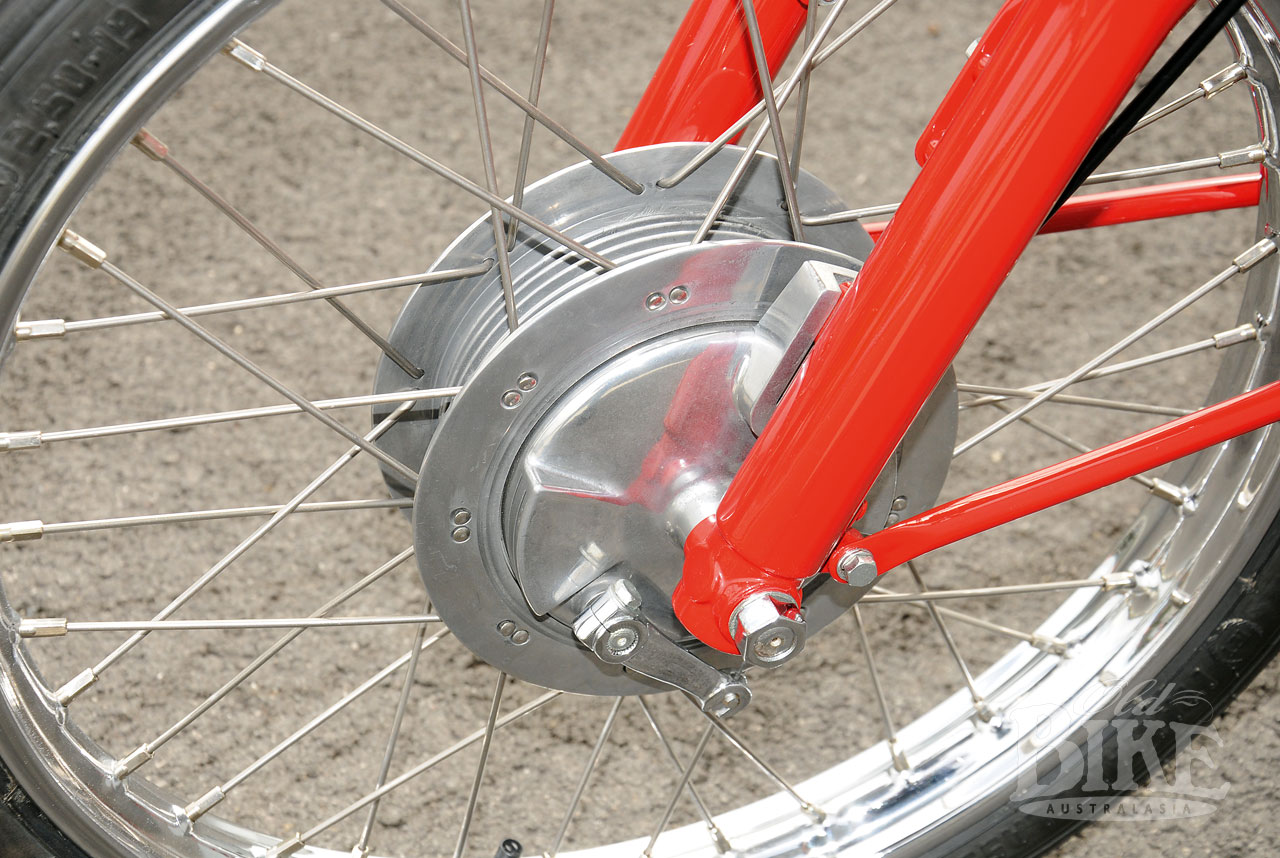
The final version of the Maserati motorcycle had grown to a full 250, the T-4, with the cylinder and head included slightly forward on the crankcase rather than vertical as on the 160. With a bore and stroke of 70 x 64mm, the 250 developed 12.5hp at 5,600 rpm and was capable of 120km/h.
Motorcycle production continued until 1961. By this point the Italian motorcycle industry was in tatters, suffering from the improved economic situation that saw cheap cars top of the shopping list. Some attempts were apparently made to hive off the Maserati motorcycle division, but when there were no takers, it was simply closed down. Estimates of the total number of two-wheelers built vary, but around 10,000 appear to be the accepted figure. But by late in the ‘fifties, the Orsi empire and Maserati itself was not in the best of health, and in 1968 was taken over by Citroen.
Maseratis Down Under
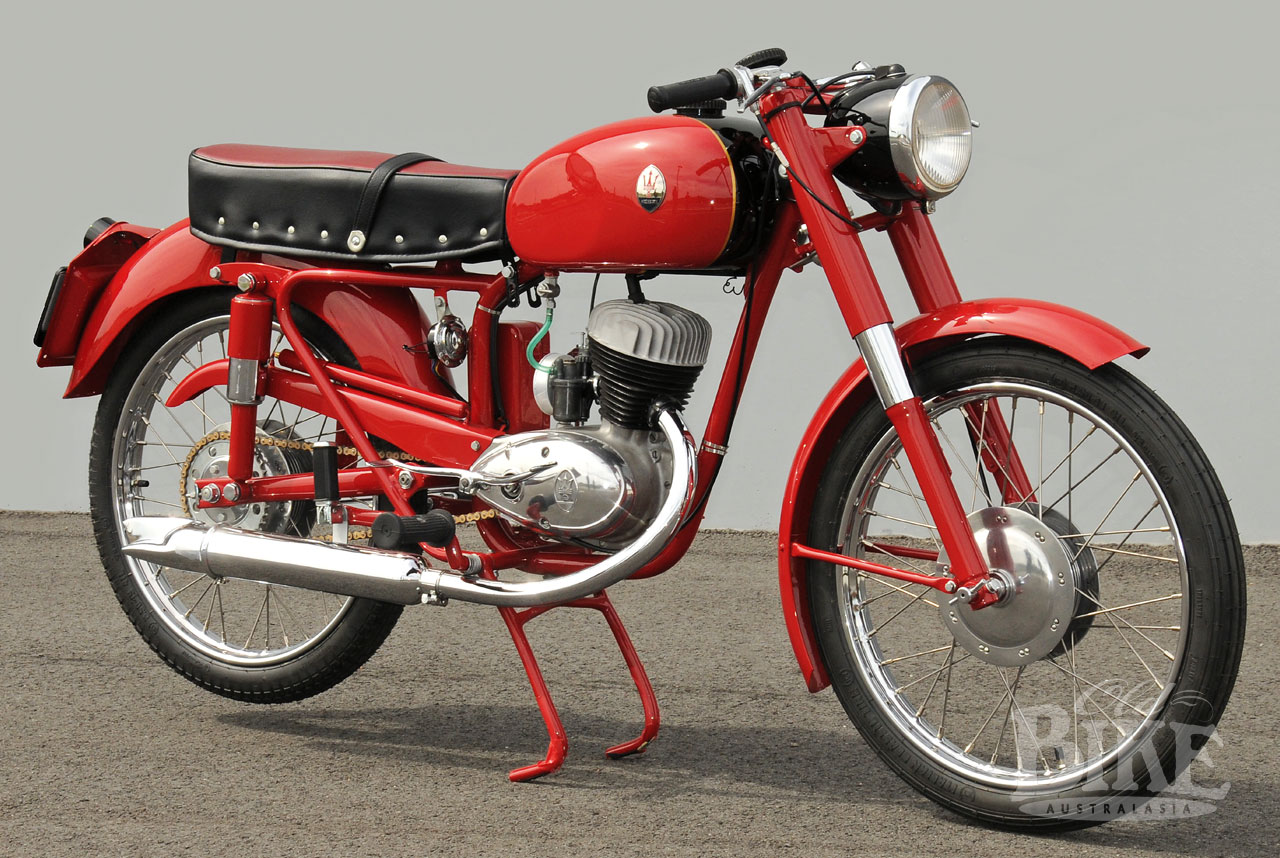
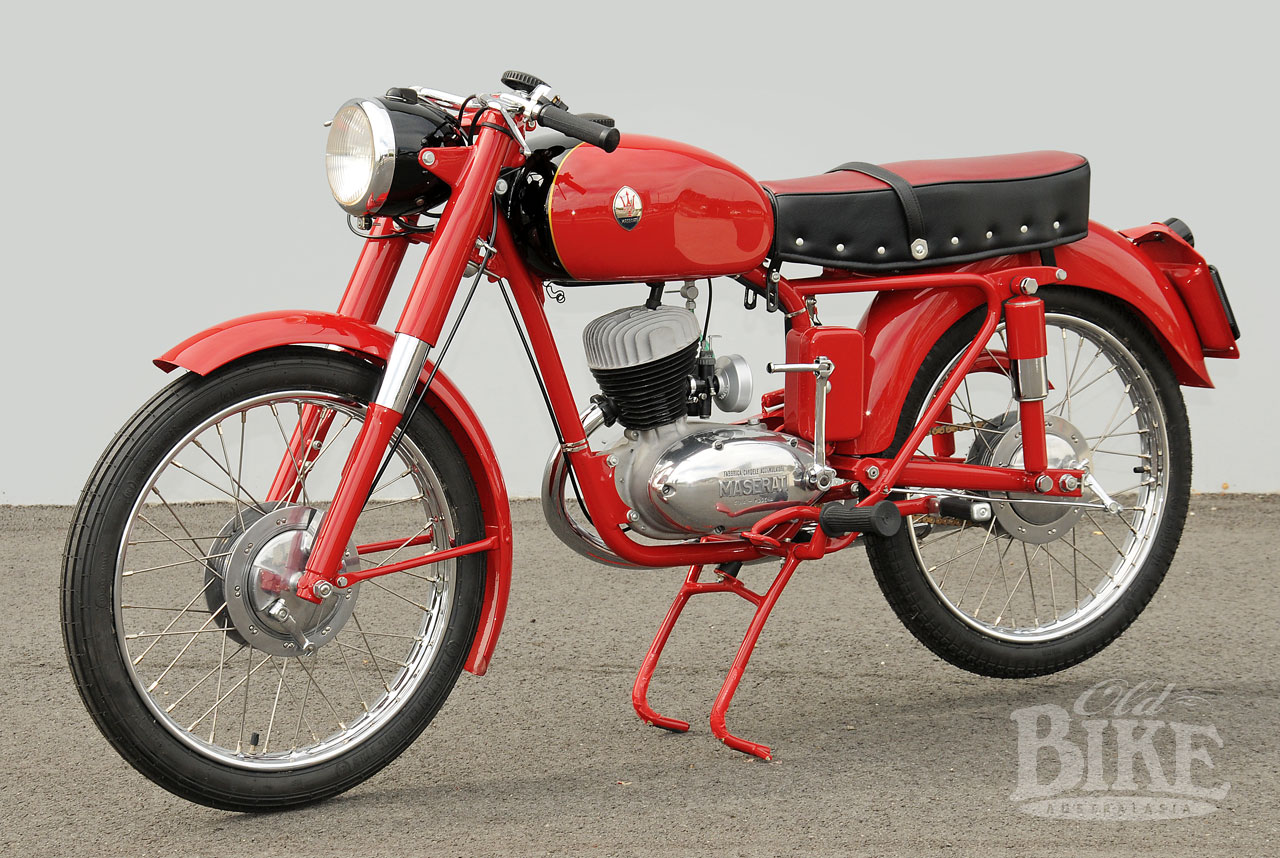
Not surprisingly, few examples of Maserati motorcycles have made it to Australasia over the short manufacturing history of the brand. One that did make it was a 1956 model T2 125 Lusso, engine number A6455, frame number A6683, that was imported from Italy to Melbourne in the 1980s. This was the year model that received a slight make-over, with small full-width hubs replacing the earlier conical versions and a gold-lined black centre section on the fuel tank.
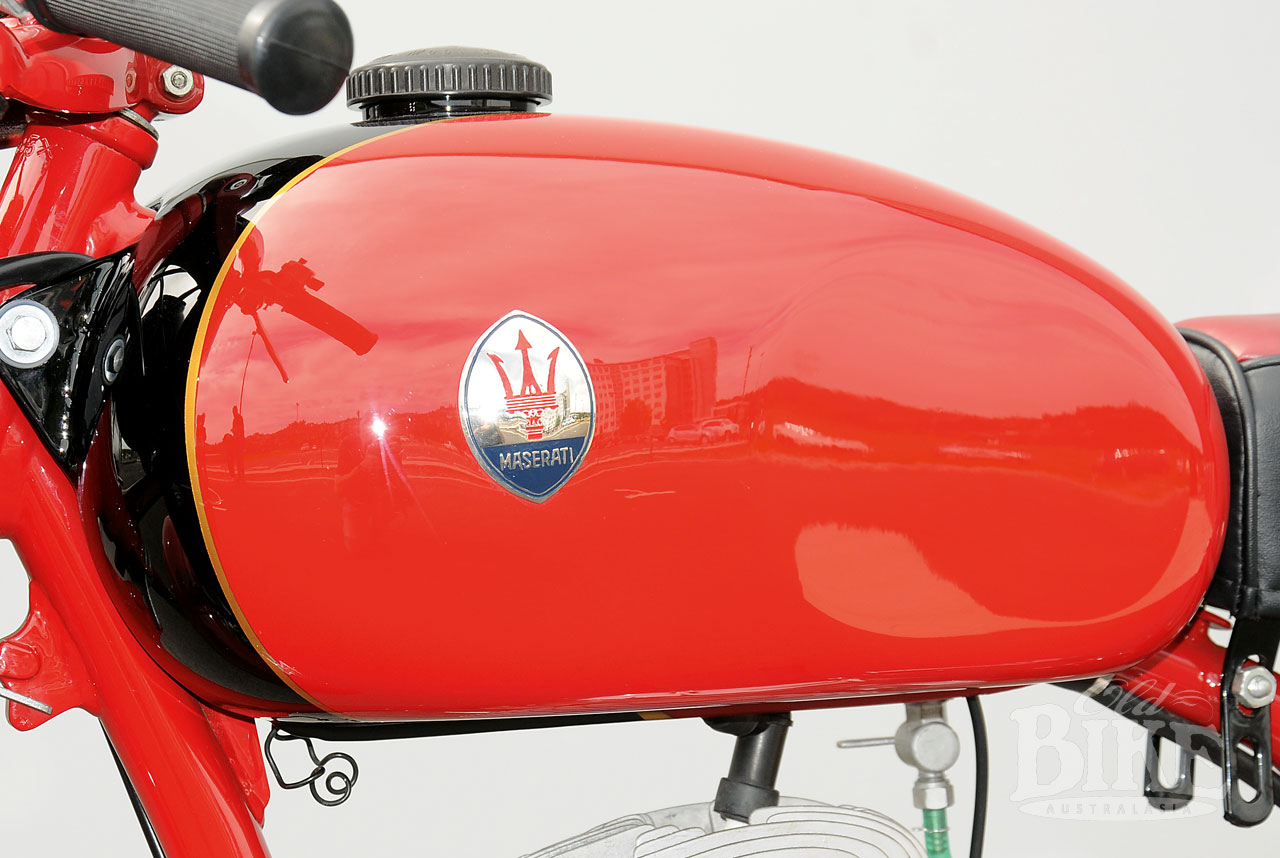
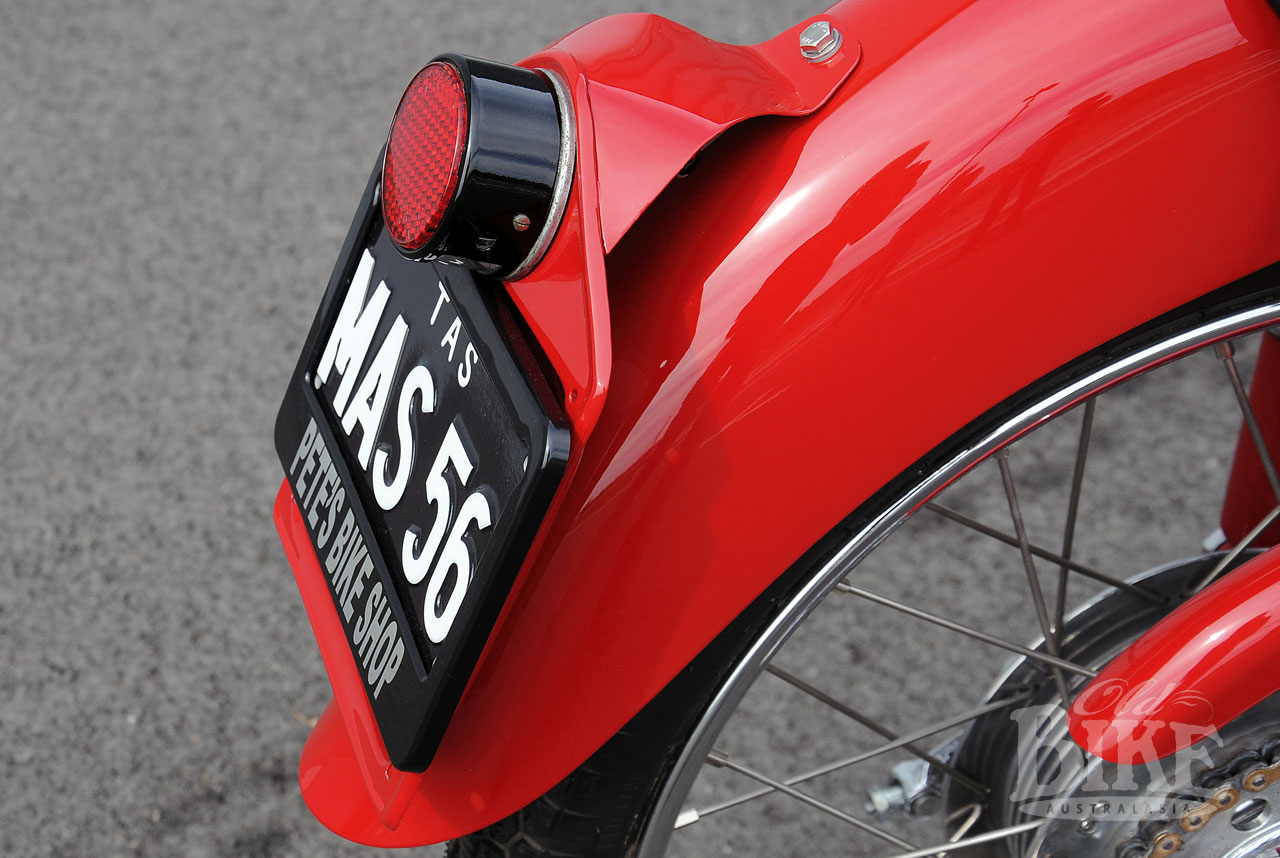
Once relocated to Melbourne, the Maserati sat for many years before Maserati enthusiast David Zeunert purchased it. In 2017 it was sold and the new owner undertook and extensive restoration. Most of the restoration was undertaken by Italian bike specialists Road & Race on the NSW Central Coast, with the paint and bodywork by Simon Bonello of Ground Level Panel & Paint, Catherine Fields, NSW. Thereafter it was displayed at the annual prestigious Motorclassica show in Melbourne, and was voted best classic motorcycle at the 2019 Auto Italia in Canberra. In 2021 it was auctioned by Donington Auctions in Melbourne, achieving well above its expected price with a sales figure of $33,500. Its new owner was Peter Kubarych from Tasmania – a man who is passionate about his motorcycles, particularly rare European models. A considerable number of Peter’s beautifully restored bikes are on display in the National Automobile Museum in Launceston – not just Italian machines but early Hondas, Ducatis and British bikes.
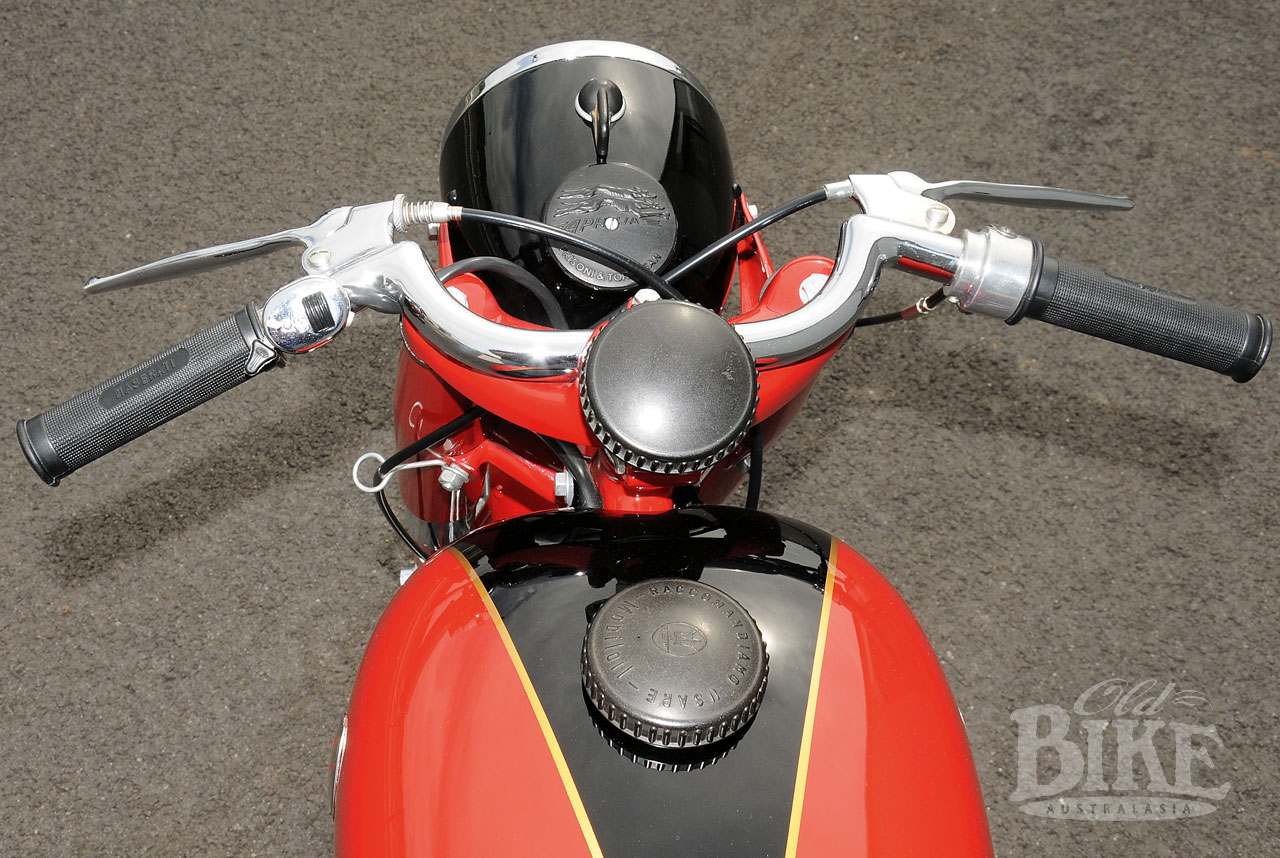
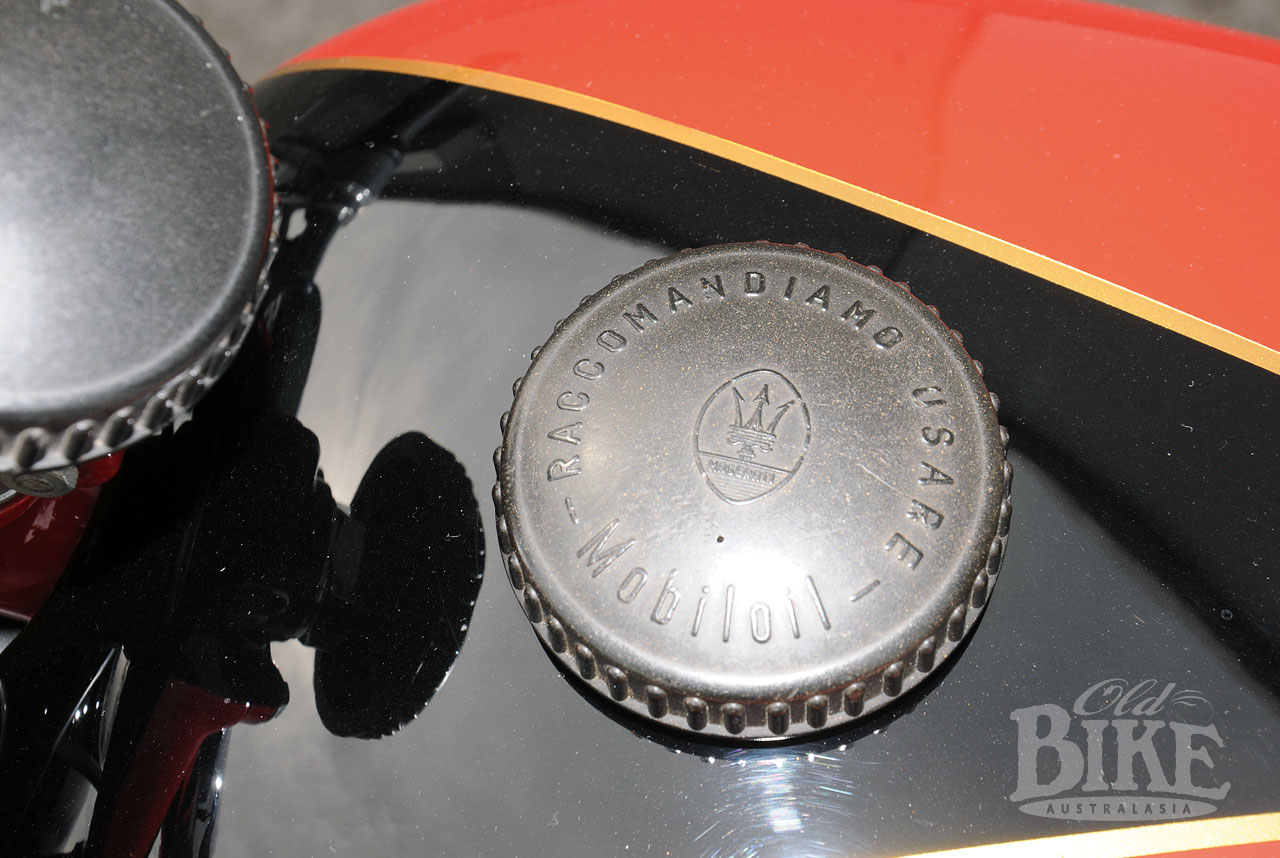
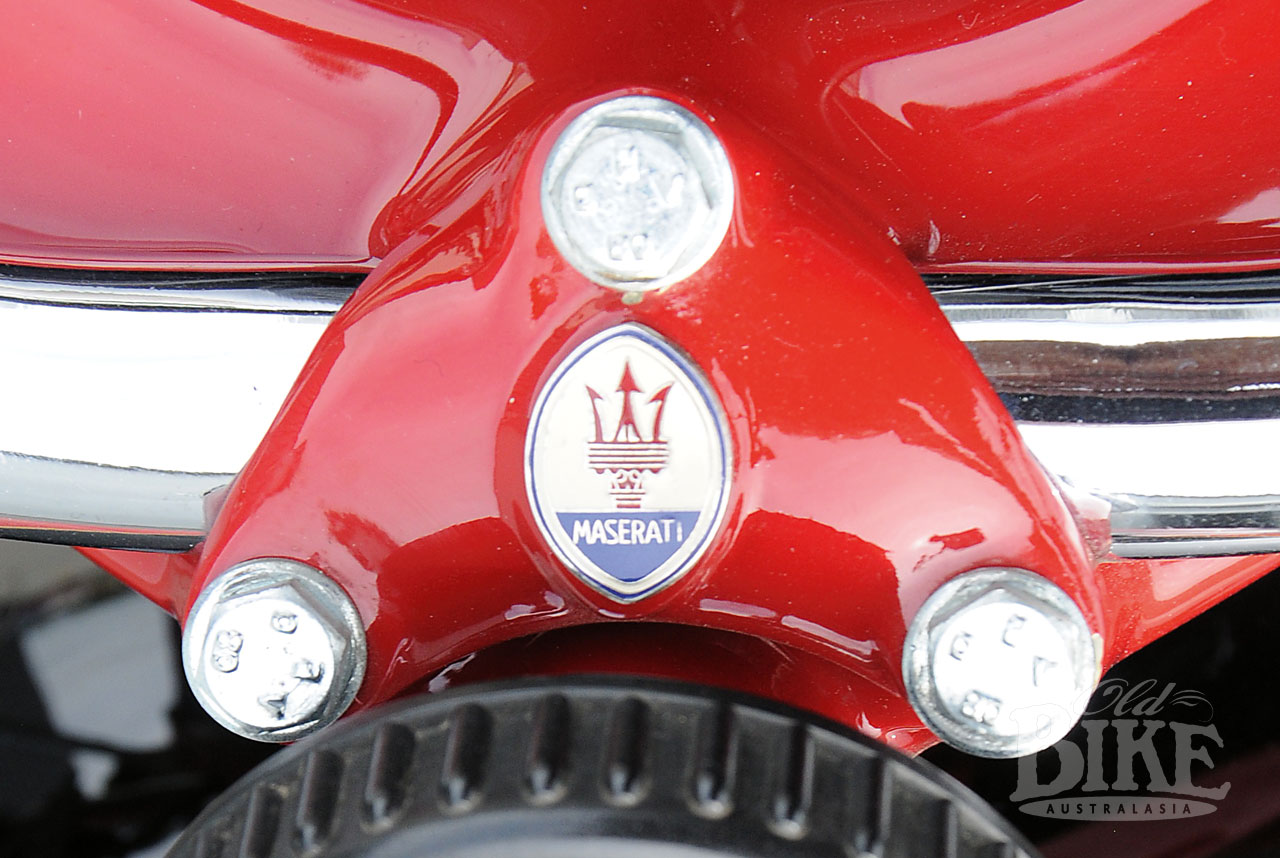
Maserati placed great importance on the instantly-recognisable Trident motif of the iconic brand (for which they had paid handsomely in 1937), and went to enormous lengths to capitalise on it. On this tiny motorcycle the Trident adorns the right hand side crankcase cover, the top steering crown, footrest rubbers, petrol cap, badges on both sides of the fuel tank, and even the studs securing the seat cover – all fourteen of them. There is nothing particularly special about the powerplant; after all, basically the same engine adorns the DKW RT125 (for which it was originally designed) as well as the BSA Bantam (thanks to post-war reparations), the Harley-Davidson S-125 Hummer (also gained through the spoils of victory), the Polish Sokol and SHL and several others including Russian brands. The same basic design also formed the basis for the Yamaha YA-1.
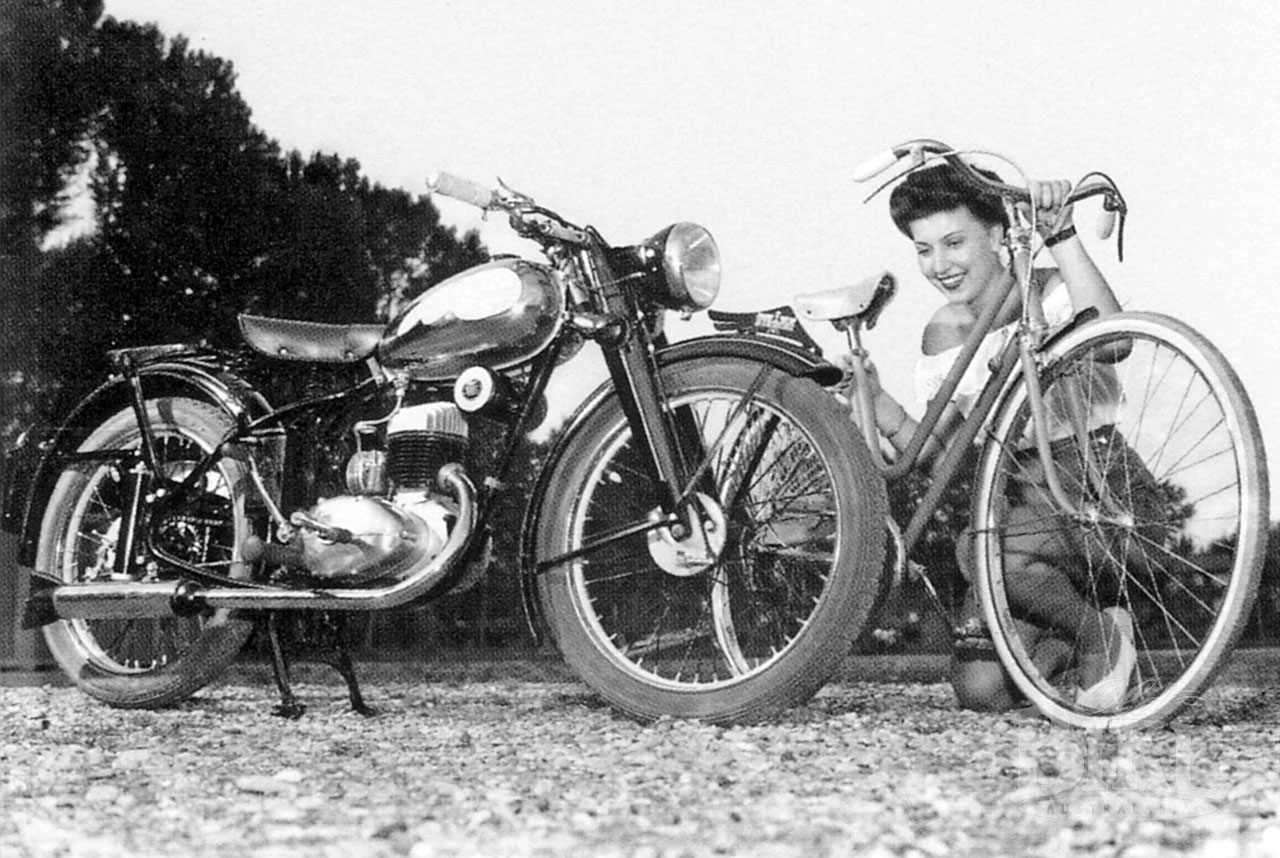
Originally conceived in the early 1930s, the DKW RT125 (RT representing Reichstyp or National Model), the design pioneered the Schnürle loop-scavenging process which replaced the conventional deflector piston with a much more efficient system of transfer ports and improved combustion chamber design.
The Maserati uses a conventional lightweight tubular steel frame with a single front down tube. Mudguards are sturdy pressed steel items, as is the fuel tank. Our featured model has the later full width aluminium alloy hubs front and rear on steel rims. A substantial dual seat and a set of passenger footrests indicates that the manufacturer considered it capable of two-up use, although with under 5 hp on tap it would have been a struggle. Peter Kubarych’s motorcycle is completely standard, missing only the (optional) speedo that would normally have resided in the headlight shell. Beautifully finished, it is indeed an impressive looking motorcycle, and an extremely rare one.
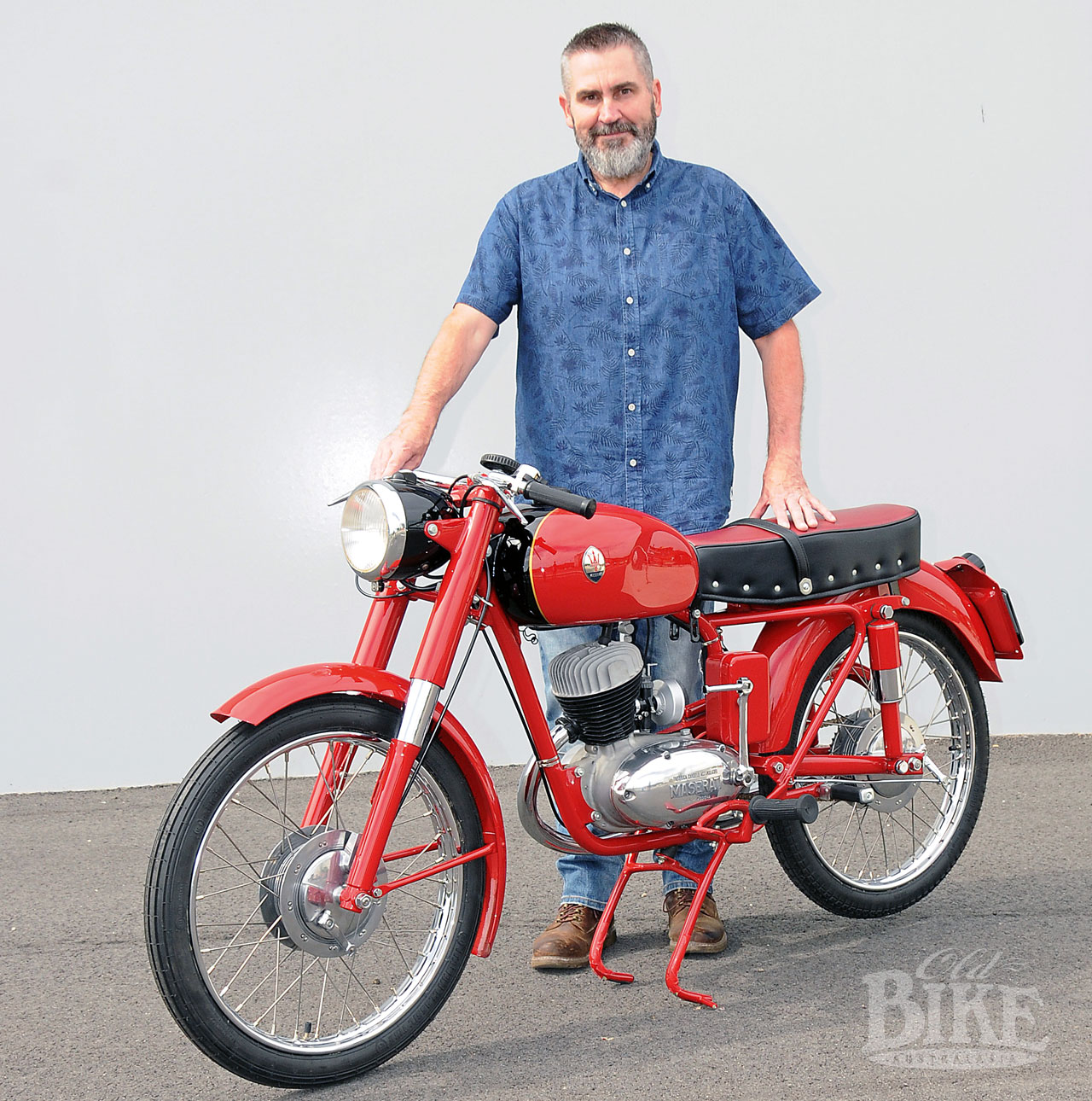
Specifications: 1956 Maserati T2 125 Lusso
Engine: Single cylinder two-stroke
Bore x stroke: 52 x 58mm
Capacity: 123cc
Compression ratio: 7.4:1
Carb: Dell’Orto
Power: 4.8 hp at 5,000 rpm
Gearbox: Three speed.
Weight: 79 kg
Top speed: 80km/h.
Wheels/tyres: Front: Steel rim with 2.50 x 19” tyre
Rear: Steel rim with 2.75 x 19” tyre.