Mechanical Marvel
By: Alan Cathcart
Despite the lingering after-effects of the Great Depression, the 1930s stand out as a golden era of two-wheeled technical novelty. With the ideal overall format of motorcycle design essentially determined, the challenge shifted to wresting optimum performance from that blueprint, coupled with the ever-elusive reliability. The radial-valve Excelsior 250cc road racer, dubbed the “Mechanical Marvel” upon its victorious debut in the 1933 Lightweight TT ridden by Sid Gleave, epitomised that period’s pursuit of mechanical excellence via truly innovative design.
Like so many pioneer brands in the misty early days of motorcycling, Coventry-based Excelsior began life way back in 1874 as a bicycle manufacturer under its original name of Bayliss, Thomas and Co. They crafted penny-farthings carrying the Excelsior and Eureka names. It’s a point of pride that they dead-heated with their neighbouring Humber rival to produce the first proper motorcycle ever built in Great Britain. One of its bicycles, fitted with a Minerva engine, debuted at the May 1896 Crystal Palace Exhibition where 250 brave souls rode it without a single tumble.
From there, the marque expanded rapidly, churning out models powered by engines from Minerva, De Dion, MMC and JAP. By 1910, they became the Excelsior Motor Co., termed “British Excelsior” to avoid confusion with their American namesake. After a turbulent period involving the Russian Revolution and a shortage of capital, the Walker family took the reins in 1919. They eventually moved the firm to Tyseley, Birmingham, rather improbably setting up shop just a mile away from their fierce rivals, Rudge.
Throughout the roaring twenties, the Walkers built Excelsior into a sound, profitable company by focusing on smaller-capacity models with flair. While they couldn’t quite muscle in on the big boys like Norton in the 500cc classes, in the 250cc Lightweight division, Excelsior was a force to be reckoned with. These lightweight machines came into their own during the economic downturn, when affordable ride-to-work machinery was king.
To promote these dependable mounts, the Walkers poured funds into a factory-backed road racing team. Excelsior’s first Isle of Man TT victory came in 1929 with Syd Crabtree, but by 1931, they were being eclipsed by Rudge’s four-valve single-cam OHV radial 250. It was time for a rethink.
Excelsior MD Eric Walker believed their woes stemmed from using proprietary motors. So, in 1932, he commissioned Blackburne to produce a purpose-built design exclusively for Excelsior. The result was a motor created by Blackburne’s chief engineer, Harry J. “Ike” Hatch, a brilliant mind who would later co-design the Brough Superior Dream and the AJS Porcupine.
Hatch’s radial-valve twin-carb Excelsior 250cc single-cylinder OHV four-valve motor made its debut in the 1933 Lightweight TT, creating huge pre-race buzz. It was immediately nicknamed the “Mechanical Marvel” for its daring, avant-garde format. And what a debut it was. Sid Gleave, a journeyman racer and keen aviator, piloted the bike to victory in the seven-lap, 264-mile race, averaging 71.59mph in gale-force winds. As debuts go, they don’t come much sweeter than that.
Under the Bonnet of a Legend
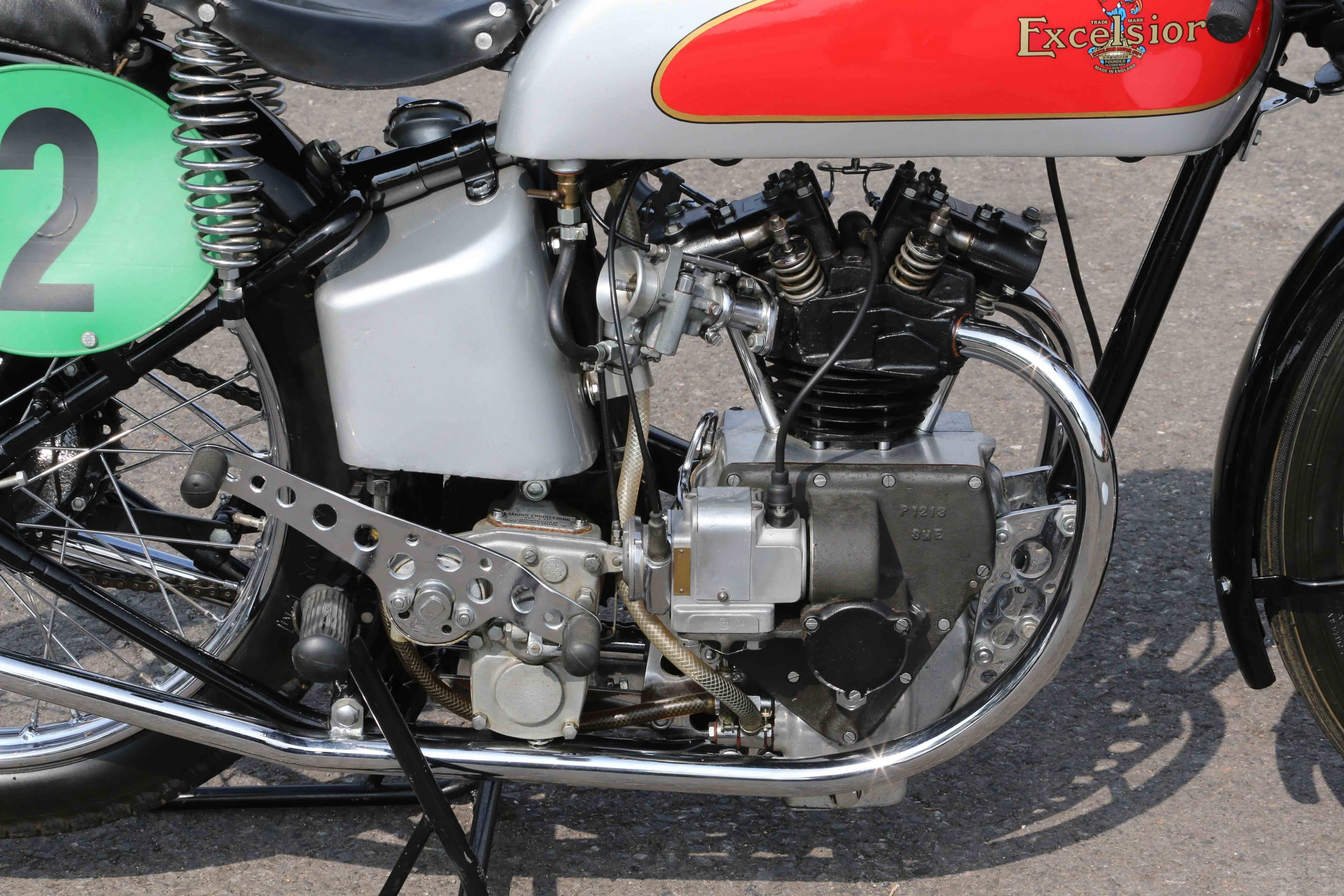
Hatch’s 246cc engine was a masterpiece of complexity. Measuring 63 x 79mm, the stroke was long enough to limit revs to 7,800 rpm, with peak power of 24 bhp delivered at 7,370 rpm. But what made the Mechanical Marvel live up to its name was the cylinder head design.
It featured four valves with coil springs set radially at 60 degrees to one another. Unlike its Rudge rival, the Excelsior motor had completely separate inlet ports, each served by its own specially developed Amal carburettor. Hatch used two camshafts, high in the crankcase, to keep the pushrods short and stiff. It was a dizzying array of gears, shafts and skew gears that allowed timing to be set to within half a degree.
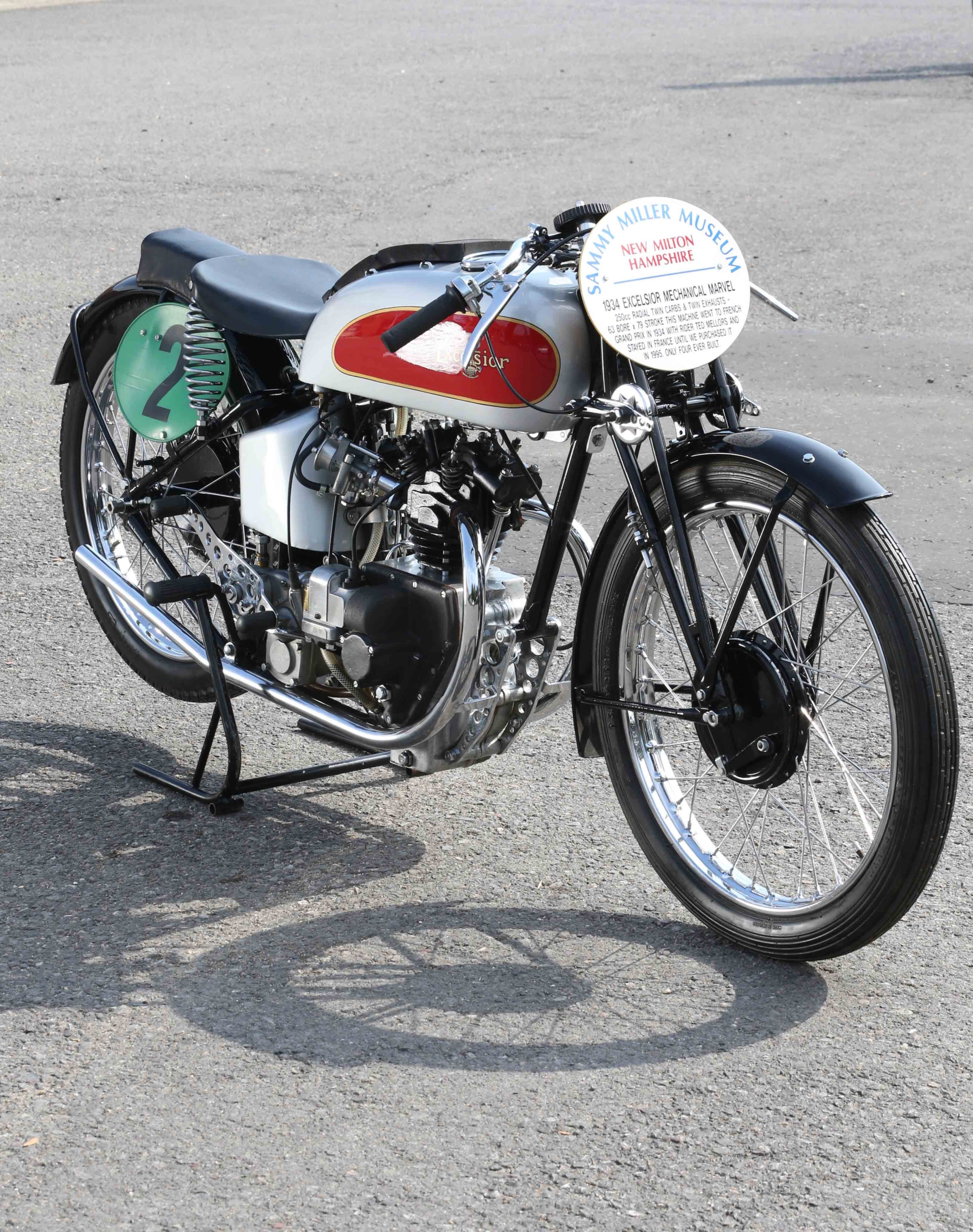
The single-loop open-cradle tubular steel frame was a fully-stressed member, resulting in a low, compact build. Despite the complexity, it was a tidy package. But alas, the Mechanical Marvel failed to build on that initial TT success. The 1934 version saw significant changes, including lighter frames, Bowden carbs to cure “pernickety” carburation and improved engine specs, but the results just weren’t there.
Eric Walker eventually terminated the project, deeming the engine too intricate for the average privateer to maintain. The remaining Mechanical Marvels were dispersed to brave souls willing to tackle the maintenance challenge.
A Rare Survivor at the Sammy Miller Museum
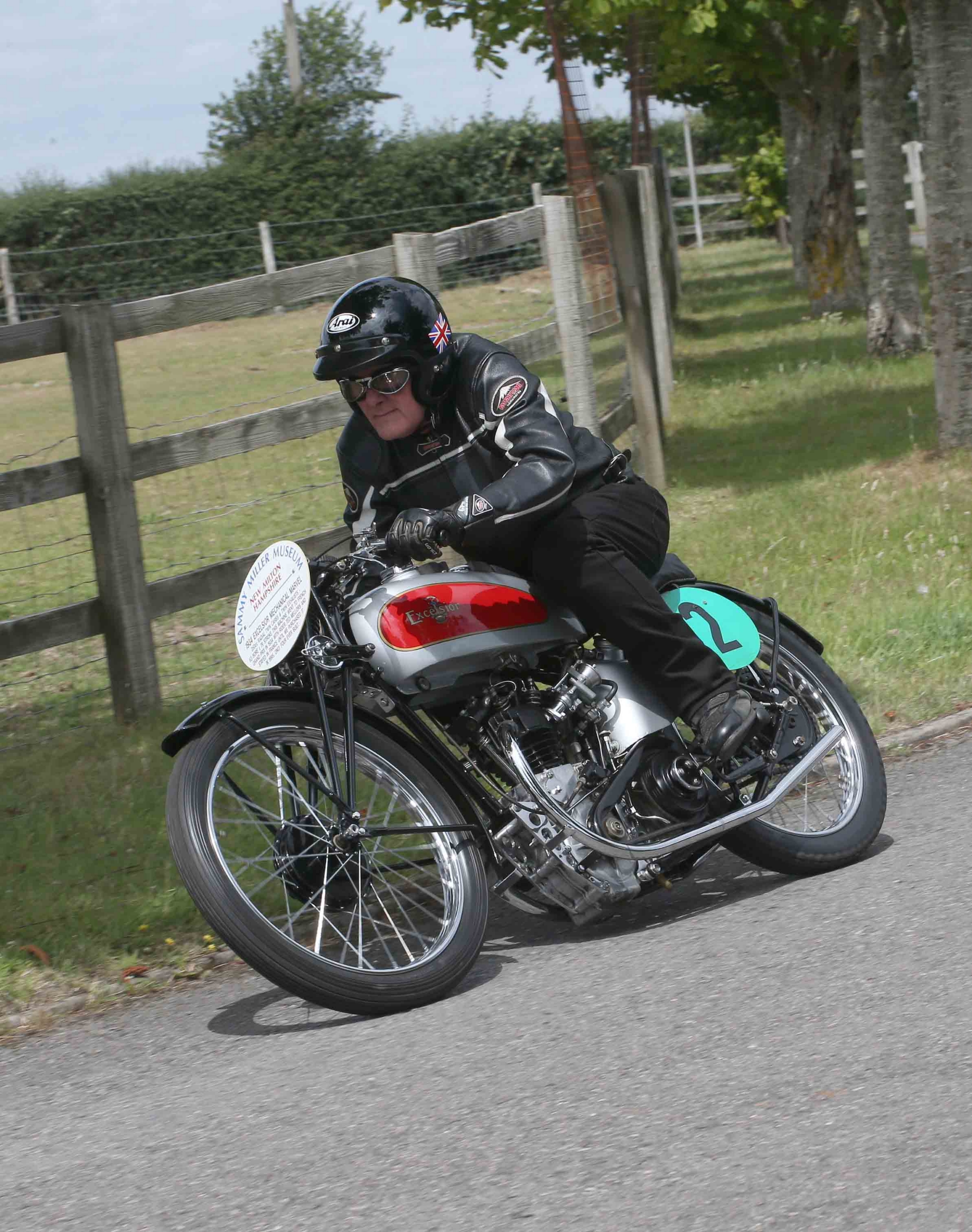
Today, just three of the five Mechanical Marvels built for 1934 survive. One of these gems resides in the world-renowned Sammy Miller Museum on England’s South Coast. Sammy repatriated this beauty from France in 1995 in a rather sorry state and restored it with his right-hand man, Bob Stanley.
“It was pretty derelict, but mostly complete,” recalls Sammy. “Bob and I had it up and running inside six months, since when it’s been one of the jewels in the Museum which we bring out from time to time, so people can hear and see it in action.”
If you’re ever near the New Forest, do yourself a favour and visit the museum. It’s crammed full of interesting machines and factory prototypes, and Sammy and his team are doing a brilliant job keeping our motorcycling heritage alive.
The Ride: Sweet and Spirited
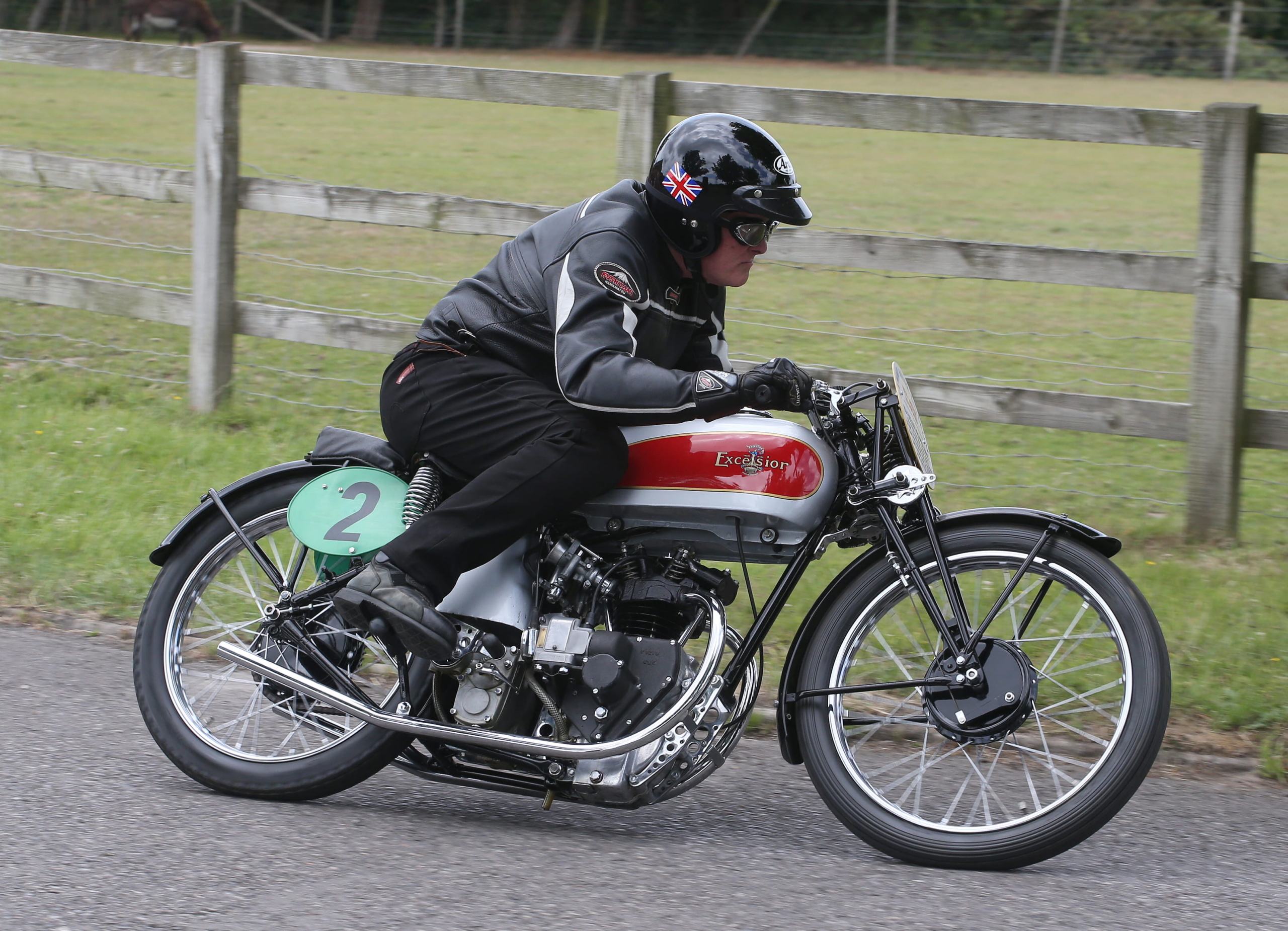
I’ve been fortunate enough to sample this legendary motorcycle on a couple of occasions, and each time I’ve walked away thinking what a sweet little bike it is. It’s a low-slung, compact package, yet surprisingly accommodating for a 5’10” rider like myself. Think of it as a Vintage equivalent of the Ducati Supermono.
It bump-starts into life with ease, just a couple of steps once warm. The gearbox, while looking a bit agricultural, works a treat. I found it best to kick the rear part with my heel to downshift, then tap the front pedal to change up.
The engine is a flexible little wonder, pulling cleanly from just 2,000 rpm. It has a real appetite for revs, delivering impressive acceleration around the 7,000 rpm mark. My only gripe? The throttle action was surprisingly heavy for such small carbs. Maybe a little tinker with the junction box is in order, Sammy?
Handling-wise, it steers beautifully, light but not nervous. I could really lean on that 21-inch front Avon Speedmaster tyre with confidence. And the sound! A nice, healthy crack from the twin straight exhausts, yet mechanically, the engine itself was surprisingly quiet.
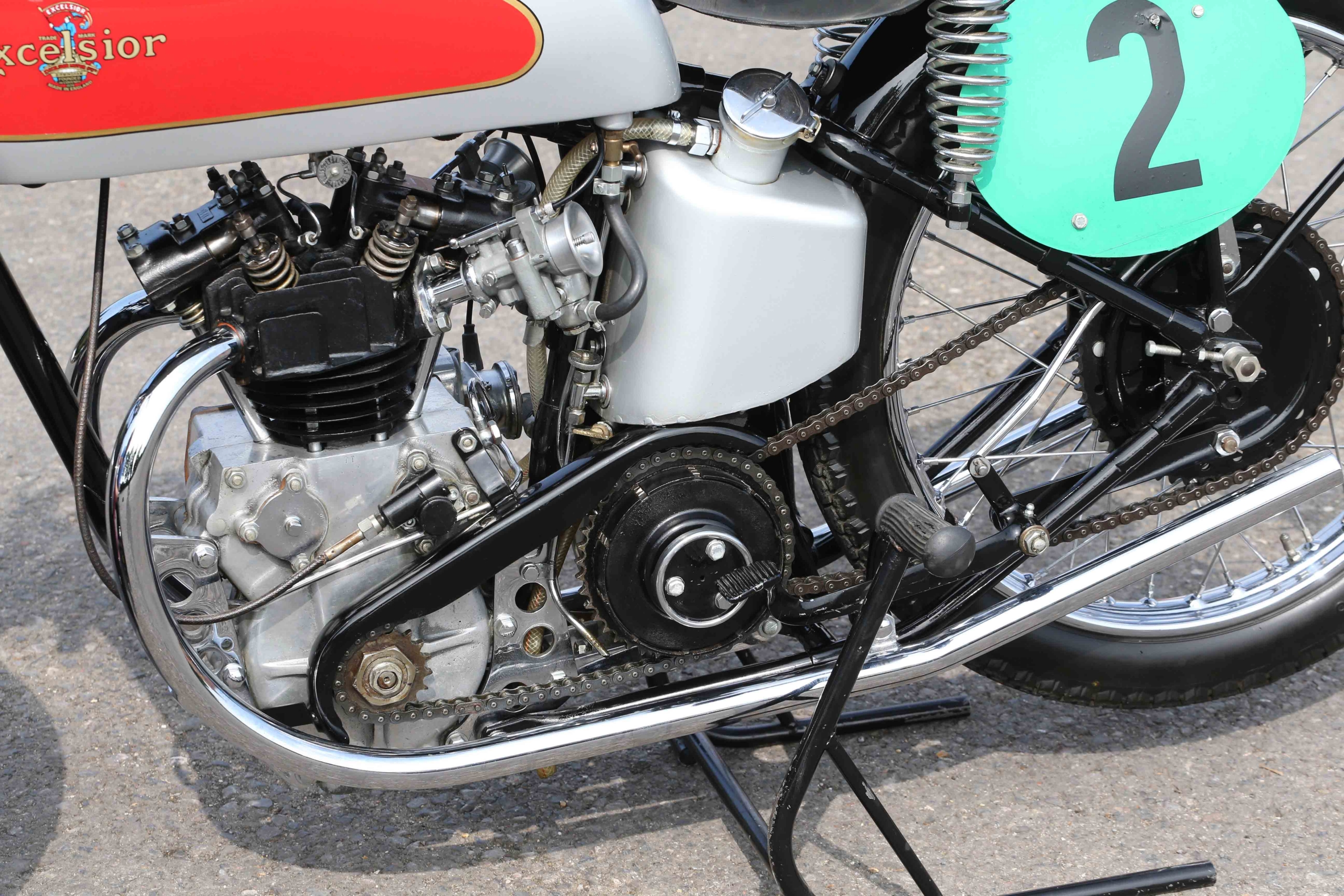
Forty-odd years ago, I remember visiting the late collector Norman Webb and seeing a trio of these in his living room. As you do! I always wondered what they were like to ride, and thanks to Sammy Miller, I now know. It’s a bike that turned a journeyman rider into a race winner and is a testament to the intricate excellence of 1930s British engineering.
Photo credit: Kel Edge
Boxout: The Variety of the Thirties
To illustrate the sheer technical creativity of the 1930s, consider this: six different engine types powered the winners of the last seven pre-war Lightweight TT races.
| 1933 | Twin-carb four-valve radial, Excelsior Mechanical Marvel |
| 1934 | Single-carb four-valve radial, Rudge |
| 1935 & 1937 | SOHC two-valve, Moto Guzzi |
| 1936 | Pushrod OHV two-valve, New Imperial |
| 1938 | Supercharged two-stroke split-single, DKW |
| 1939 | DOHC two-valve, Benelli |
The four-valve engine then languished until Honda put it back on the map in 1961 with Mike Hailwood. What a time for innovation!
Excelsior 250 Mechanical Marvel: Specification
| Engine | Air-cooled OHV single-cylinder dry sump four-stroke, four radial valves |
| Capacity | 246cc |
| Output | 24 bhp at 7,370 rpm |
| Carburation | 2 x ¾ in/19mm Bowden |
| Transmission | 4-speed Albion |
| Frame | Single-loop tubular steel |
| Suspension | Front: Webb Racing girder fork Rear: Rigid |
| Weight | 86kg dry |
| Top speed | 152km/h |
| Owner | Sammy Miller Museum, New Milton, Hants, UK |
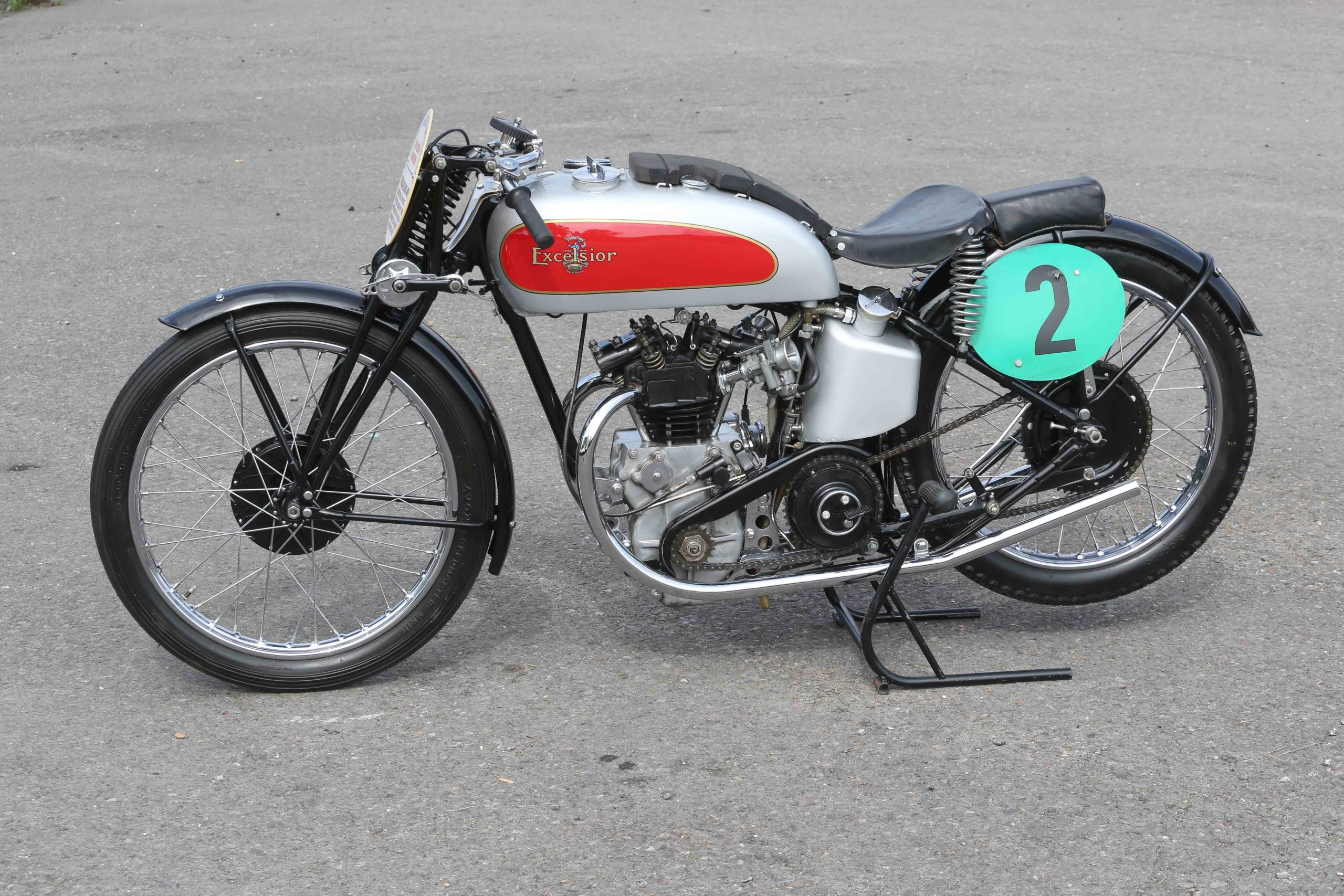
Sammy Miller Museum
Nestled in New Milton, Hampshire, the Sammy Miller Museum is a treasure trove for motorcycle enthusiasts. Packed to the rafters with fascinating machines, it showcases everything from rare factory prototypes to ingenious designs from around the globe. Boasting one of the world’s most impressive collections of exotic racing bikes, all in running order, it’s a haven for lovers of two-wheeled history.
Marvel at legends like the V8 Moto Guzzi 500, the supercharged V4 AJS 500 and the postwar Porcupine, the first-ever 500cc World Champion. The lineup continues with the V-twin Husqvarna 500, V4 Suzuki 125, 250 Mondial with its iconic dustbin fairing and countless classics from Triumph, Norton, AJS, Velocette and more. Off-road fans won’t be disappointed either, with a dazzling array of enduro, motocross and trials icons on display.
Open daily from 10am year-round, the museum is a must-visit for anyone with a passion for motorcycles. You’ll find it at Sammy Miller Motorcycle Museum Trust, Bashley, New Milton, Hampshire B25 5SZ. For more details, call 01425 620777/616644 or visit www.sammymiller.co.uk.
Gallery