From our Old Bike Archives – Issue 103 – first published in 2022.
Story: Peter Laverty • Photos: OBA archives.
In the late ‘sixties, Honda had plenty to be happy about. Within their range of small capacity twins, the CB160, CB72 and CB77 were all volume sellers, much to the delight of Honda dealers everywhere, particularly in the US.
The CB450, less so, given that the US buying public generally hated the styling, and several other things about it. Like the 250 and 305, the 450 had an oddly spaced set of ratios inside the four-speed gearbox. First was too low, second too high, which meant a struggle for acceleration up through the gears, and a neck-straining lurch when changing back to first, like at traffic lights.
For 1968, Honda decided to start with a relatively clean sheet of paper. The 450 was rejigged with an extra gear effectively slotted between first and second, which helped quite a bit, but despite an extensive face lift at the same time, still failed to ignite passion in the US. Earlier that year, Honda had reached a milestone with the production of its 10 millionth motorcycle, which ironically, was a CB450. Not bad going for a company that had been around for less than 20 years.
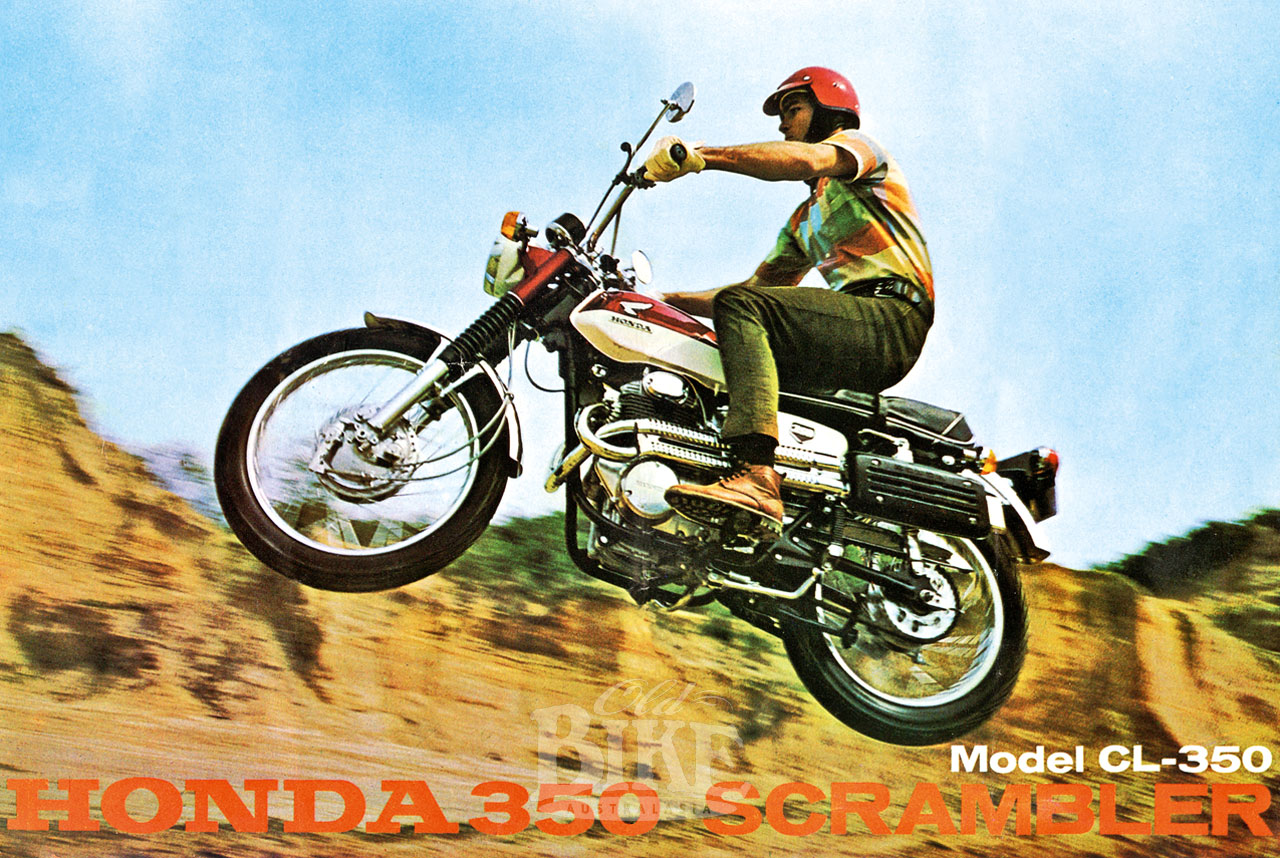
More importantly, in terms of sales volume, an all-new 250 and 350 design appeared, also with a five-speed gearbox. Over in the States, it was the larger model – which wasn’t a 350 at all but 324cc – which caused the most excitement. There were actually two models of each, the traditionally-styled CB350 (sold as the Super Sport in USA), and the new fangled Street Scrambler version, the CL350. It was certainly more Street than Scrambler, in fact, any attempt at scrambling – bashing around off-road – met with serious disappointment due to a combination of weight and inadequate suspension. The CL350 however, did feature rather avant-garde styling, and that was what sold. Big time in markets worldwide, including Australia.
That 350 engine was highly oversquare at 64mm x 50.6mm, giving it a copious appetite for revs, but still used a single overhead camshaft, like the earlier models. Valve clearance adjustment was similar to the 450, with externally adjustable eccentric spindles protruding through the camshaft end caps. However the camshaft no longer rode in ball bearings, but directly on the aluminium of the end caps, without a central support. As usual, a centrally-located sprocket carried the cam chain with a slipper tensioner between the cylinders. The valves themselves were controlled by dual progressively-wound springs, rather than the earlier constantly wound type, allowing for greater efficiency at the higher rpm of which the engine was capable, while allowing for lower seat pressure when the valve was fully closed.
Downstairs, the 180-degree crank sat in four main bearings – three roller bearings and a ball bearing on the drive side – with roller bearing crankpins. Primary transmission was by what was termed “staggered-tooth”, which used straight-cut gears (as on the 450) but effectively meant that there were twice the number of gear teeth in mesh without increasing the size of the driving gear. This eliminated the power loss associated with helical gears, and it was quieter too.
Twin twins
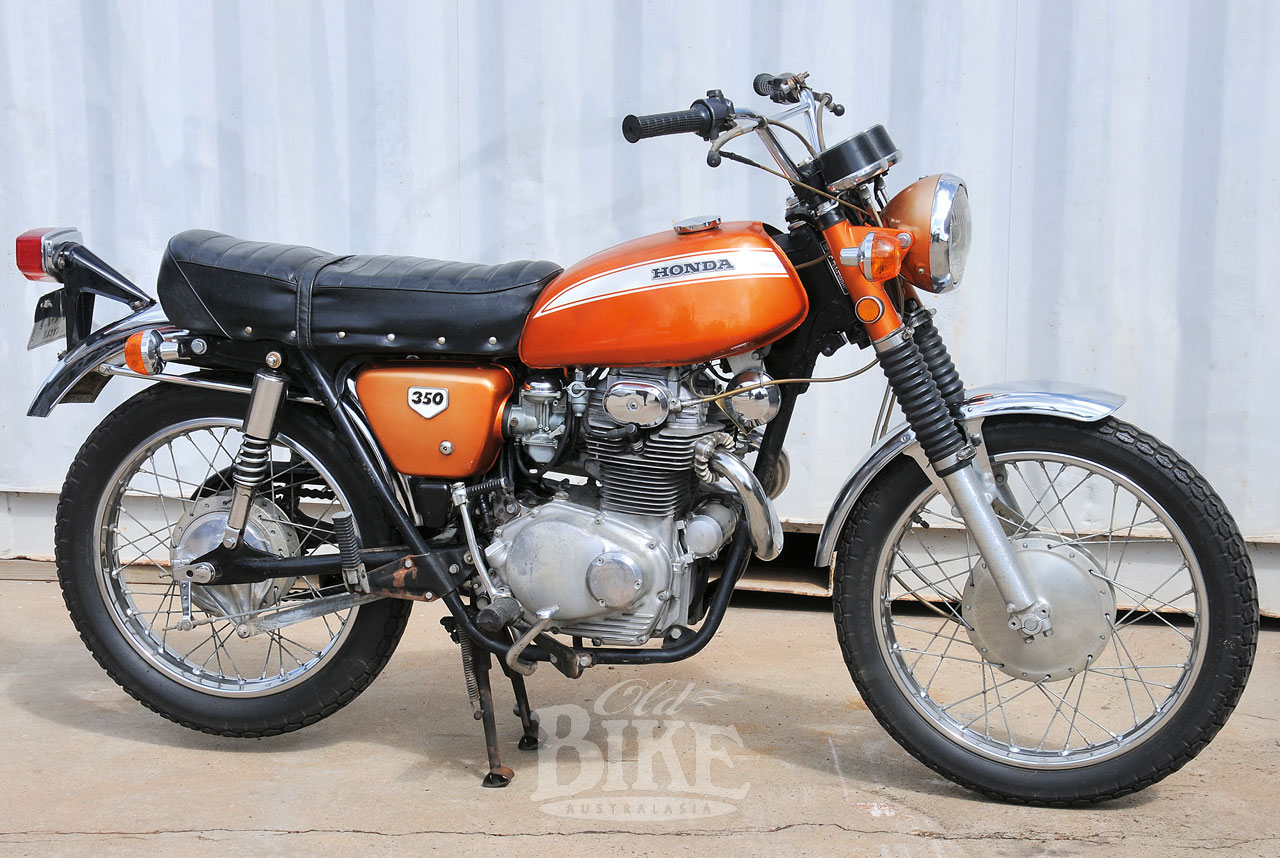
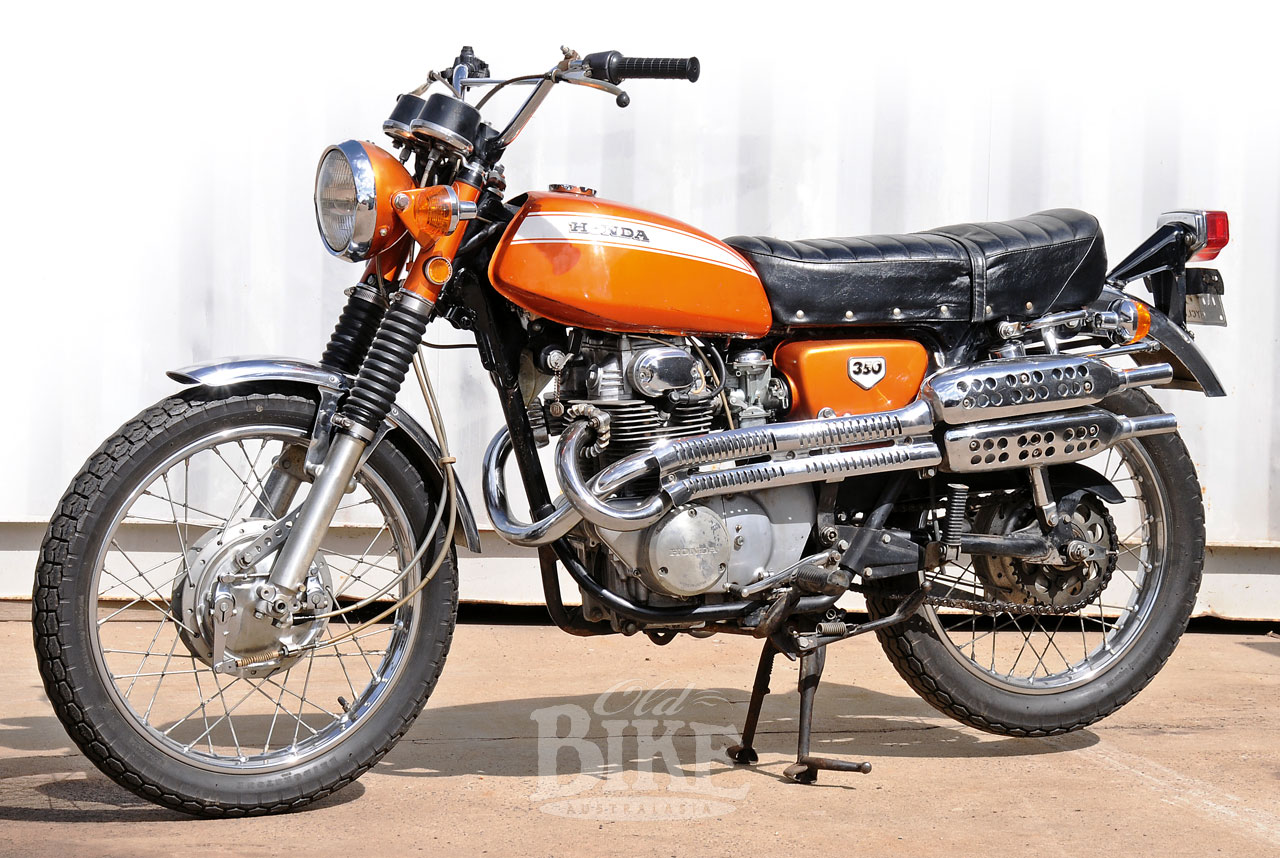
Of course, there was very little difference between the CB and CL in the engine department. All the vital statistics were identical, including the 9.5:1 compression ratio. Inside the gearbox however, lurked teeth of different sizes. The CB350 had 1st to 5th ratios of 17.74, 12.38, 9.59, 7.58 and 6.79, whereas the CL’s rations were 18.65, 13.02, 10.08, 8.26 and 7.14. Honda listed a top speed of 103mph (165.8 km/h) for the CB350 and 100 mph (161.1 km/h) for the CL. Despite the fact that the cylinder heads and the 26mm Keihin Constant Velocity carburettors were identical for both models, the CB’s power output was listed as 36 BHP at 10,500 rpm while 33 BHP at 9,500 was claimed for the CL. Odd. Most of the answer probably lay in the exhaust system.
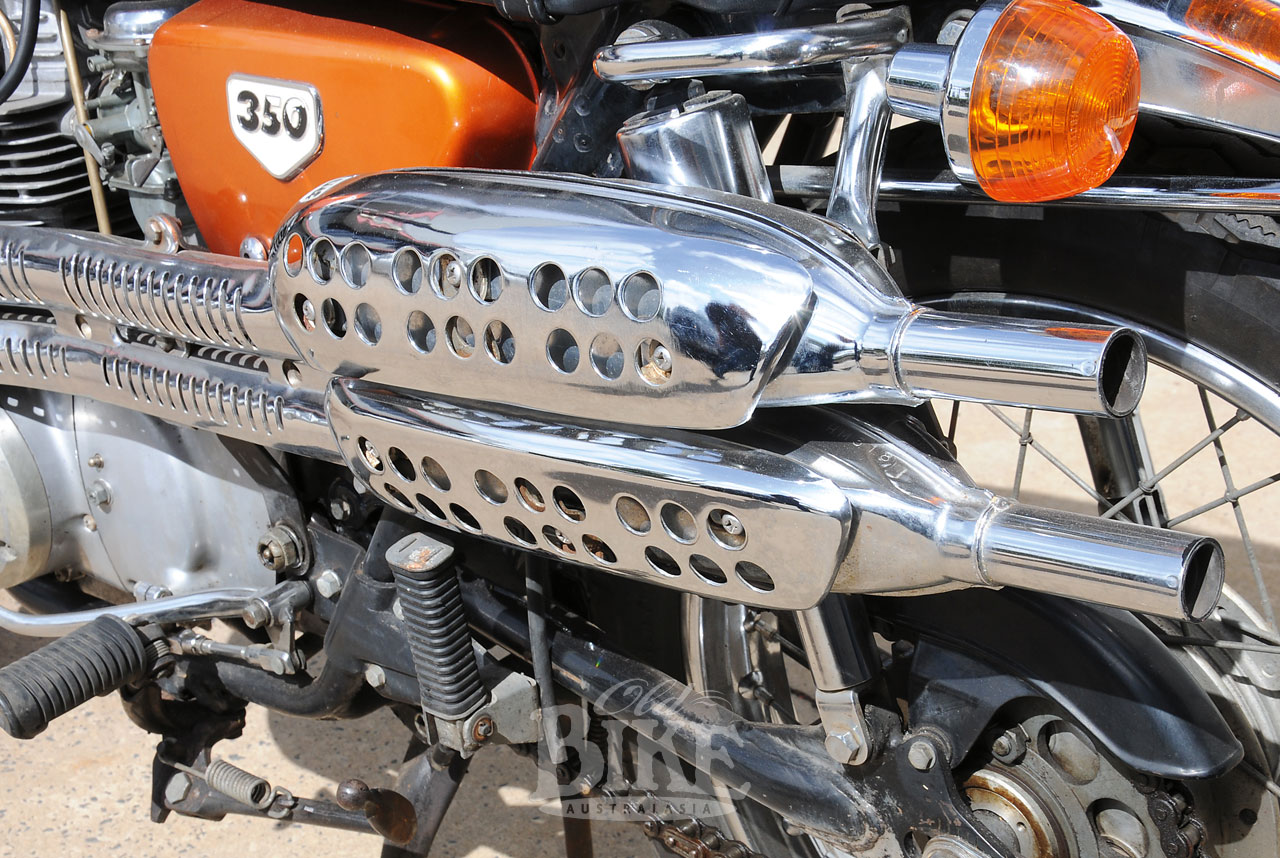
The CB used a conventional pair of down-swept pipes with long tapering megaphone silencers, whereas the CL employed an upswept system on the left side, with small diameter internal engine pipes fitted inside larger diameter outer pipes, finishing in a bulky, heavy and probably more restrictive box-like silencer which emitted a quite unique exhaust note. The reason for the sheathed engine pipes was two-fold. On one hand, having an external pipe reduced discolouration, and being fatter, looked tougher, but more practically, the actual exhaust pipe (the inner one) operated with greater efficiency (higher gas velocity) because of its reduced diameter. Smart. The CL’s complete exhaust system added 10.5kg to the overall weight.
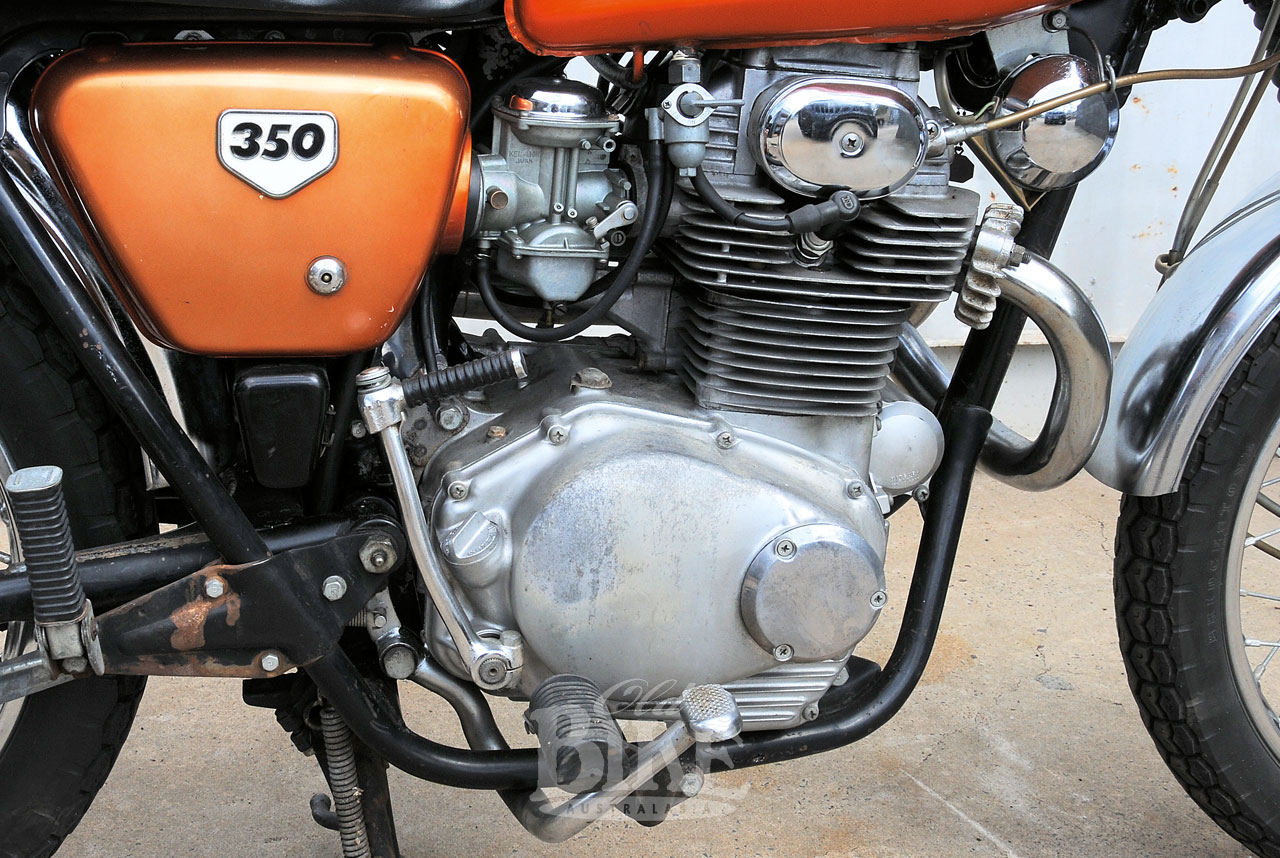
The new frame – common across the range – used a pressed steel backbone with tubular single front down-tube, side rails and seat and upper rear shock mounts – very similar to the 450 frame – but with rubber-inserted upper engine mounts.
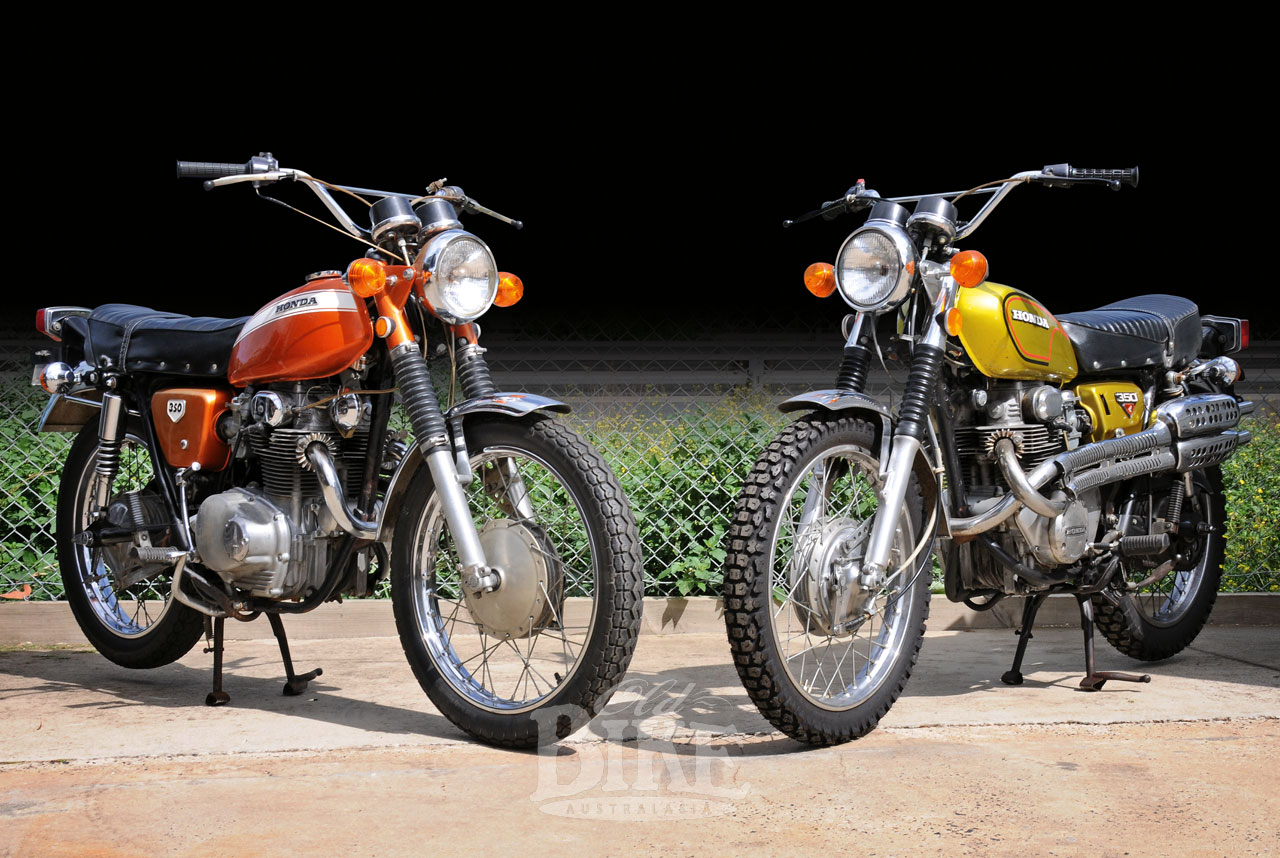
Apart from the internal gear ratios, other differences between the CL and CB350 were few. A smaller fuel tank, carrying 9 litres against the CB’s 12, was the most visible, with a wedge-shaped leading edge, the front mudguard was shorter and used only a central mount straight onto the fork sliders, handlebars with slightly higher and used a motocross-style cross brace, rubber fork gaiters. The tyres, were of different pattern on the CL – a studded 19-inch front in place of the ribbed 18-inch on the CB350. In other respects they were identical, down to the seat, the twin instruments that finally replaced the old style combination speedo/tacho, rear mudguard, lighting and so on. In most markets, the CL was slightly more expensive.
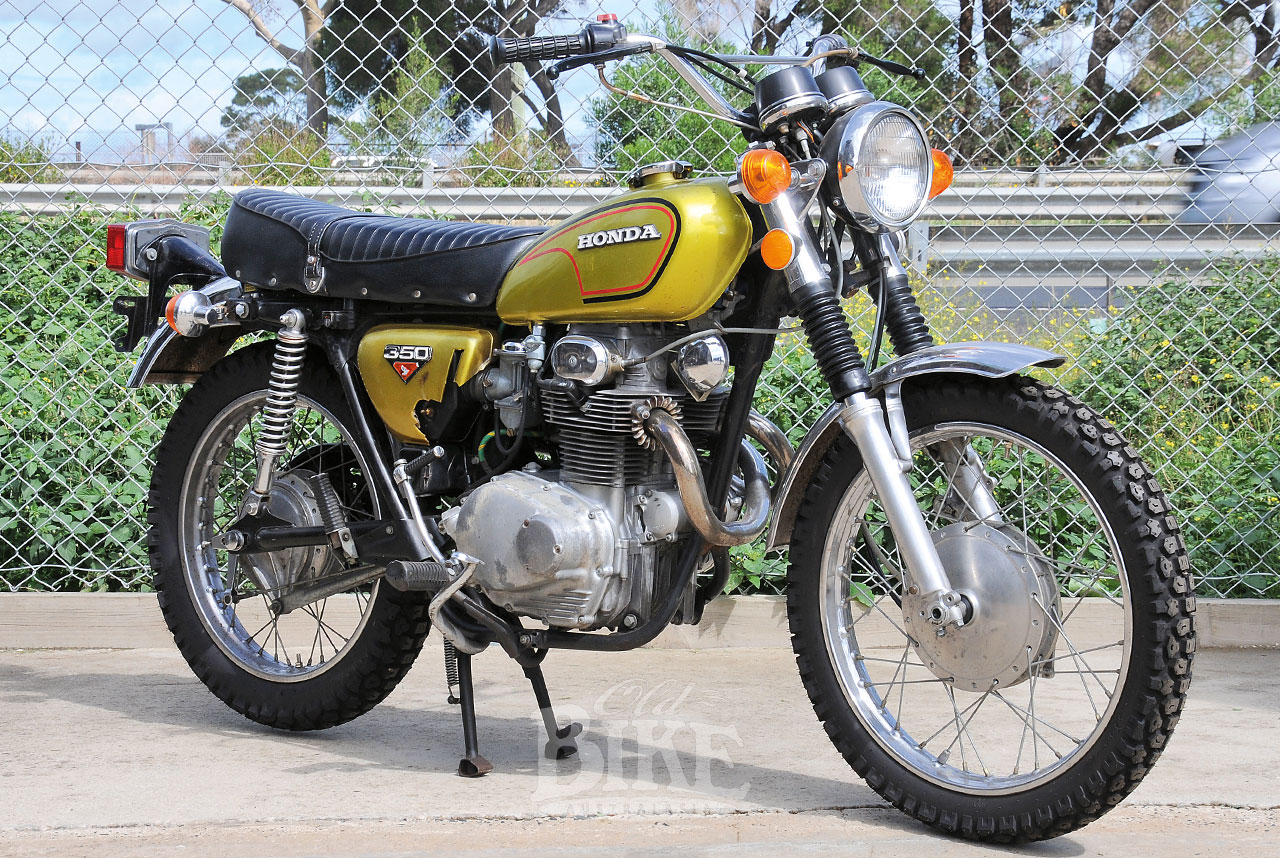
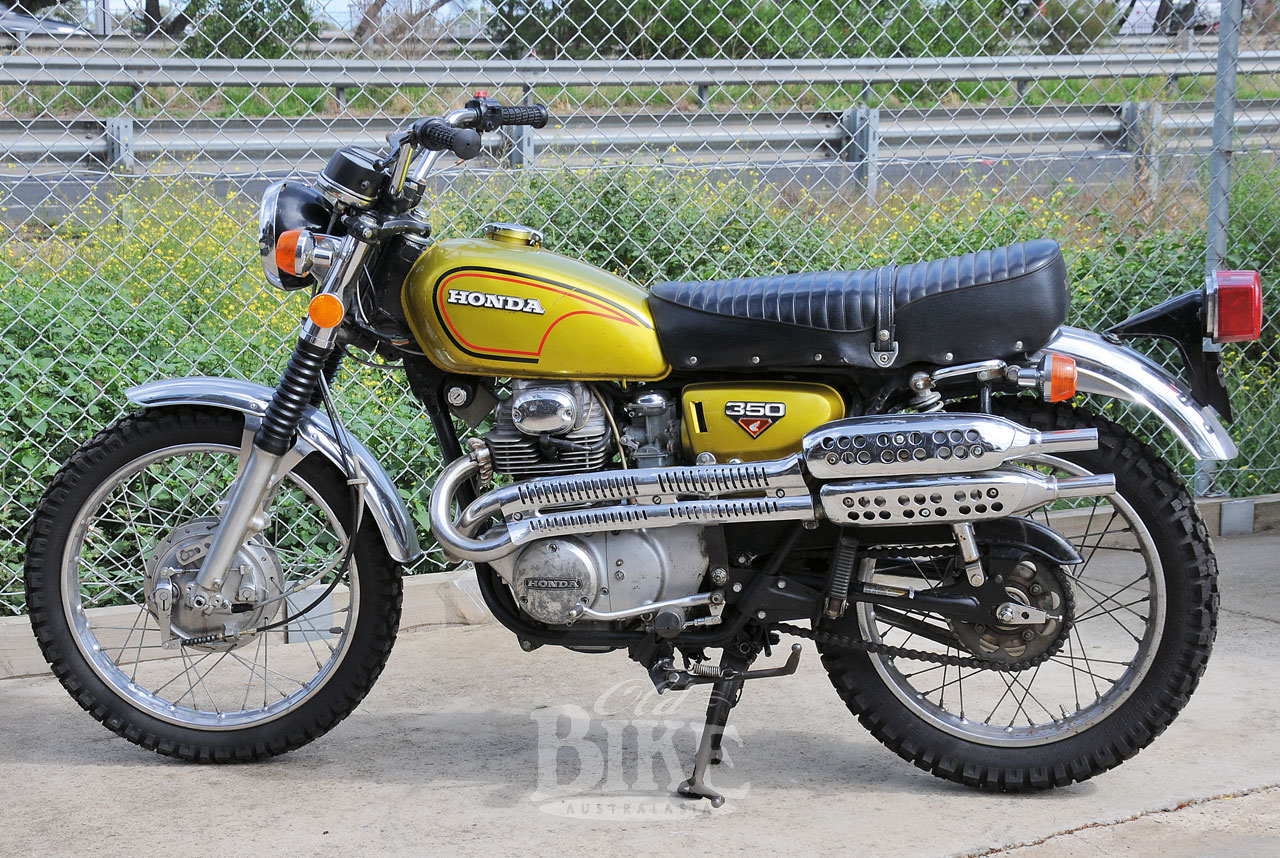
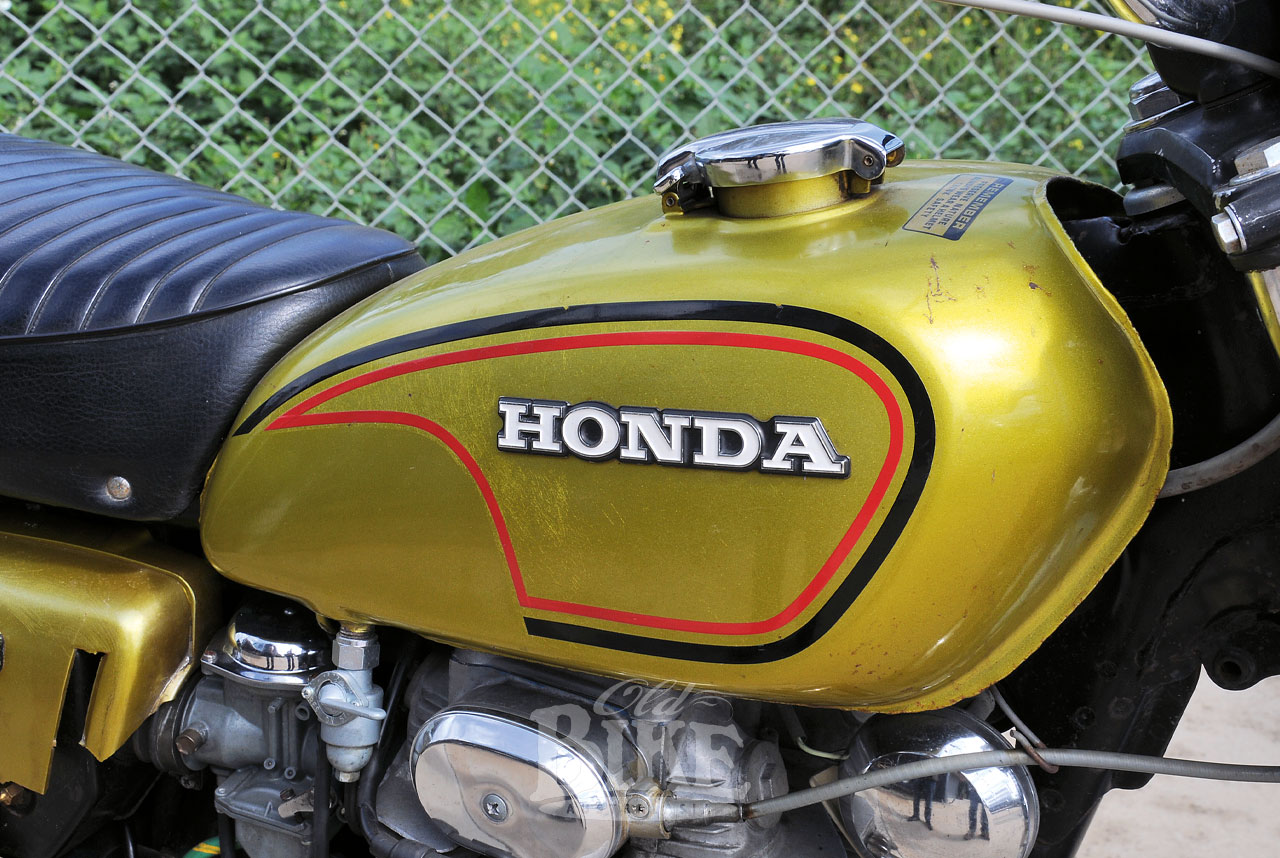
From the moment the new 350s hit the market in the US, the CL was the volume seller, at least in most states and notably in the chic west, but the CL/CB350 was a goldmine for dealers everywhere. They were attractively priced, practically unburstable, handled acceptably (at least on the tar), and were incredibly smooth and vibration-free. In the six years of production 1968 – 1973, more than 600,000 of the CB/CL350 models were sold. In other markets, such as Britain, the CB was by far the biggest seller. In Australia, the CB again dominated sales, but by 1969 there were five CL models in the range; 90, 175, 250, 350 and 450, with the CL350 priced at $662.
A Mexican wave
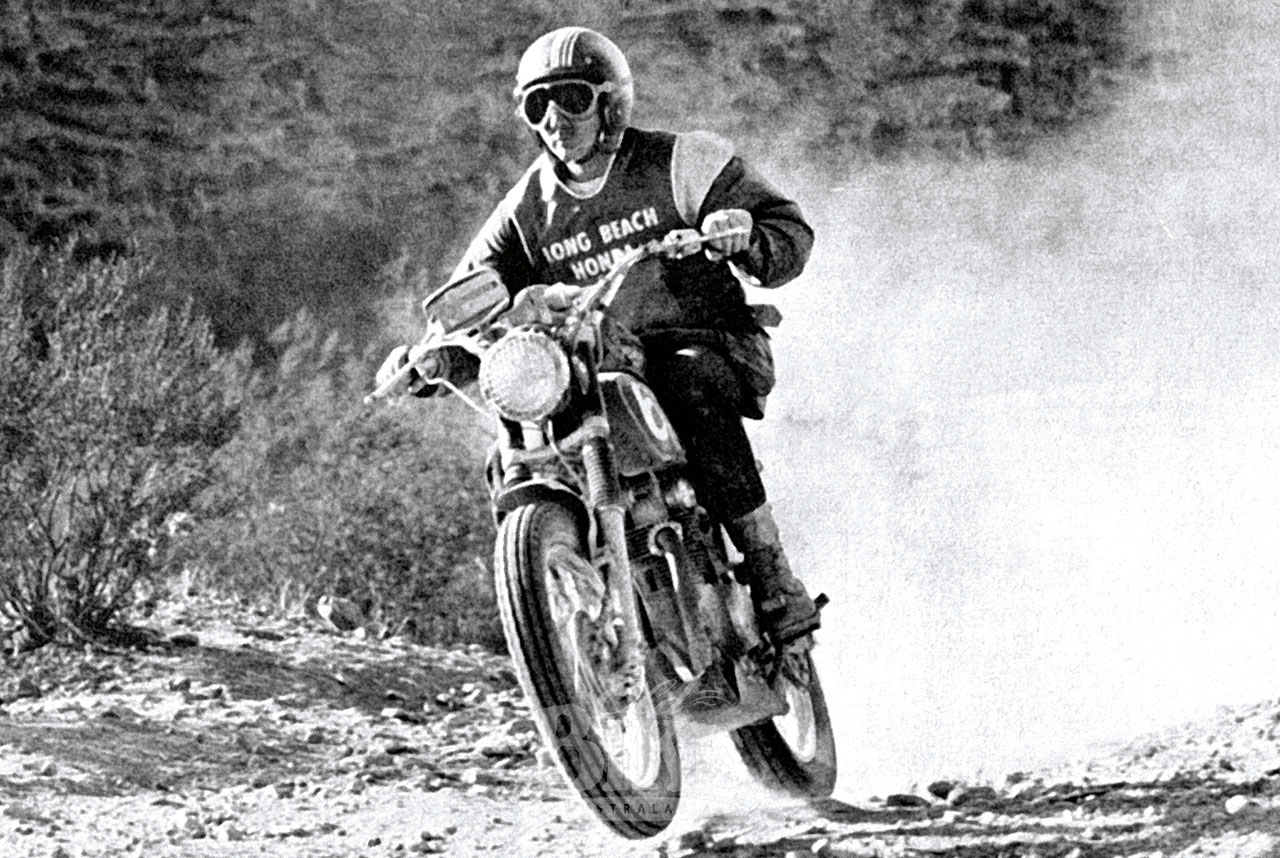
The CL350 received a massive publicity boost when Long Beach Honda entered one for the prestigious and punishing Baja 1000. At least, it purported to be a CL350, but was probably a CB fitted with a larger tank from the CB450, a fork brace, after-market exhaust system, Ceriani forks, Koni rear shocks, reupholstered seat, lighter mudguards and a sump guard. Nevertheless, the Honda, ridden by Larry Berquist and Gary Preston, demolished the motorcycle and car entry to win the event outright, with a record time of 20 hours 38 minutes for the thrash from Ensenada to La Paz, despite losing 10 minutes when the Honda ran out of fuel.
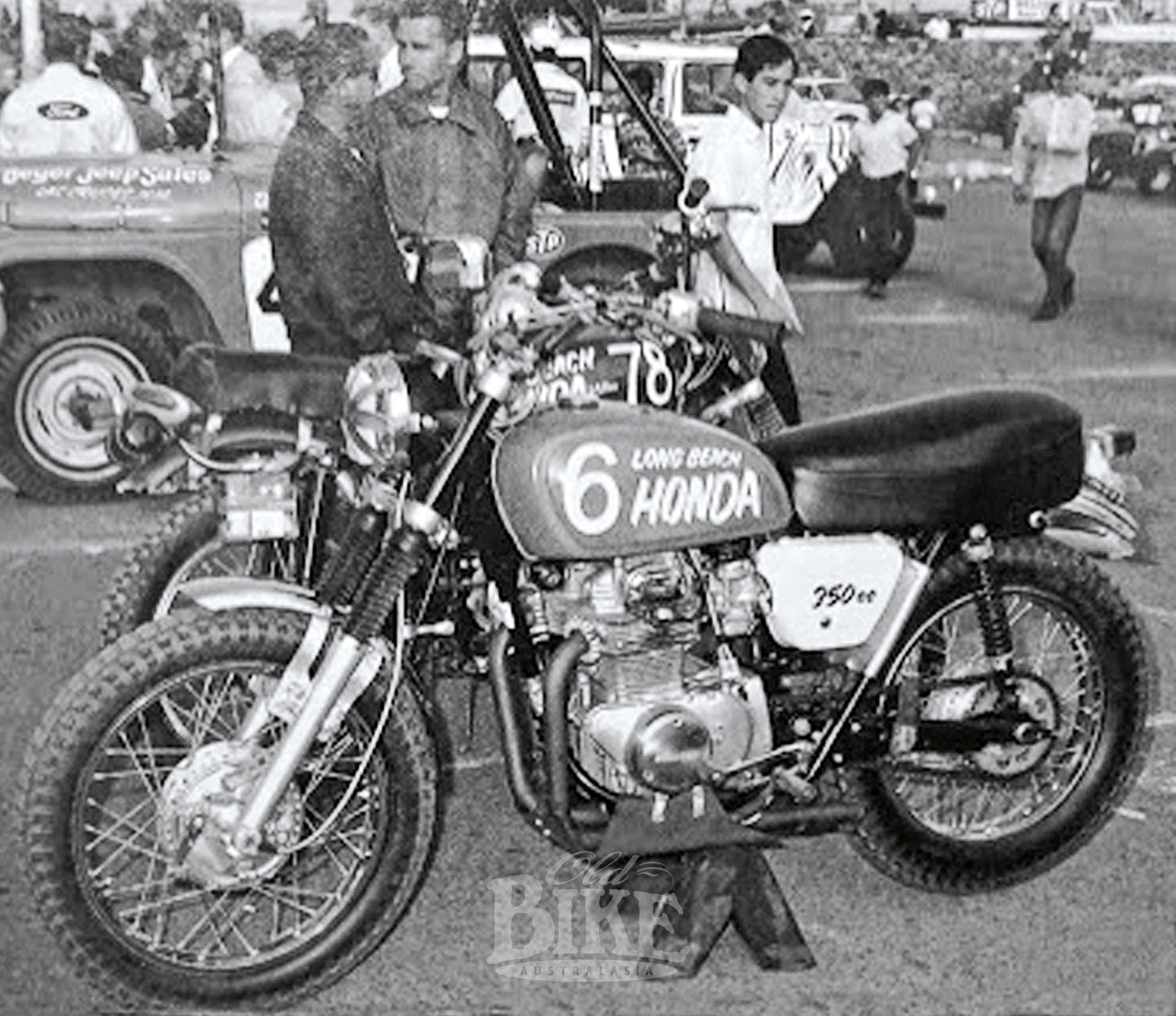
It was actually a fitting reward for the disappointment of the previous year’s event, when the Berquist/Preston team, riding a modified 305cc CB77 entered by Long Beach Honda, had the race shot to bits only to retire with battery failure. For the November 1968 race, the new CB350 was the basis – with the battery no doubt suitably cushioned from the pounding the machine would take on the 832-mile blast through Mexico.
Over the span of its existence, the CL had a few minor facelifts but no major changes in specification. The original models mirrored the CB350 with the white décor with either blue, red or orange panels, the K1 version in either orange or blue with revised twin mufflers, and the final version in candy gold with different side covers, and a more rounded fuel tank. The Baja win not withstanding, the CL350 was never a serious off-roader, but Honda soon addressed that with the quirky, but quite effective, SL350 which was far more at home away from the main road.
Thanks to Classic Style Motorcycles in Seaford, Victoria for the opportunity to photograph these two examples.
Honda CL350 – Specifications
Engine: Parallel twin, SOHC, two valves per cylinder, air cooled.
Bore x stroke: 64mm x 50.6mm
Capacity: 324cc
Compression ratio: 9.5:1
Carburation: 2 x 26mm Keihin CV
Lubrication: Wet sump
Air filter: felt and wire mesh
Ignition: Battery and coil
Starting: Kick or electric
Power: 33 BHP at 9,500 rpm
Torque: 19.5 ft-lb @ 8,000 rpm
Fuel capacity: 9 litres
Lighting: 100 watt alternator
Frame: Pressed steel/tubular steel
Suspension: Front: Hydraulic telescopic forks 117mm travel
Rear: Swinging arm with 2 x gas pressurised dampers 73mm travel
Wheelbase: 1320mm
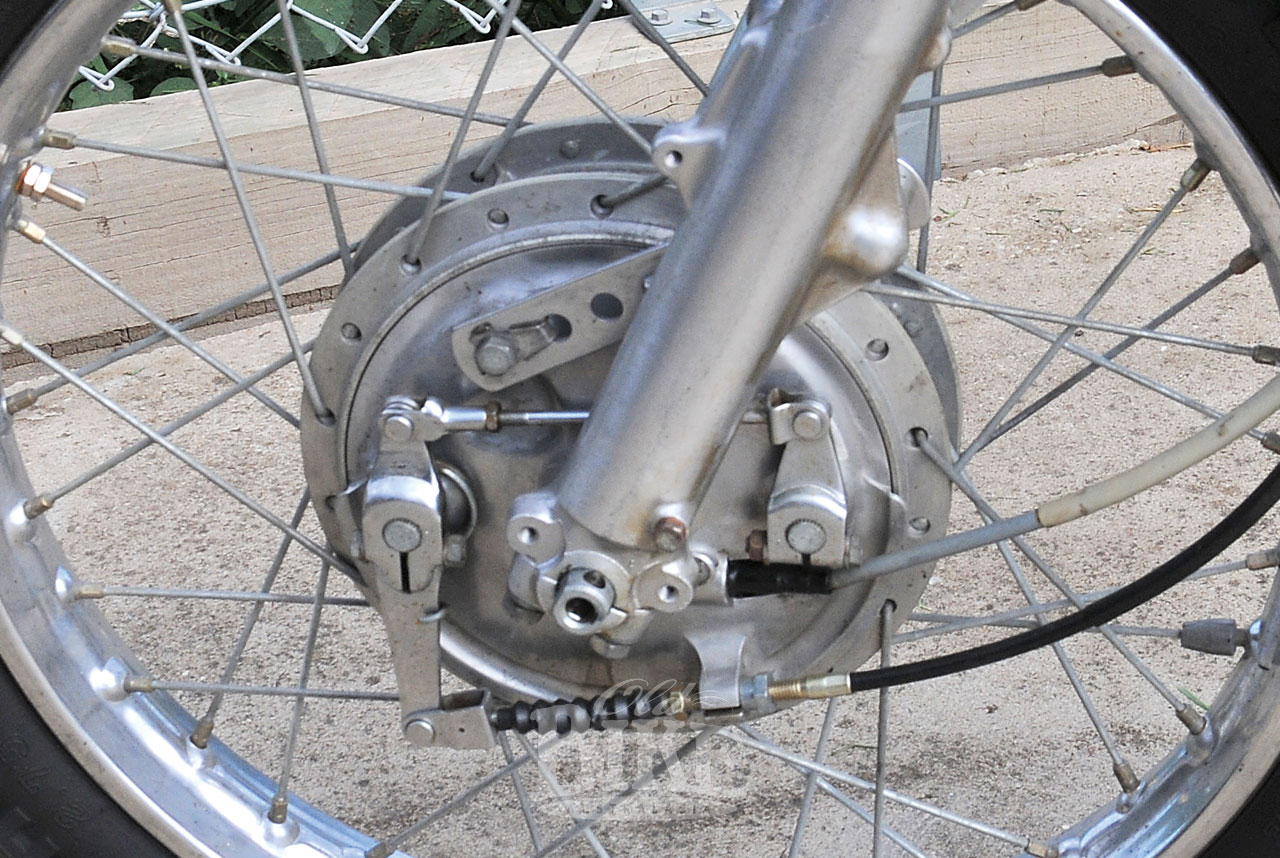
Brakes: Front: twin leading shoe 180mm drum.
Rear: Single leading shoe 160mm drum
Tyres: Front: 3.00 x 18. Rear: 3.50 x 18
Seat height: 790mm
Curb weight: 157kg