From our Old Bike Archives – Issue 102 – first published in 2022.
A Learner-legal motorcycle that puts of 34kW (45.5hp) at 18,000 rpm? Surely a typo. But no, this is the spec for the Honda CBR250RR that finally hit Australian showrooms in 1996.
Story: Jim Scaysbrook • Photos: Colin Rosewarne, Jim Scaysbrook, OBA archives.
Finally, because the little screamer had actually been around since 1986, initially in CBR250F and CBR250R form, which was very similar. It was beloved of the Japanese café racer set who purchased thousands of them, many of which eventually found their way to other markets – including Australia – as grey imports.
Herein lies the rub. So many were sold here, a strong demand for spare parts naturally sprang up. Not a few of those bikes had endured a tough childhood, being thrashed mercilessly, pranged often, and frequently deprived of the most vital servicing requirement – regular oil and filter changes.
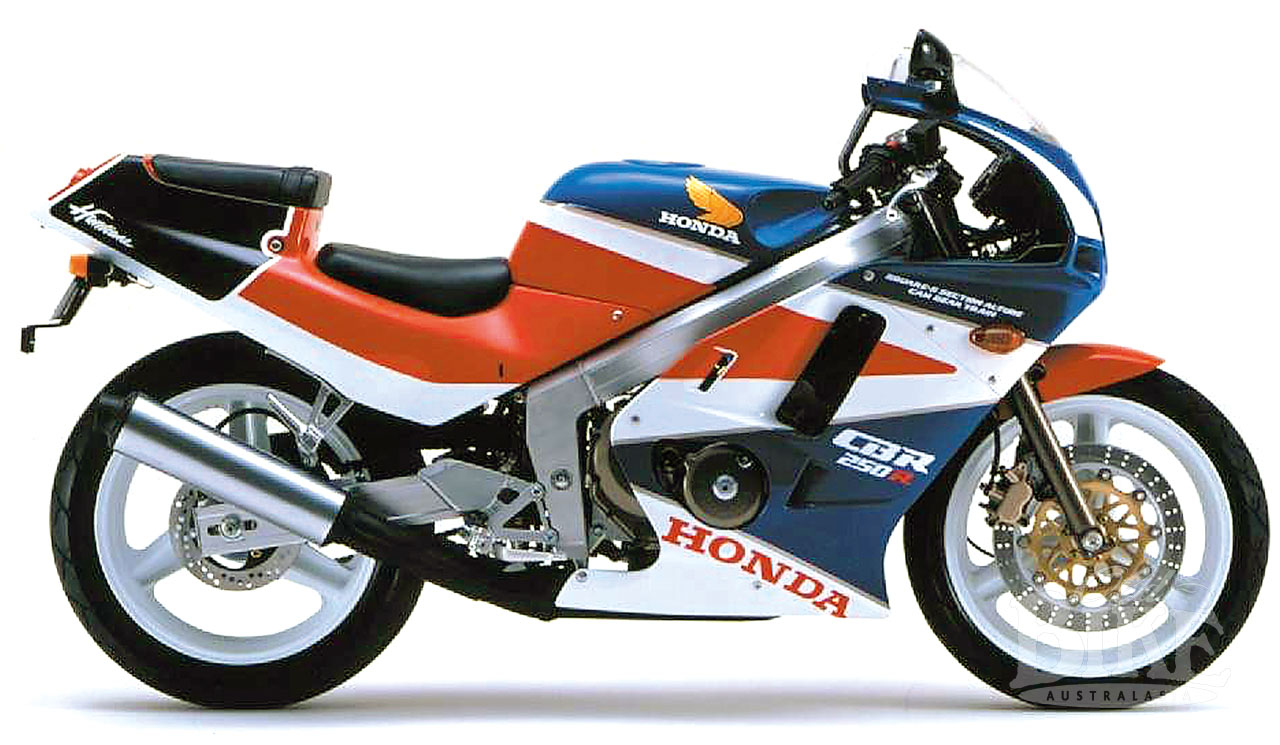
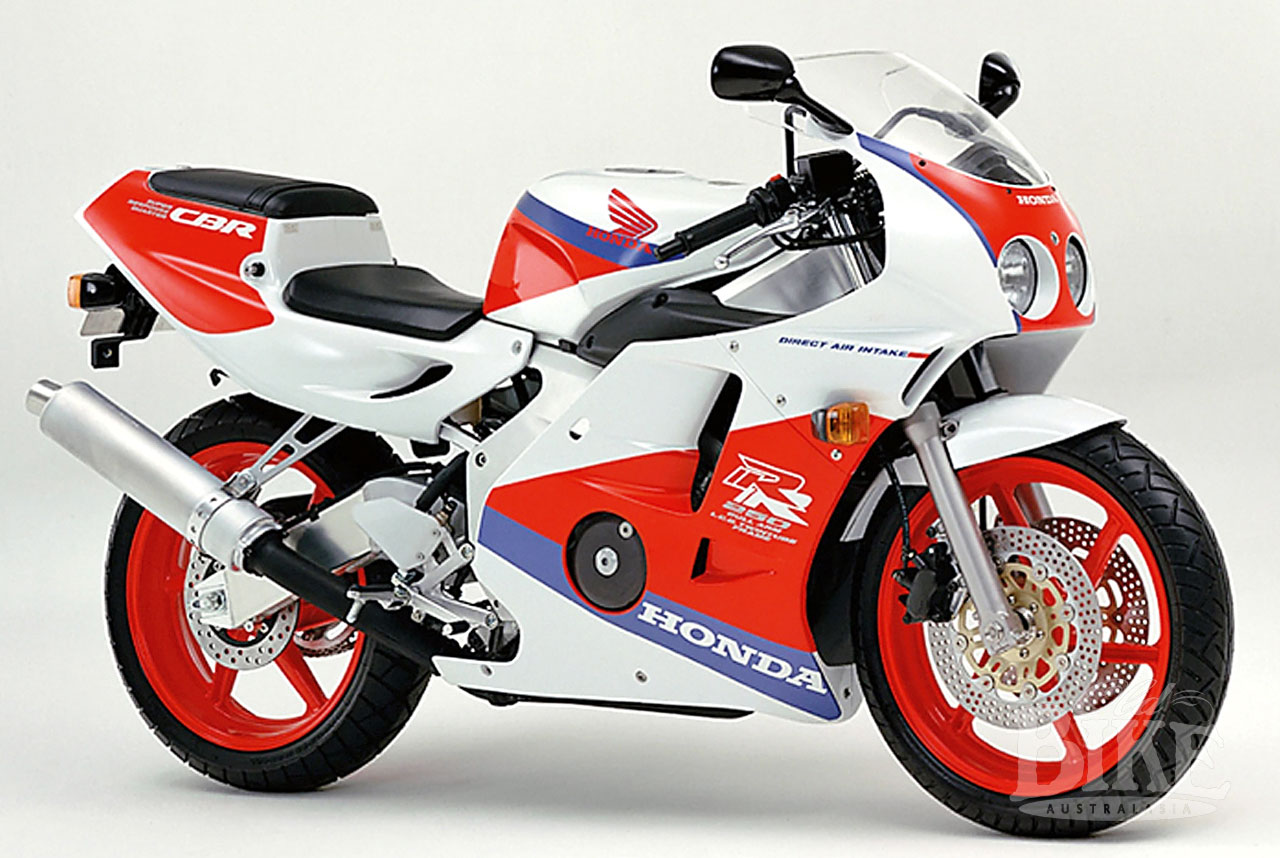
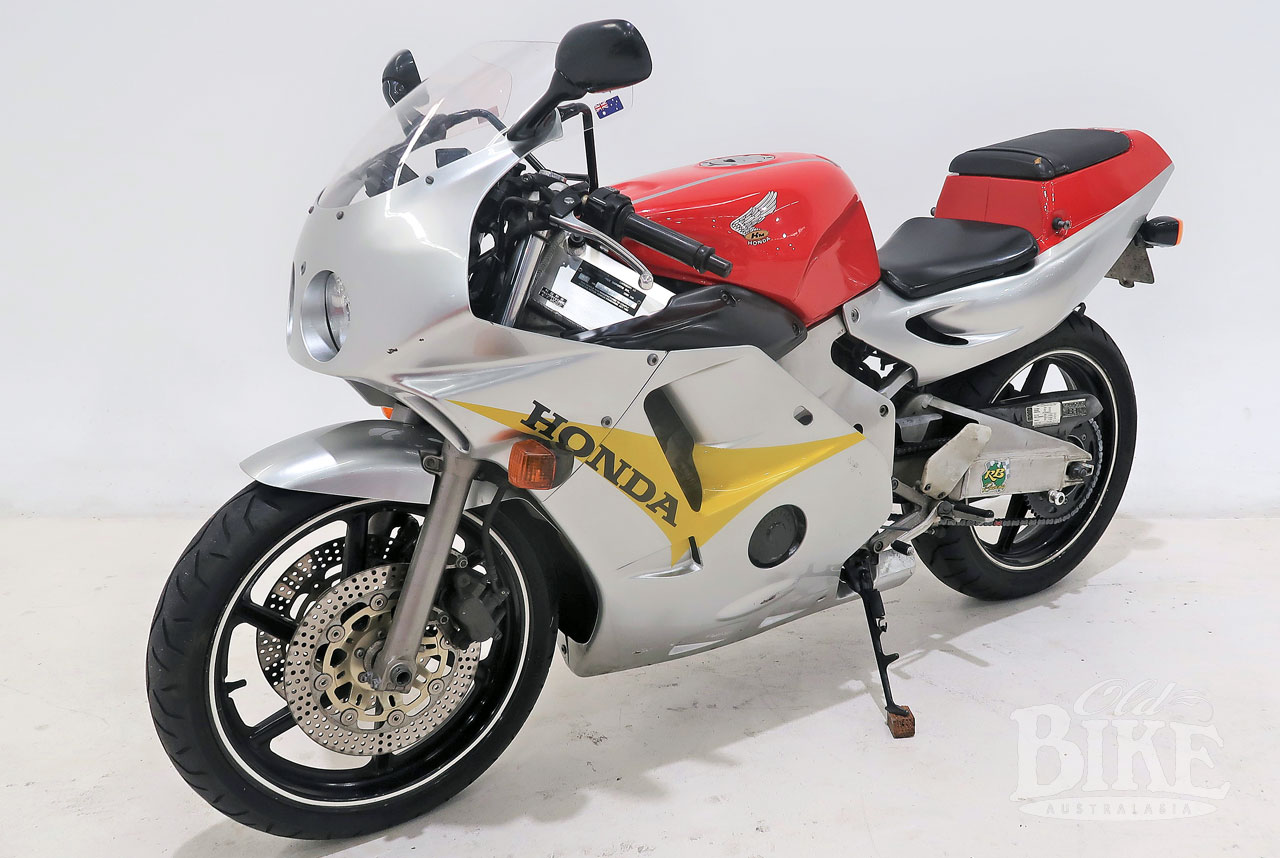
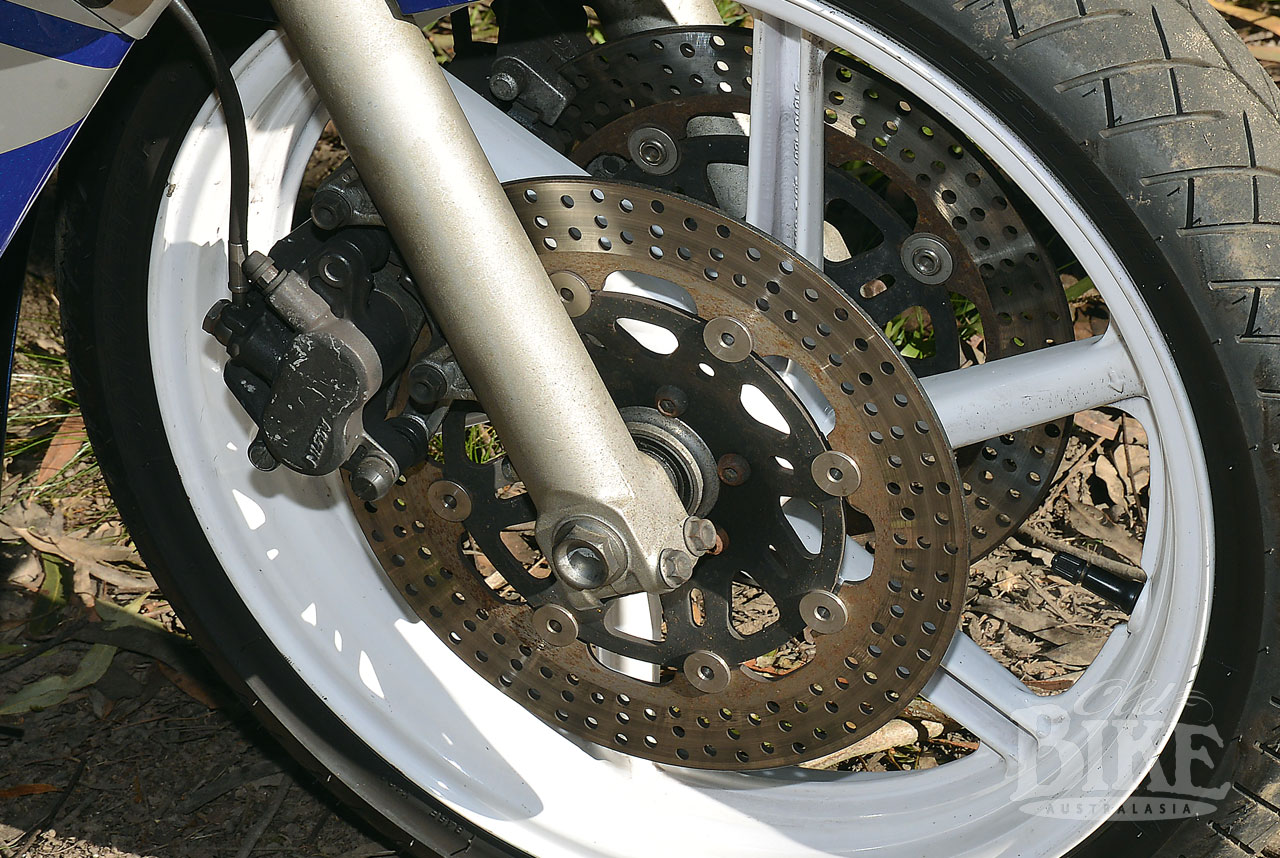
The grey imports were officially known as the MC19 and MC22, and the easiest way to distinguish them is that the MC19 had a single front disc while the MC22 had twin discs‚ with Nissin twin-pot calipers. The engine’s official designation was MC14, and featured gear-driven double overhead camshafts, with the barrels cast integrally with the upper crankcase. Marketed as the CBR250F, it was produced from 1986 for what in Japan was termed the Sport Street category. This first model used a half-fairing that left the engine exposed, while the 1987 CB250R version came with a full fairing that was reminiscent of the beloved CBR900RR Fireblade and coined the nickname ‘Babyblade’.
Various models in varying specification were produced for the home market as the MC14, MC17, with small diameter twin discs and single headlights, and MC19 with a larger diameter single disc and twin headlights. All used the four-cylinder, four-valve per cylinder, water-cooled engine, featuring gear-driven DOHC as on the RC30.
More than a facelift
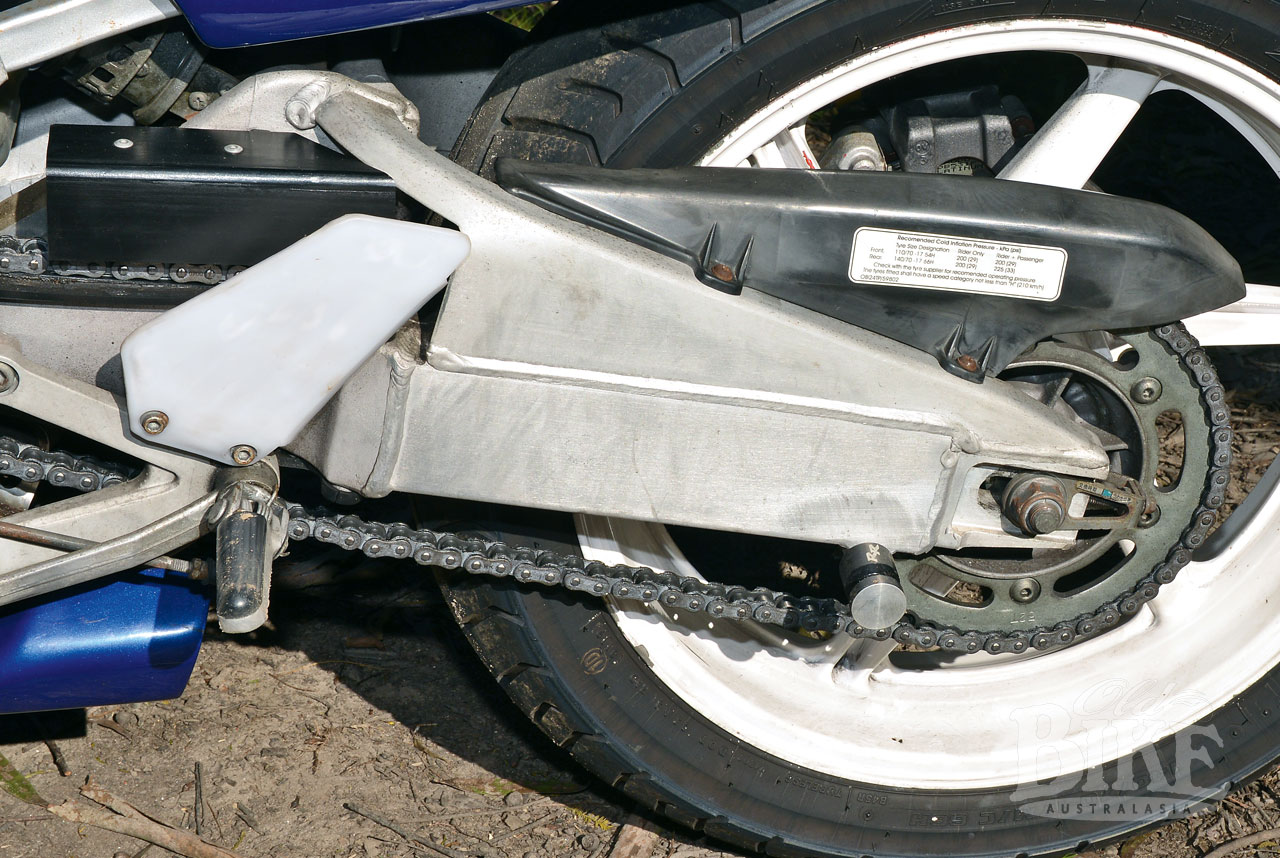
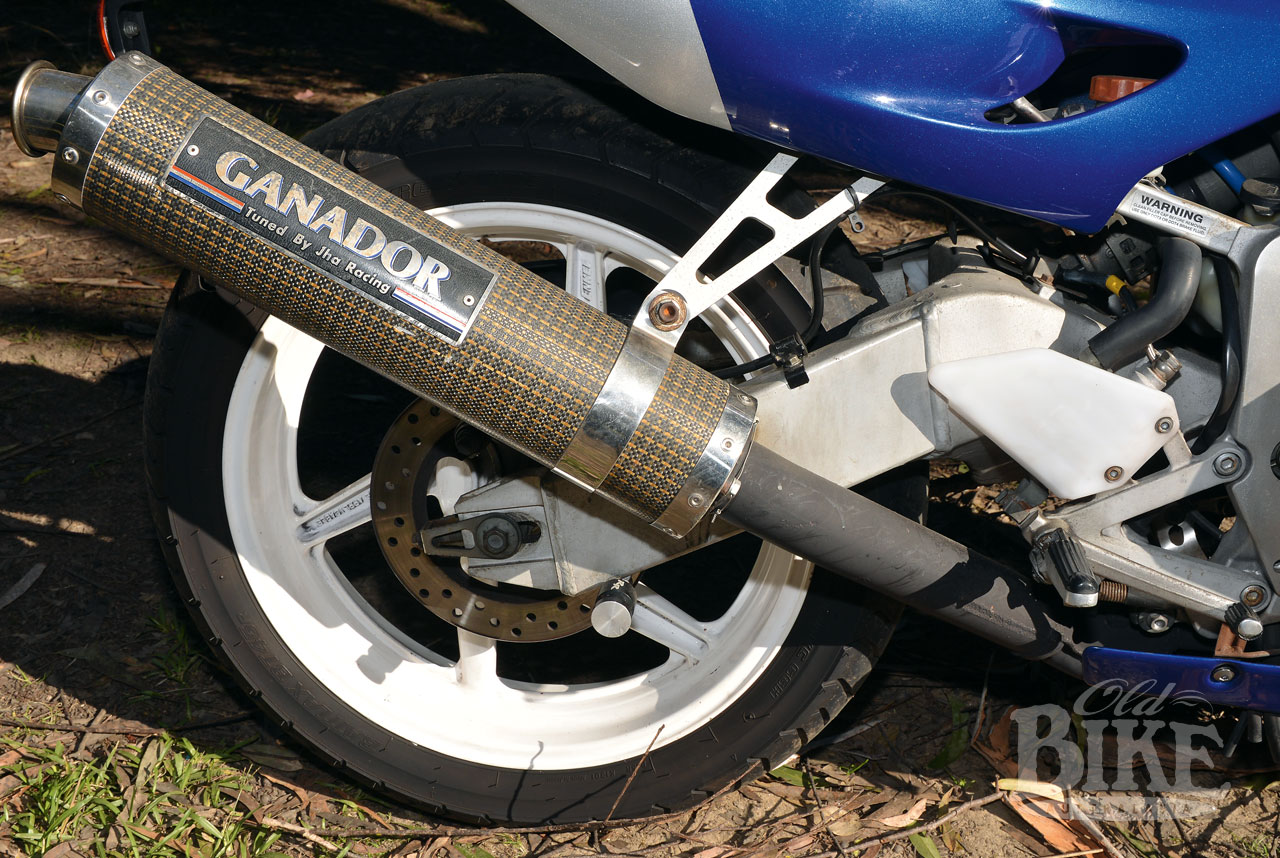
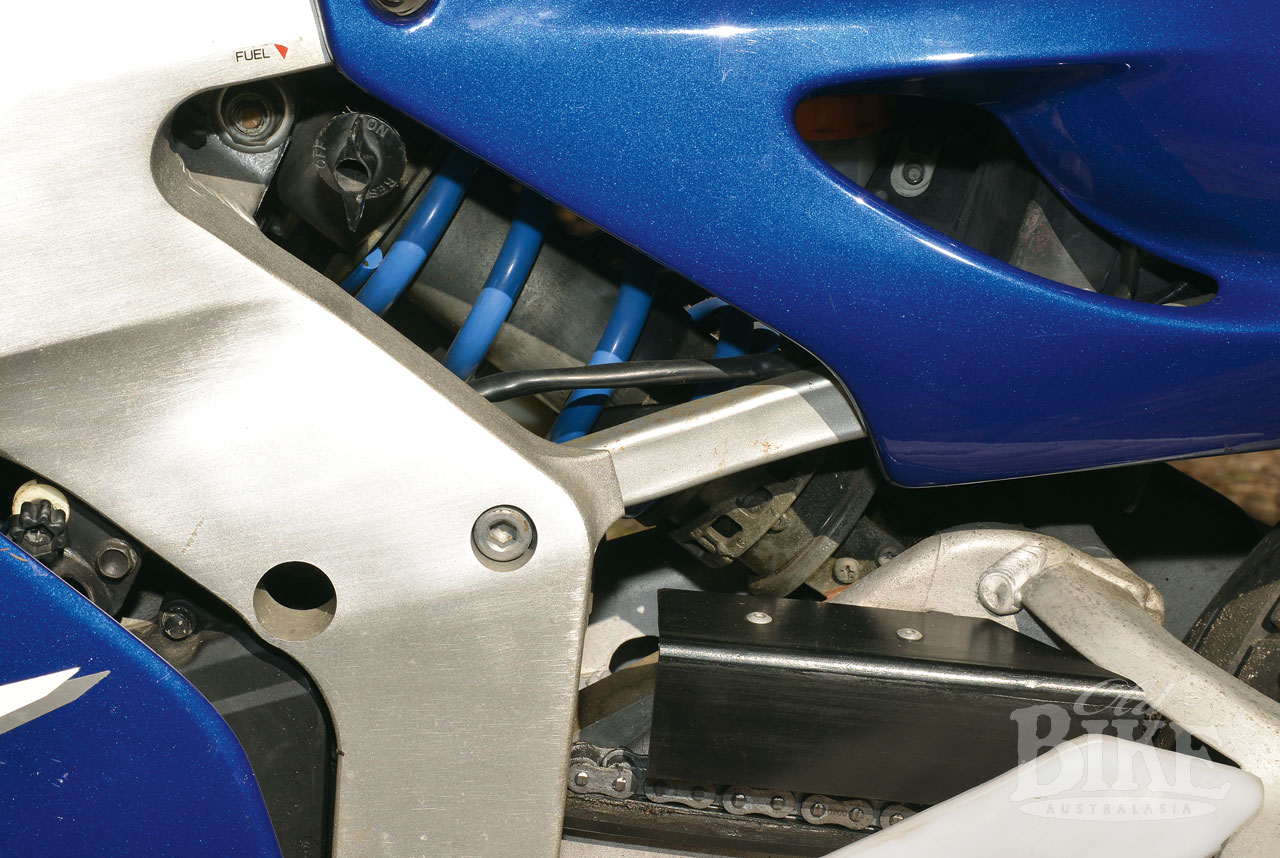
The CBR250R underwent a major revamp in 1990, becoming the CBR250RR, with an all-new cast and pressed aluminium frame which permitted a more sporty riding position, a radical aluminium alloy swinging arm (basically lifted from the NSR250 two-stroke) which was a box section vee on the left, with a banana shaped arm on the right, cranked upwards to allow the single exhaust pipe and muffler to be tucked out of the way to aid ground clearance. The afore-mentioned twin discs were floating, with six-spoke aluminium wheels.
In 1993, a change in the laws for Japanese learner licencing saw the power reduced to 30kW, which had the effect of stifling demand in the previously buoyant home market. By this stage, Honda Australia was getting a bit tired of being hammered for spare parts for the models, and decided to seriously look at officially importing the MC22 (and its sorely needed‚ spare parts). Because the de-tuning had been achieved by restrictions in the cylinder head, the head gasket itself, and a different ignition unit, it was a relatively simple process for Honda to supply full-power versions for the Australian market. Honda was grateful for the turnaround, as stock had been piling up as home demand fell.
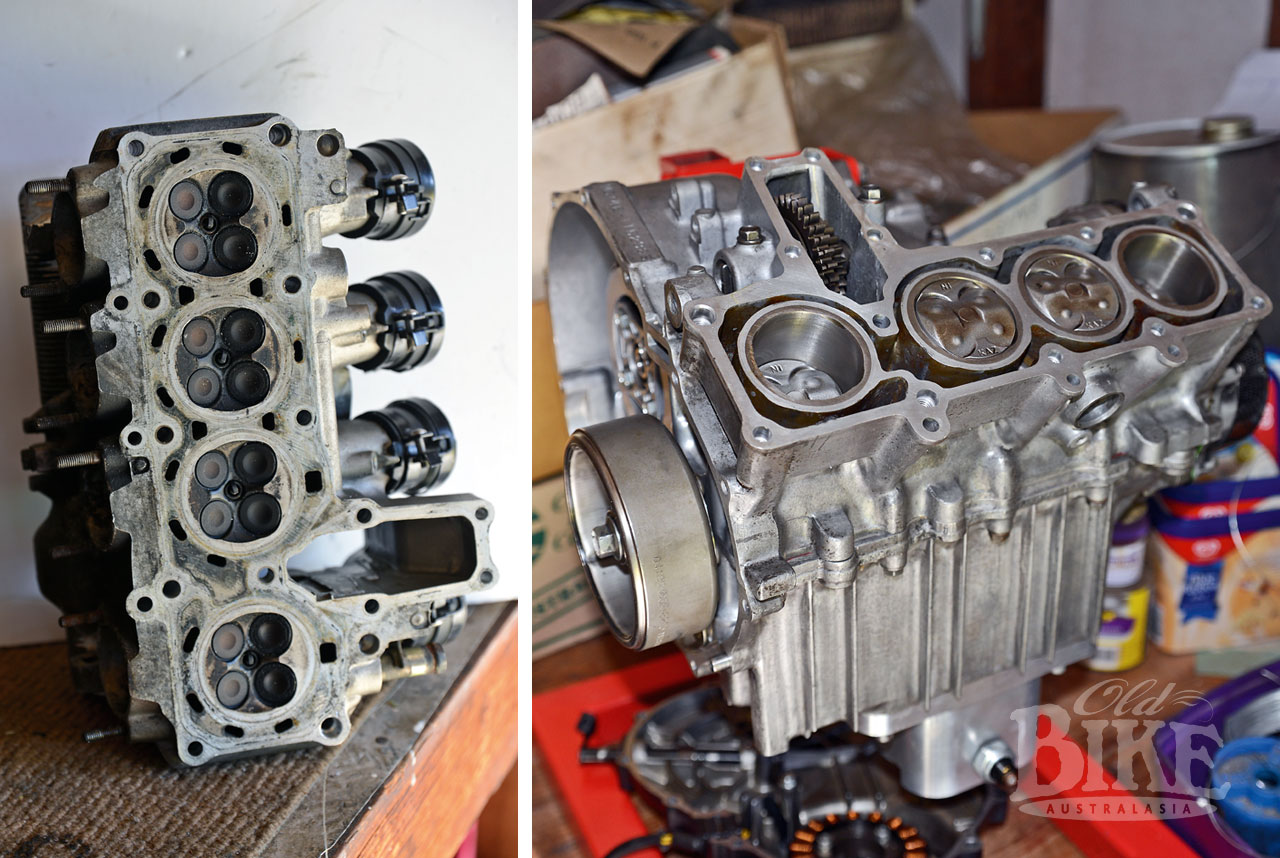
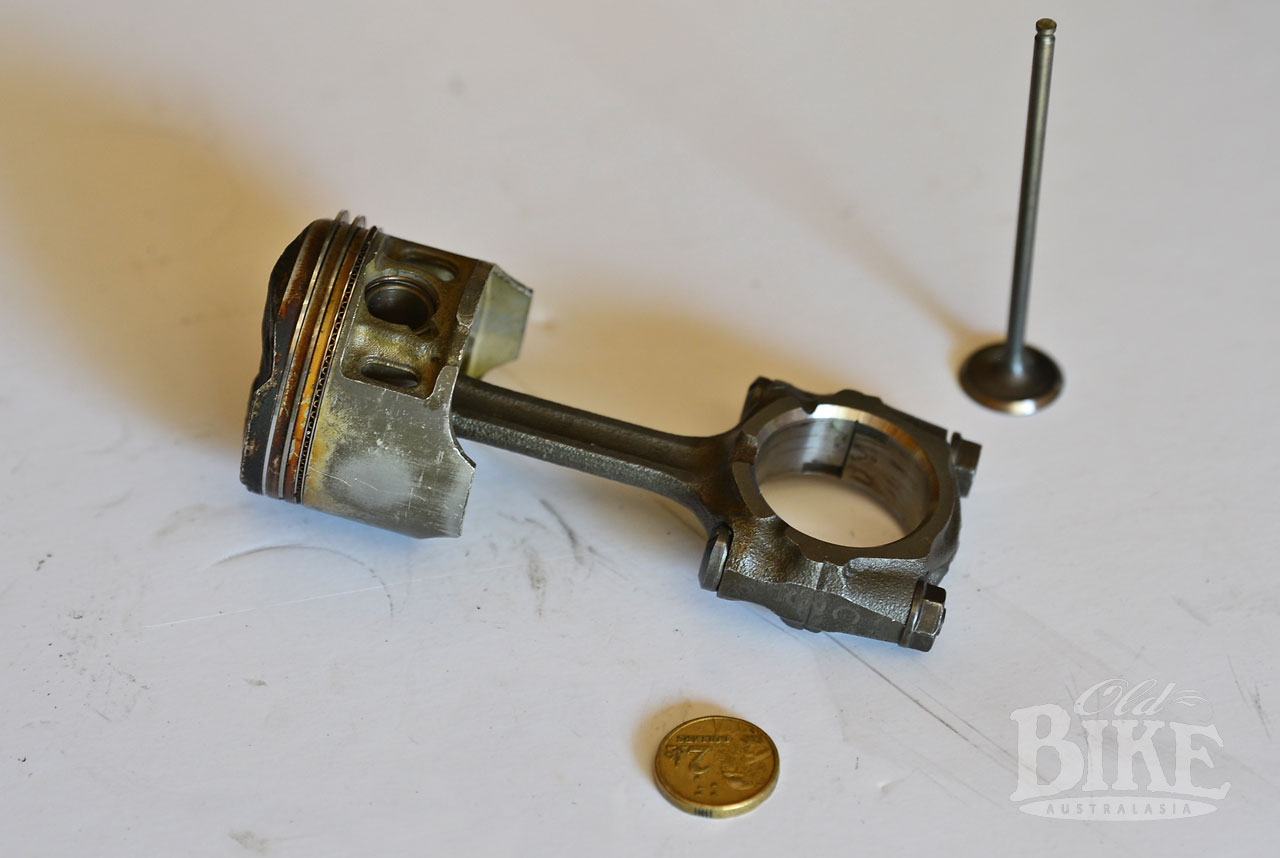
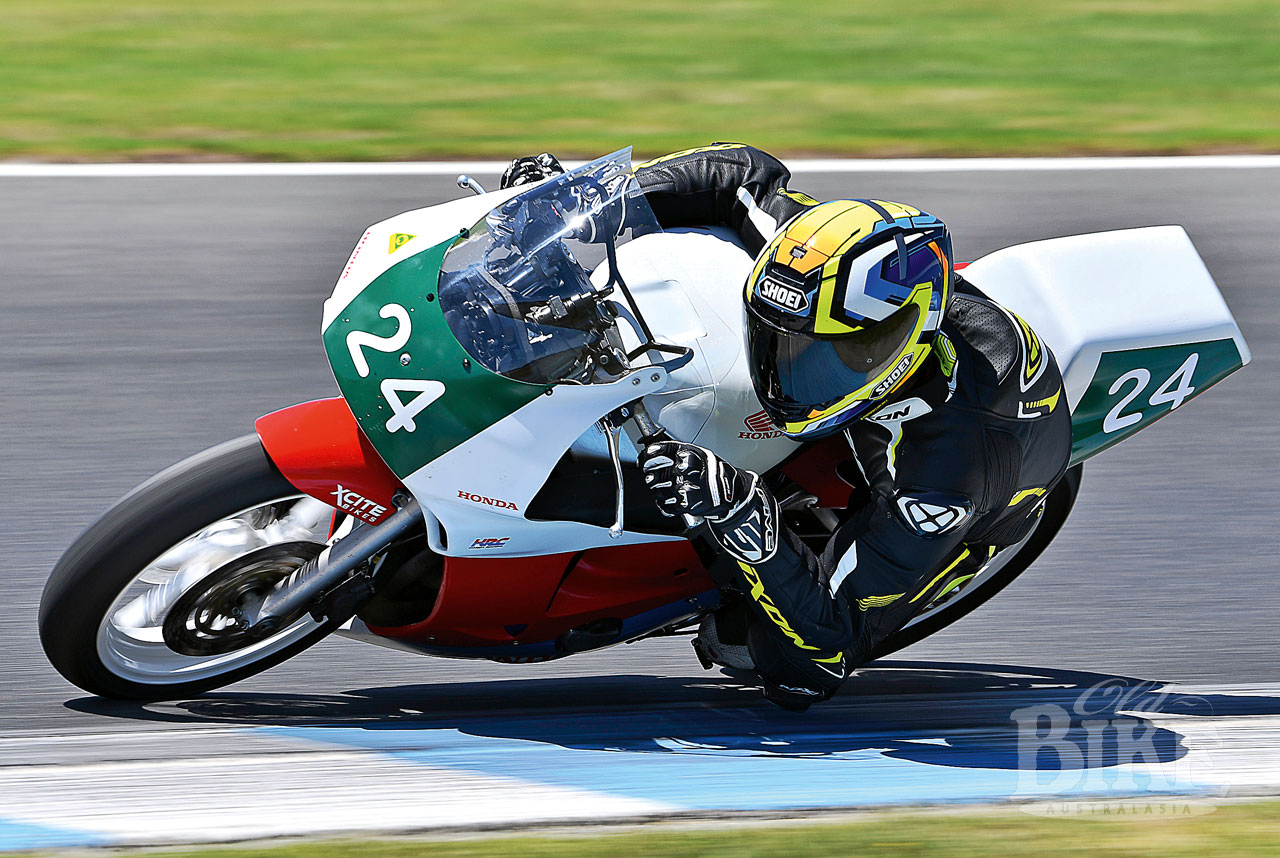
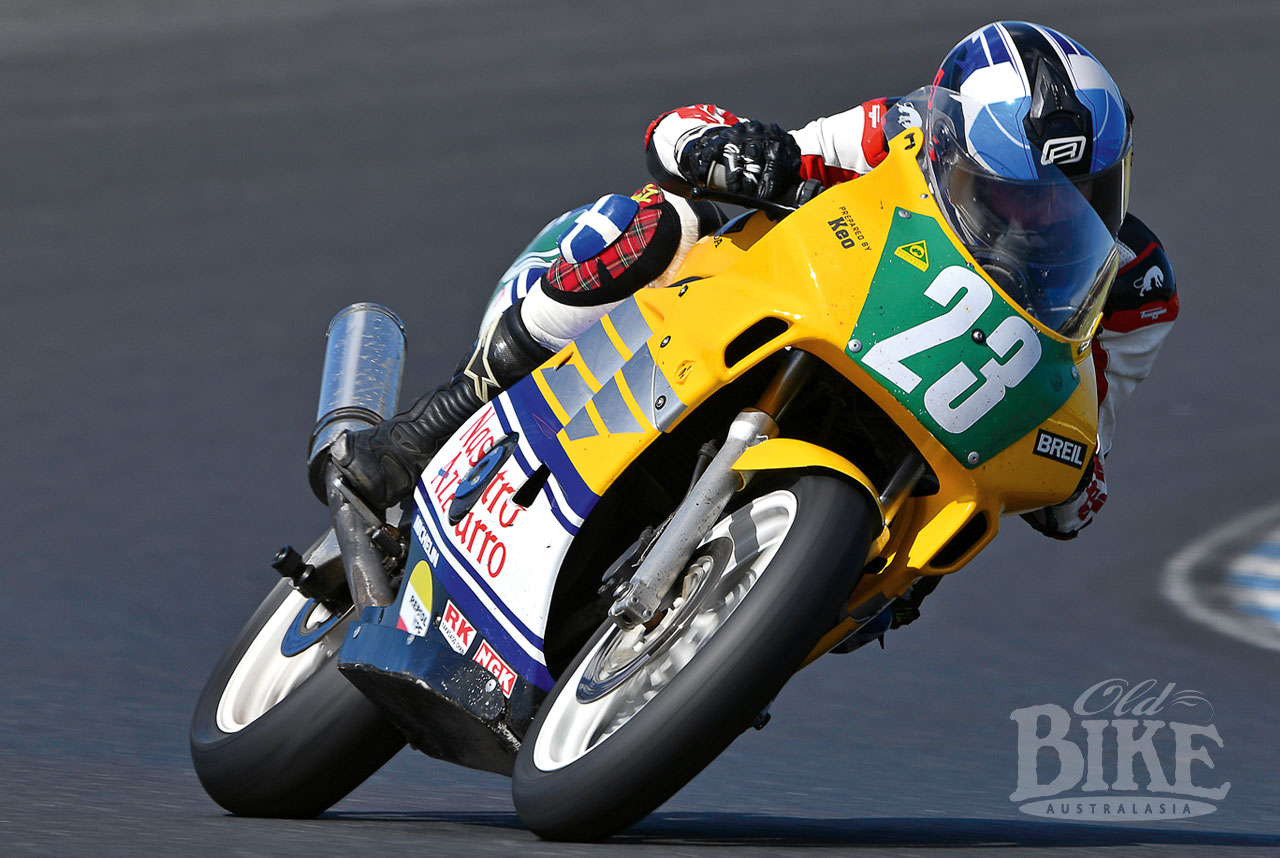
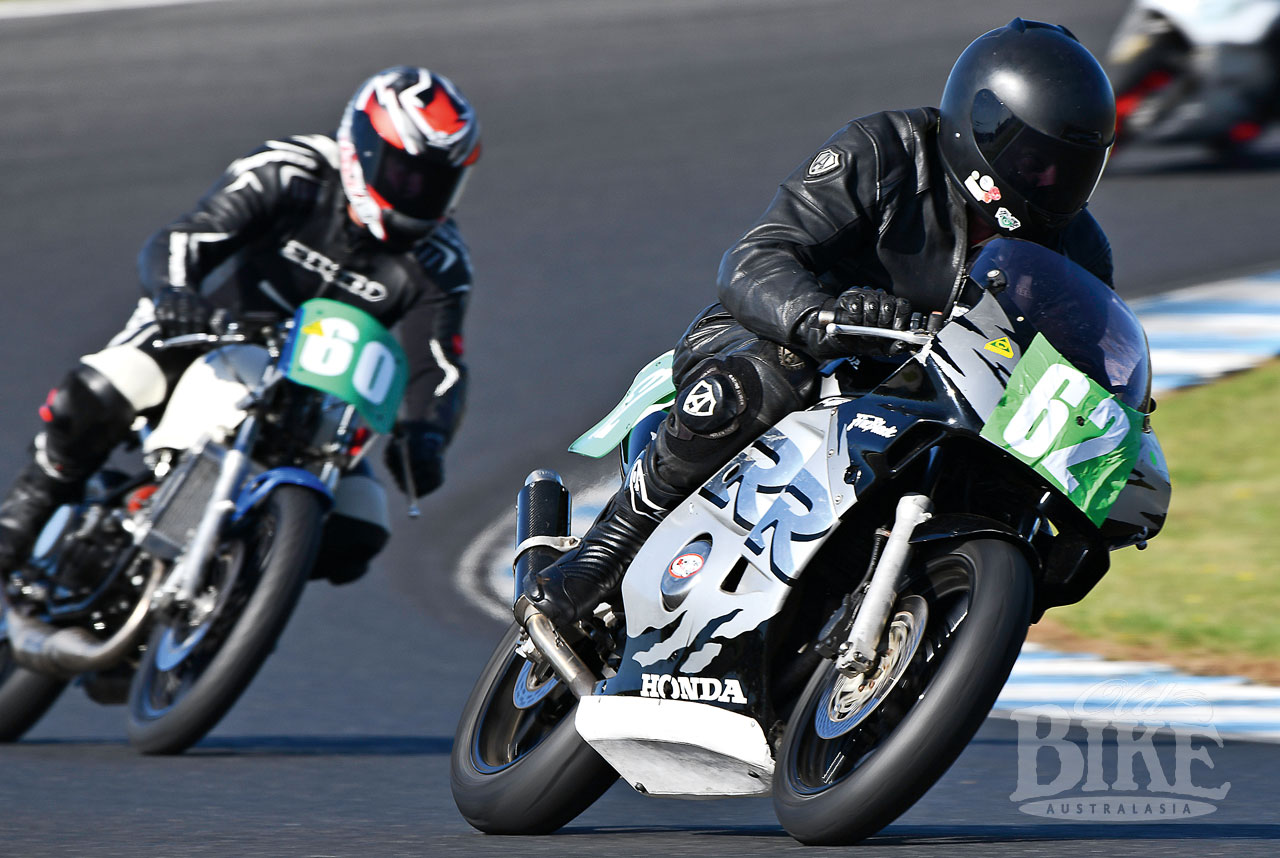
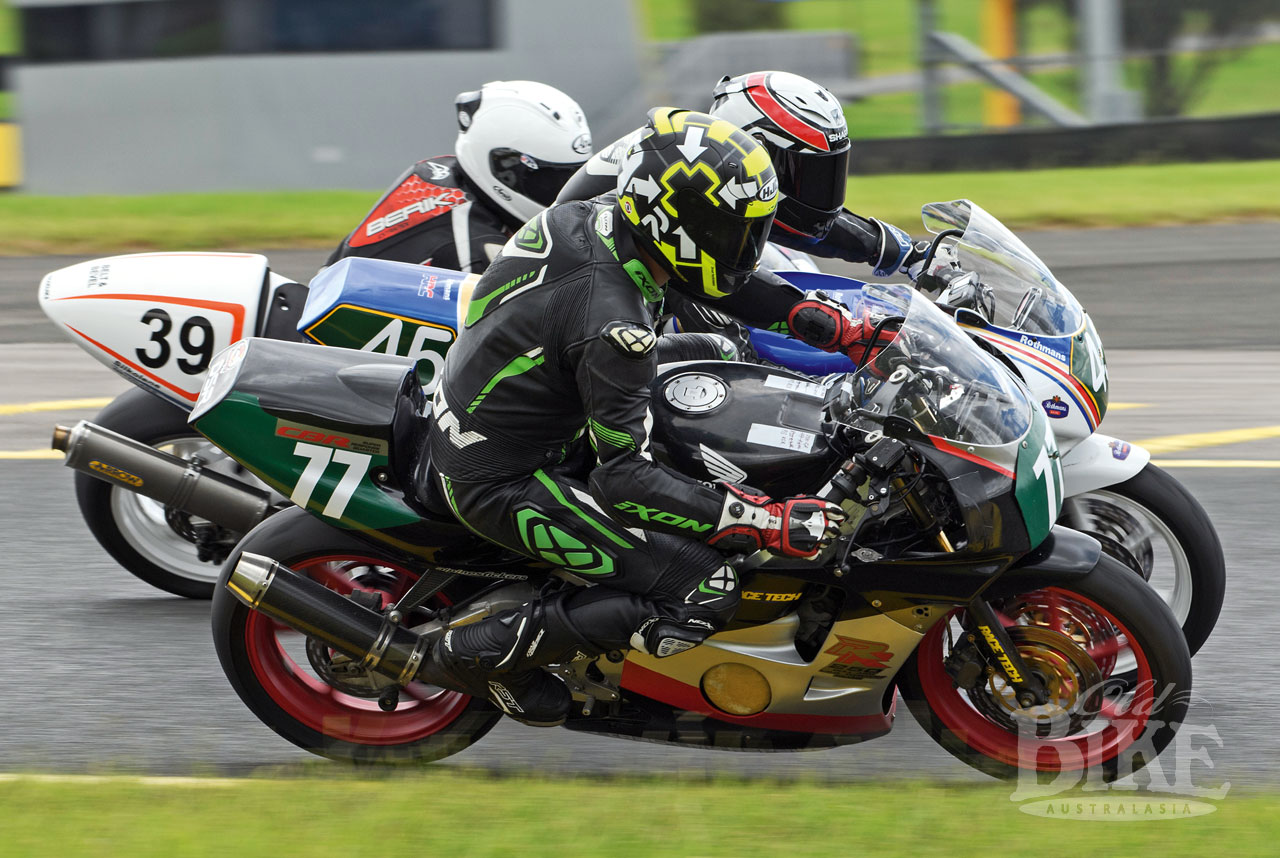
With such an impressive engine specification and a six-speed gearbox, it is no wonder that many of the high-revving 250s found their way onto the race track. Probably the mitigating factor in performance was the standard suspension, the front forks had no provision for adjustment, while the rear adjustment was limited to spring preload. Much experimentation with oil weights and capacities helped the front end performance, but some owners opted to fit completely new front ends, the NSR250 a popular donor if you could find one. Other track mods generally included braided brake lines, better brake pads, and various slip-on mufflers.
Décor varied over the course of the models’ existence and which market it was originally destined to, but many of the Australian deliveries were in what became referred to as the ‘Tricolour’ in white, red and blue, while others appeared in burgundy/black or blue.
Although the model officially ceased production after 1996, there was sufficient stock at the factory to see it remain in the model line up until 1999, when the little four was finally laid to rest. But that’s not quite the end of the story. After a break of more than twenty years, a new CBR250RR appeared at the 2015 Tokyo Motor Show and soon after unveiled in Jakarta, built by Astra Honda Motor, an Indonesian subsidiary of Honda Motor Co. But this was not a screaming four cylinder, but a parallel twin with modern specifications including a ride-by-wire throttle and three modes for the EFI. Gone are the days of 18,000 revs, but the twin manages 14,000 which isn’t a bad effort. Since the debut of the new model, subsequent versions gained an assist and slipper clutch and a more powerful, higher compression engine, poking out 30kW (40.2hp). The twin however, had little of the charisma or GP-inspired exotic specification of its namesake. After six years of production (briefly disappearing in 2017 but reappeared in 2018 as the CBR250R), and struggling to meet the ever more stringent emission laws, the model, and the name, was quietly retired in April 2020.
A grey import
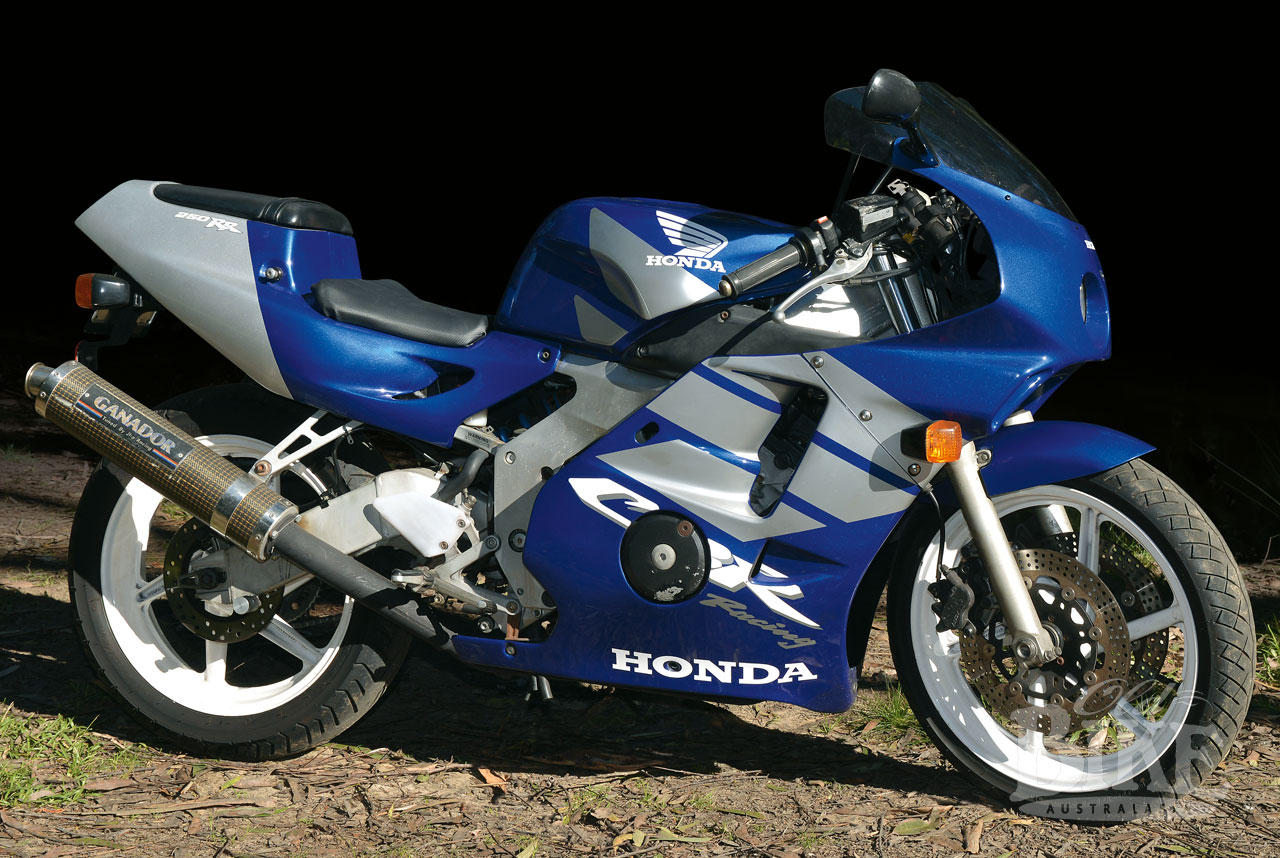
John Simms purchased his 1991 CBR250RR on eBay from a Victorian lady owner. “I paid $1250 for it, then went through it to fix a few things. It had been sitting for six years, so the brake calipers were locked up and the carbs were full of muck. I put new seals and pads in the calipers, added braided brake lines, battery, chains and new tyres, which all up set me back about $1500, so for under three grand I had a very tidy bike with 19,000km on it. The mileage had basically all been done in Japan, and the bike first came into Queensland before being sold to the Melbourne girl. One thing I did from standard was to recover the rider’s seat in a non-slip material. The pillion seat is still in the original shiny vinyl and is pretty slippery. There is quite a roomy storage compartment in the rear of the seat which holds more than you would expect.
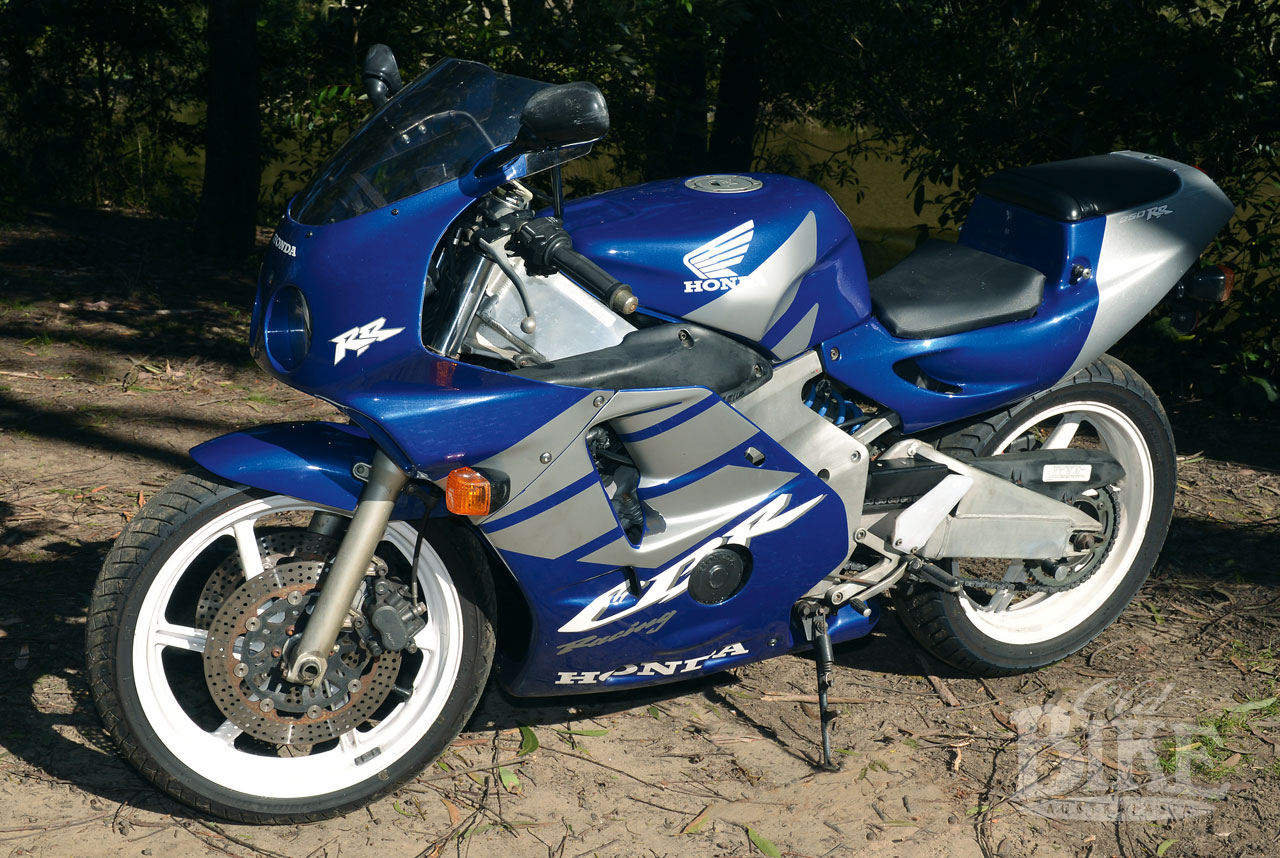
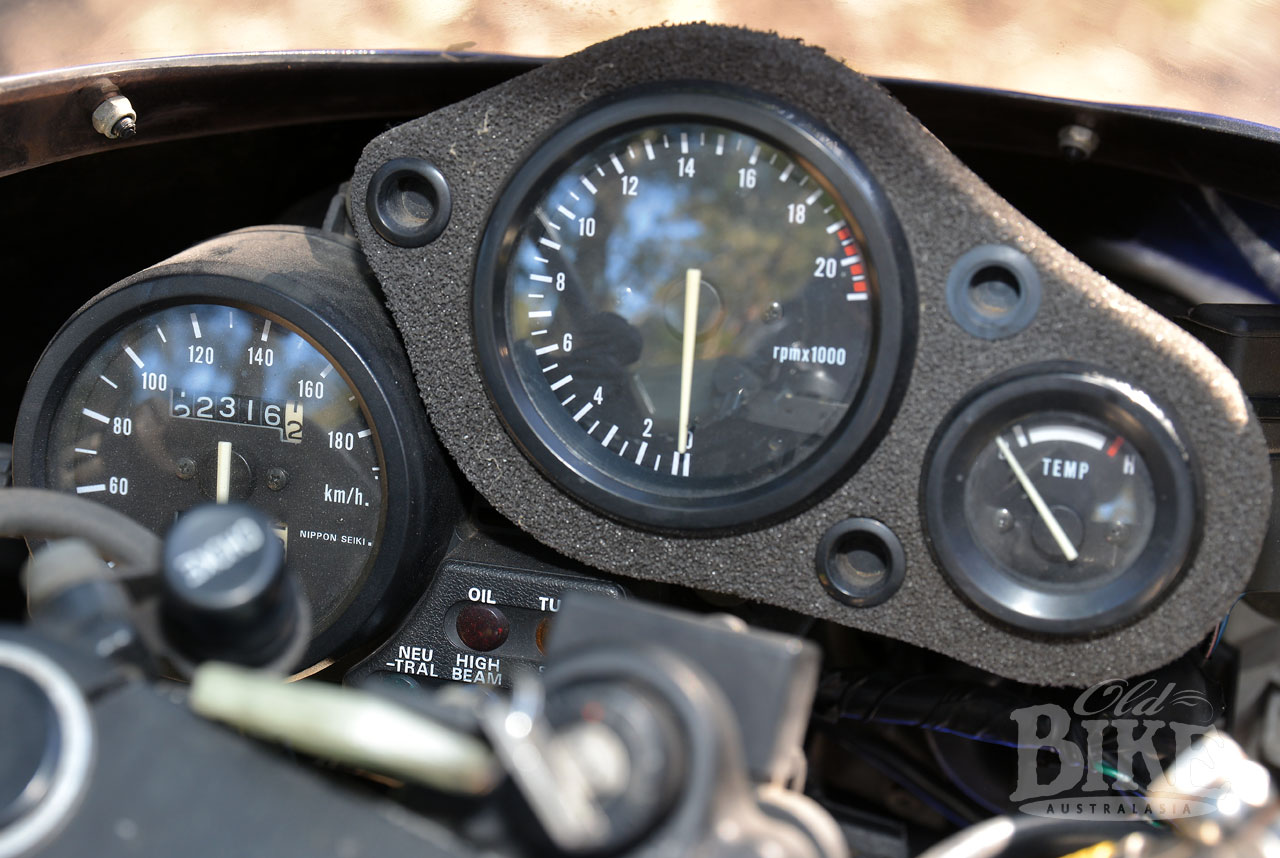
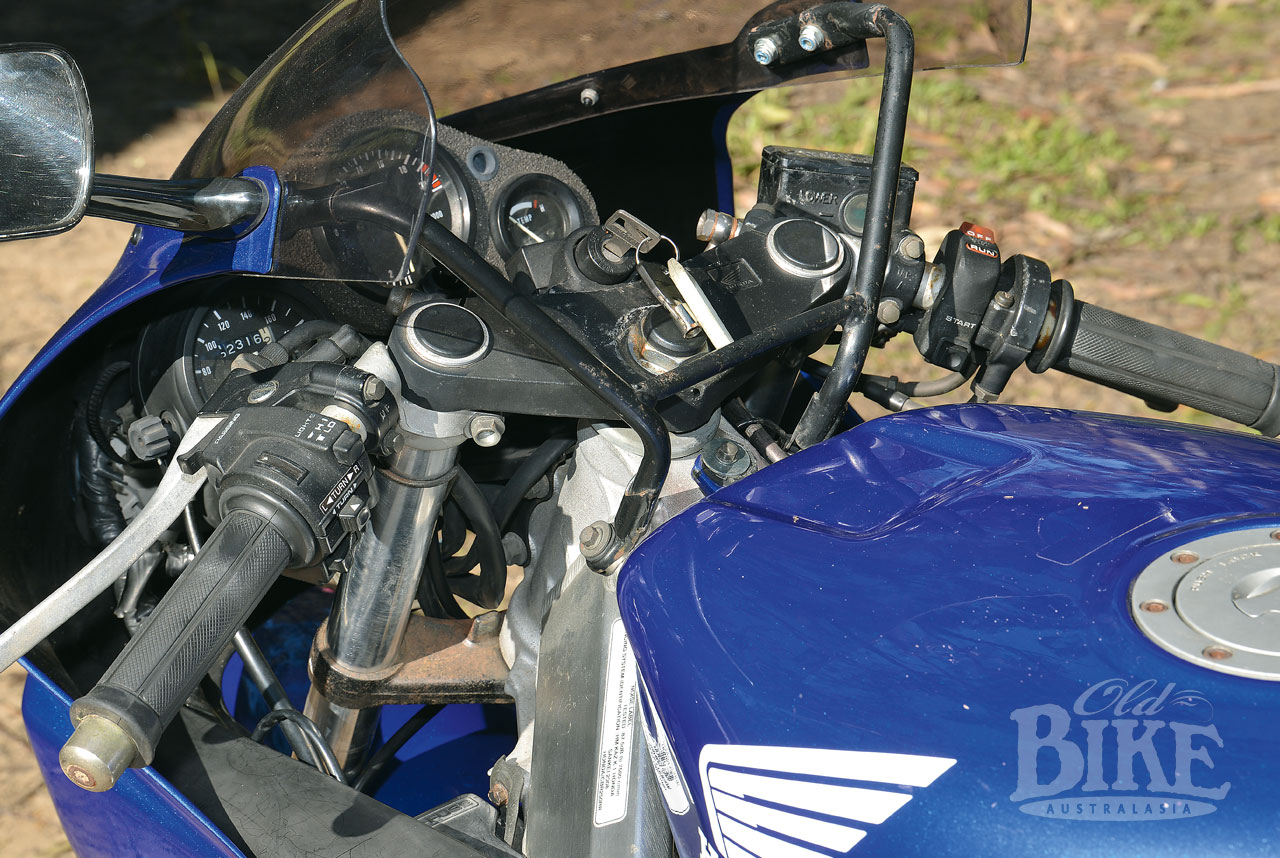
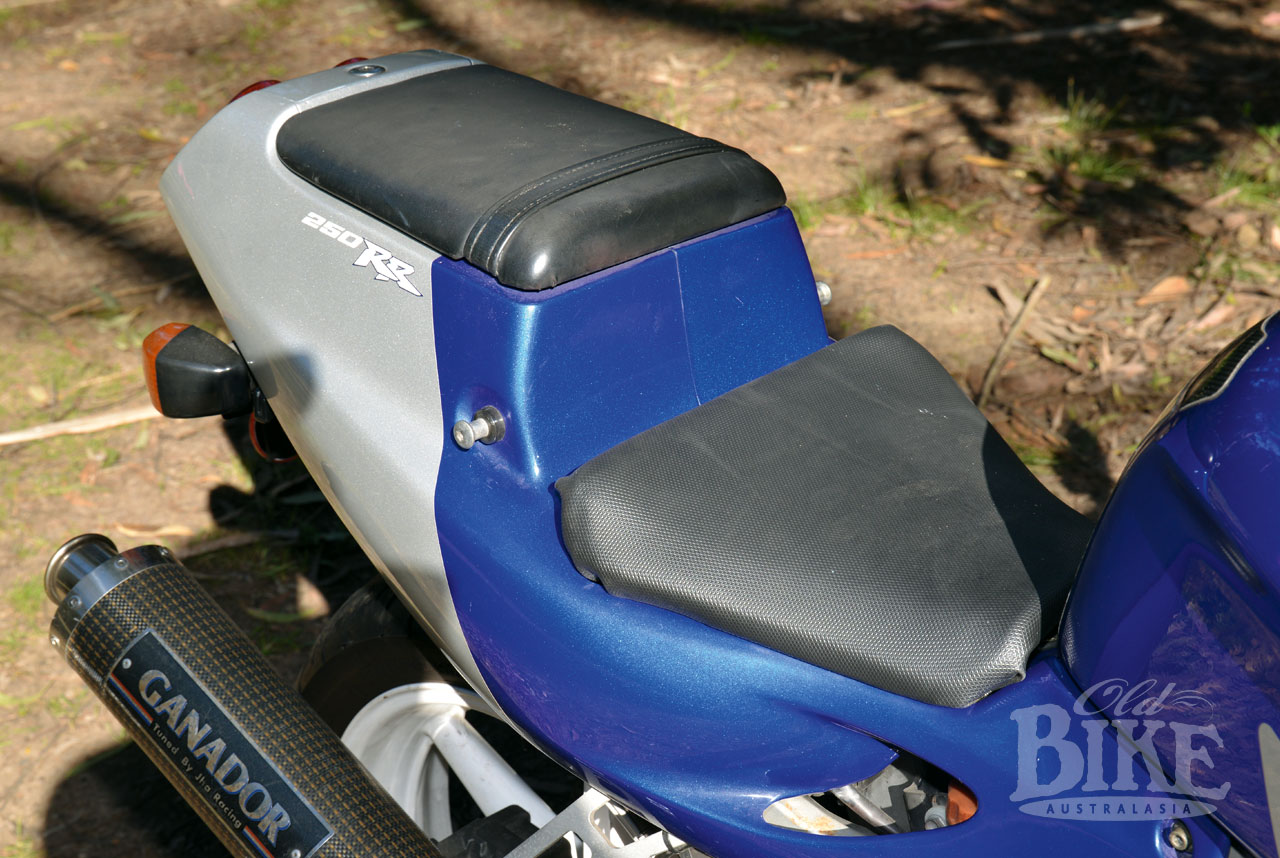
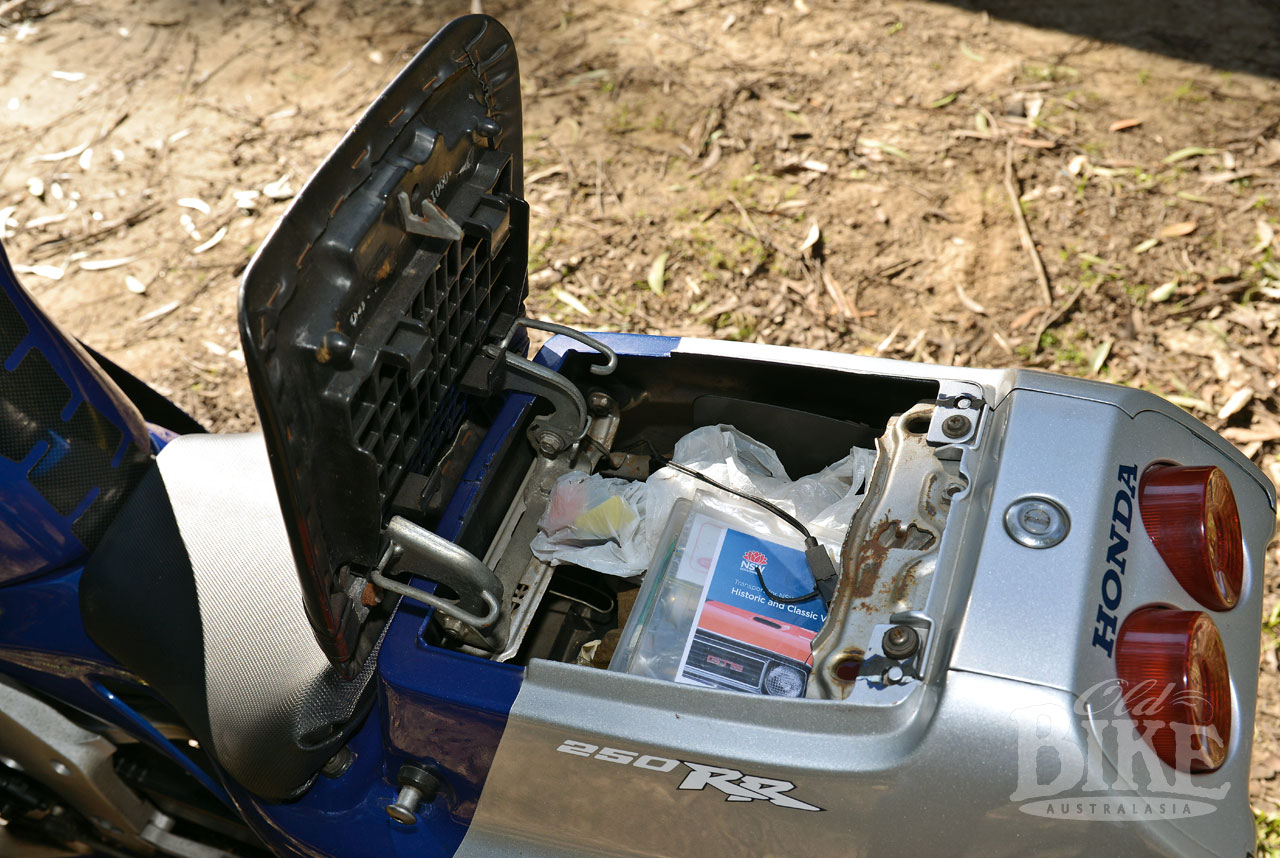
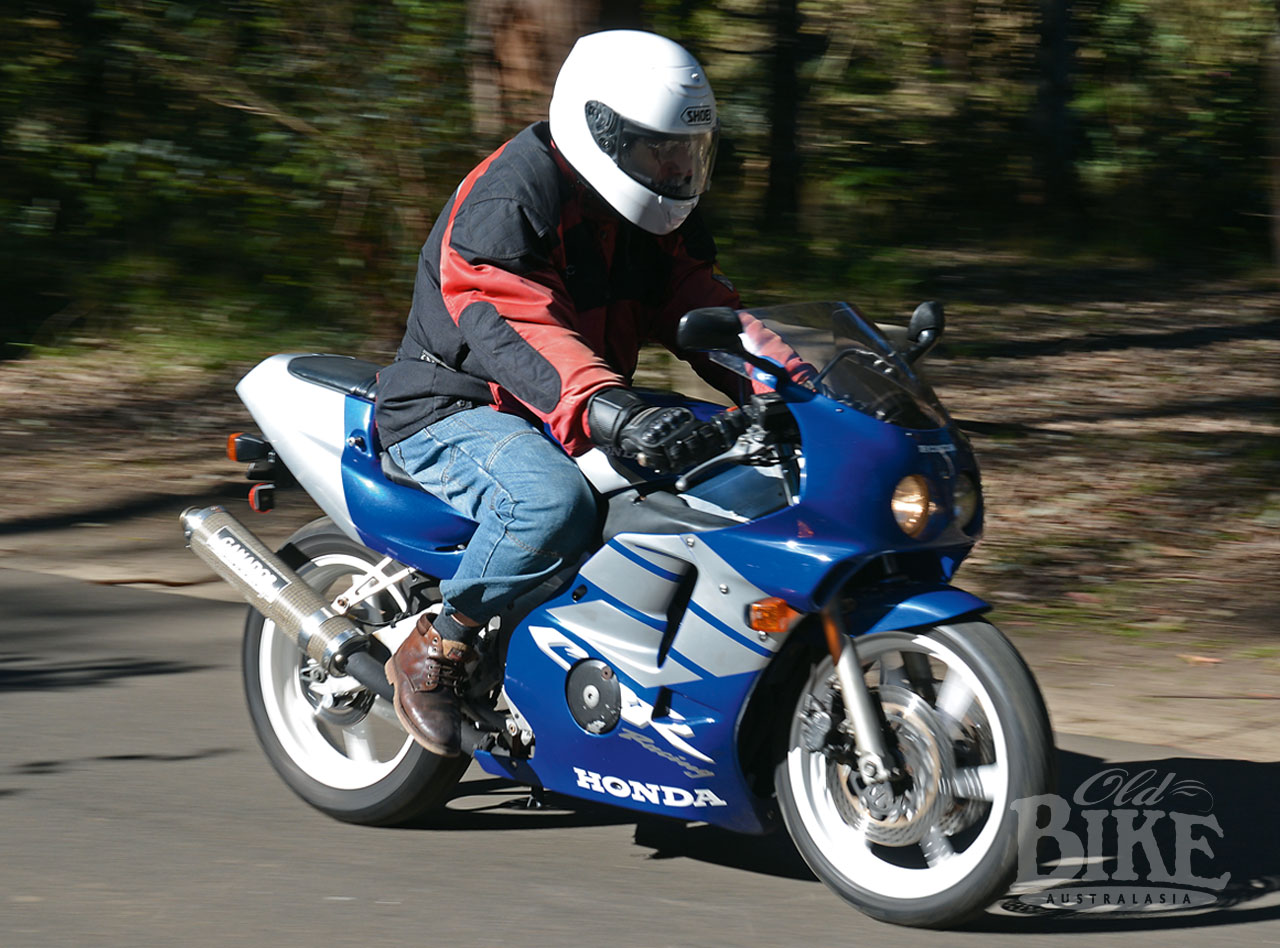
“These bikes need to be started and ridden regularly – once a week is best if you can manage it, otherwise the carbs gum up and it gets hard to start. And you need to rev the blazes out of it to clear everything. It’s not easy winding it up to near the red line around town but that’s what it likes.”
John’s enthusiasm for the model extends well beyond his road bike. He has collected around six engines, and has also built two versions of pure retro race bikes – one complete and the other currently under construction. These feature UK-built replica RC161 frames, Yamaha brakes and 28mm flat-slide carbs.
The MC22 versions of the model are very popular race bikes and fun to ride. Because of the robust engine specifications, they are also reliable and certainly fast enough to enjoy, with excellent handling and brakes. They also represent good value for money. At the May 2022 Shannons Autumn Auction, a very tidy 1996 model went for $4,500.
1991 Honda CBR250RR – Specifications
Let ‘em rip